Wednesday, June 1, 2016

The Perils of Refinancing


How much can you save?   Taking on more debt - which almost always happens in a refinance - doesn't necessarily save you anything, even if it frees up "cash flow".   Cash flow isn't wealth.

I received a refinancing offer in the mail the other day.   Since I don't have a mortgage, it was of no use to me.  But it was fascinating as to how these deals work and how they get people (including me, in the past) into trouble.

As I noted in earlier postings, there are a number of ways to "time shift" money, and borrowing is one of the most obvious ones.   You can borrow money now and end up in a world of woe later, even though things seem swell for the first few years.  It is like selling one of your kidneys.   All fun and games and  a new  car when you are in your 20's.  But later on, you'll pay the price when your remaining kidney is shot.

Refinancing is appealing as it lowers monthly cash-flow rates.  During the high-interest-rate era of the 1980's and 1990's many of us had mortgages as high as 14%.   I had one at 11-5/8% at one time.  An offer to refinance at "only" 8% seemed like a godsend at the time, even though it negatively affected my finances overall, due to my poor financial habits.

And one of those bad habits was taking "cash out" to pay off other debts.   You see, when the refinance game started (when interest rates went down in the 1990's) the deal was to lower your rate, which is what I did when we refinanced for the first time.   Our monthly payment was lower (whoo-hoo!) but of course, we basically pissed away what little we had paid down on the loan for the first five years - and added more to cover closing costs.

As the refinancing market got saturated and rates declined, they started offering "cash out" deals to allow people to pay off higher interest loans, such as car loans and credit card loans.   Take a short-term loan, amortize it over 30 years, add to the balance on your mortgage, throw in a few grand in junk fees and points, and while your monthly payment is lower, your overall net worth is lower as well.

When that well was pumped dry, they started offering ARMs, which is where the trouble began.   Once people got addicted to ARMs, they went with even lower and lower rates - often "come on" rates of a few percentage points (whose actual cost was made up in points).   This lowered monthly payments for a few years, but eventually the piper has to be paid.

Let's take a look at this offer in the mail and see why it could be a harmful deal.  Today, it is hard to get much lower than the fixed rates of 4.5% or so.   Thus, the refinance people have to resort to games, such as floating ARMs, to get you to refinance.   This offer is for a 2.75% 5/1 ARM which has an effective annual rate of 3.463%.

For a mortgage of $355,000.12 (the offered amount) the monthly payment sis $1449.26.  If you are coming from a 4.75% mortgage with a payment of $1852 per month, this is a "savings" of over $400 per month, but only in cash-flow.  There are no actual savings.

You see, you are resetting the clock on the mortgage to 30 years again, so you might end up paying more interest overall by refinancing.   For example, if you compare the two 30-year mortgages, you would see that at 4.75% you are paying $311,665.30 in interest over 30 years.   This is a lot more than the $166,732.23 at 2.75% over 30 years - in fact almost double.   Of course, the 2.75% loan is only that rate for five years, so it is really a false comparison.
But assume you've had your house for 10 years and have been making payments at the 4.75% rate.  Your remaining balance is only $285,847 or so, and over the remaining 20 years, you'll pay only $157,483.60 in interest.  The same amount, refinanced over 30 years, will yield $134,253 in interest payments, a much, much smaller "savings" than 50%.   But again, no one is offering 2.75% for 30 years, only for five years.  And even then, not 2.75%.

You see, the mortgage requires two "discount points" which means you have to pay two percent of the balance of the mortgage at the onset.   For our $355,000 mortgage, this comes to $7100 added to the balance of the loan (with interest paid on that as well!).   And if you are looking to refinance, well, you ain't got $7100 laying around, so you do fold it into the balance of the loan.   So right off the bat, you are $7100 poorer than when you started.   And let's not forget "origination fees" and "document fees" and "overnight courier fees" (often charged even when nothing is overnighted) and other "junk fees" added into a loan.   You may also need an appraisal, so throw in $300 to $1000 for that (the later what we paid in New York State!).

And this assumes you aren't taking "cash out" (adding even more to the balance of the loan) to pay off other debts, such as credit cards and cars or student loans or whatever.  Taking a car loan of five years and amortizing it over 30 isn't saving you money, it is costing you more, as you will end up paying a lot more interest.

But the real kicker is that after five years, the loan "resets" at prevailing rates.  Currently, these rates are around 3.5% to 4.0% with no points (which goes to show you, getting a loan in response to some mailing is a shoddy idea).  What those rates will be like in five years is anyone's guess.   Given that rates today are at historic lows, it makes no sense to go with an ARM.   It is all but guaranteed that rates in five years will be far, far higher than today.

Let's assume Harry and Harriet Homeowner bite on this deal.   They borrow the $355,000 offered in the mailing, have the required 740 credit score and Harriet is a vet (as required by the loan terms).   They had a balance of $285,847 on their house, but had two car loans, student loans, and credit card debt totaling about $60,000.  With the points on the loan and closing costs, the total comes up to $355,000 - the amount offered in the mailing.   They go to closing and put no cash down and eliminate all of their monthly loan bills for one low monthly payment of $1449.26

The Homeowners are ecstatic.    They have taken a monthly cash-flow requirement of well over $3000 for credit card debt, student loan debt, and car payments, and reduced it to under $1500.  No more struggling to pay the monthly bills!  No more nagging credit card debt that was increasing over time!

Now, if they were smart, they would take that $1500 a month they were putting into higher interest debt and applying to this lower-interest debt and bring down the balance in a real hurry.  

But they aren't smart.   They are human.   How do you think they accumulated all this debt in the first place?   Plus, the credit card company, seeing their balance drop to zero overnight, sends them a letter saying, "Congratulations Mr. & Mrs. Homeowner!   In view of your excellent payment history, we've increased your credit line to $20,000!"  - and that was just for one of their four major credit cards.

So rather than try to chip away at this debt, they go out and spend more.   And quite frankly, the amount of "surplus" income in their cash flow isn't the $1500 a month they are "saving" in debt payments.   Since they were living beyond their means for years, they were living on borrowed money - which is why their credit card debt kept increasing and why it was quickly becoming intractable credit card debt.

And that is why the Homeowners bit on this refinancing deal in the first place - they were starting to get desperate.  The credit card bills weren't getting paid on time and the limits on the credit cards were being breached on a monthly basis.   The refinancing offer was a lifeline.

Compounding this problem is the fact they refinanced on an ARM.   After five years, the rate resets to "market rates" which could be 5% or more.  They could be 7%.   Who knows what they will be in five years or ten?   And no, you can't "refinance" at that point to a lower rate, as the rates have gone up.   And since they have added to the balance of their debt, if market values ever go down, they cannot refinance as the debt-to-equity ratio can't exceed 70%.

(Quite frankly, the limits imposed on these offers are so strict, few qualify for the best of terms, as I am assuming the Homeowners have here).

And in five years, well, their old cars have worn out and the Homeowners bought new ones - and ran up more credit card debt.   Plus they needed that new furnace and the kids needed braces.   And of course, they took that "dream vacation" after refinancing, as they could "afford it now".

The end result is, even more debt piled upon debt.   And now they can't refinance again, as they are maxed out on debt load - in terms of their income and the equity in their house.   They literally have no where to turn.   And if they start making late payments on credit cards, or worse yet, their mortgage, their credit rating will be shot, making refinancing impossible.

Now all of this may sound harsh, but it is based on real-world experience - that of myself and my neighbors.  I was never so dumb as to go for the ARM, but I did do a few refinances in my day, adding to the balances of loans, taking out cash, and generally being an idiot.    And yes, I went right out and spent that "savings" in my monthly cash-flow rather than apply it toward reducing debt as I should have.

Others I know did even dumber things and were unlucky (or dumb) to get caught in the downturn of 2009.   They refinanced again and again (one lawyer cheerfully telling me she was a "serial refinancer" - as if this was something to be proud of.  She had a $5000 pocketbook).   And when Real Estate values went South, they got upset and asked "who took all the money away?" when in fact no one did, they just spent phantom equity in their home on vacations and handbags and luxury cars, and now they owed all the money they spent.

Now to be sure, refinancing isn't always a nightmare.   Most people don't stay in their homes for 30 years and pay off their mortgage over time.   The average person moves every 5-10 years depending on region and demographics.   This makes the 2% in "points" all the more lucrative for the banks.   Serial refinancers end up adding these points to a loan over and over again.

 But if your house continues to increase in value over time, and you make your payments (and maybe make a few extra to bring down the balance) you can sell out and walk away with no debt.   But if you have loaded up your house with debt, there may be no equity to take out at the end of the day (particularly after paying 6% commission and closing fees) to use a down payment on another house.

Also if you have only 20 years left on your current loan (or 25 or whatever), refinancing for the same term might make sense, as it insures you really are paying less in interest.   Not only that, the rates for 15 and 20 years mortgages are far less than for 30 year ones, and competitive with ARMs amortized over 30 years.

And it goes without saying that a fixed rate mortgage with no fees or points (if you can get one!) is going to be a better deal in the long run than paying 2% for the privilege of borrowing money.

If I had been smarter about refinancing, I would have refinanced for a shorter term (20 years) equal to the current length of the loan I had.  And I would have shopped around aggressively on price and points to get the lowest rates and least amount of add-on fees.   Instead of adding to the balance of the loan, I would have been decreasing it.

And rather than celebrating a refinance as an example of stellar financial acumen and spending yet more money, I should have taken it as a warning sign that I was living beyond my means.

But a lot of folks (including myself) did the opposite.   Offered cheap and easy money, we took it and failed to think about how we were going to pay it back.   Once you have loaded a house up with debt, your equity drops to nothing.  And a lot of people end up "staying in their house" for this reason.   How many folks have you heard say, "Well, there is no point in selling, as I wouldn't get much more for it than the loan balance, and then where would I go?"

I was fortunate (or smart) to sell out at the peak of the market, pay off these debts and walk away with cash.   We can't always count on being fortunate or smart, particularly today.   Refinancing sounds like a lot of fun, and the carrot of the lower monthly payment is awfully attractive.   But it can be a trap for the unwary.   If you are thinking of refinancing, make sure it is part of an overall financial plan, and not just time-shifting more debt so you can live beyond your means today.

Tuesday, May 31, 2016

The Pension Crisis


Pensions have been underfunded for decades, and now the chickens are coming home to roost.   It won't be pretty.


When I was a Teamster with United Parcel, I was told that if I stayed with the company, I could retire with a fat pension.  I declined their generous offer.  But others took them up on it, conveniently forgetting about Jimmy Hoffa, the Mafia, and how the Teamster's Pension plan was a slush fund account for the mob.

It took decades, but the entire thing is finally melting down and this could be a disaster for many Americans.    Right now, the Central States Pension Plan which covers truckers, is basically insolvent - paying out $3 for every $1 it takes in.   The current plan is to cut benefits by 60% for retirees, including those already retired.

But wait, it gets worse:
The Treasury Department appointed attorney Ken Feinberg, who's known for overseeing the 9/11 victim compensation fund, to review the plan. He has until May 7 to make a decision. If he approves the plan, it will be put to a vote for the plan's workers and retirees. But no matter how they vote, Feinberg has the final say.


That's because the Central States Pension fund is one of the biggest in the country and if it fails, it could also wipe out the government's pension insurance fund, the Pension Benefits Guarantee Corporation. 
You read that right.  If this pension plan fails, it is so large that it would bankrupt the safety net for pension plans.  This would mean that Congress would have to bail out the Pension Benefits Guarantee Corporation, or failing that, when other pension plans fail, there would be no alternative but to lose all of your benefits.

Pensions were a good idea, but they failed for three reasons.   First, companies promised lavish benefits to workers to get them to avoid striking.  Second, the companies didn't fund these pension plans, as they needed the money to invest in R&D and pay shareholders.   Third, people started living longer and retiring earlier than ever before, padding the ranks of the retired.   We already saw this effect bankrupt both GM and Chrysler just a few years ago.

In my posting The Year of the Living Dead, I noted that it takes a long time for companies to topple - Sears has continued to struggle while closing stores.  JC Penny is doing likewise.   Radio Shack finally threw in the towel last years - years longer than analysts thought it would.   It takes quite a while for economic systems to fail.  You could lose both engines on your airplane at 30,000 feet, but it would still take 20 minutes or more for you to finally hit the ground.   Similarly, in your personal finances, you can spend more than you make for years before the chickens come home to roost.

The problems with these pension plans have been well-documented for years.   And people see the problems with the companies supporting the pension plans, but nothing is done about it.   Some politicians, including Bernie Sanders, support bailing out these pension plans, as the Pension Benefits Guarantee Corporation was supposed to do.

The problem with bailing out failing pensions, of course, is that once companies realize they can let pensions fail - and that pensioners realize they will be bailed out - companies will just stop funding pensions entirely and pensioners won't object, knowing the government will bail them out.   And unlike Social Security, pensions can be rather generous.  Do we bail out the entire pension plan, or just a portion of it, as the PBGC currently does?   Either way, someone gets screwed.

The pension debacle is one reason why the IRA and 401(k) plans were created in 1978.   Congress saw that unfunded pension liabilities were soaring.   Companies simply couldn't afford to fund the promises they made to employees back then, as the economy was in dire straits.   And like underfunding your 401(k) plan, it is very hard, if not impossible, to play "catch up" later on.

Government pension plans seem fairly safe - for the time being.   High government salaries and generous pension plans, along with earlier retirement ages and longer life expectancy has meant that property taxes and State taxes have risen and States are finding it hard to balance budgets.   The Federal Government simply operates at an increasing deficit to fund the pension plans, which means that inflation could end up making all of us pay.   All of us except pensioners who have cost-of-living (COLA) adjustments.

For those of us retiring on our savings, inflation could wipe us out.

Already noises are being made about cutting public employee salaries and benefits.  What is happening in Wisconsin is no accident.   And there are more property tax and income tax payers in that State than there are public employees, which is why Governor Walker survived a recall.   Private pension plans are threatened and failing now.   Perhaps government pensions, at least on the State and Local levels, might be under attack in the future.  Some smaller towns and cities are already defaulting on obligations.

And in a way, this is to be expected.  A town or city is like a Corporation (and indeed may be "incorporated" at least in name).   If the amount of income drops (people move away, businesses close) and expenses increase (a large number of pensioners starts to accumulate) then bankruptcy is inevitable and pensions may be at risk.

So what can be done about it?   Vote for Bernie?   I doubt that would change much, as it would be Congress, not Presidents, who rescue these plans - if they are rescued at all.   Even if a bailout occurs, most pensioners can expect less than half their promised retirement.   It will get ugly.

Sadly, a lot of people did retire based on these pension promises.   And since they had these promises, they didn't bother to save - not one penny.   I know two Federal government employees who have nice pensions but only $30,000 in savings.   Like Bernie, they borrow money to buy everything, applying for 30-year mortgages at a time in life when their life expectancy is less than 30 years.   So long as the government holds up its end of the bargain, they are set.

But not too long ago, in the era I grew up in, people would save up money in addition to relying on pension plans.   Pension plans were not so generous back then (some today paying 75-80% of last year's working salary!) and were designed to supplement retirement income, not replace it.   Today, you can live high on the hog on a pension plan, which has COLA increases annually.

So my parents tried to accumulate wealth instead of dissipating it.   And it wasn't easy to do with four children to put through college.   Today, we would rather spend it all now and have a higher standard of living than save for tomorrow or for future generations.

Inheritances were another aspect of the equation.   A middle-class child could expect some sort of inheritance "nest egg" that would represent wealth in addition to pensions.   My parents inherited $400,000 from my late Grandmother (on my Mother's side, my Dad's Mother was left destitute by her husband).   This supplemented a small pension and social security - along with their own savings and home equity (yes, they had no mortgage) to live comfortably.

Of course, this money got spent, so I ended up with no inheritance.   Mark's parents were a little more thrifty and left some money to their kids - a nice supplement to existing savings.

But inheritances are getting harder and harder to come by.   The Baby Boomers spent it all and are going into retirement with mortgages and reverse mortgages and leaving their children with nothing or often worse than nothing.    Insolvent Estates are the new thing - leaving your kids just a tangled mess of debts and problems to unwind, often at their personal expense.

Yes, this all sounds very bleak, and to some extent it is.   So what can be done about it?   On a national scale or whatever, not much.   Money simply doesn't exist to fix all the problems with pensions.   And it is very unfair that a few people will get paid generously in retirement while others with similar or even more important jobs will end up broke.   Life isn't fair.

However, you do still have personal responsibility and personal choices you can make.   If you are younger, you can jump off the consumerist bandwagon and create your own wealth by saving rather than spending.   Don't count on pension promises to fund all of your retirement.   If you are older, you can spend less and live more frugally.   The fellow in the story profiled above said he was "cutting back" by getting rid of a few cable channels.   With about half his pension ready to evaporate (or all of it, in a few years) he should be cutting cable out entirely.

We all face this risk in retirement, although some more than others.  My friends with the Federal pensions seem pretty safe.   Folks with State and Municipal pensions much less so.   Those with private pensions are at a very high risk.   People with pensions from rust-belt industries are basically screwed.   And those of us with IRA and 401(k) plans just have to hope and pray that deficit spending doesn't blossom into hyper-inflation down the road, even if inflation seems eerily quiet today.

Sunday, May 29, 2016

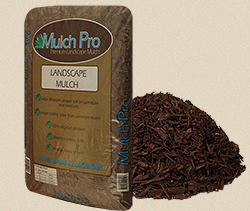
Mulch

When did mulch become a landscape feature?  Within my lifetime.


When I was a kid growing up in the 1960's and 1970's we didn't have mulch.  We didn't have shit, really.  There was no Lowes, no Home Depot - maybe an 84 Lumber if you were lucky.  We had the local lumber yard or hardware store, where they sold nails by the pound, and stacks of 2 x 4's.   

But no mulch.

If you asked someone back then what mulch was, they would have said some sort of compost.   Pine bark mulch wasn't a thing.   Logging companies threw it away.   

But in the late 1970's and early 1980's that changed, and shows like This Old House started to showcase yards with enormous mulch beds.   Originally, you might mulch to keep the weeds down until your shrubs and plants established themselves.   At that point, they dominated the planting area and no more mulch was needed.

But for some reason, the "look" of a broad bed of mulch became a thing and today, people have half their lawns covered in mulch, aided and abetted by its co-evil twin, landscape fabric.   I still remember "Norm" showing us how to do this on PBS back in the day.

So, what's the deal with mulch?   And what's the problem with it?

Well, to begin with, it is expensive.   It can sell for $5 a bag or more and you need many, many bags to fill the enormous mulch beds that many folks have today.   We're talking beds that are 30-40 feet long and 10-20 feet deep.  These take dozens of bags to fill, and cost hundreds of dollars to establish.

And once they are set up, you're not done.   Since leaves and other detritus makes them look messy, you have to get a leaf blower and blow all the leaves out of the mulch bed.   And every few years, the mulch starts to degrade, so dozens of new bags are needed to re-fill it.

A neighbor of mine just re-stocked his mulch bed with two dozen bags.   And only a few years ago, I helped him spread well over 50 bags.   At $5 a bag, we are talking hundreds and hundreds of dollars.  Of course there are cheaper mulches and more expensive ones.  You can buy a "permanent" mulch made of shredded car tires.  That sounds nice.

And here in the South, throwing wood on the ground is always problematic.  You are basically creating a termite attractor.

When we were in Virgina, we used to get "free" mulch from the County, who shredded lawn waste and offered the resulting chunks in huge steaming piles at the community rec center.   We would shovel the truck full of the stuff and then build mulch beds at home.   All that was needed was dirty, messy, backbreaking labor at both ends of the pipeline.

Is mulch worthwhile?   It think not.   And as I noted, the idea of the mulched planting bed is a relatively new phenomenon.   Back in my parent's day, if you wanted a garden, you planted your plants and then pulled weeds all day long.   Since this was a pain-in-the-ass, you kept your planting beds modest and small.

Today, with mulch and landscaping fabric, we can create huge planting beds which are never filled in with plantings, but remain mulch beds.  We like the "look" of mulch today, for some reason.   It is a fashion, however, that is only a few decades old.

I have resisted buying mulch at our house here on the Island.   In addition to the termite deal, I am kind of done with elaborate gardens (having built two already) which create maintenance nightmares and mean you can never go away on vacation without coming back to an overgrown garden that will take weeks or months of trimming and weeding to get just so.

The back of our property was landscaped by the original owner who planted Ligustrums and Azaleas, along with ornamental grasses.  After more than a decade on the rental market, it was an overgrown nightmare.  Over the years, I have attacked it slowly, removing all the poison ivy vines, trimming the Ligustrums (which are now the size of trees) and bring the Azaleas back to human size.   With all the tall Georgia pines, we have a steady rain of pine needles.

Some folks around here use "pine straw" as they euphemistically call it, as a mulch.   It is just dead pine needles, and paying for a bale of it seems rather foolish when every day a bale is dumped on our property by the six Georgia pines we have.   We used to have seven, but one almost fell on the house, and some good old boys offered to take it down for $650 which seemed fair as it was well over 100 feet tall and three feet in diameter.  The remainder just threaten to crush us to death someday.

So I rake up the pine straw and then run it over with the mulching lawnmower which turns it into a fine mulch which costs nothing and looks good (and spreads itself).   The acidity of the pine needles keeps plants from growing - other than the Azaleas which love acidity, which is why people plant them under pine trees.  I let some native "fan palms" grow up and they look good and also provide privacy from the neighbors.

The result is a "mulch bed" that sort of fills itself and needs only the occasional run-over with the lawn mower.   Recently, I bought a shredder on Amazon which can be used to shred the pine needles and other leaves into a fine mulch.  It works pretty well (it has actual blades, not the string-trimmer kind) and cost less than one load of mulch would.

We have sort of taken an incremental approach and minimalist approach to landscaping in this house.  We don't want to create high-maintenance areas, so we use native plants or plants that require little water and care and thrive on neglect.   And rather than pay some landscape architect to design and construct the landscaping, we have added a bit every year, as time, labor, and money permits.

As I noted in earlier postings, it is entirely too possible to over-do your landscaping.   Going to Lowes or Home Depot every weekend and buying carload after carload of landscape timbers, edging sprinkler systems, lawn lights, mulch, plants, soil, and other yard tchotchke, you can run up a lot of credit card debt.

Worst yet, your yard can tend to look "busy" with so much going on.   We've always thought our house was a little shabby looking when it came to landscaping (but improving every year, incrementally) and are surprised when people say how good it looks.   It looks "good" because there is not too much going on.

By the way - here's a hint - those bags of "weed and feed" they stack up at the home improvement store?  Just avoid them.   Turns out the "weed" in those mixes can kill a lot of grass types, such as the centipede grass we have here in Georgia.   Centipede grass is called the "lazy man's grass" as it requires little mowing, water, or care.  It spreads by sending out centipede-like tendrils and eventually takes over a lawn, leaving a lush carpet.   It doesn't like a lot of heavy traffic, so you can't walk on it a lot.   It also hates "weed and feed" too.   Just throw a couple of bags of regular fertilizer at it once a year and be done with it.

After several years, our yard is looking better than ever, not by spending more money and more labor, but often by spending less.   We fired the yard service, whose tractor-like mowers were killing the centipede grass (traffic again).   We bought a Honda push mower for less than the cost of a few months of that "service" - and the exercise has been good for me.

We don't have a sprinkler system, but do water a bit in the spring and fall.  In the summer, we just let the grass do its thing, and in the fall, throw some realtor grass seed on it, and it stays green all winter (unlike the neighbor's manicured lawn, which goes brown despite all the watering).

I think we've found a happy medium between an over-manicured and over-maintained (and overly busy) look and the abandoned house look.  Learning to live with and work with the native plants is part of the deal.   Walking away from enormous "mulch beds" was another part.

It is funny, but we did talk with a landscaper and asked him for ideas on how to landscape the property.  He wanted to build (you guessed it) enormous mulch beds, plant non-native plants, install a sprinkler system, tear up the hardy centipede grass and put in sod, and so forth and so on.   And the cost was only in the tens of thousands of dollars - to start with!   Of course, the resulting maintenance would have consumed all my time, or cost hundreds more per month out of our budget.

The fanciest house on the street and the poorest house are only a few thousand dollars apart in price.   Price depends on location first, and condition second.   Fancy landscaping might help with "curb appeal" in selling a house - or it may backfire, as we learned trying to sell houses with extensive gardens.   Most folks see lots of mulch beds and plantings and think, "Gee, I'll be out here all day weeding and mulching!  No thanks!"

Spending a ton of money to build a high-maintenance home just doesn't make any sense.   You'll find your "dream home" becomes a nightmare of constant expenses and labor.   You may end up feeling trapped by it - never able to leave, never able to vacation, because you have to constantly maintain it.

Less is more.  Doing things is better than owning things.

And I am done with mulch beds.   We lived, as a society, without them for generations.   For some reason, our generation has adopted them as a norm, without thinking as to why.

Friday, May 27, 2016

The Sarah Palin of the Left?


Bernie Sanders admits he knows little about Latin America. But he wants to sell us the same Socialist solutions which are failing miserably there.
 
When John McCain nominated Sarah Palin, everyone was ecstatic.  I remember hearing her "pit bull lipstick" speech (a line she ad-libbed) the night she was nominated and thought, "Wow, this is a real game-changer!"

Not that I was impressed by her ideas, but her delivery was top-notch and she knew how to work an audience.   McCain had a real powerhouse VP candidate who could rile up the crowds.

But it all came unraveled when people started asking her questions.   Questions like "What newspapers and magazines do you read?" ("All of them" was her lame answer).   In retrospect, she should have stuck to the stump speech and avoided all interviews.

Of course, Palin claimed that such questions were "gotchas" - designed to make her look foolish.   But in reality, they were just exposing her underlying foolishness.   Maybe the one about the "Bush Doctrine" was a bit "gotcha" as no one really used that term at the time - or even now.   It was a vague, open-ended question.   But she could have handled it better - just by saying, "Well, define what you mean by the Bush Doctrine!" 

Water over the dam at this point.

In a recent interview on Univision, however, Bernie Sanders illustrated his lightweight credentials.  When asked questions about something other than "the big banks" and "Wall Street" he flummoxed and flubbed it.  He didn't want to offer an opinion about the situation in Venezuela, which is about to erupt into civil war.  And likely that was for the obvious reason that the socialist policies of Chavez are not far off those that Sanders would like to implement (but of course, could never actually get through Congress).

At least Sanders was man enough to admit when he had a blind spot in his resume:
Sanders spoke about the drug war and immigration, but when pressed on the levels of violence in Central America caused by the U.S.’ deportation of hardened gang members, the Vermont Senator said “Look, you’re asking me questions about the impact on Central America, which honestly I should know more than I do know.”
You know, maybe he should serve in some capacity with the government where he would learn about foreign affairs and be up on these sort of things.   Maybe Secretary of State or something.

Yea, it would be swell to have a President who used to be Secretary of State.   Good idea.

Maybe we've had enough of amateur hour?

UPDATE:   This frightening quote from Bernie's Senate Blog:

"These days, the American dream is more apt to be realized in South America, in places such as Ecuador, Venezuela and Argentina, where incomes are actually more equal today than they are in the land of Horatio Alger. Who's the banana republic now?" 

Do you want to be the next Venezuela?   It frightens me that he looks to Latin American socialism as a model for future development, when the human rights record in Venezuela under Chavez was anything but good.

UPDATE:   Do you like bread lines?  Because Bernie thinks they are the sign of a country that is functioning well:


Scary, scary stuff.

Restroom Follies


What is behind this transgender restroom bruhaha?  Politics - as usual.

Many folks are confused by what is going on in North Carolina.  Why are companies threatening to move elsewhere just because they won't let a guy in a dress use the Ladies room?   It makes no sense!

And if that was the real issue I would agree with you.   But the GOP has done a very neat job of tying three laws together into one, and then making sure the debate is only about one part of this three-part law.

North Carolina passed a "religious freedom" bill just as Mississippi recently did.  What is disturbing about these bills is that they allow any business owner to discriminate against anyone if they feel that serving them conflicts with their religious beliefs.   That is the first part of the bill.   The second part allows government employees to deny service to anyone if it conflicts with their religious beliefs.

These two parts of the Mississippi and North Carolina laws are part of the "Cake Wars" and "Gay Marriage" wars.   Apparently, to some people, the act of writing "Good Luck Sam and Bill!" in cake frosting is going to send you to Hell.   And a funny thing, we recently had a birthday party here for four people who were turning 50, 60, 70, and 80.   And the cake place gave me a funny look about having four men's names on the cake until I explained it.   You see, you have to explain things these days, just in case.

But getting back to these laws, they seem innocuous enough, until some yahoo decides that "his religion" prohibits him from serving Gay people at all.   So you are driving through rural Mississippi and are down to your last gallon of gas.  You go to buy gas in the next small town and they see your "Human Equality" bumper sticker and say, "We don't serve your type here!".   You can't get cell service, so you can't call a tow truck.   And they won't let you use the phone.   You can't eat in the cafe.  You can't stay in the motel.   All you can do is sleep in your car until someone rescues you or they decide to drag you out and beat you to death.

OK, maybe that is an extreme scenario.   But when you tell people - through the law - that it is OK to single out certain groups of people for abuse, well, people start to abuse.  We are seeing this right now in Russia, and of course, the Police refuse to investigate.

The pendulum of hate is swinging back to 1983 and pretty soon, "Gay Bashing" will be back in vogue again (as it was during the Reagan era).  In fact if you Google it, it seems to be already happening.

So what does this have to do with restrooms?  Well, the North Carolina law tacked on another provision - about bathrooms.  And the GOP has made sure that this is the only talking point to be raised in any discussion in order to make any discussion about the law seem ridiculous.   Men should go to the Men's room and Ladies to the Ladies' room, right?   These Liberals are being downright unreasonable!

If you can control the language of the debate, you win the debate.   So even seasoned journalists fall into this trap (particularly NPR) and never investigate the other parts of this law that are really what people are objecting to.

Republican politicians are obsessed with restrooms - that is where they are usually arrested for soliciting undercover police officers.   Well, they are, with regularity.

But that comment brings up a number of issues with regard to restroom design, and maybe this discussion is useful in updating the architecture of the modern restroom.

Back in the 1980's, Republican politicians were in fact being arrested in public restrooms for soliciting sex from undercover police officers.   Back then in the closeted era, many public restrooms along public highways, in college libraries, department stores, and other areas were notorious "cruising" areas for closeted men - often married men.   There was even a little book - Dameron's Guide - that had a listing of which places to go to (it has since morphed into a travel guide).  And it was pretty out of control, too.

Since then, the highway departments have bulldozed most of the old seedy restrooms and reduced them significantly in number.  In Florida, for example, they would tear down four rest stops and replace them with one mega-travel center.   These were less costly to maintain, easier to police, and could offer travel information and tourist destination guides.   By that time, of course, men were no longer using restrooms for sex, as being gay was less stigmatized and there were other outlets.  Today, young gay men (and closeted married ones!) use "apps" on their cell phone like Grindr to find their sexual mates.

So it is possible to change restroom architecture in response to changing conditions.  And those changes were for the better.

A second problem with restroom is gender inequality.   If you go to a concert or ball game or whatever, there is always a line at the ladies' room (a long, long line!) and no line at the men's room.   Men can use urinals and don't need to "sit down" to pee.   I was at a concert once (classical) and a group of men took pity on the line of women waiting to go and closed off the men's room and let the ladies use it until the two lines were equal in length again.   That's how bad it gets.

Some restaurants and bars (and grocery stores like Trader Joe's) solve this issue by having "one-holer" restrooms (a toilet and a sink, maybe a urinal, in a single room with a lockable door).  These are gender-neutral restrooms and provide privacy and security.   Moreover, they don't discriminate based on gender.  The line for the restroom is THE line, not separate lines for men and women.

Then there is the issue with children.   If you are a Mom shopping with your young son, or a Dad shopping with your young daughter, you have a dilemma.   Do you let them go into the restroom alone?  Or do you take them into "your" gender restroom to do their business?   Dear Abby usually has a letter or two every other year on this topic - at what age is it inappropriate for Mom to bring her little boy into the Ladies room?   It gets awkward.

Again, architecture to the rescue.   In some rest areas they have "family" restrooms which are handicapped accessible, have changing tables and are basically just a private room with a toilet and a sink.  These are, in effect the "one-holers" I mentioned above. 

So why do we still have separate "gang" restrooms today?   This goes back in time to earlier years when the cost of plumbing and construction was much higher.   When I was in High School, we had "gang showers" - large tiled rooms with dozens of faucets.   It was cheaper to build, I guess, but there was no privacy and a lot of towel-snapping going on (plus leering gym teachers).   Today, most modern high schools have separate stall showers, as do most health clubs and other athletic venues.

Similarly, the "gang" restroom with its row of stalls was probably cheaper to build that a series of separate restroom "one holers" that can accommodate one at a time.

The single-occupant restroom, however, does have a lot of advantages to offer:
1.  It is gender neutral in that women don't have to wait in separate lines.
2.  If there is a maintenance issue, you can close one of a number of such restrooms with little or no impact.  If you close the men's room or the ladies' room, you have to get porta-potties for one gender to use until repairs are effected.
3.   For families with small children, the single-occupant restroom is a godsend.
4.   All of them can be made handicapped accessible, so the handicapped don't have to wait for "the" stall or be stigmatized.
Oh, and it solves this whole "men in a dress" using the ladies' room thing.

Of course, retrofitting existing structures from two gang-style restrooms to a plurality of single-occupant restrooms might not be practical and could be costly.   But in a lot of new construction, that is exactly what architects are turning to.   And quite frankly, most people prefer their own personal restroom to using some gang-restroom with multiple people farting and shitting and pissing together, with nothing separating them but some flimsy metal divider.

But again, realistically, that is an architectural solution that will only work going forward, and it would be more costly than conventional "gang" restrooms.

So what about these "Transgender" people using the wrong restrooms?   Well, despite their high profile in the news, the number of transgender people in the country is very, very small.   Many of them you would not recognize as transgender (ask Eddie Murphy!) so you would never notice them in the "wrong" restroom.   In fact, a transgendered man (appearing as a woman) would make quite a scene in the men's room, and probably be assaulted.

And sadly, this is where it is all headed.   After this law was passed, there have been a number of episodes where men have followed women into the restroom to challenge their gender.   A law designed to keep "men out of the ladies room" has resulted in so-called restroom vigilantes to start invading the ladies' room as the gender police.  And one overzealous security guard actually assaulted a Transgender woman in Washington DC - apparently believing that North Carolina's law was enforceable there!

One man even assaulted a parent for bringing their child into the restroom!   I guess kids will just have to pee on the floor of the Wal-Mart from now on...

Is there a threat of transgender people molesting women and children in restrooms?   One conservative site claims this is so - citing five examples of such incidents (one in Canada - does that count?).   But the funny thing is, since this law came out, there have been at least as many examples of men harassing or assaulting women and questioning their gender - sometimes even following them into the ladies' room.

But again, it is all a distraction.   The real reason people are upset about the North Carolina law is not the restroom part of it.   If a transgender man can "pass" as female, no one is going to notice if they use the ladies' room, law or no law.   What is disturbing is the other parts of the law which basically codify discrimination in favor of "religious liberty" - as if running a business and serving the public was a religious calling.

I must, however, enter one caveat:   There have been some isolated incidents where some Lesbians (and it appears to be mostly Lesbians at this point) have gone out of their way to find a Christian bakery or flower shop and then make some big stinking issue about their refusal to bake a wedding cake, cater a wedding, or make flowers for the wedding.   Yes, if you serve the public, you have to serve the public.

But on the other hand, going out of your way to tweak people isn't right either.   They put those Jesus fish on their business signs for a reason - so you can avoid narrow-minded people and take your business elsewhere.    Seriously, though - folks who make their religion part of their business plan are often very crappy business people and should just be avoided.  You will get lousy service and crappy prices just because they are not very smart people. 

When "praying" is your business model, you are sure to go bankrupt.   Jesus doesn't handle accounts receivable, you do.  The folks who cloak themselves in religion are usually using it to cloak their incompetence.  To me the Jesus Fish on a business sign is like a one-star rating on Yelp!   Just avoid.