Monday, August 14, 2017

Deli Meats? Kentucky Legend!

Deli Meats are probably not very good for you.  They can also be expensive.  There are alternatives, however.

Usually when we make a trip to the grocery store, we stop  by the deli to get some deli meats and cheeses to make sandwiches fo r lunch during the week.   Wal-Mart has good prices - many deli meats are around $6.99 a pound (versus over $10 a pound at Publix) and cheese are fairly cheap, too - about $7 to $8 a pound.   They even have a "deal" where if you buy one pound of deli meat, you get a half-pound of cheese for "free" - all for $9.  This is a good deal if you buy Pastrami at $10.99 a pound and basically get the cheese for free - but that shit's not kosher (mixing meat and cheese).

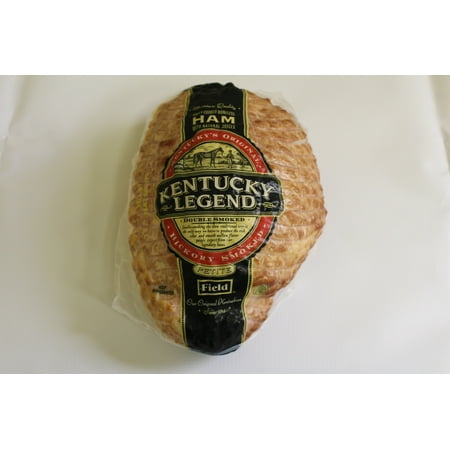
But the hassle of waiting at the deli and the cost have forced us to look elsewhere.   You can buy pre-sliced swiss at the wholesale club for under $6 a pound, sometimes a lot less.  And recently, we found something called "Kentucky Legend" pre-sliced Turkey and Ham in the meat department (NOT the deli department)  for $5.22 a pound (or less!), which is far less than the $6.99 a pound. they charge in the deli department.

The quality is better, too.  First of all, it is thick sliced which is easier when you are making sandwiches or adding meat to a salad or whatever.  Most delis slice meat razor thin, or worse, cheese razor thin, and it ends up as a massive blob than you cannot pick apart later at home.

 But is it fresh?  Well, it comes in a shrink pack of about 3-5 pounds, and it is the same shrink pack that the ham and turkey comes in at the deli department.  So in terms of "freshness" it is a wash - in fact, deli meats are generally preserved meats anyway - how do you think Ham was invented in the first place?

So today, we skip by the deli department and buy the Kentucky Legend pre-sliced turkey and ham, as well as pre-sliced swiss cheese from the wholesale club or Wal-Mart (often priced less than the deli as well!).   The thicker slices are easier to deal with, and also cheaper in terms of price per pound, sometimes (in the case of the ham) almost half-price.

Sliced some up this morning and made a ham and swiss omelet!   Yea, I know, a real heart-healthy meal.  At least it was affordable!


UPDATE:   A reader notes that these types of foods are not "heart healthy" (actually several readers noted this.   I agree.   But once in a while.... )

Another reader asks if I am being paid by Wal-Mart or being given free product, as apparently a number of blog sites mention this product and also mention they were given free product in exchange for a review.

No, Virginia, I wasn't given free food.  Because I am too stupid to think of such things.  Also, I ain't selling out for a bag of chips!  If I mention a product on this blog, it is because I bought it with my own money and liked it.

My monetezation experiment is reaching the six month mark, and I am not sure I will continue it past one year.   Yes, it generates about $200 a month in income.  No, that isn't the price of integrity.

UPDATE:  Today (11/10/2017) we went to Wal-Mart and found no Kentucky Legend products other than tiny packages of "artisinal" meats at much higher prices.   Wal-Mart is moving upscale.  I stopped at Winn-Dixie to get some distilled water for the golf cart and found.... Kentucky Legend turkey, at $6.99 a pound.

Wal-mart is just another store these days - one with higher prices that the competition, in many cases.


There's A Light....


You can have a lot of fun with cheap Chinese LED lighting strips!

I installed these lights on our golf cart and they are a lot of fun - plus they make the cart more visible to other motorists at night!   I added two strips to the Casita under the "beltline" and it looks pretty cool.   Cheap fun on a budget, to say the least.

The lighting strips come packaged on old reel-to-reel tape deck reels.   Instructions are minimal, so be prepared to figure out things for yourself....


Buy this crap from China while you can, before Trump shuts down all international commerce by imposing tariffs.   It is 1929 all over again, and Trump is the new Hoover!

Sunday, August 13, 2017

Glorifying Terrorism

Say hello to your friendly neighborhood Nazi!

Or your neighborhood Anarchist!

Two recent articles, one in USA Today and one in The Washington Post are, in my opinion, a little too cozy with their subjects.  They seem to be normalizing radical thinking as "the boy next door" and making violent political protest seem like a new norm.  Both articles made me throw up.

President Trump is getting a lot of flack for a statement he made before that loser from Ohio (lived with his mom, had a cat instead of a girlfriend, flunked out of basic training) drove a car into the crowd.   Trump noted that there was violence from "many sides" which, while we might not like to think about it, was actually true.  Of course only one side ended up killing anyone, and only one side started the entire melee.

The horrific pictures from this weekend include those of "antifa" protesters wielding clubs and beating people, as well as Nazis and KKK folks doing the same thing.   When you show up at a protest wearing helmets, carrying shields, and brandishing clubs and firearms, you are not there for a peaceful protest.   It doesn't matter what "side" you are on, it is wrong.

Why the Police allow this is beyond me.   When I was a kid, if you brought a sign on a stick, you were turned away from a protest, as the sticks could be easily detached from the signs and used as weapons.

Today, we let people bring guns to protests.  It makes no sense.

And then the media glorifies these idiots, with nice articles and accompanying photos, instead of denouncing these fringe lunatics with the strongest language possible.

I don't want to "meet the anarchist next door" - I want him put in jail for the rest of his life, and ditto for the Nazi Neighbor.   Toss 'em in lockup and throw away the key.  They can work out their political beliefs behind bars while the rest of us get on with real life.

But the media loves this shit - it generates clicks and generates eyeballs for advertisers.  "Protest violence videos coming right up!  But first, a message from your local Chevrolet dealer!  Chevrolet, as American as Basball (bats), Hot Dogs, and Apple Pie!  Drive one through your next protest rally!"

That seems to be where we are going with this...

Saturday, August 12, 2017

Heart Disease and You


Medical history made yesterday when a doctor discovered a heart inside a lawyer!

I'm happy to report that I emerged from my heart catheterization virtually unscathed.  The good news is I didn't need a stent or serious heart surgery.  The bad news is I do have some very mild build up in my arteries and will probably have to be on statins for the rest of my life.

The funny thing is, living on retirement island, when I mentioned I was having this procedure done, nearly everyone I knew recounted how they had the similar or same procedure done in the past or even more extensive procedures.  It seems that everybody I know is on statins at the very least, has been through one or more stress tests, perhaps a heart catheterization, and some have had open heart surgery, pacemakers, and built-in defibrillators just like former Vice President Dick Cheney.

Heart disease isn't some far-off possibility for most of us, but rather a foregone conclusion, if you live long enough.  As I noted in earlier posting, it is a function of diet and exercise, but also heredity.  If heart disease runs in your family, you have a very good chance of getting it.

And as I noted in earlier posting, poor Jim Fixx, the jogging Guru, died of heart disease even after he tried to turn his life around through jogging, exercise, and eating right.  Unfortunately, he failed to address the third leg of the heart disease triangle, that is family history - and visiting a cardiologist and having your heart tested.

Of course, in Jim Fixx's day, the procedures and drugs available were far more primitive. Today, health care has advanced considerably.  When I was a kid, open heart surgery was something that was basically experimental and only for people in very dire conditions. Today, is fairly common and chances are you know somebody who has had a heart bypass operation. This may seem like humdrum commonplace practice, but it wasn't so long ago that this was considered experimental surgery.

There are other less invasive procedures also available such as the heart catheterization I had today. During the catheterization process, they can actually show you a picture of your heart (shown above) and determine whether any of the major blood vessels are clogged. During the procedure they can actually insert a stent without having to perform a second procedure or having to operate.  The stent can then expand the blood vessel and improve the functioning of the heart.

Again, it was not too long ago that these procedures were basically experimental, yet they are commonplace today.

Similarly, statins are the miracle drug for curing heart disease.  I am always very skeptical of miracle drugs, is it seems that every five years, a new miracle drug comes out that everybody claims is the cure-all for everything.  And then like clockwork five years later, bunch of class-action lawyers file suit against the company selling the drug, because people have had horrific side effects from these drugs.

I think it is good to be skeptical of the pill approach to life.  However it appears these statins can prolong the lives of many people and improve their life experience as well.

There are many things I took away from this procedure.  First, hospitals, like doctors and insurance companies, operate in this netherworld between paperwork and computerization.  Our local hospital is pretty efficiently run, with everything on the computer. When I check in, they have all my information from documents scanned in into their system including who my next of kin is, and who has my authorized medical power of attorney.  It is very efficient.

But they also have reams of paper documents for me to sign which were kept in a binder with my name on it, which I found kind of antiquated.  I presume all these documents are leader scanned in.  And it is probably we lawyers who are to blame for all of this unnecessary paperwork. I'm not sure why somebody couldn't sign on some sort of pad device instead of a photocopy of a document.

Yet other things were highly automated,including use of bar codes to keep track of patients and other types of computerized records. And of course, the actual procedure was highly technical and automated, producing real-time pictures of my heart and even providing printouts and videos.  There were more flat screens in the operating room than on the back wall of a Wal-Mart.

But it still seems like a lot has to be done to bring the medical practice into the 21st century.  One thing I find very odd is that I can go online and track down the entire history of my automobile from the first day was registered to any accidents it  has been in for over 20 years.  However my medical records are scattered among various hospitals and doctors across the country, often in paper form, and often I'm not given copies of these.

I have huge binders with copies of receipts for every nut and bolt I've ever put on my car, as well as every oil change and every document related to its purchase and operation. With regard to my personal medical records, I only have a few years worth of hastily scribbled notes.

Why we can't have a national database of medical records for individuals is beyond me - and it was one of the goals of the Obamacare system.  It would really be nice to have copies of my MRI scans of my neck for example, should that ever give me trouble in the future.  Similarly, it would be nice to have an electronic version of my heart scan for future reference by subsequent doctors if necessary.

The second observation I took away from the experience, while waiting for about two and a half hours in the recovery room, was that there are an awful lot of sick people in this world who have bigger problems than I do.

Because of size and space requirements, private rooms are very rarely used anymore in hospitals. Rather we lay in wheeled gurneys that are separated by curtains that are pulled between patients.  While this may provide visual privacy, you can hear everything that is going on, and often the conversations you here are quite interesting.

In the room next to me was a "woman" having breast implants, although her voice was awfully low and gravely to be that of a female.  The conversation between her and the nurse centered on the drugs that she would be taking as well as the drugs she already was on.  I lost track of the laundry list of drugs, but they included both Percocet and Ambien which I thought would make for an interesting cocktail.  Not only that, but the patient seemed to express a keen familiarity with many of the drugs including powerful antibiotics that were being prescribed.  This sounded an awful like a person who spent a lot of time at hospitals and a lot of time taking various drugs.

Well I was relieved that my heart problems were relatively minor, there were other people leaving the area in their gurneys who look positively grim-faced.  Some were facing open heart surgery, others were having stents installed or needed other types of long-term care.  Again, it was quite interesting to hear the laundry list of prescription medications and procedures that many people had.  Some people are very, very sick in this world.  I think others also like to take pills.

The third observation would be that well I am somewhat overweight, I positively look like Twiggy compared to some of the people in the waiting room in the cardio lab.  We have a saying here in Georgia that there is fat, really fat, and then there's Georgia fat.  And there are people there who weighed over 300 lb and were barely over 5 ft tall. I can only wonder how their knees and hips survive, much less their hearts. It must be painful every waking day.

What is even more amazing, but yet not all that uncommon, was how many of the nurses were overweight.  I noticed this before when I went to pick up a friend of mine who is recovering from open-heart surgery (again, this is frighteningly common where I live) and noticed that most of the nurses in the cardio rehab ward could stand to lose 50 to 75 pounds each.

I don't know if this is part of our general epidemic of obesity in this country, or a function of the job. While nurses spend a lot of time on their feet and do a lot of active physical work, they also spent a lot of time behind desks and chairs which is sedentary behavior and is not good for your physique.  Being a Patent Attorney is even worse.   Perhaps also the long hours lead to casual eating, which often means poor eating habits.  Mark went down to the hospital cafeteria to get a cup of coffee while he was waiting for my procedure to be done, and he said he was shocked to see that the cafeteria food was probably the least healthy in the world.  There was a pizza bar, fried chicken bar, and a french fry display that was 4 ft long.  I kidded him that they would have a bowl filled of statins at the end of the line much like they have mints in most restaurants.


Hi Everybody!  Hi Doctor Nick!

As for the procedure itself, it was remarkably brief.  The video above illustrates how the procedure is done, apparently narrated by Dr. Nick Riviera from The Simpsons.  It took about an hour and a half to two hours just to prepare for the procedure, having an IV inserted, confirming my identity, signing off on various release forms, and also undressing and laying on the gurney.

The procedure itself took barely 15 minutes, once I was prepared and in the room and ready for the Doctor.  Once we had the relatively good news, there was another two to three hours of waiting in the recovery room, mostly because they had pierced my artery in my arm to do the procedure, and I would have to wait until that healed up enough to go home so I didn't bleed to death.  Also they had to make sure the calmative they gave to me had worn off enough so I didn't stumble down the steps of the hospital and sue them.  All told the time in the hospital was about a little over five hours while the procedure itself took about 15 minutes.

I haven't gotten the bill for this yet, however I feel it'll probably max out my deductible for the year. The medical technology we have in this country is amazing, but it is not cheap.  Just a simple outpatient procedure like this involves a concentrated a concerted effort on the part of about a dozen nurses, two technicians, the doctor, patient assistant, and even hospital volunteers. It was orchestrated very well and very efficiently I thought.  However I could also see that it wasn't going to be cheap. An awful lot of stuff gets thrown away by necessity during these medical procedures.

I am fortunate enough that I don't have to worry too much about paying the co-pay on my insurance. Others are less fortunate. And yet many people seem to come up with the money for medical procedures.  When I was kibitzing on the conversation with the shemale next door having her breast implants, the nurse confessed that she had implants done 30 years ago, which started leaking later on - which can be a total nightmare. What was odd was the nurse confessed that she went to the plastic surgeon's office and paged through a magazine of sample breasts she could select from.  she said she felt like she was a kid in a candy store, wondering what her insurance company would pay for or what she could afford. S he noted that she had to pay for her breast implants out of her own pocket which I imagine was probably a very expensive procedure for someone in her income range.  And sadly a procedure that went horribly wrong for her.  She noted that she would never advise anybody to have breast implants ever, after her experience. The way she put it was, they sound like a lot of fun when you're in your twenties, but 30 years later, and after four breast-fed children, it's a whole different deal.

I'm not sure what the point of this is other than I'm doing well and the other thing I realized from this experience is I want to stay the hell out of hospitals as much as I can. Even for a relatively mild procedure like this (where they jam some sort of tube up your artery and into your heart) the level anxiety is pretty high.

Changes in diet and exercise are definitely in order.

Friday, August 11, 2017

Why They Sell Vacuum Cleaners Door-To-Door in Poor Neighborhoods


The rawest deals are offered to the poor, who snap them up.   Hence they are poor.  It is a vicious cycle.

One of the greater educational experiences in my life was watching my older brother struggle after college trying to find a career or even a job.   I was fortunate that I was already working for GM, and when I left there, quickly found a job with Carrier.   But I was studying Engineering, not "Communications" and there are not a lot of jobs out there for a "Communications."   Well, there are some jobs, but there are far too many applicants.

Anyway, my brother stumbled around for a few years before he went back to college and got a Masters degree - the new Bachelors degree today.   And between colleges, he fell into some of these con-jobs and struggled.   The first was the "freezer scam" which I talked about before.  They put you in a "boiler room" and get you to call people to sell them a side of beef.  Since most folks don't have a freezer to hold all that beef, you sell them a freezer too, on time, of course, and for double what they sell for at Sears.

The other con-job he fell into was selling vacuum cleaners door-to-door.   I "interviewed" with a similar place (and quickly left) that wanted me to sell cassette tapes door-to-door.  I quickly realized it was a scam, when they wanted us to sing the company song.   Yes, the vacuum cleaner people do that, too.   It isn't that the products are no good, only that the way they are marketed sucks - high-pressure, cold-calling, door-to-door, often by fly-by-night operators who never pay their salesmen.

One of my brother's observations was telling - "They didn't take us to the rich neighborhoods to sell these $600 vacuum cleaners, but to the poorest places in town!  Places where people had plastic on their windows and junk cars in the driveways!  It made no sense to me!"

But, alas, it did make sense.   The very rich have a maid, and aren't interested in some door-to-door salesman, even if he got by the security fence and trained guard dogs.   They buy their appliances at a store and can afford the best.   They didn't get rich buying stuff "on time" from some cold-calling high-pressure salesman.

But the poor, that's all they do, which is why you see some of the nicest cars in the poorest neighborhoods (along with the best Christmas displays, natch!).   You can sell them anything and they will buy, if you tell them it is only $12 a month (for the rest of their lives).

I was thinking about this the other day with regard to the Elio car - which is now slated for production in the fourth quarter of 2019 - almost a decade after the idea was introduced.   It is looking like it will never happen and in fact, may have been a con-job from the get-go, as the insiders are making a lot of money in the deal, but nothing other than blog entries actually seems to be getting done.

The folks who put down non-refundable deposits were by and large fairly poor people.   Middle-class and lower, some college students, and one even a high-school student wanting to buy "his first car."  Of course, he is in college now and already bought a car, not having time to wait for dream cars to be built.   But they all lost their deposits - some $1000 or more, which is a lot of money to someone in that income level.

People who could least afford to lose money, lost money on this deal.   The middle-class and up are not buying tiny three-wheeled cars.   They can afford a regular car, and they know better than to give a non-refundable deposit for a car from a company that has no cars or history of making cars.   The rich save speculation for the stock market - and even then, only on things that seem pretty sure, not wild-eyed crazy schemes.  That's how they become rich - not by "exploiting the masses" but by not being exploited themselves.

The very rich are rarely targeted as victims for scams.   Sure, Bernie Madoff ripped off a few people, but when you read about the victims of his con, you realize these were not Billionaires he was scamming, but more middle-class people who came into some money and thought Bernie would make them rich, in some mysterious way, and weren't curious enough to ask questions as to why and how.   When poor people come into money, they don't have it for very long.  Ask any lottery winner in the trailer park.

But the Madoffs of the world are the exception to the rule.   Most scams and cons are aimed at the poor and the near poor.   I wrote about the "Invention Broker" scam many times, and it has been around for decades.  They promise to make people rich from their inventions, but instead just take $5000 to $10,000 from their victims.   One poor guy I met, borrowed $5000 from his Grandmother to give to an invention broker.  He was living with his Mom, unemployed, but still managed to get five grand.

I'll say it again and again until I am blue in the face - the poor don't need money, they need to educate themselves on how to use money.   A lot of money passes through the hands of a "poor" person.  They make good money in many cases, they just can't hang on to it.   You read about these kids in the fracking fields, making $150,000 a year or more - sometimes far more - and spending it all and borrowing more.  When the wells tap out and the jobs go away, they are bankrupt, even after having earned over a million dollars in a few short years.

Payday loans, rent-to-own furniture, check-cashing stores, sleazy used car dealers, liquor stores selling fifths of cheap booze - they all predominate in the poor neighborhoods, because poor folks are the only ones who will bite on these poor deals.   Scams and cons are aimed at the poor, because they are the most likely to bite on them.

So, in a nutshell, that's why they left my brother on a street corner in a rural ghetto, on a wintry day, lugging a 60-lbs vacuum cleaner and accessories door-to-door for eight hours.   He had a better shot at selling to the poor than he ever would have had, selling to the rich or even middle-class.

This is, of course scandalous.   You should be outraged that these sort of cons are aimed at the folks who can least afford them!   You should be marching on Washington!  Writing your Congressman!   Protesting the White House!

Of course, chances are, you aren't.   Because you work for the credit card company that offers odious deals to the poor, or for the sub-prime car finance company that writes them car loans, or the car dealer that pressures them to buy a new Camaro, even though you know they will default within 12 months.  Odds are, if you are middle-class, you have some connection to this exploitation.   And even if you don't, maybe you voted for the candidate who promised to "reduce regulations that are strangling legitimate businesses!" which means, of course, reducing regulations that would protect consumers, particularly poor consumers.

But it isn't all bad news.   In fact, there is a big chunk of good news in this.   If you take a look at all the shitty deals offered and aimed at the poor and just not take any of them, you can get ahead in life.   As I noted in an earlier posting, you can learn to spot these things from 100 yards away just from how they are marketed to you.   When they talk down to you and offer "Sales!" and "Bargains!" and "Savings!" you pretty much know they are trying to fuck you.

I get cards in the mail from the cable company and the dish company, desperately wanting me to sign up for $100-a-month cable TeeVee.   The way they package the deal is so odious, with come-on pricing and fake discounts and whatnot - and lots and lots of fine print, of course!   I toss this crap in the trash.  Television is just garbage - more ad time than air time.

But a lot of the middle-class today seems entranced by this carnival-barker type of advertising and come-ons.   Middle-class people actually believe that cars go "on sale" on a certain date and cost less one day than the day before.   People of higher classes are throwing more and more of their wealth away these days, and then wondering where it all went.  The middle class is acting poor and thus becoming poor.   It is no big mystery to me why we have income disparity.

The evil 1%'ers didn't take our money away, we gave it to them, willingly and with our blubbering thanks.  In return, they gave us shiny trinkets, beads, mirrored glass, and jet-skis.