Thursday, October 19, 2017

Why Brick and Mortar and Mom and Pop are Not Dead Yet.


What store has the best prices and best service?  Amazon?  Best Buy?  Lowes?  The local Mom & Pop Appliance store?  The answer may surprise you.

Our icemaker finally died after 12 years.   Such appliances are designed with a 15-year design life in mind, so it was a few years too early.  Hard water really eats these things up, as they are constantly on and constantly spraying water about the innards, and scale builds up quickly.

So I go online to find a replacement.  Most undercabinet ice makers are 15" wide, and ours was 18" wide.  Not wanting to re-build our cabinets, I search for an exact replacement.   These are not cheap.  The retail price on a replacement is a staggering $2599.   Ouch.   These are toys for the rich, or at least people who like their martini ice just so.

So I check Lowes and Home Depot.  They can order one, with two month's notice, for $2159.  That's somewhat better, I guess.  But having seen all the dented appliances at both stores, I am reluctant to order.  They hire kids to work at these places - kids who basically don't give a shit about anything.

I actually found a used one on Craigslist that needed a new pump.  I just replaced the pump in mine, so I could swap that part out.  Sadly, it was sold by the time I called.   That might have been a big savings, but then again, if ours burned out at 12 years, how long would a used one last?

I go online to all the other places - Compact appliance, Amazon, etc.  They have 15" models, or ice makers that are just freezers with conventional refrigerator ice makers in them (that make half-moon shaped cubes, not "clear ice" like a real ice maker).  Or they have 15" models which have pretty half-hearted ratings.   So much for Amazon taking over the appliance business from Lowes.

I keep searching online and find pretty good prices at some appliance stores.  But since I am out of their area, they can't ship to my house.   Then I think a minute.  The local Mom & Pop appliance store, Coastal Appliances, furnished all the Kitchen Aid appliances that came with this house.  We bought the fridge, washer and dryer from them as well.  I call up and they are $100 cheaper than Lowes or Home Depot, and will deliver, install, and remove the old ice maker as well.

And unlike Lowes and Home Depot, I trust these folks not to drop the damn thing off the back of the truck, put a dent in it and say, "Gee sorry!" the way the chain store lackeys do.

Now, sure, you could say I could have bought a cheaper model, or paid a carpenter to narrow the cabinet opening.   But that's comparing apples to oranges.   When it comes down to it, when I searched online, the best price available for this particular make and model was at the local appliance store.

Not Lowes.

Not Home Depot.

Not Best Buy.

Not Compact Appliance or Amazon.com - they didn't even stock such an item, only pale imitations.

The heralded demise of brick and mortar and Mom and Pop may be further off than we think.   Sure, Amazon has great prices on some things.  But if you want a specific thing, they largely don't have it.  They will have some crappy made-in-China substitute that no doubt is cheaper, but not quite as good.  And granted, half the time what they have is adequate.

But in terms of buying a specific product, the big-box stores and online sites all fall down when compared to the local Mom & Pop appliance store.

Wednesday, October 18, 2017

Late Model Used Cars FOR SALE BY OWNER


A used car from the original owner can be a good deal.  Unknown crap off a used car lot, not so much.

I have received a number of e-mails recently about buying used cars.  In several posts, I have repeated what a lot of "car guys" have said for years, that the best deal in a used car is a late model used car from the original owner.

This means a car "for sale by owner" about 1-5 years old, with all service records, being sold by the person who owned it - NOT from a used car dealer, a "curbstoner" (a guy who buys and sells cars on the side) or the third or fourth owner of a 10-year-old car.

For some reason, this common-sense advice gets twisted around to "used cars are ALWAYS a better deal!" or "I should buy a 15-year old Mercedes with 300,000 miles on it!" - which of course, is not what I said at all.

The low mileage, late model used cars for sale by owner are out there - but are not easy to find.  You have to look.  And it may not be possible to find the car you want or are looking for, at least right away.

It this is a generalization, not a hard and fast rule.   Used cars from a reputable used car dealer (such as some new car dealers or a chain such as Carmax) can sometimes be a good deal, but usually cost more - as evidenced by the price guides (NADA, KBB, Edmunds) which all show used car dealer prices to be 10-20% higher than "private party sale" prices.

And some types of cars are hard to find "for sale by owner" in good condition, because they are the kinds of cars bought by young men, "modded" and then beat to shit.   One problem with Jeeps and 4x4 pickups is that kids (and by kids, I mean these oversized children well into their 30's, usually young men) buy them new, put bozo tires and 8" lift kits and loud exhausts on them and then take them "off-roading" and usually break things.   Or "performance cars" that are modded with questionable aftermarket accessories and then beat upon.

These types of sellers think the "mods" they made make the car worth more than new and are unrealistic on pricing - and in fact are often not really even selling the car.   You know the type.  Back in my day, it was always the jerk with the Camaro with the perpetual "for sale" sign taped in the back window.  Yes, Mom's Berlinetta is a collectable - not many of those inline sixes with an automatic were made, in baby blue.

Like I said, the decent cars are hard to find, and if you can't find one, then you may have to move to plan B.   Buying a brand-new car is one alternative, but bear in mind the second you sign the papers on it, it is a USED CAR and worth about 10% less than the nanosecond before your pen hit the contract.   You take a big hit, so if you can find that two-year-old car with low miles, you can save a lot of dough.

Used cars from a dealer can be dicey.  The guy who offers "buy here, pay here" or "we repair bad credit" or whatever, should be avoided at all costs.  These are not car dealers, but just people who rip off the poor by selling them crappy cars for inflated prices at obscene interest rates.  New car dealers are a mixed bag.  As I noted before, the local "Monster Motors" offers shitty deals on overpriced used cars.   But other dealers I have visited (in more affluent areas) often want to "move iron" off the lot and will keep their best trades for sale.   You will pay more than in private party sale, but you won't get totally screwed as you would at Smilin' Bill's Used Car Lot and his weekly payment plan.

Whatever you decide to do, research, research, research first.   Pick one make and model car first - you will have to look at a lot of cars first and decide on one model.   You can't cross shop Fords and Chevies - the pricing patterns are apples and oranges.   Pick one and then shop that car.

For example, when we bought the Nissan Frontier, we narrowed the selection down to that model (and trim level, SV) after looking at Fords, Chevies, Toyotas, etc.   That made it a lot easier to compare Frontiers to Frontiers, and quickly get a feel for what prices were reasonable and what condition to expect as normal.   We used the NADA guide, KBB, and Edmunds (and printed out the pricing pages as a guide) and set up a file.  We read reviews online. We scoured Autotrader, Craigslist, eBay, and whatever other places listed cars for sale new or used.  We visited several dealers and quickly realized that "small town" dealers were the worst of the lot, as they sold few cars and tried to extract maximum profits from each sale.   Sometimes you have to drive to the "volume" dealer in the big city, as they get kickbacks for selling more cars and thus can offer lower prices.  Most dealers make more on service than they do on sales, particularly warranty service.

We picked the Nissan because it was cheap and not as popular a the Toyota.  The Nissan dealers were dealing, the Toyota dealers thought they were selling gold bars.   And this is true for any popular car.  You want an SUV?  You will pay through the nose.  You want a 4-door sedan?  The salesman will beg you to buy it.  Of course, this can backfire on occasion.  Some cars are unpopular simply because they are pieces of crap.  Fiat-Chrysler is always offering amazing rebates and sales prices, simply because they make the worst quality cars sold in America, other than Mitsubishi.

We then we kept looking.  And looking.  2011, 2012, 2013.  We looked at these damn things for nearly three years.  We didn't need a new truck or a used one, so we were in a good position to look and not have to commit.  With each passing year, they added more options to the truck for the same purchase price.  And eventually, I got a call from a dealer who wanted to unload a truck at the end of the year, and since it was two-wheel-drive, there weren't a lot of takers for it (the kids all want 4x4 to look cool).   Since I had looked at over 20 of these trucks and had been monitoring the pricing on them since 2011, I was able to figure out he was asking a reasonable price and we pulled the trigger on it.

Reasonable price being the key.  Expecting to "win" in the car business is just a fantasy.  They are not going to give away a car, and you are not going to "pull a fast one" on the salesman.  Every time I hear a story from some old white guy on how he snookered the car salesman and "got a good deal" I can pick at the edges of the story and discover that he either fell for the inflated trade gag, gave his trade away, or was screwed on financing, or the teller of the story is basically lying and not reporting the actual sales price (with the $600 "dealer processing fee" of course!).

What do most people do?  They wander into a car dealer "just to look at the cars" and end up trading in their car and buying something they didn't even want, without checking prices or cross-shopping at all.   My neighbor went into the Volvo dealer to buy a convertible and came home  - eight long hours later - with a wagon.

And this is a shame, as in this day and age, with a few clicks of a mouse, you can research prices on any car, print out all sorts of data, and cross-shop deals online from a number of sources.  There are price guides, buying clubs, all sorts of tools at your disposal.   It takes some effort, to be sure, but not long ago, none of this data was available to the consumer.    Back in the day we had classified ads in the paper and maybe the "blue book" which a salesman might let you look at, or if you had a friend at the bank, he might let you sneak a peek.

So do the research.  Pick a car.   Cross-shop and think carefully.  Don't be afraid to walk away.  The last two cars we bought - the Nissan and the Hamster, I picked out the exact car I wanted, and negotiated a price over the phone, before I even went to look at the car.   Most folks do the opposite - they wander into a dealer with their checkbook and a pay stub, and say, "please Mr. Salesman, put me in this '08 Hupmobile!  I desperately need a car, as my trade-in caught fire on the way here!"

You laugh, this happened to a friend of mine, whose old SAAB burnt to a crisp in the dealer parking lot.   That didn't give him a lot of negotiating leverage with the salesmen at that point.  I think he ended up driving home in a Lincoln Mark VIII.  Another friend of mine bought a car when her trade-in seized its engine in front of the dealer.   Again, not a strategic place to be, in terms of negotiating power.

When I worked at GM, we were able to buy cars at "employee pricing" (Class A discount) every two years.   Many folks would buy a popular car, drive it for two years and then sell it for about what they paid for it to some third party.  In some cases, they had a friend who would agree to buy the car ahead of time, and even pick out the options and color.   Two years later, they get a lightly used car at a very advantageous price, while the employee got to drive for free.  Those sort of deals rarely work out for the rest of us, however.

Whatever you decide to do, do the research first and understand what is a "fair price" for the car you are looking at - and in order to do this, first pick out what car you want to get, before doing the research.   Don't just walk into a dealer and compare a Ford to a Chevy to a Toyota, as you'll be confused as all get out by the different levels of options and trim, as well as model years and prices.  Avoid used car dealers in poor neighborhoods or car dealers with come-on prices, weekly payments, re-leasing or weekly leasing, or giant inflatable monsters or mascots.

The best deals, and they are out there, are late model cars from individual sellers - people who actually owned the car and bought it new, and now want to unload it.   These are not easy or common deals to find, but they are out there and worth looking for, if you can find them.

Sunday, October 15, 2017

Why Bank Of America Doesn't Want Your Business - Sort Of.

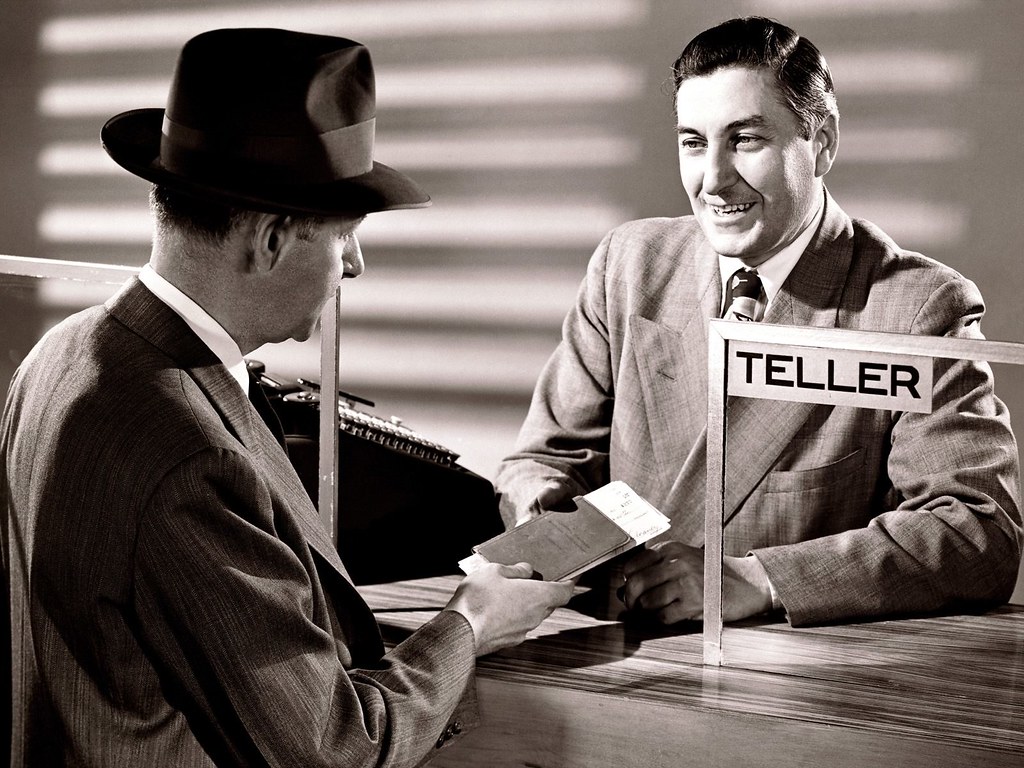
Are we returning to 1950's banking?  Sort of.

A recent article online in Forbes, which can be read without paywall here, illustrates why Bank of America has such a shoddy reputation among the poor.    The Bank has been actively trying to court its existing users who actually have money while at the same time turning away folks who just want to shop cafeteria-style for one banking product, or poor folks who have $22 in their savings account.

Bank of America is profitable again, and they returned to profits by closing down unprofitable branches, fully embracing electronic banking, and embracing their existing customer base.   As I wrote in an earlier posting, in the good old days, the banks paid "bank interest" on savings and then loaned out money at mortgage rates.  The money being loaned out was, by and large, the money being deposited by others.   Banking was a local and community thing.

Maybe that has all changed today.   And many folks today use banking services cafeteria style.  They get a credit card from some place online that offers the lowest rates or the fanciest gimmicks.  They get a mortgage through a mortgage broker.  They get car loans from car dealers offering low rates or even 0% interest.  And they shop for checking and savings accounts based on who has the best services, lowest fees, and highest interest.   And of course, their investments and savings are with some mutual fund company or a financial adviser who operates out of a storefront.

This model of banking makes it very hard for a bank to make money.   Since there are always going to be people online with no overhead who can undercut your rates, you will lose the mortgage and credit card business as well as the car loan business.   All you are left with is grandma and her passbook savings account.   And you ain't making money on grandma.

And we saw this in the now-closed branch here in Brunswick, Georgia.   You would go into the branch and you'd see a line of people cashing paychecks or making tiny deposits and withdrawals from their savings and checking accounts.   The bank makes no money on these customers, and after paying rent and employee salaries, actually loses money.

There are legions of complaints online about how banks screw poor customers with bounce fees and late fees.   In fact there was a joke on SNL, I believe, where the punchline was "give me my $17, bitch!" - which was in fact the balance on their account.   It sounds like a stereotype, but I have read online, "complaint" forums about BoA where some 20-something whines that he overdrew his account and is now being assessed a bounce fee which exceeds the account balance.   Another complainer tried to use his savings account like a checking account, and was charged an excess transaction fee.

Of course, these fees are there for a purpose - to drive away marginal customers.   Banks make no money from someone who deposits a paycheck on Friday and has it all spent by Monday.   The best advice for folks like that is to join a credit union if possible.   But don't expect the credit union to be any friendlier about marginal banking practices.   At the Patent Office Credit Union, back in the day, clerks would line up on Friday to get money orders (at 75 cents apiece!) to pay all their bills.  When I asked why they did this, one teller told me, "We tried giving them checking accounts - they just kept writing checks until they ran out!"   The old joke of "I can't be overdrawn, I still have checks!" is indeed based on real-life experiences.

The problem, of course, is banking discipline, not merely a small paycheck.  As I recounted in another posting, I was in line behind one clerk, who had a beautiful Coach handbag and was looking at a car brochure for the new Coach-edition Camry.   I couldn't figure out how she could afford these things when I could not, making more than twice her salary, when she mentioned she lived with her parents and a number of other relatives.   In other words, she had money to spend, and she was doing a pretty good job of spending it, too.   Financial discipline was just not in the cards.   Having bling was.

And that was me, at age 21, after dropping out of college, bouncing checks at the convenience store and spending every last dime on gasoline, beer, and pot.  I could not understand why the bank was being "mean" to me with bounce fees and whatnot.  It took a long time to figure out that it wasn't the bank that was the problem, it was me.  I had no savings in my savings account.  No financial cushion, no rainy-day fund.   A dollar in my pocket was a dollar spent, and like many poor people, I tried to play a game of leaving as little money in the bank as possible.

And it wasn't as though I couldn't have saved.  Rather, I blew through money on "stuff" instead of saving it.   I mean, when you are trying to make ends meet, do you really need to have exotic fish, or indeed, pets at all?   Why buy a new car when you have one that runs perfectly fine?   I made all of those sorts of mistakes and more.   Of course, back then, we didn't have tattoo parlors and piercing places on every corner - or check-cashing stores and payday loans.   Today's generation has a whole lot more shitty choices to make than I had.   And they say there is no progress!

Today, Bank of America is my new buddy - at least most of the time.   They have been fishing for my business and getting a lot of it - credit card, investment, savings, checking.  Since I have no debts, however, they probably are a little miffed at me for not having a mortgage or car loan.   But rather than fish for new customers - which is an expensive process that requires advertising and promotion - they are trying to harvest bucks from their existing accounts - and doing a pretty good job of it, too.

They have managed to persuade me to move much of my business to their bank, instead of having it spread out across a number of banks (five at one time), mortgage companies (ditto), credit card providers, and so forth.   While I still keep a backup credit card for traveling (if your card is stolen, you are kind of screwed if you are away from home with no way to pay for anything), I have slimmed down my accounts considerably since I started this blog - much to the advantage of BoA.

Saturday, October 14, 2017

Fat-free prunes

Prunes are fat-free, doncha know!  They are also gluten free!  Who knew that fruit has no grease or bread in it!  Learn something new every day, it seems!

One of the craziest things about American culture is how science turns into pseudoscience and is applied to everyday products.  I was noticing this in a small package of prunes, which stated that, among other things, they were good source of fiber (which is true) but that they were also fat-free.

The struck me as kind of an obvious statement.  Fruit generally doesn't have oil or lard in it.   For that matter, prunes are also gluten-free, in that they don't have any bread in them.  I suppose it wouldn't have hurt if they had also advertised them as being not only vegetarian, but vegan as well.  If you are going to state the obvious, you might as well go whole-hog.  No, there is no meat in prunes.  Funny how that works.

I wrote about this before, how the vegetarian aisle at the Wegmans is more like a candy store, with lots of sugary cereals and even outright candy.  A package of Jolly Ranchers was advertised not only is being vegan, but fat-free as well.  Yes 100% sugar has no fat in it.  That doesn't make it health food.

Of course, this plays into the popular misconception that fat makes you fat.  For some reason, Americans are obsessed with the idea that removing the fat from something somehow makes it healthier.  And this is only the case if it is trans fats, which largely been removed from the American diet.  And ironically, many "healthy" foods of bygone days contained trans fats - such as margarine, which as offered as a low-fat alternative to "unhealthy" butter.

You know what?  Cigarettes are also fat-free, vegan, and also a good source of fiber!  If you ate them.  I don't suggest you do.

I ran into this attitude at a restaurant recently.  Our waitress was confiding that she had bought a fat-free fryer to fry her french fries in.  She said this after I declined the side offer of fries and asked for a side salad instead.  She felt that the "evil part" of the french fries was the vegetable oil they were cooked in.  But the reality is the main problem with french fries is that they are 100% starch which is converted in your body to sugar, which in turn goes right to your fat cells, if you overeat and under-exercise.  It is not the oil, but the high amount of calories in fries - calories your body hoards if they are not used.  The fact that they are dripping with canola oil is really secondary.  And of course, the main problem is they give you a pile of them size of your head which really amounts to about 300 to 500 calories worth of potato- enough to serve an entire family.

But she was convinced, that somehow this food stuff could be made healthier if you just remove the oil, when in fact it was the huge amount of calories that was involved that made it unhealthy.

Granted, if you have cholesterol problems, the fat and oils are also an issue.  But "low fat fries" are not the answer to your health problems, the boring side salad is (sans oily dressing, of course).

But marketers and advertisers have seized upon the misinformation of the American public and thus place these labels on products where they are meaningless.  Of course prunes are going to be fat-free, unless you fry them in oil or lard.  Of course Jolly Ranchers are going to be gluten-free, unless you wrap them in a piece of bread.

But moreover, saying something is "free" of an ingredient doesn't necessarily make it healthier.  Fats and oils are not necessarily unhealthy things in your life unless you consume them to excess, much like anything else.  The same is true for glutens.  Very, very few people are actually allergic to gluten but it's become trendy to say something is gluten-free and people love to make a big deal or fuss about ordering something without gluten in it, much as vegetarians and vegans like to have things made special for them just to be a pain in the ass.

Sadly, one of the ingredients in food that really can be unhealthy for you, particularly large quantities, is sugar.  And for a long time, marketers love to use the words "sugar-free" in selling products.  But of course, the way they achieve "sugar-free" was to use some sort of artificial chemical or sweetener in place of the sugar.  And some of these chemicals have been alleged to be dangerous to humans and have been withdrawn from the market.

Other alternative is to just not put sugar in things to begin with.  As I noted my previous posting about Trader Joe's, for some reason they feel obligated to dump sugar and almost all of their products. They make an excellent hot sauce call Green Dragon hot sauce, or I should say it would be an excellent hot sauce if it didn't have cane sugar as its fifth ingredient.  When you have this hot sauce you think yourself, "Gee, this is a good hot sauce, but it's a little too sweet."  Unfortunately it seems like everything in their store is saturating with sugar, which is better than high fructose corn syrup, I suppose, but why not just leave the sugar out and be done with it?

The same is true for most commercially available tomato sauce as you see in the stores.  They are usually laced with sugar and sickly sweet.  Ironically, sometimes the store brands are the ones that don't have sugar in it, such as some of Walmart's store-brand tomato sauces.  And if you look at the calorie count on the back of the bottle, you see that the calories count correspondingly lower as a result.

You wouldn't think about making a plate of spaghetti and meatballs and then dumping a bunch of Jolly Ranchers into it would you?  I mean that would be disgusting and sick.  But for some reason, the people who make canned tomato sauce think that we want candy and all of our Foods.  And even so-called "progressive" retail outlets like Trader Joe's (which is really just a German supermarket chain gussied up for the American Market) seem to feel likewise.

And it's unfortunate, but this use of misleading labels seems to point out exactly how ignorant Americans are.  If people really need to be told that fruit is fat free or that candy is gluten free or that sawdust is sugar free, one wonders about the level of intellect in our country.

But then again this illustrates how easy it is to make money in this country, as most people are so entirely clueless and moreover believe whatever is convenient to them.

Friday, October 13, 2017

The Perfect Storm

Could a number of individual factors combine into a perfect financial storm?  Possibly.

Poor Herbert Hoover.  He has been vilified in the press and in the history books as either causing or aggravating the Great Depression and stock market crash of 1929.  In reality, much of what happened during the Great Depression was already in the process of happening before he took office.  However, his lack of action and some of the actions of the Republican Congress certainly made things worse than they had to be.

History has a way of repeating itself, although never in exactly the same way.  The housing bubble of 1989 was similar to the housing bubble of 2008 but not nearly as large.  There were differences between the two bubbles, the causes of them, the extent, and the resulting devastation.  However there is an underlying pattern in both cases - people started to think that ordinary houses were more than just places to live, but instead as gold mines in their backyards.

Our economy and our stock market and our housing market are all cyclical.  We even have names for this, we call the market a bull market when it is charging ahead and a bear market when it is falling behind - this is a known pattern throughout history.  And usually a bear market follows a bull market in a very predictable pattern.  And until very recently, we've been in a record-setting bull market that is going on since Obama's inauguration.  What always follows a bull market?  Always?

The question is, can this bull market continue forever, or will it retract?  Are we on the cusp of a recession or on the edge of a new, even larger bull market that will allow the economy to take off even faster than it has been?   Some on the Right think the latter - that unfettered by regulations and Obamacare requirements, the economy will take off like a rocket.   Others, such as myself, remember what happened in 2008 when regulations on banks and mortgage lenders were reduced and all hell broke loose.

Sadly, I think we are in for a bear market, and for a number of reasons, not just one single one.  There is not any single reason that will crash the economy in the short-term, nor do I think it will be a significant crash, but rather a small recession as we've had in the past.  However, there are a number of warning signs which are very troubling.

Optimists will point to the low unemployment we currently have, as well as the record prices in the stock market, record prices for homes, and robust home sales.  It would appear that the economy is going well.  Cars are selling well and everyone has a job.  But when you scratch the surface, you start to see some troubling signs of problems.

Consumer debt is at an all-time high, which is to be expected, as in an expanding economy, everything goes up in value over time.  However a lot of this debt is to is for subprime loans, particularly car loans and also for credit cards.  And the default rates are starting to ratchet up, and in  fact, are pretty staggering.  Bill Ford warned about this several years ago, when car makers started offering 7-year loans.  This was longer than most people actually own a car, and forces them to be upside down on their car loan for a longer period of time.  The net result is that people either default on their loans or are locked into a car loan for longer than they want to be and can't trade in and trade up to a newer car.

Or if they do trade in and trade up, they fold in the negative equity into a new loan which puts them either further behind the eight ball.  Eventually, like a person taking out a payday loan, they default and end up in bankruptcy has one loan folds into another loan and eventually they're paying very high interest rates and owe more on their car than they possibly will ever be worth.  This is a well-known pattern and I described before how a friend of mine did just that in the 1990's by going from car to car (which she never changed the oil on) and folded negative equity into higher and higher interest rates loans until she went bankrupt.   She ended up marrying a guy from Saudi Arabia and is probably under a Burkha somewhere today.

Granted, unemployment is it all time record lows, but wages seem to be stubbornly stuck in the past. As a result, these very same people who are taking out these subprime loans don't have the income to service them.  Something has to give, and banks are going to be stuck with an awful lot of bad debt.

But what about the rest of the economy?  What about manufacturing and production?  Well here, we are starting to see signs of trouble, an America's manufacturers are already sounding the alarm.  The Trump Administration was elected on the promise of enacting punishing tariffs against our trading partners in order to protect and promote American industry.  This is the core of Trump's "American First" policy.

We are seeing this already at the International Trade Commission, where the ITC is recommending a 200% to 300% import duty on Canadian build jet airliners.  While arguably it is true that Bombardier is dumping these planes on the US market for below cost, or at least at a very reasonable price, there really is no competing American product that is being harmed by the sales.  Boeing's argument the 737 is competitor for Bombardier's much smaller regional jet is someone specious.

But already, even the threat of these import duties is having the expected effects.  The affected countries, which include not only Canada, but also Ireland and England, are promising retaliatory tariffs or trade actions which could damage the US and even Boeing in particular.  Boeing is one of the largest exporters of American products technology, other than agricultural exports, and stands to lose a lot if our foreign trading partners decide to switch their allegiance to Airbus instead.

Moreover, since Boeing is also heavily into the defense business, sales of Boeing-made fighter jets and other defense products may wither as our trading partners decide to look elsewhere for their defense needs, in retaliation for the trade tariffs.  Trade wars never end well for anyone.

This is a nearly exact mirror of what happened during the Hoover administration after 1929.  In the olden days, Republicans stood for God, Country, and the Tariff.  Tariffs were very prevalent early on in American history as a means of protecting American industry from foreign competition.  In the infant days of our country, American manufacturing companies couldn't compete with cheaply manufactured British and European products, and the import tariff was seen as a way of allowing the nascent American industry to thrive.

But economists have argued that free trade is a much better alternative to restrictive tariffs.  And they argue that restrictive tariffs end up tearing down an economy, not building it up.  If each country has restrictive tariffs on imports, it doesn't necessarily mean that domestic industry will thrive, only that the cost of goods will soar in the economy be stifled.  We see this in Central American countries, which often slap 100% import duties on automobile sales.  If you want to move to Costa Rica to escape Donald Trump and retire on Social Security, you will find it very difficult to bring your car with you or have one imported, as it will cost twice as much as it does here in the United States.  For that reason, you tend to see very small, inexpensive cars in Costa Rica, which often cost more than a Mercedes does in the United States.

And no, there is no car industry in Costa Rica that is being protected or is being promoted by these tariffs, it's just a means of the government to raise revenue.  Trade agreements such as our North American Free Trade Agreement would actually allow the United States to sell automobiles into countries in Latin America, which would mean more profits for US manufacturers, which would then trickle down to shareholders and employees.  However, these at the very same agreements that the Trump Administration is attacking.

The Pacific Trade Agreement is another example of this, which Donald Trump wrongly claims gives China some benefits.  Sadly, many voters also believe this, even though China is not a signatory to the agreement and doesn't have any trade benefit from such an agreement.

The current solar panel cases before the International Trade Commission is another case in point.  A small domestic solar panel manufacturing company is claiming that China is "dumping" inexpensive solar panels on the US market.  They're asking for 200% to 300% import duty on Chinese-made solar panels so they can remain competitive.  However if such a duty were enacted, it would not mean that American manufacture of solar panels would increase, only that people would no longer buy solar panels as they would no longer be cost-effective in terms of returning revenue for the dollar invested. Trump will basically kill off the entire rooftop solar industry in the United States as we know it, as well as a number of large-scale solar projects.

Of course, the Secretary of State is a former Exxon executive, so few tears will be shed when the solar industry dies a quiet death.  If only they can figure out a way to destroy wind turbines - much as Donald Trump is trying to do in Scotland.

The death of the solar industry is probably not enough to tear down the United States economy by itself, but it could be a contributing factor, when you add in the cost of defaulted subprime loans as well as a trade war which would severely limit our ability to export products.

Of course, one of the problems that led to the Great Depression, or at least was an early warning sign of the impending doom, was the mass failure of American farmers in the 1920s.  We tend to think of the Roaring Twenties is a great time where everybody went to speakeasies and shook cocktail shakers full of bootleg gin, while gangsters drove slick cars with whitewall tires and carried machine guns.  It was the era of Flappers and Jazz and modernism.  But at the same time, the Joad family was on the road to California after losing their family farm in the Dust Bowl.  This preceded the great crash of 1929, although many people seem to remember it is happening later on in the 1930s.

We already hearing stories about American farmers struggling with overproduction, particularly of corn. We've become a one or two crop country, growing corn and soybeans and relying on genetically engineered crops and Monsanto Roundup Ready herbicide, which appears to be killing off anything that is not on Monsanto genetically engineered crops, including trees, flowers, and other plants.

While Monsanto's genetically engineered crops are unsuccessful, they're arguably too much so and now the farmers have too much crop and not enough market to satisfy the supply.  If we get involved in a trade war with our foreign trading partners, they may in fact and enact heavy duties and import restrictions on America's largest export, which is crop foods.  Trump's trade war will screw American farmers - and no, the "death tax" abolition will not benefit them at all, as farms are largely exempted from the Gifts and Estate tax already.

But what about manufacturing?  Reports are coming in that manufacturers are expanding at a rapid clip and manufacturing growth is better than ever.  On the other hand, we are hearing that automobile sales are in the toilet and even vaunted pickup and SUV sales are slacking off.  General Motors is now offering 0% financing to move its most popular product - pickup trucks and SUVs.  Ordinarily, these products have sold themselves and it is troubling that manufacturers are resorting to incentives to move their most popular iron off the lot.

Then there are the IPOs and the tech bubble.  We are in an era where we have a lot of tech-that-is-not-tech that is being offered with IPOs for things like delivering food to your house.  People have been delivering food for decades if not hundreds of years, we never thought of it as a technology. However today, since we do it from a cell phone app, we call the company a "Silicon Valley startup" and say it is worth billions of dollars.  However, the number of people who want their food delivered as opposed to going shopping is far overstated.  This and a lot of other tech-that-is-not-tech companies such as Uber (which is just a taxi company that is unlicensed and being hounded out of many of its jurisdictions) may fail in the coming years or at least be severely restricted or diminish in value.  Much of these "tech" stocks are just wildly overvalued with P/E ratios in the hundreds or even thousands.  Eventually some sort of comeuppance is due.

Again, taken by themselves, each one of these factors is not enough to crash the economy.  But if all of them come together at once or at about the same time, it could be a perfect storm of economic malaise.  The underpaid worker who hasn't had his salary increase in over a decade can afford to buy a $999 iPhone, much less call an Uber or have his groceries delivered.  And this job may be on the line if he works for SolarCity or one of the other companies which may be affected by our trade wars, tariffs, or general economic downturn.  This in turn again feeds the downward spiral.

UPDATE:  From a personal perspective, the prospect of spending $14,000 a year on health insurance (thanks to Mr. Trump) makes me reluctant to spend money on things like new trucks or boats or whatever.   The current economic climate and a President who is going to "give us what we deserve" in terms of health care (which sounds more like a threat of punishment than a promise of good) is putting me personally in "hunker down" mode.  I am selling more stock while the market is at all-time highs.

Then there is NAFTA.  If we abolish that, it will disrupt the economy in several ways.  American farmers could find duties as high as 75% on their products exported to Mexico and Canada, and American car makers will have to scramble to find parts to assemble their cars.  Of course, by then, no one will be buying anyway, right?

Oh, shit, this does not bode well!