Thursday, February 22, 2018

Sociopath vrs. Psychopath Drivers

Some drivers are sociopaths, others are psychopaths.   Few are normal people, it seems.

Driving in traffic takes some getting used to.   After you've lived on an island for a decade, where the speed limit is 25-35 and you drive a golf cart, the actions of "normal everyday drivers" in traffic seem, well, somewhat bizarre.  Considering that some 40,000-odd people die in traffic accidents every year - and far more are injured - you'd think people would drive carefully and courteously.  And considering that everyone gets into at least one car accident about every eleven years, you'd think people would learn to drive with caution.   You'd be wrong about that.

People have horrible driving habits, as I have noted before.   They will pass you in traffic, only to "beat" you to a red light that they should have seen, even as they had their foot to the floor.   People will speed up and cut off an 18-wheeler, just to get to an exit ahead of it.   It makes no sense - risking life and limb to save maybe 5-10 seconds of time, and often not even saving that.

It struck me that drivers fall into two categories, Sociopaths and Psychopaths.   Now, granted, these are layman's terms for mental illnesses, which doctors don't often use:
You won’t find the definitions in mental health’s official handbook, the Diagnostic and Statistical Manual of Mental Disorders. Doctors don’t officially diagnose people as psychopaths or sociopaths. They use a different term instead: antisocial personality disorder.
To me, the terms have a specific definition, particularly with regard to driving.   The Sociopath is someone who views other people as objects - the background wallpaper in life.  They have no empathy or feeling for other people, but view them as objects to be used as well as barriers to their goals.

This type of driver views the road as an obstacle course, and the other "cars" (not "people") are in the way.   You know this kind of driver - they talk about the car blocking their path, not the person.   So when they are in traffic, they say, "That Lexus is going too slow in the left lane!" instead of "that old lady in the Lexus is driving too slowly!"

The Sociopath driver, in my mind, is the guy weaving in and out of traffic, as though the other cars were cones in an obstacle course.   He wants to get where he's going!  And all these other cars are merely blocking the way!   This is the guy who passes you on the right - or passes you on the on-ramp, or the shoulder, or whatever.    He weaves from the far left to the far right, crossing many lanes of traffic - without signalling - to get "ahead" of the other traffic.

And an hour later, on the Interstate, you see him again, as he pulls off to get gas and a fast-food meal, and now has to "catch up" again and pass all the same cars.

The Sociopath driver is evil, no doubt, and a danger to himself and others.  The problem is, of course, that he is not as good a driver as he thinks he is, and he takes scary risks just to shave a half-second off his travel time.  He thinks he is in NASCAR, I guess.  He tailgates other cars, weaves dramatically, and cuts off trucks (often slamming on his brakes to make an exit).   To him, these other cars are objects and he doesn't see them as having people inside.   In a way, it is just a video game to him.

The Sociopath needs to get where he is going, but he doesn't recognize that other people have places to go as well, and are just as intent on getting there - because he doesn't recognize the other "cars" as having people in them.   To him, they are just objects in his path - and not people with needs.

While the Sociopath driver is evil and dangerous, the Psychopath driver is even worse.  He doesn't view the other cars around him as "cars" like the Sociopath driver does.   No, no, he definitely sees them as people.  And these are people he needs to punish.   This kind of driver is a sadist - the kind who tortures small animals and maybe eventually becomes a serial killer.   He takes delight in hurting others and inflicting pain.

The Psychopath driver can be fast and reckless like the Sociopath, but he can also be very passive-aggressive.   He will slow down when passing, so as to cause a line of cars to form behind him.   He wants to control other people's actions - make them "slow down" because he's in charge.  Sometimes, he will drag out a passing move on a two-line highway for miles and miles, until a dozen or more cars are behind him, jockeying for position.  He likes that power and control.

When he talks about the other cars on the road, unlike the Sociopath, he identifies the people inside.  He doesn't say "that Lexus is going too slow!" he says, "that dumb blonde is going too slow!" or "that little old lady can't drive worth beans!"   He identifies the other cars as people - people he needs to punish for being bad.

The Psychopath needs to get where he is going, but he doesn't recognize that other people have places to go as well, and are just as intent on getting there.  To him, they are people he must beat in this task - he must "win" at the driving game at all costs, even life and limb.  Unlike the Sociopath who sees other cars as only objects in his way, the Psychopath wants to "win" over the people in those cars.

The Sociopath just wants to get where he is going a few seconds faster - and is willing to risk your life to do it.  The Psychopath wants to cut in front of you and jam on his brakes to "teach you a lesson" or some such nonsense.  The behavior of the two is very distinct and different.   Both are annoying and both lead to traffic problems.

For example, take the merge.  Two lanes go into one, possibly because of construction.  Normal drivers take turns merging - first left, then right.   The Sociopath wants to "cut" to the head of the line to get ahead "of all those cars."   The Psychopath  merges, but then isn't going to let anyone else in because he doesn't want another person to "win" at the "game" of merging.

When you get into heavy traffic, it often is like a super-saturated solution.  You may remember that experiment in Jr. High School chemistry.  The teacher had a glass of sugar water that was a super-saturated solution.  He taps the glass, and like magic, sugar crystals fall out of solution.

Heavy traffic is the same way.  A highway can support a large number of cars traveling at speed.  But all it takes is one brake light to go on, and the whole thing turns into a parking lot in short order.   All it takes is one Psychopath or Sociopath to swerve in and out of lanes trying to "get ahead" or cut someone off, and the whole thing grinds to a halt.

Thousands of people, all trying to get where they are going, and all stopped by one person being selfish and inconsiderate.   And now you know why the Federal Government has been funding self-driving car research since the 1970's.
Wednesday, February 21, 2018

Silicon Valley - Taking Shitty Jobs And Making Them Shittier

Is the dot-com boom of our era creating new jobs or just making old jobs shittier?  And at what point do people say "enough" and walk away from these shitty jobs?

There has been a lot of commentary on the far-Left from magazines such as Mother Jones and the like, that much of what people are calling "disrupting" the economy, through new apps and online services, really amounts to no more than exploitation of the working class for the enrichment of a few at the top.

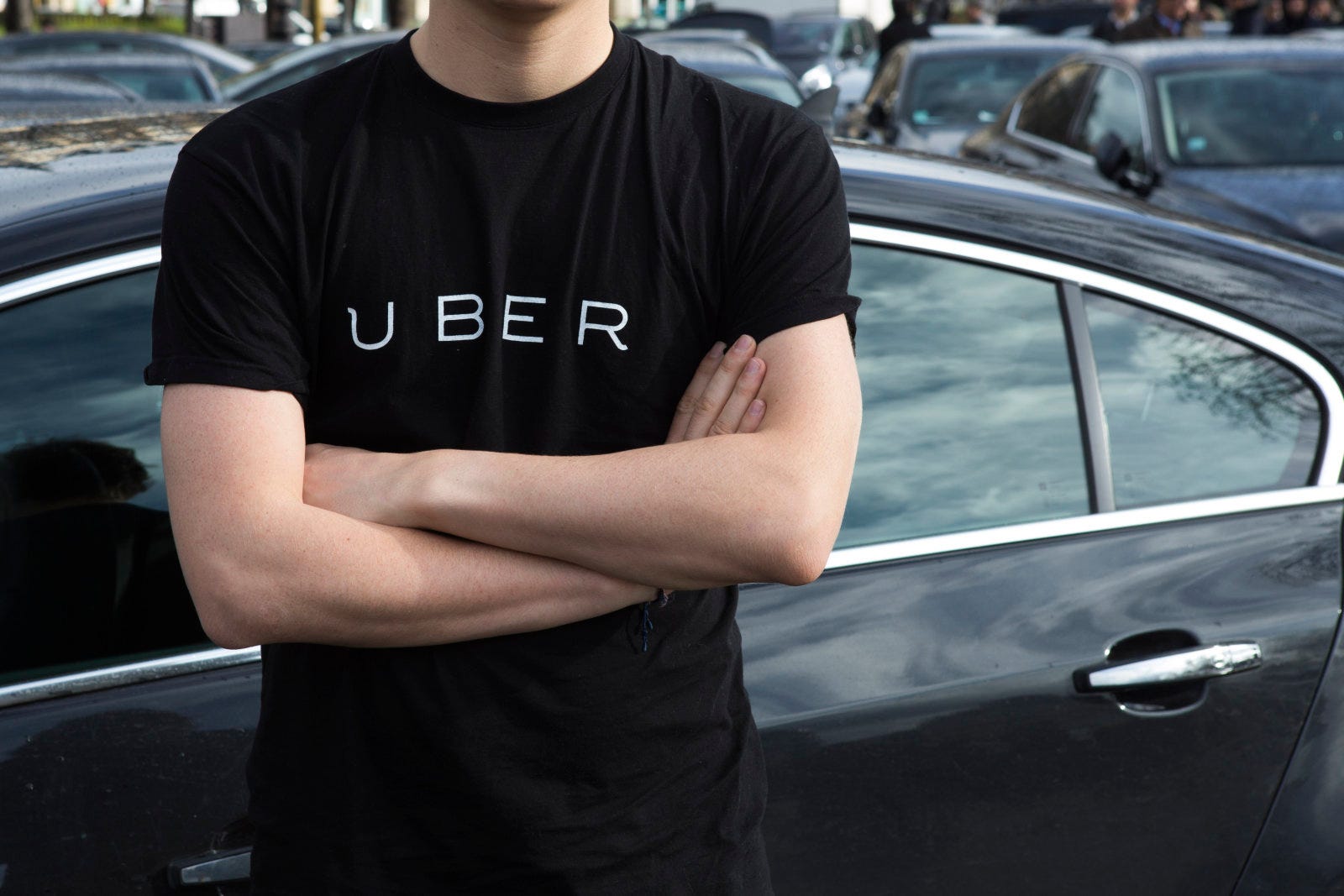
Uber is the classic example.  As I've noted before, it's really nothing more than an unlicensed taxi cab service.  In the past, taxicabs were heavily regulated by the government in terms of the number of licenses granted, the standards they had to adhere to, and the prices they charged.  And these regulations came about because during the early days of the taxicab business - in the early days of the automobile business - competition was cutthroat and passengers were often exploited as well as drivers.  We put an end to that, or so we thought.

Driving a taxi cab has never been seen as glamorous job.  Taxi driving is a shitty job that is mostly filled by recent immigrants, who have little other options in terms of employment.  The system was ready for reform, of course. The taxi cab medallion owners were basically like landlords or plantation owners, owning the means of production, while the poor slob driving the cab merely made an hourly wage.  In some instances the cab driver had to pay the taxicab owner a fee for using the cab and then try to make more money than the fees he was charged - sometimes succeeding, sometimes not.

Uber has "disrupted" this business model by allowing anyone to drive an unlicensed cab - something we saw in the early part of the twentieth century and didn't like.  As a result the medallion owners are finding their investments are now pretty worthless, and traditional taxi cab drivers are finding it harder and harder to find fares.

But doesn't mean that life has gotten better for taxi cab drivers who are now Uber drivers - often it is worse.  Uber drivers don't make a lot of money and often have to take a lot of risk. They have to purchase or lease a vehicle and basically work as a contractor for Uber - which is how Uber avoids a lot of employment and labor laws - or at least tries to.  Instead of paying a medallion owner or a taxi company, drivers now have to pay Uber, and receive little in return other than leads to fares, and maybe umbrella insurance.  At least with the medallion owner, the driver got a cab to drive as part of the deal.  All Uber has done is taken the profits from medallion owners and cab companies and transferred them to their own coffers - and perhaps taken some of the driver's pay as well.  Some disruption.

Think about it, have you ever seen a smiling Uber driver?  Didn't think so.

And many foreign countries are not liking this.   What Uber is doing in country after country is taking away the profits from the local cab driving business and transferring them overseas to silicon valley.  Morocco is the latest country to see this and shut down Uber.   How long before others figure out the same thing?   You allow Uber or Lyft into your country, you are putting your own citizens out of business, so Silicon Valley billionaires can have more billions - making the US richer and your country a little poorer.

What's next?  We get a taste of all their retail sales as well?   Oh, right, Amazon.

What Uber has done is take the shitty job of driving a taxi and made it even shittier.  This really isn't progress except for the people who are running Uber and pulling in millions if not billions of dollars in the deal.  One might argue it's a better deal for the customer - the upper class people who can afford to take taxi rides, or finding it more convenient and cheaper to use Uber than  a taxi.   That is, until they get their "surge pricing" bill.   Right.  We used to have regulations about that, too.

Other companies are following the same pattern - trying to get a taste of every shitty job in America, from pizza delivery to retail.   Amazon, for example, has merely taken retailing and put it online.  As I've noted before they're just a mercantile business selling stuff.  And in the beginning, they didn't have to pay sales tax, which gave them a tremendous advantage over local businesses.  Again, money leaving your jurisdiction and being sucked like a Hoover vacuum cleaner to Silicon Valley.

And the way they sell stuff is by paying people very little money and working them very hard in warehouses stuffing things in the boxes.  Working at Amazon is not a dream job for anyone, unless you are in management or your last name is Bezos.  Again, what Amazon has succeeded doing is taking a shitty job - working in a warehouse - and making it even shittier.

And so on down the line.  This "new economy" amounts to little more than taking old working class jobs and making them even more lower paying with even fewer benefits, so that the people running the companies can make more profits.

Now granted, I am no fan of this leftist talk, Mother Jones magazine, or any of the unions.  However I think the time is now right for unions to strike back - given that unemployment is at an all-time low.  A new generation of young people is coming up and finding that their prospects are very limited, while the prospects for a few people of the generation before, are huge.  And this could be fodder for Union organization and recruitment.

What this means in the long-term is that these companies may end up being unprofitable - or may never earn a profit to begin with.   Uber apparently has yet to make dollar one, and Amazon has only recently become profitable.   They suck all the air out of the room and don't even make a profit.  Well, at least on paper, anyway.  The principals of the company are pulling in huge salaries in the interim. But I would think twice before investing in an Uber IPO.

As the labor market gets tighter and tighter, you'll see fewer and fewer people resorting to jobs like Uber.  During the recession, we saw adults taking jobs in malls and delivering pizzas - a whole generation of high school kids never had an after-school job, as their parents' took them.  Today, we are seeing kids stocking the shelves at Wal-Mart, clearly on a work permit, as they can't be over 16.  Help wanted signs are everywhere.

At the toll booth in Florida, a plea to apply for a job as a toll-taker.  Billboards by the highway, advertising jobs.  A lot has changed in our economy since 2009!  And this tight labor market is going to change things for these "dot com" companies that have relied upon a generation of desperate people who will take any job, no matter how low the pay, and put up with many levels of abuse. Higher wages means even smaller profit margins for these companies - companies that are often not making money as it is!

This could, in fact, "disrupt" the plans of a lot of these Silicon Valley billionaires.   Pardon me if I don't shed a tear!

Monday, February 19, 2018

Unaffordable Housing?

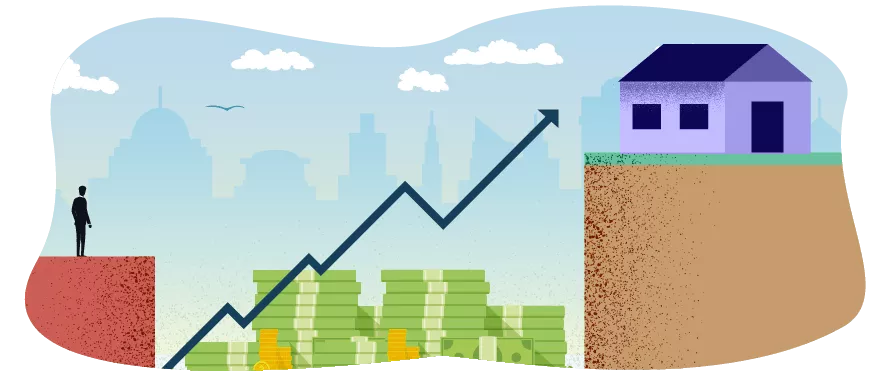
Is there really such a thing as unaffordable housing? Not for very long.

Back in the 2000s, as I have noted, time and time again, we bought two condominiums here in South Florida.  We were alarmed as the prices kept ratcheting upward - sometimes 20% to 30% a year.   As much as we enjoyed this phantom "equity",  the rapid rise made us uneasy.  We'd lived through real estate bubbles before, and this had all the makings of one.  And we were right.

Every evening we would drive down route A1A and enjoy looking at all the fancy houses and also all that fancy new high-rises going up along the water.  It seemed like hundreds and thousands of new condominiums were being built, just within a few square miles.  And all of them would be topped out and finished off at about the same time, too.  Who would buy all these condos?

(Fast-forward 10 years and we are back in Ft. Lauderdale, and this time it is all new luxury apartments under construction - all set to top out within the next few months to a year.  Who will rent all this luxury apartment space?)

The inevitable happened around 2007.  All those condos were finished, with not enough people to buy them - and the real estate market crashed.  It is a cycle that Florida has been through many, many times, and is still going through today.

According to a recent article, a builder is warning the same thing may happen again soon, only this time with regard to luxury apartments.  And actually, if you google this, you will see articles from as far back as 2015 warning of over-construction in the luxury apartment sector.   Since the real estate crash of 2008, Builders have been adding more and more apartments as fewer and fewer people want to buy, and more and more older people are less interested in owning.

Many of these luxury apartments are second homes for very wealthy people, or even sometimes a third home - they're only seasonally occupied.  Others are downsized homes for empty nesters  whose children have left the house.  They no longer want to deal with the joys of homeownership and just want to a turn-key place they can go, and pay a monthly fee.

At the other end of the spectrum, poor people are having a harder and harder time finding decently priced places to live, particularly in very hot real estate markets such as the San Francisco Bay Area, Washington DC, and the like.

Many are spending more than 50% of their income on the housing alone, which puts them in the category of being financially stressed.   The question remains why are there not more lower income housing units for lower-income people?  The answer is complex, and it has a lot to do with the inefficiencies of the free-market, which often becomes a race to the bottom.   In this case, it is the builders racing to build a product that is the most profitable to them, but unafforable to most.  It is like the carmakers building $70,000 pickup trucks and $100,000 SUVs - and not being able to keep them in stock.  Meanwhile, no one wants to make a simple, inexpensive sedan anymore - no profit in that!

I mentioned before that there's really no such thing as unaffordable housing.  A house or apartment is placed on the market either for sale or rent and then is rented or sold for the highest possible price the market will bear.  Few, if any houses or apartments sit empty - for very long.   If people stop paying higher prices, the market corrects itself and prices go down.  This pattern has been established again, and again - and again - over the years.  But it does take time for these corrections to occur - and in the interim, people can get hurt as a result.

This is not to say that housing prices are ever cheap or that affordability is tracked in real-time. Rather, there's often a delay or hysteresis in the system as prices get ahead of the market and then inevitably crash and prices go below the market - at which point nobody can afford to buy because they're broke.

I mentioned this before in a posting about depressed real estate prices in Cape Coral, Florida right after the crash.  We drove down there after seeing houses selling for under $100,000 - houses that have been on the market for over $400,000 just months earlier.  By the time we got there wily investors had snapped up most of the prime real estate stock.  At that point in time, that's who could afford to buy these properties.  The poor people who really could have used those houses were financially stressed from the recession, likely having lost their jobs or maybe their life savings in some real estate scheme during the bubble.

Of course there are other factors besides supply-and-demand in the real estate market - or at least some people believe.  In many real estate markets, geography constrains expansion of the marketplace.  Areas such as Vancouver or San Francisco are bounded by water and it's difficult to expand beyond those boundaries.  Prices go up and poor people forced to pay an exorbitant amount of money for rent or have to commute enormous distances across bridges to get to their jobs.

Of course, there are other alternatives.  As I noted before, many of my semiconductor clients moved their offices to lower-cost areas such as Boulder, Colorado or Austin, Texas - which quickly became higher-cost areas as more more companies moved there.  Amazon is doing the same thing by locating a "second headquarters" in a lower-cost community, and it sounds like Apple may follow suit.

The high cost of living affects not only employees but employers as well.  And as the cost of living rises, employees are more likely to seek other job opportunities where pay is higher in order to better support themselves.  This is the reason I left the Patent Office to work for a law firm -  so we could buy a house in the expensive Washington, DC area.   My salary at the Patent Office was was not going to support our dreams of home ownership.

Although it may take some time, the same thing will happen in these hot real estate markets today. Employees will try to find higher-paying jobs or go on strike for more wages in order to pay for the higher cost of living. Companies will realize that the cost of living is too high and thus they have to pay their employees more. That, in turn will incentivize them to move some or all of their businesses to lower-cost areas in the country.  Eventually, a new equilibrium will be reached - which has happened before in the Bay area, many times, when real estate boomed - and then went bust.

Before he moved to Washington DC, Mark lived here Boca Raton, Florida which was in the process of recovering from a real estate crash prior to the 1989 crash.  Many developers overbuilt the area with luxury condominiums for which there were not enough buyers.  He, and students like him, could rent these condominiums very inexpensively for use as dormitories while they were in college.  And they could rent them inexpensively as the builder went bankrupt and a new owner took over - an owner with a much lower cost-basis who could rent for less and still make money.

A builder, developer, or landlord might argue that the high cost of these units would prevent them from renting at low prices, but then bankruptcy enters into the scene.   We saw this same pattern in the Washington DC office real estate market in the 1990s, where too many new office buildings went up at once.   Once these white elephants went up un-rented, they often ended up in bankruptcy court. Some new landlord takes over and rents them out for a few dollars less, and since he has a lower cost basis and overhead, he can do so at a profit.

Pretty soon, his building is full of new tenants whose more expensive leases expired in other buildings.  Those buildings are now un-rented and they go bankrupt - and the process repeats, with these office buildings toppling like dominoes in bankruptcy court, one by one.

And I think that's what we'll see in this "luxury apartment" market.  When you have a major luxury apartment developer warning that people are over-building, then trouble lies ahead.  One or more of these apartment developments will end up in bankruptcy as the units end up un-rented.  Since the landlord can't pay the notes on these places, they will have to reorganize in bankruptcy court.  A bunch of the debt will be wiped out as a result, and the cost basis of the new owner will be lower, allowing them to lower rents to attract tenants.  This doesn't mean that Section 8 tenants will be moving into the luxury high-rises, only that this will depress rents all across the market.

Again, as we saw in the Washington DC office real estate market, this has a domino effect.  Thus, while housing seems unaffordable today, this could change dramatically in the coming months and years.  Eventually they will reach a point where people will stop paying and this will, in turn, drive down prices.  And the change could be sudden and dramatic, as we saw in 2008.  And it could be very soon, too.

This is not to say that housing will become cheap or even free.  People don't like to spend a lot of money on housing, and it usually takes up at least one-third of your budget, if not more, even in a "normal" market.  What people complain about is they would like to have more and nicer housing than they can afford and have more money to spend on bling.  And this is where I have a disagreement with the "affordable housing" people.

As I noted before, I pissed off a "housing advocate" in Key West once, as he argued that homeless people should be allowed to have homes on that resort island.  I pointed out that since they weren't even working there, why would they need to have housing on a resort island?  They could live further up the Keys or even on the mainland.  But in his mind, beggars could indeed be choosers, and if you wanted to be homeless, you should have your choice of where to be homeless, including in a resort area.

Meanwhile the poor bartender or waitress, who's doing 60 hours a week trying to make ends meet, has to commute two hours from up the Keys in order to go to their job.  They made the logical choice to go where housing was more affordable.  The working class gets punished here.

And those really are the only choices you have, when the housing market goes bananas and gets crazy expensive.  You can argue for political changes, but they're not likely to be forthcoming, particularly in the current political environment.  Or you can find someplace cheaper to live - or find a job that pays better money.   And in my life, I've been forced to do both of the latter, as there is no "middle-class housing advocate" with a 503(c) organization lobbying on my behalf.

A better approach, I think, is to realize that if you're living in an area with a high cost of living, to remember that you came there for a reason - most likely a job.  Earn your money, and bank as  much of it as possible - and spend as little as possible on housing even if that means getting a roommate or living in an apartment or a smaller place or a place less desirable than what you think your are "entitled" to.

Chances are, you may end up moving away in a few years, anyway.  If the market is that overheated, it may correct itself soon, and you may end up "upside down" on a house for many years - and stuck.  And I say this from experience, having bought at the height of the 1989 bubble - and then bought many more properties after it all went bust, in 1994.  If the market is overheated, don't be in a rush to buy.   It is like buying Bitcoin or gold after it has gone up in value - thinking that the boat is leaving the dock and you'd better get on board, only to later find out the boat was sinking.

When the time comes, you can move away to an area where housing costs are far less and live more comfortably.  The big mistake, I think, is to try to buy up to your salary level and spend a huge amount of the money that you earn on something that could fluctuate in value greatly, particularly in these bubble areas.

Because when it comes right down to it, housing is a commodity like any other - and it is subject to the same laws of supply and demand.  And when people try to tell you otherwise - that gold or bitcoin or houses, or tech stocks are "different" and don't conform to normal economic theories - that's a sure sign you are in the middle of a bubble that is about to burst, and burst bad.

And I think we are headed for yet another real estate meltdown, within the next couple of years.   And a lot of housing that today is "unaffordable" will drop in prices dramatically.  Don't take my word for it - ask the guy who is building these darn things!

UPDATE:  Bubbles eventually burst and equilibrium returns.  It cannot be denied forever.  The key is to not give in and buy at the height of the bubble due to "fear of missing out".  Same is true for most things, in fact.

Sunday, February 18, 2018

Cats Are Stupid, Dogs Are Worse.

Why would a cat choose a feral life over being domesticated?  Why would a dog run until it was lost?  Maybe these instincts can tell us something about human nature.

While traveling by RV, we often run into feral or semi-feral animals at campgrounds.  In some cases, people "dump" unwanted cats and kittens or dogs and puppies at campgrounds, thinking that people will feed them (and we do, sadly) and thus they will have some sort of life.  But of course, as animals that have been domesticated for millennia, they are not well-suited for the feral life.  The expected lifespan of a feral cat or stray dog can be measured in a few years or even months.  On the other hand, a domesticated cat or dog can live as a pet for well over a decade, sometimes even two.

So why would a cat choose a feral life over sublime domestication?   Because they are dumb as stones.   We were in Vermont last summer and around midnight, heard a cat meow outside our camper.  I went outside to see a perfect tiger cat, sitting outside the camper, waiting for dinner.  He is pictured above.  So I brought it a paper plate with some shredded ham, along with a saucer full of cream.  He ate like he hadn't eaten in weeks.   He was a well-groomed cat, but a little slovenly at the edges from living in the wild.  He purred and rubbed against my legs.  I was able to pick him up - a sure sign he was someone's pet at one time - and he purred as a I rubbed his belly.  Feral cats do not like being handled, as they were not handled as kittens.

I left the camper door open and he came right in, jumped up on the bed, and curled up with Mr. See.  Mark woke up and was somewhat surprised to see this purring tiger cuddling with him.  "Who is this cat?" he asked.  "I've decided to call him 'Hero' - since we are near North Hero, Vermont!"

I went to close the door and "Hero" jumped up and ran through the gap.  Free food and cream and cuddling was fine and all, but he wasn't about to be domesticated.   I speculated that he was someone's pet - someone who foolishly decided to take their cat camping.  Cats generally don't like traveling in cars, and often will run from a car as soon as you open the door.  I suspect "Hero" escaped from someone's car at the campground and ran as fast as he could.  The owners called for him for days, and then finally had to go home.  The same thing happened to my sister, traveling from Boston to Colorado in her Volvo in 1973.  She let the cat out at a rest stop and it ran as fast as it could.  Five hours later, no cat, and they had to leave.  Another feral cat living at a rest stop.

The problem for "Hero" was that he hated cars so much that he did not want to be trapped in an RV or car.   So he would never allow himself to be adopted by some other camper - such as ourselves.  We realized, after three days with "Hero" visiting our camper for more food and ham, that he would never come home with us.   He would choose the feral life over domestication.

And what we were offering him, of course, was a chance to live in a comfortable house, have regular shots and inoculations, medicine and health care, all the food and drink he could stand, and someone to scoop his shit out of a box twice a day.  Oh, and he could expect a life expectancy well into his teens - maybe his early 20's as two of our cats achieved.  The more I thought about it, the more I thought it was a pretty raw deal for the humans involved.

But "Hero" would have none of it.  The feral life was for him!  He didn't appreciate what a coming Vermont winter would bring.

We are in Florida now, and the first night at the KOA, a small cat comes out from under a neighboring RV, curling around our legs and begging for food.  I give her cream, which she loves, and some ham and cheese - but apparently she's keeping kosher, or perhaps vegan.  I name her "Hollywood" since we are near there.   Once again, the same pattern emerges.  Clearly an abandoned pet who likes being handled, she still is too skittish to be adopted by humans.


Free cream - and freedom.  What's not to like?

And why should she?  Living in an RV park means a never-ending supply of patsies who will take pity on her and give her free meals and an occasional pat on the head.  All she has to do is mew and purr and rub against a leg - and voila!  Free meal!  Why be domesticated when being "free" is so much better?    But of course, a cat isn't making that mental calculation - or is she?

Maybe after being abandoned once, she doesn't want to risk abandonment a second time?  Or maybe it is just more fun to live under a trailer in temperate Florida, than to be confined to a house and one family?  Or maybe cats are just too stupid to grasp a good thing when they see it.

Dogs are not much smarter.   Dogs often will run away or get lost from their owners, and often can't find their way back home.  Despite the stories and movies you've read about dogs traveling thousands of miles to be reunited with their owners, the reality is, most dogs get "lost" only a few blocks from their homes.  Despite their reputation as tracking hounds, most dogs don't have enough common sense to come in out of the rain.  When let out of the confines of their back yards, many will just wander off in random directions, chasing an occasional squirrel or cat or whatever, until they realize they are tired, hungry, and thirsty, and their owners are nowhere to be seen.

And it is sad.  They end up in the pound or shelter, and the odds of them being reunited with their owners is maybe 50/50 at best.   Dogs have a good thing going - getting three squares a day and all the shoes they can chew - and yet they blow it the first chance they can dig a hole under the fence, by getting lost and never finding their way back.

(Our first dog, Maggie, a lab/chow mix, would have run off chasing a squirrel and gotten lost at the first opportunity.  And indeed, in Nova Scotia, we nearly lost her when we let her off the leash and she chased after a deer.  Ginger, our greyhound, on the other hand, knew a good thing when she saw it, and rarely ventured more than 20 feet from our sides.  Greyhounds are sometimes smarter than even humans.)

So what does this have to do with anything?   Well, humans aren't much smarter than cats or dogs.  Many humans, given the chance, would rather live under a bridge, provided they can have all the cheap beer and drugs they can consume.  And with a few hours of panhandling, they can often finance this lifestyle.  Or maybe a few hours spent stripping the copper coils off your air conditioner will suffice.  People will revert to a feral state if allowed to do so.  The veneer of civilization is indeed, very thin.

When we were living in South Florida, we used to drive our boat down various canals.  One went under a bridge under Route 1.  Some homeless guys were living there in a primitive camp made of found furniture, some broken-down tents, and whatnot.  They would ask us for beers when we drove by in our boat, and we would throw them a few cans - which they were adept at catching!   They had a lifestyle there that was, in some respects, envious.   Their life expectancy, of course, was severely shortened.  But they didn't have to be domesticated.

And this is the problem for people who actually have to deal with the homeless, as opposed to self-appointed "homeless advocates."  The latter would argue that the cure for homelessness is a firehose of money, preferably directed at their non-profit organization.    But of course, these "solutions" to the problem of homelessness - which is a problem of mental illness as well as drug use - fail to address the underlying causes.

Not every cat wants a warm lap to sit on, or a warm fireplace to curl up next to and nap - not when living on the street can be not only comfortable, but leave you with a sense of freedom and lack of obligation to anyone.   And while dogs are more like pack animals - and want to bond with humans more than cats do - they will wander off their leash at the first opportunity and end up lost.   They just aren't that smart.

And often, we humans are just as dumb.

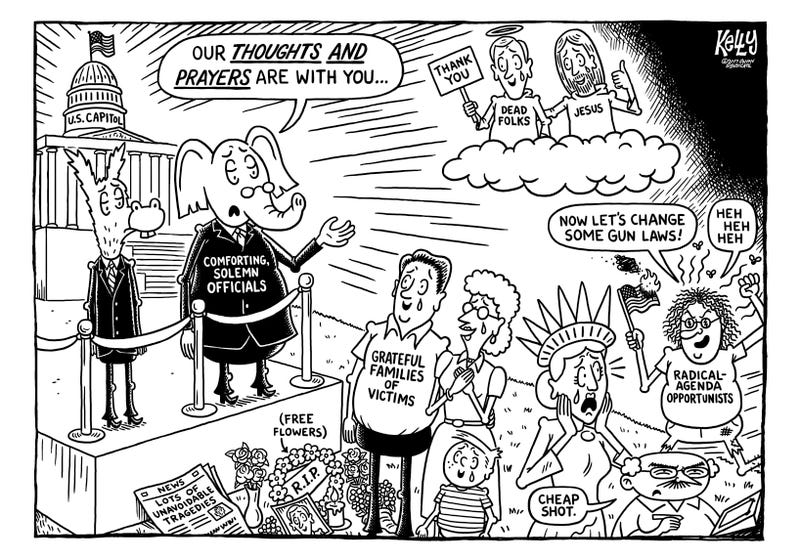
Thoughts and Prayers Aren't Working...


We need to try something new....

Another day, another mass-shooting in America.  A deranged young man with access to guns.   And in most cases, these people who collect arsenals of guns and who are obsessed with guns are batshit crazy.   We can't stop selling guns to crazy people because they are the best customers!  It's time we realized that "gun nuts" are nuts, period, and this will never stop unless we change something.

But you know the routine.   Or you should by now.  Barely two months into 2018, there have been 18 school shootings alone, or about three a week.   And in each case, the same old process is played out.  The press reports breathlessly about the shooter (glamorizing him in the eyes of other potential school shooters).   The GOP and NRA give "thoughts and prayers" to victims and their families and castigate anyone for talking about gun control "at a time like this!"

The press continues to glamorize the shooter, with article after article about what was going through his mind, an intimate detailed biography of every incident in his life, and of course, weeping parents who say they "never saw this coming!" and they are the real victims here (if they weren't shot first, that is).

A week goes by and we see the "who were the victims?" articles, but we never click on these, do we?  Maybe a week later, a tearful article about some victim who had high hopes to be accepted at college or had a football scholarship all lined up.   We rarely click on those as well.

Meanwhile the memorial is set up, with flowers and teddy bears and cards and flags - as if this will somehow make it right.  The authorities later on remove the mounds of decaying flowers and mildewed stuffed animals with a front-end loader.

And... it's back to business as usual.  More guns sold to mentally ill people, using a background check system intentionally hobbled by the NRA -  and organization that has fought to allow convicted criminals and mentally ill people to be able to obtain firearms.

How can you tell if someone is mentally ill and trying to buy a gun?   It isn't that hard - check their closet for an arsenal of weapons.   Mentally healthy people don't have a need to hoard guns.   And I am not talking about gun collectors with a carefully curated collection of antique firearms in glass cases.  I am talking about the 20-something dude with guns leaning up against the wall of his closet, or arranged on the bed for a snapchat photo.  You know exactly what I am talking about - and those who claim not to, are lying.

So, nothing will get done, other than more "free flowers."

And it will continue to be this way, so long as people vote Republican.

By the way, in the 240 year history of this country, was there ever a time when politicians of either party "took away our guns?"