Friday, January 16, 2009

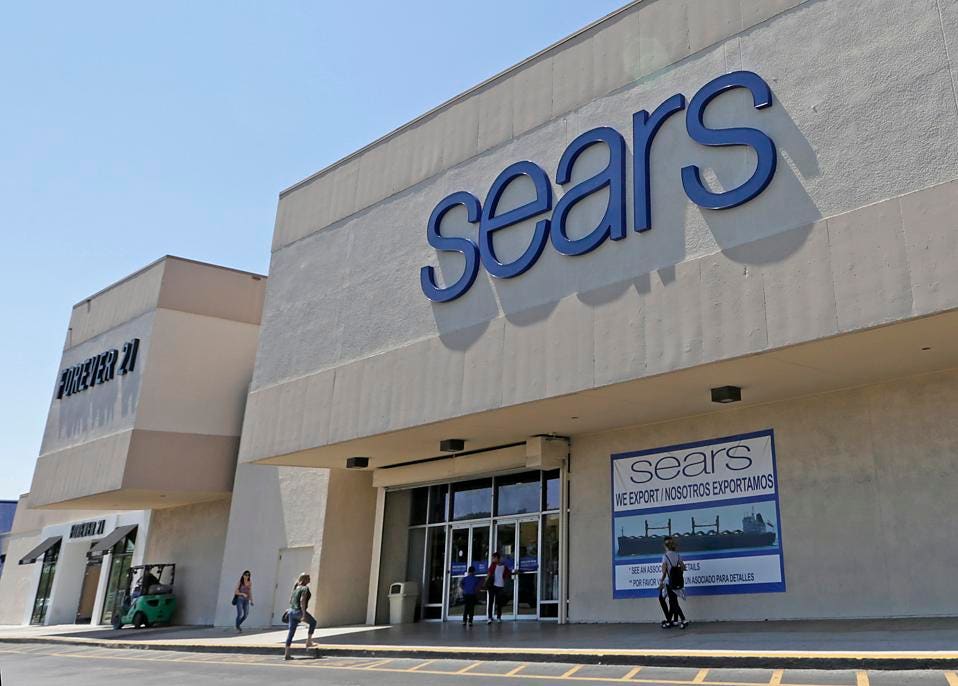
The DEATH of Retail

Sears Must Think We're Stupid Or Gullible. Here's Why.
Traditional retail is dead and not coming back - at least not in its current form.

Circuit City is liquidating, finally. Linens 'n Things is no more. Retailers are complaining that the market is "down" and look forward to an uptick in sales in the future.

I hate to break it to them, but this shift in retail sales will likely be a permanent thing. Our population is aging, and spending less. The Internet makes price shopping a snap (or a click, anyway). Big-box discount retailers like Wal-Mart and the shopping clubs offer big-ticket items at small-ticket prices. Why go to a Consumer Electronics Store when you can buy the same stuff for cheaper at Wal-Mart?

Electronics, in particular, is one area where prices have changed permanently. We should have seen this when the CD came out - and put audiophile quality sound in the hands of everyman. Suddenly, overnight, analog vinyl recordings become passe and quaint. (Note to so-called audiophiles: Please don't try to convince me that scratches, pops, and static sound better than digital sound, because it just ain't so!).

The downfall of Circuit City is one area where people just don't get it. Folks blame the management for dropping major home appliances, or getting rid of sales commissions or expensive salesmen. These were not the CAUSE of the demise of Circuit City, but merely a symptom of the problems in the overall consumer electronics market. The salesman's commission model, with the "hard sell" of financing and extended warranties just didn't work in an era when you could buy the same (or similar) goods for HALF PRICE at a discounter across the street.

One fellow commented about the former President of Circuit City:
"The people he fired happened to be the ones who knew what they were talking about when it came to electronics and those sales people went to work for the competition, taking their customers with them."
I think that comment misses the mark, completely. What killed off Circuit City was the changing nature of consumer electronics. The electronics sector is changing. He had to fire the highest paid people just to stay alive. Why should I go to Circuit City or any other "big box" store and talk to a "salesman" about an electronics purchase, when I can go to Wal-Mart, Sam's Club, Price Club, or the like and just put these things in my cart and check out? Or buy them on the Internet for cheap?

(Wal-Mart's secret weapon, of course, is that it also sells groceries.   People still grocery shop, and will often "pick up" other items while they are there.  Wal-Mart has created a compelling reason to go to the store, so while you are there, they hope you impulse-purchase a new wall-screen television).

A 42" flat-screen teevee is now $600 to $800. This is not a 'big ticket' purchase that requires financing, extended warranty, or a "salesman" to "help you choose the right one!"

Circuit City made money by marking up electronics and selling add-ons like financing and extended warranties. When prices fall, these add-ons are no longer necessary.

Car Stereo is another area where the game has changed. Most cars come standard with 8 or 12 speaker stereos, so who needs an aftermarket one? And am I going to let the teenagers at Circuit City cut into the wiring harness of my BMW to install one? I think not. That whole market has shrunk.

Consumer electronics are now CHEAP and DISPOSABLE. Digital processing means that consumer-grade electronics are now on a near-par with what used to be considered "audiophile" electronics.

As for appliances, the big-box lumberterias have this nailed down. Circuit City could not go head-to-head with Lowes or Home Depot, which don't have to pay sales commissions.

The Circuit City model was completely wrong for this market. Electronics are a commodity now - like a bushel of beans. You sell them for as cheaply as possible and in mass quantities. The idea of going to a dimly lit store and spending hours selecting components with a salesperson is outmoded.

Maybe in 1975, we'd go into the "high end" stereo room (with sliding glass doors, natch) in hush awe at the "audiophile" speakers and receivers. But no more.

In addition, an aging population doesn't really care about those sort of things anymore. Heck, half of them are deaf from Rolling Stones concerts.

Yes, the sales people were fired. They probably took jobs at lower pay with other stores. But did customers "follow" them? Do I remember the name of the sales person I last bought a piece of electronics from? I think it was the Internet....

The so-called "downturn" in Retailing is not a momentary pause, but a permanent change in how we do business. When I want to purchase anything these days, I first check the Internet for pricing, and then locally for availability. Much of what I need can be ordered online for less than in a local store. So why would any rational person buy at a store?

The idea that the store provides "service" is ludicrous.  Electronics, when they fail, are disposed of. Product returns on the Internet are as easy as at a store.  So there is no advantage to buying at a store - and you pay more.

Traditional Brick & Mortar Retail is DEAD, and companies will have to remake themselves to compete.

The last thing I bought at Circuit City was an iPod, and that was after ordering it online and picking it up at the store. Before that, the last thing I bought at Circuit City was a $99 TeeVee in 1987. The experience was so unpleasant, I never went back (bait & switch, pressure to sell extended warranties, etc. BTW, the TeeVee still works, no extended warranty needed. But it is analog, so in the trash it goes.  Electronics are DISPOSABLE, folks!).

Circuit City is just the start.  Other consumer electronics retailers will feel the heat next.  Best Buy is another unpleasant, overpriced buying experience that no one really needs.  Maybe the selection is greater, but do I really need to choose from 50 different TeeVees? Just offer six or so, and lower the prices.

My next purchase will probably be a flat-panel TV.  But I'll probably buy it online or at a discount store (Wal-Mart), rather than a dedicated consumer electronics store.   Why spend tons of money on a "high-end" screen, when they are basically a disposable commodity?  It would be like paying extra for a "gourmet" Big Mac.

While Bed, Bath & Beyond may be relaxing now that their largest competitor, Linens 'N Things is bankrupt, I would caution them not to get too cocky. They already know that for many major ticket items, shoppers can buy online or at a big-box store. The last major purchase I made at Bed, Bath was a KitchenAid mixer. They didn't have it in stock, so the clerk went online and ordered it for me and had it shipped to my home.

Gee, ordering appliances on the Internet. What do I need the store for?

Not surprisingly, Bed. Bath, & Beyond has crowded their aisles with junky trinkets and impulse purchase items. Finding actual kitchen ware or bedding supplies is getting harder to do with the store stocking more gadgets and less real products. They are losing sales on hard items with small margins, so they are shifting to a Spencer Gifts model. At this rate, there won't be a kitchen knife or sheet left in the place in five years. Bed, Bath, & Beyond will be heading for the Great Beyond in no time.

My local town has miles and miles of retail space built in the last 10 years. Most of these storefronts are empty. What is it we need to buy so desperately? Companies are realizing that you can sell more effectively and efficiently on-line than through a "store". Need a cell phone? Go online and they'll mail you one. Why do you need to visit a "store" to do this?

Worse yet, when many folks visit local stores, they do so only to shop or look at products that they later buy online. Since the local stores are all anonymous chains run by faceless corporations, no one feels any guilt about using them merely to demonstrate products later purchased elsewhere.

Personal Services like barbers and the like will always require some storefront (but perhaps not - a mobile barber van could come to your home, no?). But the amount of retail space we have in this country far exceeds demand.

The retail market has changed and I think changed for good. Using traditional retail marketing strategies simply won't work any more. Relying on 100% impulse buying is not the answer either, I'm afraid. How the new retail works in the Internet era will be interesting to see.

Look for more store closings near you!

Saturday, January 10, 2009

Understanding Health Insurance

The Health Insurance system in America is a mess, no doubt about that. But the reasons why Health Insurance is so screwed up is not the reasons you may think. Everyone wants to blame "greedy health insurance companies" or "greedy doctors" or "greedy malpractice attorneys" but no one thinks about the other player in this game - greedy patients.

Patients, unfortunately, bitch and gripe about how high their premiums are, or how unobtainable coverage is, while at the same time moaning and groaning about how their insurance didn't cover their last bottle of aspirin. In order to understand the entire picture, you have to understand where each player has fallen down here - and that includes patients.

Patient - heal thyself!

To understand what went wrong with Health Insurance, we must first understand what insurance is, and then how, when applied to medical treatment, often works at cross-purposes.

1. What is Insurance? To many people, this sounds like a dumb question. And yet, most people in America today have a fundamental misunderstanding about what insurance is, or how it is supposed to work.

Traditionally, insurance was a technique whereby people would pool risk, in order to spread risk out among a large number of people, so that no one person is adversely impacted by catastrophic events

So, for example, in the old days, you bought a "fire" policy for your home, along with a large number of other folks. The odds of your home burning down were very slim, so the premiums were pretty small. If your home burned down, the premiums from all the people whose homes didn't burn down would pay for replacing your house

It was a great idea, and for the most part, it was a system that worked. Actuaries could calculate with extreme precision what the odds of your house burning down were, and then calculate an exact and fair premium, with a reasonable profit for the company built in. Unless everyone's house burned down, there was no risk that the insurance company would go broke.

Somewhere along the way, however, the insurance companies got lost. To begin with, in an effort to generate more business, many insurance companies started offering increased coverage. Instead of just "catastrophic" coverage, homeowners were now covered for such mundane things as a broken window, which formerly would have been paid for out-of-pocket. As a result, the number of small claims increased, and the insurance companies had to hire an army of adjusters and clerks to manage such claims (and prevent fraud). Homeowners became more adept at filing claims and less adept at repairing their homes. The idea of insurance as being more of a "cradle-to-grave" coverage took root.

This illustrates the first problem with traditional insurance: People became too used to insurance covering every little thing, instead of just catastrophic losses.

And as people started building homes in flood plains, hurricane zones, and the like, the number of claims shot up. In some regions, this meant that insurance coverage was nearly impossible to obtain. So State-mandated plans were enacted, along with Federal flood insurance, to allow homeowners to build homes in places that they perhaps shouldn't. Beach homes, which were formerly throwaway shacks meant for occasional summer use, became waterfront estates, all insured with government regulated flood and wind policies - at considerable cost.

This illustrates the second problem with traditional insurance: the risk was no longer being spread.

Hurricane insurance in Florida, for example, is so expensive that many homeowners can barely afford it. For many a homeowner, doing home repairs is a foolish waste of money. If your roof is 20 years old and needs replacing, the last thing you want to do is repair it yourself with your own money. Rather, it makes much more sense to wait for the next hurricane to blow the roof off, and then have the insurance company pay for the repairs.

Insurance in Florida is no longer a matter of spreading risk out among a large number of people, but instead, spreading risk for individuals out over a period of time. You may pay $5000 a year in homeowner's insurance, but over time, you end up collecting about the same amount in claims, as the odds of a hurricane hitting or damaging your home are about even. In Florida, it is not a matter if IF you will get hit, but WHEN.

So your homeowner's policy becomes less of a catastrophic coverage vehicle, and more of a home repair piggy bank that you pay into over time, and then cash out of whenever there is storm damage.

As a result, insurance is now "expensive" for individuals. But considering that most people get out, in terms of claims, a substantial portion of what they pay in, it is really not as costly as one might assume.

The problem with this "everybody gets paid" approach to insurance is that the overhead costs can be quite high. If a homeowner wants to put a new roof on his house, he is motivated to find the best bargain possible. If the insurance company is paying for the roof, the homeowner doesn't care how much it costs. Throw in the overhead of claims adjusters and forms and processing, and a $15,000 roof can easily cost $30,000. So while the homeowner is getting a "free roof" out of the deal, the overall cost to society is much higher than it should be.

2. How does this apply to Health Insurance? Well, OK, there are problems in the homeowner's insurance market, you say. But how does this apply to Health Insurance? Well the same problems afflicting the homeowner's insurance market are also afflicting the Health Insurance industry.

Traditionally (e.g., 1950's and before), one would purchase a "hospitalization" policy to cover the possibility of a catastrophic accident or illness. For most people, the chances of having such an event in their lives was small, so the risk was low and premiums were low. In addition, hospitals were not as expensive as today, and the basic treatments were not as costly. So the payouts were smaller.

Old-school hospitalization insurance was a classic example of spreading risk out over a group of people.

But as the Health Insurance industry expanded, coverage increased, in part to sell more policies, and also as a means for employers to offer a tax-free form of compensation to employees. For example, to appease striking UAW workers back in the 1950's and 1960's, General Motors offered increasingly lucrative health insurance plans. These were attractive to workers, as they were not taxable, like wages, and moreover encouraged workers with families to stay with the company. At the time, costs were relatively low, so it was an easy giveaway for the company. The long-term costs of such plans was a problem for future management. And so long as the company maintained a 60% market share, it was not foreseen as a problem.

So instead of just catastrophic hospitalization coverage, more and more people started demanding coverage of everyday items - doctor's visits, prescription drugs, tests, routine physicals, dental coverage, mental health, outpatient treatment, and the like. At the heyday of the Health Insurance business, if you worked for a major Corporation in America, nearly everything was covered, with no "co-pays" or deductibles. But then things started to unravel.

Just as in the homeowner's example above, costs got out of control. If the roof on your house is being paid for by the insurance company, then there is no incentive to shop around for the best prices. Rather, you'll shop based on what is perceived to be the best roof, period, regardless of cost. And if the insurance company will replace your roof every year, well, you might want to put on a new roof just to change the color, right?

The same thing happened with medical. Once everything was "free", there was no incentive to shop around or reduce costs. When I was younger, it was routine to go to the doctor for a head cold. The cost? Nothing. Insurance covered it. One never even saw the bill.

Since insurance companies were not as astute as individual consumers in scrutinizing costs, doctors and hospitals charged what the market would bear, which turned out to be a lot. Costs started spiraling out of control. In the 1980's, many insurance plans started instituting co-pays and deductibles. Insurance carriers started negotiating flat fee prices with doctors, in order to reduce costs. And lamentably, insurance companies started pressuring doctors to limit costs per patient by offering bonuses and the like to doctors who spent less per patient.

The insurance industry took some wrong steps at that point. One was the idea of positing themselves as "Health Maintenance Organizations" (HMO) rather than a simple insurance company. The very name implied that the company would maintain your health. When HMOs cut costs and refused to pay for certain treatments, they were soundly sued in court when patients died as a result.

This was the fault of the insurance companies themselves, to some extent - by training patients to look at their services not as insurance, but as a "pay for everything" maintenance organization, the insurance companies took themselves out of the insurance business and got into the medical business - a business best left for doctors.

Another problem caused by insurance itself was the standard of medical care. In the old days, there was not much a doctor could do to bring you back to health, other than use antibiotics, some primitive forms of surgery, and bed rest. More esoteric forms of medical care did not exist, and the number of drugs available was pretty small. With insurance money paying for nearly unlimited medical care, the amount of care increased proportionally.

There is no argument that this aspect of the "health care crises" is arguably a good thing. We have treatments and drugs available to us today that were not dreamed of back in the 1950's. To some extent, we have the explosion of insurance-money to thank for this explosion in treatment options. But none of this was free, of course. The MRI is a great diagnostic tool, but a simple scan can run $1500 or more.

Doctors order tests such as these because they can - and to avoid malpractice. In the old days, as they used to say, a Doctor buried his mistakes. Today, a Doctor is not allowed to make any mistakes at all. Medical Malpractice has become such an industry that it has enriched hundreds of thousands of lawyers. The son of a mill worker can now become a multi-millionaire, Senator, and even run for President, thanks to the lucrative nature of Medical Malpractice. It is such a lucrative and powerful industry that they can afford to hire lobbyists and insure that their business remains unregulated. And, as noted, they can even afford to run a candidate for President.

The problem with the Medical Malpractice industry is that it does little to prevent malpractice and it does little to help patients who are victims of malpractice. Lawyers take the lion's share of money from the settlements in these cases, not the victims. And some "victims" are less than real victims. In Washington DC, for example, one "Med/Mal" law firm advertises on television, suggesting to viewers that if their child is not doing well in school, that perhaps they should sue their pediatrician - for some alleged harm from childbirth years ago.

The Med/Mal lawyers will argue that the total amount of damages paid out for their cases amounts to small percentage of the overall cost of medical care in this country. However, what this calculation fails to take into account is the additional costs incurred by Doctors who spend more time covering their potential malpractice liabilities by ordering unnecessary tests than they do treating patients. The "make one mistake and you're dead" mentality of the Med/Mal business increases costs dramatically for the overall industry. Oh, and by the way, even if the cost of malpractice suits is "only" a few percentage points of the overall cost of health care in this country, that is still a staggering amount of money.

3. What's wrong with Health Insurance Then? As illustrated in the Examples above, risk is no longer being spread out, as in traditional "insurance". Each of us pays into a system now, and expects payouts as part of that process. Like a homeowner in Florida, we pay high premiums, but fully expect to be paid back every few years with a new roof.

In fact, the largest gripe most patients have is that they are not "getting back" enough in payouts from their plan, for the amount they put it. This model stands the entire insurance concept on its head - it no longer is spreading an occasional (rare) risk among thousands and thousands of people, but rather is just shifting money from one pile to another, adding administrative costs and a profit margin along the way.

In order to remain "competitive", Insurance Companies have resorted to "cherry picking" their clients to keep rates low. Thus, if you are young, healthy, and male, you can get health insurance at a fairly low rate. However, if you are older, have a history of health problems, and are female, well, you might find yourself insurable.

Again, this stands the entire model of "insurance" on its head, as by cherry picking clients, the risks are being artificially lowered, which in turn lowers premiums. But that leaves other patients out in the cold.

Now, granted, insurance companies have done similar things in other arenas. For example, if you own a brick house with a built-in sprinkler system and fire alarm, your premiums would be a lot lower than if you had a wood-framed house with no sprinkler system. But, rather than cover only the brick houses, the insurance companies cover all homes, but adjust premiums to encourage homeowners to install these systems.

Health is often something that one has no control over. We might be able to quit smoking and lose weight, but cancer hits almost randomly. It is not fair to deny coverage or to jack rates based on health, when it is less in the control of the patient.

As a result of these practices, Health Insurance, like the homeowner's policy in our Florida example, is no longer an example of spreading risk over a large number of people, but a matter of spreading risk for a single person over time. For many people, the cost of health care premiums is equal to their health care costs.

For example, if you are between 60-65 years old, you are not old enough to receive medicare. However, if you don't have insurance through a place of work, you might find your health insurance premiums staggering - $20,000 a year or more, in some instances. The reason the premiums are so high is that the insurance company is betting that you will file a claim in that amount during the time of the policy. Your risk is not being lumped in with the risks of a 20-year-old, but only with yourself. In effect, we are all buying group policies, with everyone in a group of ONE.

Now to be certain, we do desperately need some mechanism to control costs in health care. Patients should be cognizant of costs and try to pick doctors and treatments based on what is the best value and also what is really needed. Health care might initially seem like an inelastic commodity. If you need a heart transplant, you need a heart transplant, and there is no acceptable substitute. However, experience has shown that this is not always the case for other, less dire, conditions. Surgery might help a 40-something with a pinched nerve in their back or neck, at the costs of tens of thousands of dollars (and risk to the patient), but on the other hand, some patients outgrow this condition or find massage and other treatments to be just as effective, if not more so.

Dental coverage is an excellent example of this phenomenon. While visiting my (former) Dentist, she told me I needed to have an extensive treatments for my gums, and that my bite was wrong and I would need my jaw broken and reset. And have I considered braces and teeth whitening? From this description, you'd think I had "British Teeth", wouldn't you? When I asked about the cost of all this, the Dentist said, "well, your insurance will cover most of it!"

When I explained that I did not have Dental insurance, suddenly all these "necessary" treatments were no longer needed. I went to another Dentist for a second opinion, and he said my teeth were fine. Brushing and flossing and regular cleanings were all I needed to have healthy teeth for the rest of my life. The treatments recommended by my other Dentist were mostly cosmetic in nature, and would have been handy should I decide to become a television anchorman. But for me, entirely unnecessary.

The example illustrates, however, how the perception of available money skews recommendations for treatment. One would think that medical treatments would be recommended based on technical need, based on expert opinion. But as in any human endeavor, there is a wide range of variation. Once costs are considered "free", the range of options increases accordingly.

Thus, co-payments, deductables and the like are bound to be permanent part of the landscape. Socialized Medicine, as illustrated by the examples in other countries, may make medical care available to all, but often results in the rationing of medical care, as systems become overwhelmed by patients demanding "free" services.

Experiments in medical savings account plans have largely failed, mostly because insurance companies do not support them. Such plans would have set aside pre-tax money for patients to spend as they chose on medical care. Early plans were draconian - if money was not spent by the end of each year, it was lost. Not only did this discourage participation, it forced patients to spend money on medcial care (eyeglasses, dentists, etc.) or lose it - the opposite of what a rational spending control system should do.

Later medical savings account plans failed as well. Congress limited participation, on groudless fears that such plans would be a "giveaway" to taxpayers. As a result, few insurance companies participated in such plans, and as a result, premiums were higher than in traditional "cradle to grave" health insurance plans. The entire franchise was sandbagged from the get-go.

Given the troubles in the economy, it seems that some sort of Health Care Reform is inevitable in the long run. American corporations cannot compete with their overseas counterparts, largely due to dramatic differences in health care costs. When consumer activists rally for Health Care Reform, Congress can safely ignore them. When General Motors pushes for it, something will get done.

4. So What Can I Do? In the meantime, many of us are "stuck" in the middle, with high health insurance premiums, or unobtainable health insurance. If you are still able to obtain health insurance, however, you should do so, even if the plan covers very little.

Even a high deductible ($5,000 to $10,000) plan has benefits. To begin with, such a plan is more of the traditional "insurance" that we all should be expecting, rather than the "cradle to grave" coverage we all want. If you need a kidney transplant, you'll come up with $10,000, trust me, even if means selling a car. Expecting the Insurance Company to pay for every little thing, while keeping premiums low, is unrealistic.

In addition, another benefit of such a plan is that it provides you with access to pre-negotiated pricing for many health care services. Thus, even though you may have to pay for some services yourself, at least you are getting the lower prices that Health Insurance Companies have negotiated. Paying as a "cash" customer (uninsured) generally means you often have to pay 50%-100% more for any given service. So even a minimal health care plan is better than none.

And of course, a plan like that will give you the coverage you really need - catastrophic coverage for life-changing events. They are far less likely to happen (and let's hope they don't!) but that is where your real risk lies - in a debilitating illness or accident - than in daily health care problems.

* * * * *

Our Health Insurance industry, like the insurance industry in general, is a mess. This mess, however, is not the fault of any one actor, but something we all share the blame for. So long as patients demand extensive coverage and low premiums at the same time, the insurance companies will continue to "cherry pick" their customers and move further and further away from the insurance model and toward the "health care provider" model.

One sure way to fix this problem is to go back to treating insurance as insurance - something that covers unlikely and catastrophic events. If we keep demanding our insurance pay for our Asprins, the cost of Asprin is sure to contine to rise.

Tuesday, January 6, 2009

Why Gambling is a Really, Really Bad Idea

 It may sound like fun, but playing with your income is no joke.

Some folks wonder why I am against gambling. Others, who have taken courses in probability, don't need to ask why.  Gambling is a form of a stupidity tax - it takes money away from people too dumb to deserve it, and transfers it to folks who are smarter than they are.

Life is all about risk-taking, so in effect, we all gamble every day, with investments, jobs, purchases, and even homes. Insurance is one form of legalized gambling that serves a function in society.  However, with all these risks, there are smart bets, there are safe bets, there are dumb bets and there are risky bets.  Smart folks take only the smart and safe bets, but might take a risky bet if the odds are good.  But they never take a dumb bet.  Gambling is about the dumbest bet there is.

There are many forms of legalized gambling in the United States now.  In my youth, gambling was largely illegal, except for Las Vegas Casinos, and the occasional Bingo game at the Catholic Church. Since then, gambling has expanded across the country, to the point where most folks live within a 30-minute drive of one Casino or another.  Government-sponsored gambling, in the form of lotteries, is legal in almost every State now.

By the way, why was gambling was illegal for so long in the US?  The answer is simple: Gambling did nothing to add to the bottom line of our country.  Rather than promote productivity, gambling only wastes capital and assets. The money spent building gambling casinos pales in comparison to the amount spent at the tables.  In terms of real job creation and growth, it is a false illusion.  It creates only dead-end and low paying service jobs.  Gambling destinations attract organized crime, prostitution, and drugs.  If you doubt this, spend some time on the Las Vegas strip - or better yet, a block off the strip.

And gambling ruins lives and families.  Since it caters to a part of the brain that triggers compulsive behavior, gambling can ruin a person financially.  Only people with the strongest of wills can resist the siren song of the shiny, loud casino.  However, like much of our society today, financially we cater to the lowest common denominator, and if someone wants to ruin themselves through payday loans, car leases, credit cards or compulsive gambling, then that is their "right" to do so.  Society has no right to interfere!

Just don't smoke while you're doing it, though.  That, we have laws against!

When you consider how anti-gambling our society was in 1965 or even 1975, it is amazing how the landscape has changed since then.  So long as a Casino can be said to be "good for business" or a lottery "helping the schools", then these forms of legalized gambling can be sold to the public.  I will not address the political implications of these actions.  It is the human suffering caused by gambling that is the subject of this article.

Gambling acts as a stupidity tax, which means that it is a tax on the poor.  And if you are not poor when you start gambling, you soon will be.  It is an unfair tax, in some ways, as it panders to the weaknesses of the human psyche, weaknesses that are often caused by more by chemical imbalances in the brain than by any moral failings. See my article, Are We Really In Control of Our Own Destiny?  As noted in that article, it has been discovered that certain chemicals, when given to people, cause them to gamble their life savings away.  It has less to do with self-control than with chemicals in your brain.

The mythology of gambling is shrouded in style and class.  Not a James Bond movie goes by without Bond, in his evening jacket, playing Poker or Baccarat in some elegant Casino, with stylishly dressed women sipping champagne or exotic cocktails.  The gambling industry plays up this angle, trying to cloak "gaming" (as they euphemistically call it) in a shroud of elegance and class.  If rich and sophisticated people gamble, it must be good, right?

The reality, as anyone who has been in a Casino knows, is that most people gambling are middle class or lower.  The mythology of the "high roller" coming to Vegas to gamble away a million bucks or more is just that - a myth.  The rich didn't become rich by pissing away their money on games or playing games with their money.  Most of the folks in the Casinos are regular folks, usually lower middle class or poor.

There are a number of forms of gambling, of course, and each has its own proponents and arguments why their form is a "good bet" compared to the others.  But in reality, they are all losing bets.

Wheel games are considered the ultimate sucker's bet.  These include the roulette wheel, the wheel of fortune type (or money wheel) vertical wheels, and the slot machine.  All of these games are pure probability.  You cannot put "English" on the wheel or otherwise alter the outcome.  Studying the wheel or machine cannot improve your odds.  For every dollar gambled on such machines, the house pays out less than a dollar.  Thus, over time, if you gamble on one of these fixed-odd machines, you will eventually leave with nothing.

This doesn't stop people from claiming to have "a system" for gambling with such machines. Slot machine mavens will follow you around the slots, and if you play a machine for a while and it does not "pay off", they will jump in behind you, convinced the machine is "due" for a payoff.  In reality, each spin of the slot machine, like the spin of a roulette wheel or wheel of fortune, is probabilistically independent from its preceding roll.  There is no system, period.

If you flip a coin 9 times and it comes up heads every time, what are the odds it will be tails the tenth time? 50/50.  Each flip is an independent event.  If you fail to grasp this, then you shouldn't play with your money by gambling.  Slot machine players would argue that the coin is "due" for a tails, as there was so many heads before.  But coin flipping and slot machines don't work that way.

Gamblers, of course, deny all this. They may gamble at such machines for a period of time and walk away with money on some days, and walk away without money on others.  They remember the days they win, and conveniently forget the days they lose.  If you gamble consistently, however, you'll lose, all the time.

(Note, of course, that cheating is one way to win, but probably not a very good idea when you consider that the casino might have ties to organized crime.  If you count cards at Blackjack, you'll be asked to leave.  Similarly, the idea that you can "figure out" the flat spot on a Roulette wheel will also fail, as the house will change the wheel once you start winning.  That is the ultimate irony of gambling - even if you did have one of these mythical "winning streaks", or if you could find a way to cheat, the casino would usher you out the door before you won too much!).

There are other games where your intelligence, and your interaction with others can help you win. Poker and even blackjack, have some interactive features which make it possible to "beat the house", although blackjack remains mostly a probability game.  In Poker, you can "game" your opponent and bluff them and win.  Thus, in an informal setting with friends or acquaintances, it is possible for a sharp card player to make money at poker.

However, for the sharp poker player, playing poker is anything but a game, and it is not gambling.  As I noted in another article, I had a chance once to meet such a fellow, and it was an education.  He lent me a book about playing poker, and I presumed it would tell me about odds of playing hands, card strategies, and things of that sort.

Surprisingly, the book was mostly about how to rope losers into games and keep them there, how to collect on gambling debts, and generally how to use psychology to make money from the game.  The book suggested getting your opponent drunk - making sure his glass was always full, while you drank watered-down drinks.  Once your opponents starts playing sloppily, encourage him to stay in the game, saying things like, "Well, you could always win it back in the next hand!"  So much for the "friendly" game of cards!

If that is your goal in life, to con others out of their money from poker, then go for it.  However, don't expect to be too popular a guy.  Eventually, folks get wise to your game and stop playing. In the old West, they'd shoot you.  It's not much of a life.

If you play poker with such folks, expect to lose and lose heavily.  They have all the cards (sometimes literally) and you have nothing.  They will play on your fears and greed like a violin, and fleece you for every nickel.  Needless to say, after losing a few times, I dropped out of "Poker Night."  There was no way to beat a card sharp like my friend.  And he was really no friend, as it turned out.

Being an amateur poker player is like being a new car customer.  The new car showroom is a machine designed like the slaughterhouses of old Chicago - designed to fleece the customer for his every last nickel.  Sharp poker players are the same way.  You may think you can outsmart the car salesman or the card shark, but odds are, you can't.  The only way to "win" is not to play in the first place, period.

(Casinos are also designed like slaughterhouses.  One casino in Vegas even had a conveyor belt to haul people off the strip and deep into the bowels of the casino, like cows to the butcher.  Once inside, you are assaulted with a cacophony of noise and lights and cannot even begin to think straight.  Start drinking, and well, you're done for.  Trying to get out of a casino is never easy, which is why fires, such as the MGM Grand, can be so fatal.  Exits are not clearly marked, as they do not want to encourage people to leave.)

Sporting events, such as football games, horse and dog racing, boxing matches, and the like are other areas where the law of probability might be trumped by experience or knowledge. Some racing fanatics claim they can study the racing form and figure out who will win a given race, based on the history of the horses, track condition or the like. The problem with sports betting is that a lot of other people have the same knowledge, and as a result, the odds are always set by what people smarter than you are thinking.

You can learn about the horses, or football players, or whatever, of course.  But such an investment in time and energy is not likely to be rewarded by the payoff.  And gambling of all sorts is a huge time bandit.  One friend of mine, who liked to "play the ponies" spent every waking minute at the track, when he was not at work.  He gambled away a fortune over the years, spending money on nothing other than his apartment, a Cadillac, and his meals and clothes.  He never married or had a family or did anything else. T he horses were his life. But he never made any money at it, despite the dedication of a lifetime to the "sport".

So, it is highly unlikely that you will be able to educate yourself enough to win at sports betting consistently.  And moreover, sometimes these events are rigged or fixed (don't act so surprised).  So even if you know all the odds and know all the horses, you can, and will likely lose most of the time.

Note also that the tracks and bookies are not operating these enterprises for free.  Each gambling enterprise has to take a percentage of the action in order to profit (and profit they do!).  So it is not enough to merely win a majority of the time - you have to win consistently and win big to offset the overhead costs.

Lotteries are, of course, a purely probabilistic game - and one with amazingly long odds.  For a dollar bet, you can potentially win millions. Of course, the odds of being hit by lightning are lower.  As in any form of gambling, playing a lottery ticket once in a while can be entertaining and exciting. But the problem occurs when this excitement turns into excitement addiction or a compulsion.

I've bought a lottery ticket on occasion, as a lark.  What is interesting to observe, is who else buys these tickets.  Most of the purchasers are very poor people, poorly dressed, driving run-down cars.  They look as though they can ill-afford to gamble.  And instead of buying one ticket, as I do, maybe once or twice a year, these folks are playing the lottery every week, or even every day, buying 10 or 20 tickets at a time - of all different types.  $20 a week, invested over time, could be $105,115.96 at retirement.  That's a sure thing - compared to a bunch of losing lottery tickets.

In terms of probability, the lottery is the ultimate sucker's bet, as the odds are long, and the State takes a huge chunk of the money - more than the Casinos.  Scratch games and smaller numbers games (e.g., Keno) have sprung up, which provide more "wins" of smaller pots ($5 to $20, for example).  These games pay off just often enough to encourage more playing.  However, if you keep playing long enough, you end up broke.  Lottery salespeople are encouraged to "pay off" winners of such games with more tickets.  As a result, even if a winner "wins" ten dollars, he usually ends up buying 10 dollars worth of tickets.  Eventually, all he is left with is a fist full of losing tickets and grey scratch-off under his fingernails.

What is sad about the whole gambling industry, is that most of the folks gambling can least afford to squander their money this way. To someone making $20,000 a year, spending even $1000 a year on gambling is a significant percentage of their income.  Gambling serves to keep the poor, poor.

Of course, gamblers have multiple justifications for gambling:

  • You get free drinks, meals, and even hotel rooms in Casinos: As the old saying goes, "there ain't no such thing as a free lunch." Any "free" comp'ed drink, meal, or room is more than paid for by your gambling losses.  If you add up what you've spent at the slots or the tables, you've paid for those "free" items many times over.
  • Gambling can be an inexpensive, affordable vacation: One friend of mine plays the nickel slots, on the basis that it is a cheap way to gamble.  It is a slow way to go about wasting $20, to be sure.  But over time, you are $20 poorer, and have wasted an hour or more in a dimly-lit, smoke-filled room.
  • Gambling losses are tax deductible: Yes, and winnings are taxable.  However, don't count on having too many winnings.  As I noted in other articles, never confuse a tax deduction with making money.  You cannot deduct your way to wealth and prosperity.  It would be better not to have gambling losses at all, than to have a deduction.
  • Professional Gamblers can make a living at it: The myth of the professional gambler is far overstated - very few exist.  While it is theoretically possible to make a living at gambling, it is not possible to do so with purely probabilistic games (e.g., slots).  And guess what? You'll never be a "professional gambler," so what's your point?  Of course, it helps if you can change the rules of the game, if you are a "whale" - but you aren't, are you?
  • Gambling can be fun, exciting and enjoyable: This is, of course, a subjective argument.  I found Vegas to be depressing, dirty, and full of runaways and hookers (often the same people).  It was exploitation of the human condition on an industrial scale.  The buildings were gaudy, tacky, and cheaply built.  Fun?  If you like spending hours in noisy, smoke-filled rooms wasting your estate away, then perhaps so.
  • Poker can be a fun way to while away the time: Marathon poker sessions in a smoke-filled room are the stuff of novels and movies.  In reality, spending hours sitting in a chair, drinking and smoking is about the worse thing for your physical health.  While Brad Pitt may play a poker player in the movies, the reality of the hard-core player is not the washboard abs and muscular physique.  Poker is the ultimate sedentary lifestyle game.

So what can you do to protect yourself from gambling? Here are some suggestions:
  • Don't fall for the myth of gambling as romantic or classy: If someone tries to hawk gambling to you as "fun" and "exciting", tell them the real truth.  If people stop believing the myth, they may be less inclined to get sucked into gambling.  Avoid people who talk up gambling, or at least let them know in no uncertain terms you are against it.  I let my friends know that I think gambling is for fools.  If they are offended, too bad.   But perhaps it may, over time, sink in. Set an example as a role model.
  • Just don't go: If a friend recommends a Casino vacation, Casino cruise, or a trip to a local Casino, find some excuse not to go.  Once you are aboard a Casino cruise, for example, you are basically trapped on board, with no place to go.  Most of such ships have no other actives to pass the time - not even a means of going outside and enjoying the ocean!  Many are nearly windowless.  Casinos themselves are windowless mazes of darkened rooms with flashing lights and noise, designed to trigger base emotions in your brain.  You cannot fight back in such stacked scenarios, so just don't go into the trap.
  • Limit your spending: This can be as difficult as advising an alcoholic to limit their drinking.   Casinos all have ATM machines now, and even banking facilities to allow "gamers" to access their savings while at a Casino.  I went into a Casino once, saying I would spend $20 on the slots and see what it was all about. $50 later, I finally realized that the whole setup was designed to make me want to gamble.  If you do go, take only some cash you want to spend, and leave your credit cards and ATM cards behind.  If you are not tempted to spend it, you might not.

But the best advice about gambling is to leave the risk-taking for other areas of your life. It never ceases to amaze me that people who will gamble at loser's games like slot machines (where you almost never win) will be very conservative with their personal investment and purchasing choices (where a little education and savvy can make you a winner most of the time).  A chronic gambler will drop thousands of dollars in a slot machine, but not invest in the Stock Market on the grounds it is "too risky".

Go Figure!

(Edited April 18, 2012)
(Edited February 21, 2014)
(Updated December 2020)

Saturday, January 3, 2009

Understanding Auto Insurance

Auto insurance comprises a number of different components, of which one is collision insurance.  Understanding these components and what you are paying for them is important.

Automobile Insurance can be very confusing - and expensive. Coverage is broken down into a number of categories, including liability, medical, collision, comprehensive, and uninsured motorists insurance.

Note that required coverages vary from State to State.  Most Agents, when preparing a price quote, automatically add on coverages that you may not need.  Scrutinize your policy carefully - it may turn out you are paying double for basic coverage, with add-ons that are pricey and provide little in real coverage for you or your vehicle.

1. Liability Insurance is the big ticket. If you smash into someone and they sue you, you don't want to be bankrupted by such an accident.  (Of course, if you are poor, you have no assets to protect, so buying additional coverage often makes no sense).  The best bet in this category is to get a standard rate of coverage (e.g., $300,000/$100,000) and then buy additional liability in an "umbrella" policy  if you need it.  Not only is it cheaper in terms dollars spent for coverage, it covers all sorts of different types of liability.

2. Medical Coverage is often overpriced and covers little. In one policy I had, the agent automatically added $10,000 of medical coverage for $150 in premium (six months). This is not a lot of coverage for quite a lot of money. If you already have health insurance, chances are, this medical policy will cover little more than your deductible. I cancelled this coverage, as it seemed like a lot of money for not a lot of payout.

3. Collision Insurance, like the name implies, will cover the cost of collision repairs if your car is damaged in an accident. If you have a loan on your car or lease your car, you are usually required to have this, with a $500 deductible. You can save a lot on collision by going to a higher deductible ($1000) which eliminates frivolous claims.  But check with your lender first to see if this is permissible.

Some folks would say "Well, then that doesn't pay for a minor collision!" And this sort of comment illustrates the two views of insurance, and why insurance is so expensive these days. Some people view insurance as a Chinese take-out menu, looking at the claims possible and then saying "I'll have one of these and these and these". They want an accident or other claim event to be like an all-expenses-included spa vacation holiday. Others, like myself, look at insurance as a safety net, for emergencies only, to HELP cover the cost of disasters. If you take the latter approach, you'll spend a lot less on insurance.

3. Comprehensive Insurance, like collision, covers damage to the vehicle from other sources, such as hail damage, or a tree limb falling on the car. Again, if you have a loan or a lease, you are required to have this coverage, usually with a $500 deductible. If not, you can raise your deductible to $1000 and save a lot of money.  Again, check with your lender, if any, to see if this is permissible.

At some point, of course, Collision and Comp don't make much sense, no matter how good condition your car is in. One mistake many folks make is in assuming that because their car is worth (to them) thousands of dollars, that the insurance company will pay out that amount. Most car insurance companies only pay out "book value" such as the KBB, NADA, or Edmunds values for a car. So, even if you installed a $5000 sound system in your car, your insurance company will not pay for it, unless it was declared as part of the policy.

For example, Jim buys an old Honda Civic. He takes it to a professional "tuner" and has $20,000 of work done on the car, including ground effects, suspension, engine mods, a big fiberglass wing, and a cool custom paint job. He re-does the interior in suede and puts in over $5000 in audio and video equipment. The car catches fire and burns to a crisp. His insurance company offers him a check for $5000, the "book value" of a used Honda Civic. Jim is outraged!

The problem is, Jim insured the car as a plain old Honda Civic, which is worth $5000. The insurance company assumed that is what they were insuring, and he paid a premium based on the base value of the car - not all the "mods" he added. You can't blame the insurance company for not paying off on a risk they did not assume.

Jim's experience illustrates why "mods" are not worthwhile. Chances are, even if he disclosed these "mods" to his insurance company, they would not insure him, as such modifications are worth far less in resale value than the cost of installation. So taking Jim's business is a sucker's bet - Jim would be motivated to torch his own car, once he realized the resale value was far less than the amount "invested".

If the premiums on Collision and Comp are more than 1/10th the BOOK value of the car, it is time to drop collision and comp, in my opinion.  For example, I have a 1995 Ford F-150. Since I have taken care of this truck, it looks like the day it was made. No rust, no scratches, no dents. Unfortunately, the "book" value on this truck is about $3500 on a good day. No matter how much I could plead and beg with the insurance company, they would argue (correctly) that I could buy a similar vehicle for $3500 all day long. So minus the $1000 deductible, $2500 is all they would pay out, period, and that is only fair.

Collision and Comprehensive insurance for that truck would run about $250 a year. Not a lot of money, but about 1/10th the value of the vehicle. Since most folks get into an accident about every 11 years (on average), statistics would argue that paying for Collision and Comprehensive insurance on this truck is not a good bet.

And that's all insurance is, a bet. It is a form of legalized gambling. You are betting that you are a horrible driver and will wreck cars all the time. The insurance company is betting that you are a good driver and will never file a claim. The lower the deductible and the higher the coverage, the better this bet is for you - and the higher the cost of the bet (lower odds). If you are a sharp gambler, you'll take the bet with the longer odds and the lower buy-in.

Most car owners obsess over their collision coverage, wrongly thinking that damage to the shiny objects parked in their driveway represents their largest exposure.  However, where their real exposure is, is in a wrongful death suit or a personal injury suit.  If your $20,000 car was totaled and you had no coverage, you could easily recover from such a setback. On the other hand, if you are sued for a million dollars, it would wipe you out, take everything you own, force you into bankruptcy, and destroy your credit rating. Where is the real risk?

4. Umbrella Liability Coverage on top of basic liability is the most important coverage you can get. Coverage for damages to vehicles is trivial compared to that exposure.  A better bet than buying additional liability is to ask about a separate "umbrella" policy that will cover you for all sorts of liabilities - up to $1 million or $2 million for only a couple of hundred dollars a year.

5. Rental Car Coverage: There are a number of other "junk" coverages usually added on by most Agents, without your authorization. If your Agent does this, change agents or companies, as the Agent is acting in their interest, not yours. Rental car insurance is one such coverage. This coverage provides a rental car in the event your car is damaged and needs to be repaired under the collision policy. The Agent will tell you it costs only pennies per day, but in reality, the odds of your collecting on this are slim. Again, a major accident should not be viewed as a trip to a day spa, with all expenses included. Based on an average 11-years between claims, you end up paying a premium for this coverage. If you have a second car, chances are, you might not even need this coverage at all.

6. Car Rental Coverage: Note that this coverage is different Rental Car Coverage above!  In the past, many car insurance policies would cover you if you rented a car - both from a liability standpoint and a collision/comp standpoint. Paying extra for liability or collision coverage at the rental car counter was deemed a waste of money. But today, many insurance companies are not automatically offering to cover the costs of car repairs to rental cars. Some may cover from a liability standpoint, and some may not even cover this. An umbrella liability policy may cover you in this regard. It pays to ASK your agent whether your policy covers these items before accepting or declining this coverage at the rental car counter.  Some credit cards offer to cover rental car collision if you book with their card. Again, though, it pays to check out the details. If you bring back a dented car to Hertz, you may be delayed for hours filling out paperwork and miss your flight - and repairs may be charged to your credit card and you may have to wait months for reimbursement.

7. Towing Insurance is another possible junk coverage. If you belong to AAA (recommended) you may already be covered. Again, the Agent will sell this to you on the basis that it costs "pennies per day" but in fact, it is rather expensive roadside assistance. I have been a member of AAA, and addition to getting free maps and trip routing, they paid for towing in an accident I was in 3 years ago, no questions asked. When the tow truck driver arrived, at night, in the rain, AAA was one of the few options he was willing to accept - no questions asked, no ifs, ands, or buts, and no payment needed in advance.

8 Uninsured Motorists Insurance (UMI) is a puzzle to many, including myself. What exactly does this cover? Why do I need it? Do I need it? How much do I need?  (UPDATE:  See THIS POSTING for more information about Uninsured Motorists Insurance).

Massachusetts Bay Ins. Co. v. Allstate Indem. Co. v. Joyner, 736 So.2d 877 (Mississippi Supreme Court--July 20, 2000) illustrates one example of where Uninsured Motorists Insurance is applied. On September 19, 1996, on an interstate outside Jackson, Mississippi, two cars were traveling in the left lane. A black sport utility vehicle (SUV) was passing them on the right and found its path blocked by a slow-moving truck. Rather than braking, the SUV swerved to the left. In the left lane, Evelyn Joiner swerved farther left in response to avoid a collision with the SUV, entered the median of the highway, lost control, flipped, and was killed. The other car in the left lane witnessed the tragedy as the black SUV continued speeding on into the night, never to be apprehended. After Joyner's death, her husband sought uninsured motorist benefits from Allstate (which provided $30,000 in such coverage) and Massachusetts Bay (which had uninsured motorist limits of $200,000).

The theory of uninsured motorist coverage is that it provides the coverage that would have been available had the policyholder been able to bring a tort claim against an insured driver. To the extent that the tortfeasor driver is uninsured or under-insured, the innocent driver may recover up to applicable policy limits from its uninsured or under-insured motorist coverage.

So, uninsured motorists insurance is an opportunity to sue your own insurance company. Such claims are ripe for fraud, which is one reason I think the premiums are so high (almost as high as regular liability insurance). One could stage an accident with an uninsured "friend" and then claim pain and suffering quite easily. Or one could claim that their car was "sideswiped" on the street by another motorist, when in fact you hit somebody.

As the example above illustrates, such insurance might be useful in a situation where you want to sue someone for wrongful death, but they are uninsured. The question I would have in this particular scenario, is whether $30,000 or even $200,000 really makes much of a difference to the husband after the death of his wife.  In the greater scheme of things, this hardly covers burial expenses, much less the emotional or financial loss.  Any amount of money really does not make one whole.

States are split as to whether a "hit and run" driver constitutes an uninsured motorist or merely an unknown motorist, the latter not being covered by uninsured motorist insurance in some States. Some States require that a "hit and run" driver actually HIT your car in order to collect (driving off the road to avoid an errant driver is considered your fault, not his).

So what WOULD this insurance cover? And is it worthwhile? From what I can ascertain, the "nightmare scenario" of the Uninsured Motorist would be that of an uninsured motorist hitting you can causing debilitating injuries for you and/or your passengers, to the point where you required extensive medical care and/or rehabilitation. If you have to take a year off from work to learn how to walk again, you might be devastated financially.  However, $25,000 of uninsured motorists insurance isn't going to do much for you, is it?

Your personal health insurance would cover a lot of those expenses, however. So the Uninsured Motorists Insurance would only kick in to cover deductibles and co-payments. In addition, it is not clear that Uninsured Motorists Insurance would cover lost wages and "pain and suffering." If it did, chances are you'd have to sue your insurance company to obtain the money, as they would dispute large payout amounts.

I am not convinced that a lot of coverage is necessary. One problem with all types of insurance is that if people think they are entitled to a payout, they will milk that payout for all it is worth - that is the nature of human beings. So if someone hits your car, of course you might claim pain and suffering and all sorts of things - and even hire a lawyer to sue them for damages. But if the same injuries occurred to you as the result of your own negligence, you might be more motivated to move on with life.

And as I noted earlier, I am not certain in what scenarios a wrongful death suit makes anyone whole. If you already have life insurance, then your spouse and children will be taken care of. In the case illustrated above, even if the surviving spouse win $230,000, how much of that went into lawyer's fees? And how did that money fix anything?

UMI is little more than the insurance company agreeing to be a defendant in a lawsuit filed by you, where the "bad actor" may be unknown, uninsured, or under-insured. One can readily appreciate why premiums for this coverage are so high.

Most umbrella liability policies require $300,000/$100,000 coverage on liability in order to obtain umbrella coverage. But they require NO UMI to get the umbrella policy. From my perspective, buying an umbrella policy is probably a better deal than UMI, and if you have to parse your insurance dollars, cutting back on UMI and buying an umbrella policy is probably a better bet.

Is there a grave risk of uninsured motorists? It would seem to be declining. In many States, such as Georgia and New York (my two homes) if your insurance lapses on your car, you are fined on a daily basis for lack of coverage.

In other States, like California, which borders Mexico, uninsured motorists have been a big problem, but a problem that is declining. The following table, from the California Motor Vehicle Bureau, illustrates how the percentage of uninsured motorists has been declining:


Year
Registered VehiclesInsured Vehicles
Rate of
Uninsured
Motorists

Number *
%
Change **

Number
%
Change **
199520,197,09214,164,57429.87%
199620,323,8290.6%14,620,1803.2%28.06%
199720,727,2742.0%16,557,56513.3%20.12%
199821,043,5601.5%17,604,6036.3%16.34%
199921,593,4682.6%18,512,7555.2%14.27%
200022,266,9823.1%19,107,5643.2%14.19%
200122,793,6312.4%19,806,6583.7%13.10%
200223,331,6312.4%20,003,5361.0%14.26%
2003 23,987,0272.8%20,550,0672.7%14.33%
200424,672,6335.7%21,113,4035.5%14.43%
* Based on DMV Currently Registered Vehicles by ZIP codes interpolated to July 1 for the given year. The number of Registered Vehicles includes an estimated number of vehicles that are unregistered.
** Percentage change from the previous year.


Thus, even in high-risk California, the percentage of uninsured motorists is declining. The alarming statistics of a decade ago (routinely batted about by Agents) have dropped in half.

Again, Insurance Agents will regale you with horror stories as to how so-and-so was hit by an uninsured motorist and left crippled in a wheelchair. However, making a financial decision based on anecdotal data is hardly sound.

UMI was nearly 1/3 of my overall insurance bill, at the $300,000/$100,000 level of coverage. Rather than drop the coverage entirely, I lowered it to the lowest level available ($50,000/$25,000) with the highest deductible ($1000). This is, of course, a risk-taking exercise. With risks, go rewards. But also risks.

UPDATE:  I decided to drop UMI entirely, as having paltry $50,000/$25,000 coverage seemed kind of silly.  If I have a debilitating accident (in a wheelchair) from an uninsured motorist, 50 grand ain't gonna cut it.  You can buy a lot of UMI coverage to cover such catastrophic possibilities, but the cost is prohibitive.  I decided to take a calculated risk and get rid of this coverage.  I live on an island where the speed limit is 35 mph.  Hopefully, if I do get in an uninsured motorist accident, it will be a small one.  In the mean time, I can bank the difference.

By dropping collision and comp, medical coverage and UMI, and declining rental car, towing, and other "junk" coverages, I was able to drop my car policy to less than $50 a month for three cars.  I have an umbrella liability policy on top of this, which covers all liability for my home, car, etc. to $2 million.  This represents a lot of coverage for very little money, and also covers very real liabilities that could bankrupt me.

Many others will spend far more on covering things like collision and towing, and neglect or avoid paying for more than minimum liability.   If you have any assets at all, such coverage, I believe, is short-sighted.

Also, as I noted in another posting, Uninsured Motorists Insurance is popular with Tort Lawyers, who want to "stack" such coverage to obtain greater returns for their clients (and of course, themselves!).   Your lawyer will be happy you have uninsured motorists insurance.   Whether you are happy paying the premiums, is another matter.

UPDATE October 2014:  A relative recently died after an auto accident.  She was not wearing a seatbelt and hit her head on the windshield.  The other driver was uninsured.   She also had several major health problems at an advanced age.  She was fine after the accident, and then died suddenly (blood clot?).  Her uninsured motorists insurance paid out $100,000 to her estate, which divided nine ways means another $11,000 for her heirs.   While this is a nice (small) windfall for the heirs, does it really make anyone whole?   Was it worthwhile for her to pay for such coverage?   Bear in mind that had she survived, her collision insurance would have covered the car, and her health insurance would have covered her medical expenses.  Granted, she could have sued her own insurance company for "pain and suffering" and collected on the UM policy.   But is suing yourself such a swell idea?

For me, the costs don't seem outweighed by the benefits.

What decision you make is your own decision to make. Figure out what you are spending on each form of coverage and what risks and possible liabilities are involved, and then make a sound decision.  For me, I would rather put money in the bank and have that as a certainty, than to pay a lot of money for coverage of "what if" possibilities, which pay off only rarely.  It is called risk-taking, but not everyone is well suited to it.

Modern Day Slavery, or Debt Slavery

Consumer debt can be a form of slavery!

When I discuss Modern Day Slavery, or Debt Slavery, some people freak out, or even say such talk is racist, or some such nonsense. In reality, Slavery has existed for millennia. In the old days of Leviticus and such, slaves were not necessarily Black, but merely folks, who, for one reason or another, found themselves indentured. Typically, invading armies would enslave foes, usually people they deemed to be of lesser intelligence and value.

It was only until the 18th Century that Slavery became associated as a Black-only thing. But the roots remained the same - a view by the slave-masters that they were superior to the enslaved.  And even then, the enslavement of Africans was a follow-on to the practice of indentured servitude, which was promulgated in the New World.  Once the settlers in the New World ran out of indentured servants, taking Africans as slaves seemed like a natural next step.  Debt-slavery conditioned people to accept actual slavery - which is troubling, given the conditions in the world today.

Even today, slavery exists in the world, albeit in a much smaller scale. Oppressed people are coerced into slave-like conditions. The traffic in human misery continues, as women are forced into prostitution, or the poor are kept as virtual hostages as housekeepers and servants in some countries - sometimes even in the US!

But that is not what I am talking about here. While those types of modern-day slavery exist and are deplorable, they are not as common as what might be called Debt Slavery - the de facto condition of servitude that many in this country (and others) find themselves in as the result of economic conditions and consumer debt.  While Debt Slavery is certainly not on the level of the traffic in human flesh, it can be debilitating and devastating to its victims. And since it is far, far more widespread, one could argue that Debt Slavery is a greater harm overall.

The conundrum of Debt Slavery is that most victims willing fall into it, through their own actions and by yielding to easily-offered temptation. And like traditional slavery, it disproportionally affects minorities, the poor, and the less educated. However, even white, middle-class folks can end up selling their souls to "the man".


What is Debt Slavery?

In England in the 1700's, one could literally fall into a real form of Debt Slavery. If one failed to pay the bills and went bankrupt, not only would you lose all your worldly possessions, one could be forced into the workhouse or jail (debtor's prison) until the debt was considered "paid" or a prison sentence served. Like in antebellum slavery, children were often separated from their parents (as in Dickens' Oliver Twist) and literally sold.

Reforms brought about in part by stories like Dickens' have made bankruptcy less harsh. We no longer throw debtors into prison or take them to the workhouse. However, even a lavish prison is still a prison, and many folks in modern America find themselves in perpetual debt. If real slavery were legalized tomorrow, within a few years, a staggering proportion of Americans would end up as slaves, all because of the inability to control spending. People would literally sell themselves into bondage, all for a wall-screen TeeVee.

Debt Slavery might be defined as a condition of perpetual debt, which in turn forces a person to perpetually work in order to pay off this perpetual debt. It is a condition in which a large percentage of a person's labor (one third or more) is devoted to servicing debt - most of which is payment of interest on debt. A person in Debt Slavery never gets ahead, since as soon as one debt is paid off, another is incurred. A person in Debt Slavery never owns anything, they only owe.

And while reforms since Dickens' time have made the poorhouse and the debtor's prison things of the past, recent "reforms" to bankruptcy laws have made it nearly impossible to get out from some debts, particularly student loan debts.  The old days, where debts were "wiped clean" are largely past.  And as a result, we have created a nation of perpetual debtors, who are forever trying to "work out" their past debts, never to get ahead.


How Do People Become Debt Slaves?

One of the most puzzling thing about Debt Slavery is that most, if not all, people who fall victim to this condition willingly sign up for it. In exchange for shiny consumer goods (cars, boats, televisions, clothes, etc.) they sign their lives away, so that they can have it all "now" rather than later. Often this means paying two, three, or four times as much for an article than its actual retail price.

So, for example, a person buys a brand new car, signing up for three or four years of car payments. With interest, they easily pay 1-1/2 times the retail price of the car. Compared to the same car purchased used, they pay double the value of the car. Throw in the added cost of collision insurance over the life of the loan, and (for young people in particular) they can end up paying four or five times the value of the car.

They signed up for this to satisfy the need of the ego to have something new and shiny - and because of weakness - the inability to say "no" to a persuasive salesman. It also is a result of ignorance, or lack of experience or training. Car salesmen and dealers are not going to point out the economic folly of such a transaction. And yet the victim sees all his peers doing the same thing, so he thinks, "This must be an OK deal, right?" Wrong, of course.

Once the process starts, it worsens. Paying too much for one item, like a car, leaves the victim with less money to spend on other essentials, such as car maintenance. When the car is finally "paid for" (or even before) it is in such bad shape that the victim goes back to the dealer to "trade in" - often on onerous terms. Since the car may be worth less than the balance of the loan, sometimes the "negative equity" is folded into a new loan. As the creditworthiness of a Debt Slave is always suspect, and the balance on the loan exceeds the value of the new car, the terms of the loan (interest rate) are staggering.

But the debt slave, seeing only a monthly payment and a shiny new car, signs the papers and kids themselves they are "ahead" of their neighbor who owns and older, paid-for car.

The car scenario is only one major example, and an example of how debt can snowball out of control. Granted, most people don't end up being scammed as badly as in my example above. But that example is based on the real-world experiences of a friend of mine, so I can say that it does happen.


How Do People Remain Debt Slaves?

Once people get into Debt Slavery, it is very, very difficult to get out. Institutions cater to the Debt Slave and continually entice them to staying in its grasp. Once a credit rating is shot, only the worst sort of financing is available to the Debt Slave - interest rates of 20-30% or more.

Catering to the "I have to have it NOW" mentality, enterprises such as Rent-To-Own furniture and appliances sell consumer goods to the Debt Slave for 2-3 times their real market value. A recent trend and extension of this concept is the Rent-To-Own Rims (car wheels) that enslave their victims in exchange for what is literally bright shiny and cheaply made trinkets. The Manhattan Indians were tricked in a similar manner, swapping the Island of Manhattan for $24 worth of beads and trinkets. In the cities today, young men do the same thing for cheap Korean-made "bling" rims.

Of course, once the process starts, the Debt Slave is short of money. Financing companies fill in the gap by providing payday loans, often at interest rates of 300% or more. Each payday loan is folded over into another loan, and never paid off. Tom Wolfe wrote about this practice back in the 1930's in Look Homeward Angel, in which an unscrupulous local lawyer would loan $20 to the poor, having them pay it back in $1 weekly installments perpetually - to cover only the interest. Once trapped like this, the victims never paid the loan back. In over 70 years, not much has changed.

Pawn Shops, Car Title Loan shops, and other enterprises separate the Debt Slave from the meager consumer goods that they have managed to pay off. For pennies on the dollar, they sell off what little they have in exchange for getting money NOW.

Even if the Debt Slave manages to get ahead somewhat in payments, or gets a raise or promotion, they often fall back into slavery by buying yet another new car or purchase.

Credit Cards merit special mention. Credit Card companies have been very aggressive in recruiting new customers, oftentimes customers they know cannot pay off large debts. They offer large credit lines, knowing that the victims will indulge themselves with purchases of food, clothing, and other consumer items. Once they reach their limit, they will be charged over-limit fees and the like. Since the Debt Slave cannot manage their finances, they may pay a card late, which in turn jacks the interest rates to 20-30% or more, making paying off the debt nearly impossible.

And the Credit Card companies have successfully lobbied to pass new laws limiting a debtor's rights in bankruptcy. The one weapon that debtors had in the past has been severely blunted.


Why Do People Remain Debt Slaves?

Peer Pressure is one reason many people remain in Debt Slavery. By this I do not mean the type of pressure to conform faced by high school students. Rather, I mean the tendency of human beings to judge their own actions by the actions of others. If a suburbanite sees that his neighbor is in debt, but has a new car and other desirable consumer goods, then he/she thinks that such indebtedness is a "normal" part of modern life.

Unfortunately, we, as humans, tend to judge our actions this way - by what our peers are doing. And this negative tendency can explain some of the most egregious human behavior. If all your neighbors join the Nazi party, then it certainly doesn't seem like such a bad thing. Germans were not being particularly evil, they were just being particularly human. The scary lesson here is that any behavior can be adopted on a mass-scale, once people view it as a "norm".

Or take cigarette smoking - and the campaigns against it. When everyone smoked, the idea of lighting dozens of small, hand-held fires in an aircraft surrounded by aviation fuel seemed "normal". Today, the "norm" is to be anti-smoking, so smokers can be ostracized. Homophobia worked the same way. Today, homosexuality is accepted as part of the "norm", but in the not-too-distant past, it was not. What is viewed as a "norm" in society can change, and change very rapidly.

For this reason, the Debt Slavery industry does not want to change what is perceived as normative. Here in Georgia, for example, laws were passed outlawing payday loans. The payday loan industry has fought this, arguing that they are a legitimate business, and that in certain instances, people need such loans to get by - and that the government should not interfere in what is, essentially, a private transaction. Usury laws and the like were also repealed on similar grounds.

The Debt Industry advertises heavily. You probably know the catch-phrases and jingles of most major credit card companies ("What's in YOUR wallet?"). Payday loan places, Rent-to-Own furniture stores, and the like, all heavily advertise on Radio and TeeVee. Unscrupulous home refinancing deals also advertise heavily, offering the Debt Slave a "way out" - but one paved with toxic ARMS, junk fees, and loan points.

For many people, however, the TeeVee is the source of their normative cues. Most Americans watch 6-8 hours a day, believe it or not. They wake up to the TeeVee, watch it at a restaurant during lunch, turn it on after work, and shut it off before they go to bed. The TeeVee is the ultimate propaganda machine, and if you keep watching it, you will end up brainwashed, no matter what. The best thing to do, is turn it off entirely.

So long as Debt Slavery can be viewed as a "norm," it will continue. The best thing you can do is stop taking your normative cues from television and your dimwitted neighbors, and learn to think for yourself.

One interesting aspect of Debt Slavery is that on many blogsites and other discussion boards, you will see postings from people who actually defend bad financial decisions that lead to Debt Slavery.  While some of these postings are no doubt shilling from the debt industry, others appear to be from genuine individuals who want to self-justify their own bad behavior, by convincing themselves that leasing a brand new car every three years or running up debt on an "   airline miles"   card really isn't such a bad thing after all.


So Why is Debt Slavery a Bad Thing?

Some might argue that Debt Slavery affects only its victims. And by being in debt, the victims of Debt Slavery have a motivation to go to work every day, and thus it encourages productivity from the masses. Debt Slavery results in a massive transfer of wealth from the people in our society who can afford it least, to a small minority of people and institutions who need it least.

But just as secondhand smoke affects non-smokers, Debt Slavery harms society as a whole, not just its immediate victims. Debt Slavery creates a permanent underclass in our society, an underclass that feels it has been lied to and taken advantage of. The Debt Slave tends to believe, with good reason, that the system is fixed and the game is rigged - that there is no legitimate way to win.

And with " reforms"  in bankruptcy laws, the debt industry has been emboldened to lend money more and more to people they know in advance cannot pay it back.  They count on "workouts" and other means of getting their money back, plus copious interest payments.  By the time most Debt Slaves think about bankruptcy, they have paid for their credit card purchases at least twice over, with interest charges.  Any workout money is a pure bonus for the debt industry.  Compare this to the old days, when banks and credit card companies were reluctant to loan money to people they knew would default - as there was a real risk of not being paid back!

Creating a permanent disgruntled underclass degrades our entire society, not just the underclass it affects. Once a person comes to believe, either from personal experience or by watching the experiences of others, that they cannot get ahead legitimately, then criminal activity seems all the more legitimate. The next time you are robbed or your car stolen, ask yourself if the motivation of the robber or thief was pure laziness or merely a sound economic decision based on the perceived choices available to them.

The wealthy have far more to lose by creating a permanent underclass than does the underclass itself.


How do You Avoid Debt Slavery?

The key here is to redefine your normative cues. This can be difficult in a city or suburb, or even in the country (Many a farmer has gone bankrupt buying the latest and largest tractor, just because his neighbor has one). Bucking the norm will open you up to ridicule and abuse. But life at the center of the herd is never the richest. Most of the grazing grass at the center of the heard has been eaten down, trampled and pooped upon. The edge of the herd is dangerous, to be sure, but that's where the prime grazing is.

If you buy a secondhand car and then keep it for 10 years, you can be sure that a shallow neighbor will rib you about having an "old car". This is to be expected, particularly if the neighbor has a shiny new car and a string of car payments (or worse, lease payments). You are challenging their norm, and it scares them. They want to reassure themselves that being in debt is good, and that you are the one who is wrong.

In other cultures, it may be different cues. In Gay communities in major cities, many young men bankrupt themselves trying to appease a mythical "norm" which involves spending enormous amounts of money (all on credit) on clothes, bars, and oftentimes, drugs. Those who challenge such norms will be ridiculed for not having "stylish" clothes and $200 haircuts.

The list goes on and on. Regardless of whether you live on a 1,000 acre farm, an Army barracks, a tract home, or a school dorm, you will be pressured to get involved in many forms of self-destructive economic behavior. It takes strength and resolve to fight these trends and have your own ideas - and follow through with them. Once you have that resolve the rest is easy.

The procedural techniques of what you need to do to get out of debt and stay out of debt are well-known and obvious, and can be summed up in one simple statement: spend less than you make. That is not the hard part. Like a diet, the hard part is willpower.

It is also a good idea to understand the politics of Debt Slavery. Payday loan operators spend a lot of money supporting candidates who want preserve their line of work. Credit Card companies pay lobbyists millions of dollars to get Congressmen to pass laws in their favor. If you vote for such politicians based on their position on "social issues," for example, but fail to recognize the real dangers to yourself and society, then it is you, not the slave-masters, who are to blame.

Debt Slavery is deadly serious, and nothing to take lightly.  And anyone can fall victim to it, without thinking.  If you follow the herd and take your cues from the television, chances are you are on your way to becoming a debt slave, if you are not already one.