Sunday, February 14, 2010

BMW Fright Pig


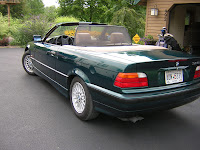
A used car like this might look "perfect", but if it was not
well taken care of,
trying to fix it up could bankrupt you.

Note: While the comments in this article are related to BMWs in particular, they can be applied to any older car, particularly esoteric makes like BMW, Mercedes, Jaguar, Land Rover, etc.

A "Fright Pig" is a car that is so worn out that nearly everything needs to be replaced. The problem with a fright pig is that they often look like any other used car to the uninitiated.

Most used cars that are 1-5 years old have few major mechanical issues, which is why they are often the best bargains for the car shopper. You can buy a 3-year-old Camry and it is still under warranty and has hardly any wear or major repair issues. But the same cannot be said for cars 8 years old or older.

Many folks get caught in the trap of the older used car. They drive by a used car dealer and see a shiny used BMW or other exotic marque, for sale at what seems to them to be a very low price.

"Gee," they say, "Look at that BMW for sale, and only $5000! Here's my chance to own a BMW I always dreamed about!"

So after driving by several days, they stop in and check it out. It sure looks shiny and new under the bright lights of the car dealer. They take it for a test drive and it seems to run OK as well. It has high mileage, but hey, it's a BMW, right? They are built like German tanks! Well, the salesman says so, anyway. And the dealer offers to finance the purchase, at the low, low rate of 16% interest.

So, unfortunately, they take the plunge. Hey, what could go wrong with a $5000 BMW?

Well, to begin with, they failed to check the book value and realize that a 15-year-old BMW is worth maybe $2000 to $3000 depending on condition. So right off the bat, our naive young friend has squandered two to three thousand dollars by paying too much for the car.

Why are old BMWs and other cars worth so little? Well, like any other car, German Engineering notwithstanding, they wear out over time. And as they wear out, they require repairs and replacement of parts.

German car companies have a reputation for making good cars because they also recommend servicing them at regular intervals (or at least they used to). For a BMW, this was outlined in the "Inspection I" and "Inspection II" protocols, where the car was scheduled to be brought back to the dealer for various inspections, fluid changes and even replacement of parts. If the car was maintained this way, it could be a very reliable car, for many years and even 200,000 miles or more.

But few are.

The problem is, while the original owner might do all this maintenance, often the second owner will neglect it. They buy the car fairly cheaply, put gas in it and occasionally change the oil, and drive it. When it gets old and starts to show signs of wear, they trade it in. It goes to auto auction, where our used car dealer buys it, shines it up, and puts it on his lot.

Compounding this problem is the fact that many young men (usually the audience for such cars) want to immediately spend money "hopping up" such cars. They get slick catalogs or go online to aftermarket parts sellers. The things they want are usually cosmetic "mods" - the type touted in teen car mags you see at the grocery store. They want shiny and loud things - shiny loud exhaust pipes, funky airdams, weird headlights and taillights, that sort of thing.

These types of "mods" can be easily bolted on with simple hand-tools. The kids who do this convince themselves they are "tuners" when in fact they are little more than kit builders, taking off one easily removable part of the car (the intake, the wheels, the muffler) and replacing it with another part. These aftermarket parts add little or no horsepower, and often make the acceleration and handling worse than stock. But they can cost thousands of dollars - all financed on a credit card at 22% interest.

So our intrepid you buyer decides that he has to have clear "Euro" turn signals and "Angel Eyes" headlights, as well as a brittle, fragile, fiberglass air dam for the front end (painted primer grey, of course, because he's "saving up" for a new paint-job - preferably Kermit-the-frog green). Out back, he removes a functioning exhaust system for an expensive stainless steel job with baloney cut exhaust tips that jut out at a jaunty angle (and stick out past the bumper). He maxes out his credit card for the largest rims possible, shod with the most obscurely named cheap Asian tires, that "only rub a little bit" when he turns. His E36 is now on its way to being a "racing machine"!!!

Unfortunately, a car like this, over a decade-and-a-half old and with over 150,000 miles on the clock, needs some serious attention. The suspension on these cars (like most) is pretty shot by 100,000 miles. The tie rods are worn, the ball joints loose, and the bushings collapsing. The struts and shocks no longer dampen and the springs are saggy. The cost of parts alone to do this job is well over $1000. Since our intrepid friend has no tools or garage to work in, he has to pay someone to do this work. The overall cost can easily exceed $2000.

Taking this as an opportunity to further "mod" the car, he opts for "high performance" shocks and lowering springs, lowering the car 2" (more is better, right?) which means the oversized wheels and tires rub even more. The stiff shocks mean the car rides harshly and rattles over every bump. Worst of all, the fiberglass airdam, already hitting objects, now plows into even the shallowest of driveway aprons. Within a month, it is cracked in several places.

The over-sized rims, cheaply made in China, bend when hitting a pothole. With only thin, low profile tires to protect them, and a stiff suspension not allowing for much rebound, they take a lot of punishment - and since the metallurgy is not the highest, they bend easily. Our young friend goes back to the rim shop and discovers they no longer sell that style. Even if he had the $500 to buy the shiny "bling" rim, he can't find a replacement. No matter, within a few weeks they are all bent and he goes back to the original wheels and tires, which are pretty worn out at this point and now look ridiculous with all the "mods" on the car.

But it gets worse. The car needs a brake job, of course. The fluids on the car were never changed regularly, so there is rust in the brake lines. It need one or more new calipers, new rotors, and a new master cylinder. $1500 later, he is back on the road. But then the car starts vibrating. The guibo is shot and is the center bearing. Alarmed he goes online to a discussion board, and realizes that this car has a litany of potential problems at this age.

For example, the cooling system, which was never changed on this car, will eventually wear out. And wear out it does, on the way to work, in a cloud of steam. He pulls over at the next exit, but the damage is done. The ordinarily robust BMW engine has one achilles heel - you can't overheat it - never, never, ever. Unlike a small block Chevy, which just runs slower then you overheat it, and just burns a little more oil, once it cools down, a BMW engine, when overheated, will blow a head gasket, warp a head, or worse.

Towed back to his mechanic, he gets the bad news: $2500 to put in a new head gasket and cooling system, presuming the head is not warped or damaged.

Our young friend adds up all the money he has "invested" in this car and figures out that it is well over $10,000 at this point, so he might as well "fix" the car. He ignores the fact that the repair cost will easily exceed the resale value at this point in time. The mechanic shrugs. He's seen this before and it will not turn out well. He will fix the car and the young man will eventually get pissed off at him, as if it were the mechanic's fault that this young man chose to throw thousands of dollars at this car - mostly paid for in a high interest rate car loan and in credit card payments.

At this point, our young friend is becoming less and less enamored of the BMW marque. "These cars are crap!" he says, "They keep falling apart! What next?"

The transmission is next. Yes, unfortunately he chose an automatic transmission, which defeats the entire point of this car. Some of these can last a long time, but since our young friend is fond of showing off by doing smoky burnouts, the tranny is taking a beating. One day on the way home from work, the car starts shifting funny. The transmission fault light comes on and the car suddenly revs and stops accelerating. He pulls over to the side of the road. The car is immobile. Once again, the car goes for a flatbed ride.

The news isn't good. Installing a rebuilt tranny will cost $3000 to $4000. A used transmission might be had for slightly less, but at this point in the car's design life cycle, there are few junked E36's left out there with workable transmissions with low miles.

Our young friend finally starts to see the light. The car is worn out. The interior has several major issues known to this car - the driver's side seat bolster is worn through and the recliner no longer works (nor do the heated seat bottom on the driver's side). The HVAC fan has quit and needs replacement (the mechanic already replaced the final stage resistor a year earlier). The speaker cones are rotted through and the car could use a whole new sound system. The door panels are popping off the doors and are bubbling up in several places - alarmingly so on the passenger's side. One power door lock does not work. The funky taillights make the "Brake light check" error message come on continually on the dashboard. The Check Engine light is on, as is the SRS light, (seatbelt switch was kicked).

And the odd thing is, he is more than willing to throw more money at this car, rather than "give up" on it. But his credit card is maxed out at this time, and the mechanic, taking pity on him by this point (having made several thousand dollars from him) says, "Dude, it ain't worth it!"

So another Fright Pig E36 heads off to the bone-yard. And our young friend spends the next decade paying off his credit cards and trying to repair his credit rating. And he will tell anyone within earshot what pieces of crap BMWs are.

And this was all preventable, too. How can you avoid the BMW "Fright Pig" (or any other pig for that matter)?

The answers are simple. First, if you are not handy with tools and do not have a lot of tools and a garage to work in, do not even think about buying decade-old cars like this. These are "handyman's specials" that people who like to tinker with cars (like me) can keep running and fix up - on a budget.

Second, don't assume that a prestige marque is made better than a pedestrian one. Mercedes, BMW, and Jaguar are interesting cars, but not nearly as reliable as a Toyota or a Honda. The BMW message boards are full of former Toyota owners grousing about the reliability of BMWs. Well, they ain't Toyotas!

Third, always check blue book value before buying a used car. At the end of their design life, many cars are worth little or nothing, even if they look really nice.

Fourth, don't fall for a cosmetically good-looking car. Used BMWs can look "perfect" because many were garage kept and they have quality paint jobs. But if the underlying maintenance was not done along the way, they can easily require thousands and thousands of dollars of repairs just to put into reliable running condition. You can spend more on repairs than you spent on the car, quite easily. A $2000 BMW can require new tires, brakes, suspension, cooling system, and a whole host of other repairs than can cost $3000 to $5000 if you have to pay someone to do them.

Fifth, don't bother with trying to "mod" such a car, as the thousands of dollars spent are essentially down the toilet and will not improve the performance or resale value. In fact, these types of "mods" make the car basically impossible to sell to anyone other than a clueless teenager. Bolting on crap without doing basic maintenance is a sure recipe for disaster.

Sixth, know when to pull the plug on the project. A $2000 BMW can be a good bargain, if you are handy with tools, and can keep it running cheaply. You can drive a car like this - if you know how to fix it - for a few years, and then sell it to some chump like our young friend above. But once it needs a major repair like a new head gasket, a transmission, or anything that would cost more than the resale value, it is time to junk it, even if the paint still looks shiny and new.

Seventh - FISH FURTHER UPSTREAM. Our young friend here ended up spending well over $10,000 to purchase, repair, and "mod" this car, and ended up with nothing to show for it, other than a horribly unreliable car to drive for a year or two at most. For that same money, he could have purchased a much newer and lower mileage car. $10,000 can even buy a brand new car, these days (although not much of one).

Spending ten grand on a 15-year-old clapped out piece of shit makes no sense at all. Most people don't intentionally set out to do this, they just sort of let it happen to them.

Again, cars that are a decade old or older are really not for the faint of heart. There are some folks out there who buy such cars, do no maintenance on them and then drive them into the ground. Probably that is the most cost-effective thing to do to such a car. Trying to "fix up" such a car is cost prohibitive.

At the top of this page is a photo of one of my BMWs. Nice, eh? Only 75,000 miles, garage kept, and regular maintenance done. Even still, it will need new tires in the next year, as well as a suspension overhaul and new oxygen sensors and a serpentine belt and tensioner. I can do all this work myself for a parts cost of about $1200, not including the tires. To hire a mechanic to do it would cost $2000 to $3000. The book value on the car is about $6500 or so. Appearances can be deceiving! It ain't a fright pig by any means, but even still, a 13-year-old BMW will require regular maintenance.

So, avoid buying a fright pig. If you find yourself with one, don't compound the error by throwing money at it. Save these "mechanics specials" for the mechanics.

FWIW!

UPDATE:  See also:  "BMW Fright Pig, Part Deux" and "Why You Don't Want to Own a BMW"  While I loved owning my BMWs (four at once was a bit much), I am content today to own a car that burns 87 octane, uses oil and filters from Wal-Mart, and has tires that you can buy at the wholesale club.  A Nissan is no BMW, but darn, it is a lot cheaper to own.   Sometimes it is easier to be a plebe.


Saturday, February 13, 2010

Speeding - a loser's game


 Going Real Fast is fun, but also expensive, in more ways than one.

When I was much younger, I used to love to go as fast as possible everywhere. Like most young people, once in the car, I hammered the throttle. Young people tend to do this, which is one reason they have such high insurance rates.

My parents, though, were also ratchet-foots. My Dad kept getting speeding tickets and my Mother thought the speed limit signs were mere suggestions. Actually, they were both horrible drivers - speeding, tailgating, you-name-it. We learn what we are taught.

Like most young kids, after I got a few tickets, my insurance rates shot up. That's the problem with speeding. Not only do you have to pay the fines, which are usually pretty small, but if you are young you can end up paying thousands of dollars a year in insurance premiums, even to insure a basic small car.

After three tickets, they sent me to defensive driving school. It was a revelation. I had gone to Driver's Ed in high school, but much of that was learning where the pedals were and how to turn the wheel. The instructors played gruesome "scared straight" films, showing gory accident scenes. But these were like the anti-drug films - more advertisement than anything.

In terms of teaching defensive driving, and also WHY we have speed limits and what to watch for, Driver's Ed was a washout. Defensive driving was a good course - it taught you how to go WITH the flow of traffic, instead of trying to fight it and make things worse (as most people do).

You see, speed limits don't exist for no reason at all. They are not there just to create "speed traps". Rather, when you come to a congested area - one with many driveways, cross-streets, parked cars, pedestrians, etc., you have to slow down in order to preserve your reaction time.

People do stupid things. And if someone pulls out in front of you when you are doing 35 mph, you can slam on your brakes and stop -and avoid an accident. But at 55, you'll likely collide and probably hurt someone.

OK,OK, you say, you understand that. But what about highway speed limits? Well they are usually set based on the condition of the highway and also the maneuvering room you have. In any highway, you want to have options, should something bad happen in front of you - a broad shoulder, and maybe some "run-off" space nearby. Highways in urban areas and those surrounded by trees provide little escape options if you have to avoid an accident in a hurry. So usually, those types of areas have lower limits.

Now back in the 1970's they lowered the speed limit to 55 mph save gas. And it made little sense and no one obeyed the law. This created a prohibition-effect, where so many people were flouting the law that the law became a joke. As a result, people lose respect for the law and for law enforcement.

The speed limits today, which can go as high as 75-80 mph in some areas, are more than reasonable, given the condition of American roads and American driving skills (and the condition of our cars). Yes, in Germany, you can go on the Autobahn and have no speed limit. But the roads are different over there, as are the drivers and the cars. And guess what? They are talking about putting speed limits on the Autobahn as traffic has increased.

All the car magazines (which are pretty juvenile and usually published by the same publisher) like to play "Rebel without a Clue" in their opposition to speed limits, as it sells well with the readers and also with the advertisers, who are selling radar detector equipment and other gadgets to help you evade a speeding ticket.

But really, to avoid a ticket, all you have to do is obey the limit -or even stay fairly close to it. And it really isn't all that hard, onerous, or inconvenient.

We used to own a motorhome that, foot to the floor, did 65 mph. As a result, we spent a lot of time in the right lane, chugging along. We would see young men, usually in what they thought were fancy cars (but were often just reworked economy cars) fly by at 80 mph or more.

And then an hour later, they would fly by again. And then again. And then again.

What gives? Well, speeding like that, weaving in and out of traffic, accelerating, jamming on the brakes, being paranoid of a speed trap around the next corner, is awfully tiresome - and it burns an incredible amount of gas. A car getting 25 mpg can be brought down to 10-15 mpg by driving at such speeds, particularly if it involves weaving in and out of traffic and accelerating and decelerating.

So the stressed-out speeder stops often, to relax, to get fuel, to get refreshed. Meanwhile, our old motorhome, chugging along at a speed not too different, passes him by. He gets back in his car and floors it and "Gee whiz! I have to pass that damn motorhome again!"

Here's the deal: If you are going 65 mph in a 65 zone, you cover 100 miles in about an hour an a half. At 75 miles an hour, you might save about 15 minutes. At 80 miles per hour, maybe 20. If you are driving a few hundred miles a day, you might save an hour or so, provided you do not stop more often - and this assumes you maintain a constant speed, and are not slowing down for traffic.

For local traffic, the time savings are even worse. If you are driving 30 miles from one town to another and the speed limit is 45, you'll get there in 40 minutes. If you go 60, which is well over the limit and likely to get you a ticket, you'll save a whopping 10 minutes. Miss a traffic light or two and you save no time at all.

And that brings up another point. If the traffic is going 65 mph to 70 mph and you want to weave in and out doing 80, all you are doing is just pissing every one off and making an ass of yourself.

In addition to gas mileage, the wear on your brakes and driveline will be more than double that of an ordinary driver. Stopping a car from 30 mph uses a lot less brake pad than slamming on your brakes on the Interstate to go from 70 to 55 when a truck pulls out in front of you.

So the costs, in terms of speeding tickets, staggering insurance bills, gas mileage, and wear and tear on your car is pretty impressive.

But the specter of an accident makes those costs pale in comparison. Yea, yea, I've heard it before - you've "never" gotten into an accident. Well, there was that deer you hit, but that doesn't count, right? Oh, yea, and that lady who pulled out in front of you and you couldn't stop in time (because you were speeding) and that asshole cop gave YOU the ticket, when it clearly was her fault, right? Yea, other than that, your driving record is clean.

Car magazine columnists like to make asinine pronouncements like "Speed doesn't kill, speed differential kills!" And they are right of course. If you are doing 70 and a bridge abutment is doing 0, the differential will surely kill you. But more importantly, if you are the one weaving in and out of traffic trying to "make time", you are the one disturbing the flow of traffic. It is the differential between your speed and everyone else's that is causing the problem.

Back in the days of the 55 mph speed limit, maybe such arguments made sense - on highways where everyone was driving 65 or greater, driving at or near the speed limit could be dangerous. But those laws have been repealed.

And funny thing, too. When I am driving in a 70 mph zone, I find that many people don't even drive the speed limit. Many lose their comfort level at about 65 mph. So even given the opportunity to go 70 -80 mph legally, many don't.

You have to drive defensively. And that means going with the flow and anticipating the other fellow doing something stupid - and leaving yourself time and space to avoid his stupidity.

Of course some will cry, "Well, what's the fun in that?" Well, if you have a sports car, there are times and places you can "open it up". In city traffic or on a crowded highway aren't some of them. In fact, there are fewer and fewer places you can responsibly drive fast anymore. Most county roads have deep ditches (4 feet or more) and agricultural equipment lurking around the next bend. And then there are the deer...

Want to go fast? Go to the track. Most tracks will let you take a few laps for a few dollars. But beware, your insurance doesn't cover you on the track - you wreck it, you bought it. And after even one lap, you may discover you are not the race car driver you thought you were. If you are serious, join a car club and take a driving school. But bear in mind that that sort of driving wears on a car.

I'm older now and driver more carefully and more slowly. My insurance, for five cars, including four BMWs, (three convertibles) is less than $1000 a year. Your insurance can be much lower too, if you have a clean license. Driving fast to impress people or get somewhere "faster" is a silly reason to pay tens of thousands of dollars more (over the years) in insurance costs.

And guess what? No one is impressed you can crank you Hyundai up to 80. And you aren't getting anywhere faster than anyone else.

It is a loser's game. And you can save a boatload of money by not playing it.

Tuesday, February 9, 2010

Shopping at the Thrift Shop.


There are bargains galore at the thrift shop. Why do they always smell funny though?

I just got back from the thrift shop, where I bought a pair of like-new Wrangler blue jeans for $4, three nice shirts (one long-sleeve denim, two other short-sleeve shirts from Cabela's, brand new) for $2.50 each. I also bought a CD for a buck. You can't beat those prices, particularly when I recently purchased the exact same pair of jeans brand new for $35.

Should you shop at the thrift store? Well, of course, it never hurts to look. You may not find anything of value whatsoever. Or you may find an item or two that you can use. In addition, if you have items that no longer fit or you no longer use, by all means donate them to a thrift store, and get a receipt, so you can write it off on your taxes!

St. Vincent dePaul, Salvation Army, whatever - it really doesn't matter. Some are better than others, of course. Thrift stores near wealthy areas can have some pretty amazing stuff, as rich folks (or people who think they are rich) throw out a lot of things, some brand new and never used.

Now, on the other hand, the thrift store near where I live in New York, well, they tend not to have such nice things. It is in a poor community, and much of what they have to sell is worn out.

Of course, I can already hear the cries of protest from some folks, and a laundry list of reasons why they "can't" shop at the thrift store. These are the same sort of reasons given for not shopping at WalMart. What it comes down to is this: Some folks are just too darn proud. And oddly enough, it ain't the rich folks (the real rich, not the buy-everything-on-time pretend rich) who are too proud. Often middle class and lower middle class folks are the ones who refuse to look for bargains, as they believe that over-paying for things is a sign of "wealth" or "status".

Whatever.

Here are some reasons I have heard for not shopping at thrift stores:

1. The stuff they have there is junk - outdated clothes out of style, nothing I'd want. 
This depends on the store - and the location. Most stores realize that you can't sell junk, and they are pro-active in accepting donations that are salable. Stuff that doesn't sell is usually weeded out fairly quickly. Many stores get donations of new materials from retailers who have discontinued or returned items. Many donations are clothes that were bought and didn't fit or were not worn for one reason for another. 
Like any other store, there will be things you don't want. But you can find a "diamond in the rough" on occasion. But like any other form of shopping, don't buy something just because it is a "bargain" - buy it because it fits you, and you WANT it and can USE it. 
2. The clothes are dirty. 
At least at the store I went to today, all the clothes were laundered and ironed. One stack of dress shirts was all freshly dry-cleaned (by the donor). Of course, it doesn't hurt to launder them again when you get home, which I did. 
Here's the deal - your own clothes get dirty - and yet you still launder and wear them again. The clothes at the thrift store are going to be a lot cleaner than what is already in your laundry hamper - perhaps cleaner than what is in your closet! 
3. The place smells funny. 
OK, you got me there. But this does prevent you from staying too long. They take in donations of tons of clothes, furniture, and other used items, and I guess over time, these places tend to smell musty. 
4. Its supposed to be a place for poor people to shop. If I buy things there, I am taking product away from the poor! 
Wrong! They SELL items donated in order to raise money to help the poor. When you buy a donated item, that is cash in their pocket they can use to feed the homeless or whatever. The homeless can't eat clothes. 
Most of these organizations would GIVE clothes to the needy if they asked for them. The sales are used to generate income. By buying things from them, you are putting cash in their coffers. 
Also, many of the so-called "poor" are too prideful to shop in the thrift store (which is why they are poor). You'll see more designer labels and expensive mall-bought clothing on "poor" folks, who can afford it by skimping on more important aspects of their lives - things like housing and health insurance. So go ahead and buy. The poor think they're too good for it. 
Still feel uneasy about it? Well then donate some of your old but usable clothing that doesn't fit you any more. They can turn around and sell it and make more money, and everyone wins. You get a bargain, you get your closet cleaned out, and they make money to help the needy. 
5. The don't have the Designer Labels that I have to wear! 
Actually, I was surprised at the stuff they had there. Of course, this thrift store is near an island that has multi-million dollar homes on it (not my island, the next one over). So they do get some upper end donations. I saw, for example, hand-tailored shirts on the rack (I used to have the same ones, back when I was an important lawyer) and a lot of designer labels. 
But if having all the "right" clothes is important to you, well, your priorities are all wrong and frankly, I don't really want to meet you, thanks. Such things are so wholly superficial that it is not even funny. Maybe for teenagers and children, being seen in the "right" clothes is important. And for the red carpet at the Oscars or some high society fashion party, it is important to have the "right" clothes. 
But if you are reading this blog, you ain't a Hollywood star trying to decide what to wear to the Oscars. And chances are you ain't a teenager wanting to wear the latest "cool" gangsta wear for school. You are just another middle class schmuck trying to save a few bucks and get ahead and are wondering where the heck all the money went. 
Well, let me tell you where it went - it went to foolish, prideful ideas like you have to have a brand new car every three years, or you have to "shop" at the mall every weekend. That's where it all went, dummy!

6. I'm not poor - I wouldn't be caught dead in such a place! 
Well, again, this is ego talking. If you think you are better than everyone else, well, let me know how that works out for you. Me? I'm not so proud anymore. As I've gotten older, I realize that you have only a finite amount of time on this planet, and to spend it chasing money or pride is just utter foolishness. 
If I can save $30 on a pair of pants, you BET I'm going to do it. Because I can go to dinner at the bistro down the street, and have dinner for two and a bottle of wine for $30 (they are running a special!).
* * *
The only thing I regret is not shopping there more often. Like buying books at a bookstore (as opposed to getting them for free from the library) you look back on it and say "Hey, that made no sense at all!"

You can bet I'll be checking back in later on to see what other bargains they might have.

Note:  It goes without saying that buying things you don't need, but look like a bargain isn't saving any money.   And buying junk (and often they have lots of it) isn't worthwhile.   You have to be astute, of course!  Note also that thrift shops usually specialize in clothes, but often have other items, including sporting goods, furniture, housewares, etc.   One thing I would stay away from is electronics, as most things donated are outmoded junk and they put stupid prices on them.   But it is a place to pick up some used patch cables now and then.

Monday, February 8, 2010

Online Banking

Despite all the hoopla and negative press, Bank of America has excellent online service.

Online banking is very prevalent today and there is no reason not to use it. I was skeptical when online banking first became popular, and I was not an early adapter. But in this day and age, if you are still putting stamps on envelopes and writing checks to pay your bills, you are not only wasting money, but risking it as well.

Many people have vague, unfounded fears about online banking. They believe that somehow the computers will go "haywire" (a term favored by the elderly) and all their life's savings will disappear overnight. But if you think about it, this fear is unfounded - or at least it is not alleviated by using checks. When you write a check or go to the bank, the transaction is almost immediately converted to an electronic transaction (Check 21). If the computers are going to go "haywire", well, they're taking down your paper checks as well.

There are a number of disadvantages of using paper checks and mail for paying bills:

  1. Mail can get lost or delayed, resulting in late payment of bills. This can result in late fees, confusion, phone calls from creditors, damage to your credit history, and in the case of credit cards, jacking of your rate to 28% or more.
  2. "Identity Theft" is more likely to occur from someone stealing your mail, than your e-mail. Thieves love to snag outgoing mail with checks and then "wash" the checks and write new ones. Similarly, bank statements and other financial data, when sent by paper, is relatively easy to steal from a mailbox.
  3. You pay 42 cents to mail each check, which if you are paying 10 bills a month, comes to $4.20. Over a year, this comes to $50.40 -enough for dinner for two at a nice restaurant.
Online banking, on the other hand, is far easier to do, and faster and more efficient. And if you are careful, it is just as secure as paper banking, if not more so. It also allows you to keep better track of your finances and know exactly what your bank balance is, in real time, on a day-to-day basis.

I have been using Bank Of America for several years. There are other good banks out there, but BOA has an excellent online system. There have been some criticisms of BOA in recent years. Some criticize the actions of the Bank and its officers during the recent downturn. And the buyout of Countrywide Mortgage certainly is giving shareholder's ulcers. But these do not affect you, the customer, at all.

And I have read online, complaints from people (losers) who whine about overdraft fees, bounced check fees, and the like. All banks have these, and if you keep careful track of your balances, you'll never have such problems. And since everything is on the computer and accessible online, 24 hours at day (or by phone) there really is not reason you should ever bounce a check, unless you have a drug habit.

Paying bills electronically started back in the 1980's. I recall my Father appearing in a print ad for Syracuse Savings Bank's "Pay By Phone". The system used there (before the Internet) allowed you to call the bank, read your account number and password to the operator, and then designate which bills you wanted paid. The bank would then cut the checks and mail them out to the payees, all for a nominal fee. It was pretty crude, but it worked.

Today, we can do this online, and it is far easier. Many payees will automatically send bills to your bank account, and you are notified by mail. You can then log in and decide when to pay the bill, and for how much. You can also elect to receive the bills electronically or statements in e-mails or online.

If you spend a lot of time traveling, this is a Godsend, as you no longer have to worry about missing bills or missing payments. And many people are using this system today - much to the distress of the Postal Service. The volume of mail has dropped off significantly, and the loss of bill and statement revenue is one aspect of this problem.

I also enter all of my checks and credit card charges into Quickbooks (more on this later). You could also use Quicken, which is usually distributed free with new computers. And many online banking services allow you to "synchronize" their data with your Quicken data (I have yet to try this). Afraid to use Quickbooks or Quicken? Check our your local Community College or Adult Education Center - they may offer courses on the program.

One nice aspect of online banking is that you can setup automatic deductions from your account to go into savings. So, for example, you can pay $100 a month into your IRA, instead of waiting until April and trying to come up with the money.

And the fees for all this? Usually nothing, or free. BOA has a deal where if you set up your account to automatically put $25 a month into your savings account, they waive the monthly banking fee. You can even take the money back out, if you want to. It is weird, but they do it.

Now of course, you do have to take some precautions. If someone came up to you on the street and said "I work for your bank, can I borrow your checkbook for a minute?" you'd tell them to piss off. And yet online, many people hand over their account number and password to the first person who sends them an e-mail claiming to be from the bank.

It is not hard to spot these frauds, and if you are ever uncertain about an e-mail purporting to be from the bank, just log into your account in a separate window (NEVER follow a link from an e-mail!). Or call the bank, if you are in doubt.

ATM Machines have come a long way in recent years as well. Many people are paranoid about using ATM machines after seeing messages posted online about people stealing your identity by reading your PIN or whatever. Obviously, you do not use an ATM machine in a bad neighborhood, or with someone standing behind you. Use your common sense.

And unless it is an emergency, never use "foreign" ATM machines that charge fees. Most banks charge fees for using such machines, so if they charge $2.50, chances are, your bank will charge another $2 on top of that.

One advantage of BOA is that they are everywhere (at least on the East Coast) and it is not hard to find an ATM machine locally. You can call their 1-800 number, enter your zip code, and find one, or you can search online.

There really is no reason to go to the bank anymore and see a teller, or wait until "Business Hours". Modern ATM machines (at BOA anyway) take deposits by scanning in your check electronically (no deposit slips or deposit envelopes!). The machine then displays an image of the check and electronically reads the data off the check (or asks you to input the data if it can't read it). This is a real time-saver, as depositing checks by mail is slow and uncertain (and they can get lost).

Moreover, thanks to Check-21, checks deposited one day are usually credited the next. No more waiting "seven business days" to get access to your funds. Electronic banking represents a huge improvement over the past.

If you are one of the few people who has not gone online yet, the time to start is now. Waiting until the end of the month to know what your bank balance is, is simply not workable. Keeping track of your money is something you need to do in real-time, and thanks to electronic banking, you can.

Thursday, February 4, 2010

Should You Remodel or Move?


Should you remodel your home or just buy a different one?

Home remodeling is a project fraught with peril. You can easily spend more remodeling a home than it will ever be worth. And it is not hard to "over-remodel" a home so that it is at a price point beyond what the neighborhood will support.

If you find your home lacking in any way, should you remodel or move? Whether it is because the home is too small, getting old, outdated, or some other issue, chances are, in many cases, it is simpler to move to a new home than to remodel your existing one.

Why is this? The deck is stacked against you in remodeling:
1. Remodeling costs more than new construction: When remodeling a home, you not only have to build anew, but you have to tear down or modify existing structures. Trying to fit things into an existing structure can be two to three times as difficult (read: more labor) than building new. Older homes may not be square and plumb. Older lumber may even have different dimensions. Trying to fit things in without damaging existing structures takes time and effort, and thus adds to cost. It is easier to build a bathroom in a new home and to retrofit one in an older home.

2. New Construction has cost benefits: When you are building five, ten, or twenty houses, there is a savings by building in bulk. You can bring in tradesmen and they can work non-stop, installing plumbing and electric work, and with repetition, do it more quickly. You can buy parts in bulk, too. In remodeling, everything is a custom fit and a one-time deal. And you are not buying your parts in bulk, either.

3. Construction is a Hassle: The dirt, mess, and disruption from remodeling can drive you nuts. And one thing that makes it harder for the workmen is trying to remodel the home while the homeowner is still living in it. Moving out means renting a place, which means more costs.

4. Remodeling Costs More Than It Adds In Resale: Real Estate Agents like to say that adding a kitchen or bath adds the most value to a home. But what they mean is that in terms of recovered cost, you get the most of your money back. You still lose money, though. Kitchens and Baths can return 90 cents on the dollar, traditionally, while other types of remodeling or additions (bedrooms, den) may return 50 cents or less.

5. Cost Overruns and Contractor Problems: Everyone who remodels, it seems, has a remodeling horror story. Contractors walk off the job, they charge more than expected, they do shoddy work. You can expect at least some of these difficulties in any remodeling project. If you are not lucky, all of them.

So why remodel? Well, that is a good question. Many folks do it so that can remake their home the way they want it.  This is fine and all, until the day you have to sell it.  If you've remade the home in a way that is quirky or weird, good luck trying to unload it.

Builders or Developers sometimes buy distressed homes and remodel them and flip them.   How do they make a profit when you don't?  Well sometimes they don't.   But in most cases they make money by strategically buying "basket case" homes that need a total overhaul (or a lot of cosmetic work). These may be foreclosures or former rentals . Traditional home buyers and banks shy away from such uninhabitable properties.

Since Contractors are in the business, they have the contacts to make such a strategic purchase (far below market value) and then the resources (contacts, parts sources, labor, skill, experience) to remodel it economically so that it looks great to a potential buyer.   They can then sell the property at market value, or slightly above, and make money.

But you, the average homeowner, who already paid market value for his home, will not make money on remodeling.   You have to hire someone to do the work, and they will charge you retail rates for the remodeling.   And since your home was not a "bargain" distressed purchase, chances are, if you add the cost of remodeling to your purchase price, the sum will be higher than market value for your area - even if prices have gone up substantially.

Marketable improvements include upgraded kitchens and baths.  Added bedrooms can be marketable, if done in a manner that fits into the architecture of the home.  Additions that look like additions (hastily tacked on, not matching the rest of the house) may detract from market value.  Bedrooms that can only be reached by going through other bedrooms, for example, are just quirky and weird and add little value to a home, if not in fact, detract.

Of course, each case is different, so you have to "do the math" on each remodeling project. But the first step in any event is to determine the market value for your home.  Look online.  Ask a local Real Estate Agent for "comps" (comparable homes SOLD, not LISTED) to get an idea of sales prices. Then figure out if you have any headroom to do a remodel, and whether this remodel will make the home worth more and also more marketable.

If what you paid for the home, plus what you spend to remodel is more than the projected resale price on the home, your remodeling project, in addition to being costly, could make you "upside down" on the property.  And I've seen this happen to people before - and I've purchased the resultant properties at foreclosure.

If that is the case, then what should you do?

One idea is to just live with the house as it is.  If you have a functional kitchen, then use it.   If your remodeling project is just to impress the neighbors, forgetaboutit! That sort of thing is so last-decade anyway.

Here's the deal: In any neighborhood, the price spread between houses is remarkably thin. A house "all fixed up" and a "fixer upper" are not that far apart in price. A house in reasonable, livable condition is going to fetch not a lot less than the one with the new granite counter tops.

Note that there are a many types of remodeling, from the simple (!) kitchen or bath remodel, to raising the entire roof and adding a second story. Adding garages or other outbuildings are other forms of remodeling. Adding a deck or improving a deck is a popular project. There are some remodeling projects that bear special mention, however.

1. Sun Rooms: Sun Rooms bear special mention. Adding rooms to a house because you think you "need more room" is often a waste of money. For example, many people decide to add a sun room to the house. Maybe they started off with a screened-in porch, and then decide to enclose it. So they hire the sun room enclosure people to come by and they put up an aluminum sun room. The new sun room becomes the living room, and the living room becomes this empty space that you walk through to get to the sun room - an empty space that merely accumulates clutter.

And since such sun rooms are not heated or insulated, the homeowner then spends more money installing an air conditioning system or strip heaters, which are not very efficient, and as a result their utility bill skyrockets. And of course, all that sun makes it hard to watch TV, so the next thing they do is put blinds on all those giant windows to make the room darker. Pretty soon, the "sun room" is just another room in the house - a poorly insulated one at that.

And pretty soon, the homeowner thinks, "Gee, we should put a screened porch off the sun room so we can get some air!" And then the process repeats itself again, as the screened porch gets enclosed eventually. The house starts to look like one tacked-on addition after another.

Let porches be porches. Enclosing porches or trying to make living space out of them often ruins the architecture of a home and decreases its value. And the resulting rooms are often hard to heat, have cold floors, and often are maintenance nightmares. They were never intended to be living space.

2. Converting Garage Space: It is tempting for many homeowners to covert garages into living space.   This can be done in some instances without detracting from the value of the home. If the garage is built as part of the house, and is capable of being insulated and heated properly, it can add value, if the resultant space doesn't merely look like someone took the garage door off and installed a window in its place.

Garage conversions which show their roots, with cold concrete floors, dramatic step-downs, and obvious door replacements may not add much value, and in fact may detract. Most garages face the road, and thus are part of the curb view of the house. Obvious garage conversions that are apparent from the street make a house look tacked together. If you are going to go this route, spent the money and re-do the fascia of the house (re-siding, matching brickwork, or whatever) so that a glaring seam doesn't appear where the garage door once was.

3. Finished Basements: Finished basements also bear special mention. Many homeowners finish their own basements, which can be a good way of building "sweat equity" if you are handy with tools and capable of doing a good job. But poorly done self-remodeling adds little value. And quirky or oddly finished rooms add little value.

Bear in mind that unless you have a "walk-out" type basement, with window or doors that can be used as fire exits, subterranean space cannot be marketed as living space (bedrooms) and thus adds little or nothing in value to a home. Dark basement rooms add little or no value whatsoever, so don't spend a lot of money finishing them off.

Another problem with the basement remodel is flooding. Make sure that any basement space is dry and will stay dry, before you commit to finishing it off. One of my old bosses spent thousands of dollars finishing off a family room, complete with carpeting and a bar. He was so proud of it. Less than a week later, a torrential rainstorm came down, the power went out, and the sump pumps didn't work. The entire room flooded, and ended up tearing out most of what he built. It was a heartbreaking experience.

If you have a walk-out basement and plan on putting in living space (bedrooms) think about adding a bath, or at least doing the rough plumbing for one. Subterranean bedrooms with no bath add little or no value to a home, and once you've covered everything with sheet rock and carpet, it is hard to go back later and add the plumbing for a bathroom. A neighbor of ours made that mistake, spending thousands of dollars to finish a walkout basement without roughing in plumbing for a bath. With a second bath, the house would have moved into a higher price bracket, and likely recovered most, if not all, the cost of remodeling and made the house more salable.

But all that being said, before you attempt such projects, you need to ask yourself two important questions:

1. Do you really NEED a bigger house?
2. Do you really WANT a fancier house?

If so, then you should at least think about selling your existing house instead, and then buying the house you want - as opposed to remodeling. There are many advantages to this approach:

1. It is simple and fast. When the deal is closed, you move your furniture (which may have to be moved for a remodeling anyway) and within a few days or a week, you are settled.

2. No dust, no dirt, no workmen in your home for a month: Pretty self explanatory. The movers, if you use them, are gone in a day.

3. You end up with more value: If you sell strategically and buy strategically, and pay a reasonable market value for the new home, chances are, it will appreciate in value better than the remodeled older home. And yet the two may cost the about the same - the newer home may actually cost less than your remodeled older home!

4. Better financing: A new mortgage may provide you with better rates, as it is a first mortgage on your new home. But trying to get a home equity loan for a remodeling is more difficult - and the interest on such a second note is a lot higher. Yes, it might be possible to refinance once the work is done, but then you have to go through two loan closings. Plus, cash-out mortgages may not have rates as low as purchase money mortgages.

5. Strategic Buying: When you are buying a home in a neighborhood for the first time, you may be at a disadvantage, not knowing the neighborhood, or moving from out of town. But when you live in the neighborhood, you can spot the deals on the market when they appear, and jump on them.

6. Fixed and finite costs: Unlike remodeling, which can easily go over budget, selling your old house and buying a new one is a known quantity. The numbers are all there on paper, and how the house will look and the quality of the workmanship are already known.

7. Better Architecture and Curb Appeal: A larger home that is designed as a larger home looks better and fits into its neighborhood. There are no quirky add-ons or finished garages that are obvious from the road - improving curb appeal. Remodeled homes with poorly thought out additions can look awkward and be hard to sell. And well-thought out additions usually require the services of an architect, which is expensive.

8. No permiting and inspection hassles: One of the hassles not mentioned above is permiting. Getting permits to build additions can be tricky, and getting the house to pass final inspection can be nerve-wracking. Many people compromise their remodeling projects to fit into permit requirements, which often results in odd-shaped additions. And if you addition is "not conforming" expect a nightmare of problems, particularly if even just ONE of your neighbors complains to the county.

Now granted there are transaction costs in buying and selling a house. But if you are using the same agent for both transactions, he or she may be willing to cut their commission slightly.

Note when I say "new home" I don't necessarily mean new construction, but a home that better fits your needs. It may be that one of your neighbor's homes, recently remodeled, fits the bill nicely. Or it could be new construction. You never know. But before you start hammering, it pays to look around.

And if you are finding that you've outgrown your house, a good bargain might be a neighbor's house that has already been remodeled. For example, Bill and Sue remodel their home. They do a stellar job, installing a gourmet kitchen, modern appliances, and a sumptuous bath. Their home also has four bedrooms and three baths, so it is fairly large.

Paul and Linda live down the street and have always admired Bill and Sue's home, as they have a growing family and need the space that their 2-bedroom home doesn't provide. And Linda always wanted marble counter tops.

Bill is transferred to a new city and has to sell his home in a hurry. Why let some stranger get a good deal on the house? Paul and Linda approach Bill and Sue and make them an offer. Perhaps without a Real Estate Agent in the picture, they can cut out the 6% commission. They end up with their dream home for less than it would have cost to remodel their existing home.

(It is possible to make the contract contingent on the sale of your existing home, so you don't end up in the awkward situation of having two mortgages to pay at once. The equity in the old home is transferred to the new home in back-to-back closings).

And yet, many people would never think to do that. Approach remodeling projects carefully. Chances are, the home you want, particularly in urban areas, already exists, just down the street or in the next block. It may be cheaper to buy anew than to try to make your home into something it is not - a process we call "Dressing the Pig".

But like anything else, do the math. Chances are when you add it up, remodeling is no bargain.


UPDATE:  A neighbor here on the island did a stellar job of remodeling his home.  His strategy was interesting.  He wanted a home here on the island, but wanted it all-new and to his specifications.  It took him several years, but he found a very distressed and under-priced home in the location he wanted.   He gutted the entire place and "started over" turning a 2-bedroom home into a four-bedroom showplace. 

Since the entire house was done-over (and added to) and since he didn't live there, it was a lot easier and cheaper (in terms of cost per square foot) to do the work, as opposed to a single remodeling project (bathroom, kitchen, etc.).

All that being said, he has a beautiful home, but likely has "bought ahead" of the marketplace, in that he has more invested in the home today than he might get out if he had to sell overnight.  But in a few years, who knows?   Market values here might rise.  And it does seem like a trend, that many older, under-valued homes here are being bought and gutted.

We bought our home from a developer, who had gutted and remodeled it.   It was a lot easier to just put the key in the door and walk in, rather than have to deal with contractors, of course.

Remodeling can be kind of fun, but also stressful, and an expensive pain-in-the-ass.  We spend tens of thousands of dollars (over $100,000) remodeling our house in New York, and when we sold it, we ended up losing money.   Most people do.  Remodeling costs, at best, are recovered 50 cents on the dollar in resale.   If you remodel, you do it for your own pleasure, not for any financial gain.