Sunday, May 23, 2010

Some eBay Tips - Never "end the auction early!"


I have listed this tractor on eBay, and after three listings, it sold. But in the meantime, I had every sort of yahoo wanting me to "end the auction early." Don't fall for that!

When selling something on eBay, you are contracting with the eBay auction service to list your item for a fee.  When the item sells, you have contracted to pay eBay a final value fee for the sale.  It is a simple contractual agreement. If you violate the terms of the contract, well, that is cheating.

Don't cheat. It's bad. And bad things happen to people who cheat.  The temptation to think you are clever and can get ahead in life by cheating is great.  After all, it seems like everyone who gets ahead cheats. But in reality, when you cheat, or try to cheat, most times you end up getting burned - and not because you get caught cheating, either.  Remember, the greatest cons are based on making the "Mark" think he is cheating.

The Nigerian scam is a classic example.  The victims think they are getting involved in an illegal money laundering scam and then cry "foul" when they are conned out of their life savings.  Hard to feel sorry for someone who thought they could make millions in money laundering, isn't it?

So when someone asks you to cheat, chances are, it is because they want to cheat YOU.   Keep that in mind at all times - in with regard to all aspects of life, not just eBay.

But getting back to eBay, when you sell an item, you may be contacted by people who ask you to "end the auction early" and then sell them the item outside of eBay. They will tell you that instead of risking the item not selling at auction, or selling for less than you'd like, you can get a "sure thing" by selling to them directly.  Or, they argue, you could sell to them and avoid paying eBay's final value fees.  Don't fall for this scam.

To begin with, it is cheating.  And you have to ask yourself, the fellow who is asking you to cheat the system, is he all that honest?  If he is proposing you cheat eBay, then you really have no cause to complain when he cheats you.

eBay originally was founded on the honor system, and to some extent, it still works that way. You buy something online and then hope the people send you the goods.  In the old days, doing things that were not Kosher was considered to be not "eBaysian".  Today, most users don't understand what that term means.

It meant you didn't misrepresent your goods.  You didn't bid and then not buy. You did not withdraw items from an auction when it didn't meet your price.   And you didn't cheat eBay, either.  Today, as eBay has become more popular, more people who never were there during the earlier days have no clue about proper etiquette.  So they think of eBay as a classified ad system, where you find a product, ask them to end the auction early, and then buy it outside the system.

So, you say, eBay makes a ton of dough.  Why is this a bad idea?   So eBay doesn't get paid, big deal!

Well, to begin with, a lot of frauds and con artists try to use eBay as a means of snaring victims and then attempt to consummate the transaction outside of eBay to avoid what little checks and balances there are. So when someone says "I have a car for sale, but if you send me the money by Western Union, I can avoid paying the eBay final value fees" watch out, because they likely are a con artist, and there is no car. You send the money and that's it. You are out the money and you have no recourse.

When selling, similar things can happen, but not necessarily from professional con artists. For example, one persistent fellow kept e-mailing me and saying "End the auction early and I'll drive up and pay you $3000 for the tractor!" So, you say, what's wrong with that?

Well, typically, the way these deals work, if you fall for them (and I haven't, thank you) is the guy shows up and then says "Well, there's a scratch on this side you never mentioned. I'm not sure I want it anymore!"

So there you are, having ended the auction, wasted a week on the market, and no buyer.   But of course, the guy will say, "But, I'll overlook the scratch if you drop the price $500."

And that was the gag all along. They want to put you at a disadvantage and then take advantage of you.

Another fellow wanted me to "end the auction early" and then "meet him halfway" in Pennsylvania. Talk about a disadvantage.   After driving four hours (and renting a trailer) I end up meeting some Joe in a parking lot in PA, only to have him try to haggle me on the price.  Since I have so much invested in driving there, I would be motivated to fall for his machinations.

I told both "buyers" that if they wanted to bid on the tractor, then bid.  Play the game by the rules, not make up new ones as you go along.  Of course, both "buyers" had ZERO feedback, meaning that they never had done a deal on eBay.   And I programmed my auction sites to not accept zero feedback bidders.

And the funny thing is, in every case where someone asked me to "end the auction early" and sell to them for a fixed price, that person never bid on the item - even when it eventually sold for LESS than what they proposed to pay in the proposed outside-of-eBay transaction. What does that tell you about their real motivations?  Volumes!

In other cases, I have had people e-mail me telling me an item was "overpriced" but that they would "do me a favor" and buy it for less than the minimum bid, if I would "end the auction early". These types of people are like the "early birds" at garage sales.  They prey upon your insecurities and try to buy things for below market value by implying that they will never sell otherwise.   "Sell it to me now," they are implying, "or lose your only hope of ever selling it!"

Again, the best solution is to "Stay the course" and go through the normal channels of commerce. Rigging all these outside deals is just not worth it. They become complicated and difficult, even if the buyer is "honest" (a word I would use with trepidation) as you can't use PayPal and the other normal means of completing the transaction.  From the standpoint of "Hassle" alone, the "end the auction early" deal just isn't worth it.

I re-listed the tractor, each time dropping the price $500. It finally found bidders, perhaps not at the price I wanted, but at a respectable amount.

I listed the tractor and mower together, and in retrospect, I probably should have sold them separately. Some folks were interested in the tractor, others might want a mower. Selling them separately targets larger markets for both and generates more money.   Something to bear in mind when selling items that contain multiple components.

I also went on some tractor websites and posted links to the auction. This is probably a little cheeky, but it does generate interest. If you are selling an Alfa Romeo, putting a note on an Alfa website might generate more traffic for your auction. But, beware - many such discussion groups, etc. frown upon such postings. You may get some flames on the message board. However, since you are selling your Alfa anyway, chances are, you won't be visiting the message board ever again. And if it sells your Alfa....

eBay is a great way to get rid of things you are no longer using - converting physical assets to cash, which can, in turn, be converted to things you need. It is not a way of "making money" unless you want to make a business of it. But if you have things of value you want to get rid of, it is a useful place to convert them to cash.

UPDATE DECEMBER 2015:  I have sold a number of boats, cars, campers, etc. on eBay and every time, someone early on asks to "end the auction early" and offers a low-ball price.  In some instances, I have ended up getting more than three times these offers!

There is a pattern to these people:

1. They send endless e-mails asking for more information - information that is often in the listing.

2.  THEY NEVER BID ON THE ITEM

3.  They tell you that you are asking too much or ask "what would you take to end the auction early?"

In many cases, these are Nigerian scammers, who want you to "end the auction early" send you a forged cashier's check for more than the sale amount and then have you wire money to someone else.  You end up not only NOT selling your car, you are now out the $3000 you wired to a "shipping company" that doesn't exist.

See also:


The "end the auction early" people are either scam artists or just want to get you to sell cheaply.  Bear in mind that bidding really doesn't heat up until the last day of the auction, often the last MINUTES.  Just because the bids are low after day 1, doesn't mean it won't sell for a good price.

Thursday, May 20, 2010

Constipated Commerce

For Sale: 1992 Geo Metro. 150,000 miles. Doesn't start or run. Won't pass inspection. Needs work. Nice car. Good on Gas! Fuel-Sipper! $5000 obo.

In poor areas of the country, commerce grinds to a halt, as people believe their meager possessions are priceless, while at the same time believing that other's are worthless.

We lived in the summer in Upstate New York.   I grew up in this area, and when I left, I noticed a definite difference in attitude in other, more affluent areas of the country.   If you want to buy a used car, go to Washington DC or some other Southern city, where there are rust-free cars galore at very low prices.  To people down there, a used car is not something you hang on to or value highly.  You sell it and make it go away.  Commerce gets done.

But in Upstate New York, Clem is selling his rusted-out POS Chevy for $1000 over book value. What gives?

When I returned to this area, I realized the phenomenon more thoroughly.   Buying and selling the most basic items is an onerous chore.   Prices are high and no one is willing to pay.  Want to sell a house?   Expect to wait a year, perhaps two, for the "right buyer" to come along.

And that's the mentality.   People put boats, cars, and other consumer goods on the market, often parking them on their front lawn, and then let them sit there - often for YEARS, mowing around them, waiting for "the right person to come along" so they can "get their price" on a clapped out Firebird.

And it becomes almost comical.   When spring arrives, people put out their lawn furniture, mow the grass, and then push their perpetual "for sale" car or boat out of the garage and onto the lawn.  No where else in the country does it take two or three years to sell a car or an old day-sailor.

You read that right.   Two years, sometimes three.  We see the same clapped-out crap for sale, year after year.  And even though these are depreciating assets, worth less as times goes on, the prices never drop, and in fact, often go up.  (UPDATE:  We returned to Central New York years after writing this posting and say the same damn sailboat for sale five years after we left, and nearly seven years since it first was put on the front lawn for sale!).

Apparently, these people never heard of eBay.   List it there, BAM! it's gone in 7 days.   Or maybe autotrader.  Or maybe looking up the book value on something and pricing it accordingly.

No, no, they have to "get their price" and will wait for the "right person to come along".

You see this in many poor neighborhoods - the over-valuing of junk.  As I noted in my Used Tires post, overpriced things seem to be the norm in poorer neighborhoods.  Pawn shops are another example.   I went to one once on the advice of a friend who claimed there were great deals to be had. But what I saw was very used things for sale for nearly 3/4 of the price of new.

You see, as I have noted before, one reason people stay poor is that they make bad economic decisions.   And one of these is paying too much for things.   Shafty used car dealers thrive in poor neighborhoods because they get poor people to believe that a clapped-out minivan is worth nearly double book value.

Part of this is ignorance of economic data and lack of access to it.  If you are undereducated, have no access to a computer, then chances are, you aren't checking the three book values (Edmunds, KBB, NADA) on a car before buying it.  So your pricing information is sketchy at best.

And under-educated people don't understand how equipment and things work.  So to them, a shiny used car is nearly as valuable as a new one - they look nearly the same, right?  What they don't appreciate is that these are disposable appliances with a finite design and service life - more like a roll of tape than an anvil.  If you buy a roll of tape and half the tape has been used, well, it is only worth half as much, right?  The same is true with cars and other consumer goods.

So they overpay for things, and when it comes time to sell, they ask too much, not understanding that the fact they made a bad economic decision (overpaying) doesn't mean everyone else has to make one as well.

The problem with this type of economic behavior is that it grinds commerce to a halt in these sorts of impoverished areas. And it has a snowball effect.  As money becomes scarcer, fewer and fewer economic transactions occur.  Because of the scarcity of money, people demand more when selling their own goods.  So you see cars for sale for years, because "I'm not just going to give it away" and "I want to get MY price for it!"

This sort of impoverished mentality creates a situation where people end up with mountains of junk and obsolete crap around their homes.  You've see the houses in the country with the old cars parked around them.  Cars that are worth nothing.  Why keep an old, rusted out Chevy Malibu with a seized engine?  Because they want to "get their price" for it.

When scrap prices recently spiked, and dealers were paying as much as $200-400 for junked cars, some of these junk collectors stood to make thousands, if not tens of thousands of dollars, selling their piles of rust.  But many refused, saying "I want to get my price" - convinced that any day now a "rich car collector from the big city" was going to pay them thousands of dollars for their old Chevette or Vega.  I kid you not, they really believe this sort of thing.

We have run into the same thing on Craigslist.   People post ads nominally offering to sell something. You call them or e-mail them.  They don't get back to you.  Or if they do, they won't give you a phone number, an address, a time to come look at the item and buy it.  Then they say "Well, maybe my Brother-In-Law might buy it, I'm not sure" (I have actually heard this!).   They can't bear to actually consummate a deal. Constipated Commerce.

Up in this neck of the woods, people "think" about transactions a lot, but they rarely make good bargains, for themselves or others.   A person drives by a used car for sale on the way to work for six months, before finally stopping to look at it.  Three or four weeks of dickering and haggling, and he ends up the proud owner of a rusted-out 1979 Jaguar sedan.  Constipated Commerce.

It is important to liquidate physical assets that are no longer in use.   The capital you free up this way, no matter how trivial, adds to your bottom line.  And the sooner you sell a worn or unused asset, the more money you will get for it.  Wasting time - years even - trying to sell a $1500 boat for $3000 - is not cost-effective.  This is time you could put to better use.   And getting $1500 for that old boat is better than letting it rot behind the barn, out of spite when no one would "pay your price".

And of course, your home is worth more without garbage around it.   Junked and wrecked cars, old boats, and the like, will all have to go away eventually - when you sell your home or when your children sell it after you die.  At that point, your "precious collectibles" will be sold off to a junk dealer for the lowest amount possible.

And its important not to overpay for goods.  Buying Clem's clapped out '92 Ford for $3500 is no bargain, no matter how you try to convince yourself it is.  And convince themselves they do.  And when it is time to sell, they want an equally staggering amount for the rust-bucket as well. So the cycle continues......

Constipated Commerce!

Wednesday, May 19, 2010

Investing in STOCKS

What are you buying when you buy Stocks?

Should you invest in stocks? Well, chances are, you already have. If you have a 401(k) or IRA or other investment account, it probably is invested in a Mutual Fund, which, in turn, is mostly invested in stocks or as they like to call them,  "Equities."   And which stocks you are invested in, well, you might not even know.

And like most Americans, you wonder sometimes whether these things are worth anything, or, if in fact, the whole game is rigged.

Stocks can have a higher rate of return than other investments, it is true, but unlike other investments, they can drop down in value to ZERO in a real hurry, and stay that way.

Even if you bought a condo in Las Vegas and paid cash for it, chances are, it is still worth about half what you paid for it. And you could still rent it out to a Casino worker for some amount of money. It is not worth "Zero" now.

But if you bought GM stock a few years back, well, it ain't worth bubkis these days - not even enough to justify paying a discount brokerage to sell it.  In fact, today, it is worth ZERO.

And yet, for many people, their only investment is a stock portfolio.   Is this a good idea? Probably not.   There are a number of reasons why you should Diversify your portfolio, so you are not totally invested in "all one thing."   If one investment goes "bust" then you still have something else to rely upon.

The problems with stocks themselves are numerous, but mostly the problem is that they lack transparency, and as such, we tend to value them by how much other people think they are worth. Let me explain.

1. Stocks Prices are often confusing and misleading. People like to say things like "Bill Gates is worth Upteen Billion Dollars" basing this on his number of Microsoft shares, multiplied by the share price.  But of course, if he sold his huge chunk of that company, the share price would plummet. He would not get the "full retail" value of his "investment."   So who pays that top dollar for the last share sold? Well, chumps like you and me, who get in on these deals last.

"Market Capitalization" is another phony number thrown around, calculated by multiplying the share price by the number of outstanding shares. For some companies with wildly over-valued stocks, this number merely points out the ridiculousness of the share price, as the "Market Capitalization" exceeds the GDP of some countries. The only value in that number is to illustrate how overpriced a stock can be. If someone started selling off a big chunk of a company, the share price would drop precipitously. It is only the small investors, buying that last share, that drive prices up so high.

2. Many people own stock and never pay for it - or pay much for it. Founding shareholders in a company put in a little cash, their "sweat equity" and maybe ideas and get huge chunks of stock. They pay little or nothing for it. They wait for people like you and me to "invest" and then ride the wave. Others, who work for the company, have "stock options" which grant them the right to buy shares at little or no cost. More on that later.

3. Like the Government, they can always print more. Want to raise capital? Print more stock shares. Of course, this dilutes everyone Else's investment. How do you think the company comes up with those shares for the stock options? They don't buy them on the open market, they just print more!

4. Whose looting the company? A lack of transparency in most companies makes it easy for executives to loot the company and walk away with most of the cash. And you'll find out about it in the papers, most likely. Sure, the SEC will investigate, and maybe someone will go to jail. But how does that help you?

5. Ratings agencies and Analysts know little more than you and I. Up until the moment Enron went belly-up, most stocka analysts were ga-ga about the stock and very few people were sounding the warning bells. The lack of transparency made it difficult for them to know what was going on.

6. Markets can change dramatically, rendering a company worthless overnight. Technology changes and markets change. What was a hot product one day is yesterday's news the next. Often a company has little or nothing in the way of tangible assets to back up the price of the stock. Once liquidated, there is little left to pay back investors.

7. Most Companies are wildly over-valued: When a company is liquidated and assets returned to investors, most get pennies on the dollar. The value of the physical assets and even intellectual property are not worth all that much, it turns out. Rusty old factories and office leases just aren't worth much to anyone. When buying an "Equity" you really are just buying the right to receive dividends, and for many companies, which pay no dividends, there really is no "there" there, other than the premise that some other person will pay you even more later on for your shares.

8. Stock Values are largely based on what other people think. We buy and sell shares at the market price. The market price is based on a consensus of what everyone thinks the stock is worth. To some extent, this is a false value. We assume that people smarter than us are setting the stock price, no doubt based on some detailed analysis. And you'd assume wrong. In terms of price to earnings ratios, most stocks are wildly over-valued. The amount that the pay in dividends compared to the stock price is paltry - you'd do better in a savings account. People assume that the share price will go up over time and that someone else will pay them more for the stock. Sometimes this happens, sometimes not.

9. The value of the Stock is often just in control. One way to cash out in a stock investment is when some other company takes over the company you are invested in. Stocks represent the ownership of the company, and thus the control over it. So you may be "bought out" as an investor by another company. But guess what they are going to pay you in? That's right - more stock! So Acme Corporation buys Widgets International, and pays for it by printing up a fresh batch of shares, which they exchange for your Widget shares. You just have to hope that the Acme stock is worth something to someone else.

10. Stock Options force executives to pump up share prices. If the bulk of your income is in Stock Options, then your number one goal in life is to make the share price of your company as high as possible. Screw real profits. Screw dividends. If you can get people to think the company is worth trillions, you can sell your Stock Options for a ton of dough - often millions or even billions of dollars. The problem with this model, as we all know too well, is that it moves an executive's focus from running the business to running the share price. And the underlying business suffers as a result. It encourages poor management, if not outright fraud.

So given all that, why do people invest in stocks and why do most investment gurus tout equities? Well the answer is pretty simple.  When you go to the store and all they are selling is horseshit, what else are you going to buy?  And if all the investment "gurus" can advise you on is horseshit, what else are they going to say?

If your only tool is a hammer, well, every problem looks like a nail, as they say.

During the 1990's a group of young people formed "Motley Fool" and made a name for themselves by appearing on financial programs in jester suits, telling everyone to invest in Stocks. Stocks, Stocks, Stocks, they chanted, like a mantra. And in the go-go 1990's, it all made "sense."

No one bothered to think about why they were taking serious financial advice from a guy in a clown suit.  They are still around, but I don't see them wearing the clown suit much these days.

Investment gurus have to advise you to invest in stocks, for the simple reason is that it is the only game in town.  As I have noted before, in order to make a name for yourself as an investment guru, you need to offer some startling or unorthodox advice.  You have to sell the sizzle, as they say.   And that ain't gonna happen if you say "invest in savings bonds" or "pay off your mortgage."  You'd be laughed out of the millionaire investment-guru booksellers club.

And similarly, investment gurus can't say things like "buy Real Estate" even during the Real Estate boom, as it was a local phenomenon and they had little actual experience with it.  Being a landlord and stuff? Messy.  Takes Work.  Takes TALENT.   Buying stock?  Takes a click of the mouse.  Makes you look like a genius.

So all the financial shows concentrate on stocks like it was the only game in town, because it is - for them.  And they want you to think so, too.  The day-to-day pulse of the DOW is touted like it was the financial heartbeat of the country.  Buy this, sell that, watch this.  You should be looking at stocks all day long and studying their trends and movements.

They are selling the premise that you can make money from nothing. T hat you can create real wealth without work, labor, or effort. That merely watching numbers on a screen and making choices is a way of creating wealth.  But the reality is, the most you can reasonably hope for in an investment is a reasonable rate of return.  The idea that you can get "rich" buying and selling stocks is largely illusory.

Some folks invest this way and some gurus sell investment systems - looking at graphs and charts as though they can tell you the underlying value of the company - without bothering to actually understand what the company is about or how it is run.  All that matters to them is the trending in pricing.  This sort of "analysis" totally misses the boat most of the time, as important trends in pricing are often determined by the operations of the company.

And others are more number-oriented, concentrating on company profits, dividends paid, and the like.  Quarterly reports are their mantra, and what the company did last month is more important than overall trends.  So long as the company reports record earnings, they will shout "BUY" to their viewers. And that sort of mentality is why Enron kept reporting phony profit reports.

And Joe Citizen buys into this, reading financial pages that talk about nothing but Stocks, watching financial news programs that talk about nothing but Stocks, buying financial advice books that talk about little but Stocks. Stocks are sexy, Stocks are in, Stocks are dramatic. Even when the financial news shows (or networks, now) cover things like bonds, they tend to treat it as a boring topic - with the story usually assigned to the intern or the bond geek you never see.

Yes, there are people who become billionaires in "the market". But the Warren Buffets of the world do more than simply buy and sell stocks. They buy and sell companies, often re-working them, spinning off divisions that management was too lazy to realize were a hindrance or would be worth more as a separate entity. Or they merge to marginal businesses to make one profitable one. They really are adding (or trying to add) value to the equation. These sort of "investors" are not just clicking a mouse and buying or selling a share, they are running a company (or ruining it, depending).

Does this mean you should NEVER invest in stocks? Don't be an extremist. It only means that if all your assets are tied up in one thing, you could be in for a world of trouble. And for personal investing - the money that you will need to live on for the rest of your life, having it all in Stocks could be a big mistake, particularly as you get older.

And the irony is, most older people in this country are the ones who watch the financial channels and read the financial pages. The people who should have the least interest in the market are the ones watching it most closely. If you are watching a financial channel and monitoring stock prices when you are 70, something is seriously wrong with your portfolio. By that age, you should have only 30% of your investments in Stocks, and even that small percentage should be in safe, dividend-paying blue chip companies.

At age 50, I have about half my investments in pretty safe things. Some bonds, some life insurance, and a big chunk of un-mortgaged Real Estate. Yes they can go down in value, particularly Real Estate, as we have seen. But they won't drop off to NOTHING overnight, or perhaps ever. Unless a huge plague hits America and kills off half the population, people will still need a place to live.

But Stocks? I have some in my portfolio that went from $50 a share to ZERO and stayed that way. Granted, others skyrocketed, but those are few and far between. And every skyrocket has an apogee and then a messy re-entry.

FDIC insured savings is another good place to park money as you get older. Not exciting. Nothing to "advise" people about. No ticker or stock chart to watch. No "Buy" or "Sell" decisions to make - nothing, in short, for a guru to advise you about. Nothing to talk about on TeeVee. No books to sell. But as you get older, a sizable part of your portfolio should be in something that cannot go away, no matter what.

Many folks are investing in Gold right now, convinced it is a stable investment. It is true that Gold will never "go away" as an investment, like stocks can do. But you can still lose nearly half your investment in a big hurry, when commodity prices plummet. I suspect once the market stabilizes and people realize that life will go on as before, that Gold will drop in value to about $600 an ounce, and those folks who paid $1200 will be crying. There is a LOT of Gold in the world, and the supply will increase accordingly, when prices are so high.

Again, this is not to say minerals are a bad investment, just that buying them when they are high is probably not a smart move. They were a good investment to make - five years ago. Today, you should be selling, in my opinion.

So, should you invest in Stocks?   Sure.  But don't put everything there.  And as you get older, you should be in the market less and less.

Tuesday, May 18, 2010

Should You Unplug From the Grid? (Part Deux)

Can you go all-solar? Not cheaply. Yet.

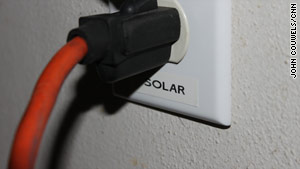
In this recent article on CNN, a fellow in Florida shows off his alternative-energy lifestyle. It is an interesting article and the fellow is resourceful. But is this a practical lifestyle for most of us?

Probably not, and not yet. Let me explain why.

To begin with, in terms of cost, most of these gadgets cost far more than conventional electricity generation. Solar panels have a finite lifespan, and over their lifetime, will generate electricity at a cost over double, perhaps triple that of conventional electrical rates.

Compounding the problem is that to store this energy, for use when the sun goes down, you have to have a bank of batteries in your home. These are wildly expensive and need regular maintenance, and need to be replaced about every 5-10 years. The "battery problem" multiplies the cost per kW-hour several times again.

So, a the present time, going solar isn't practical for the everyman. For hobbyists and enthusiasts, who are basically experimenting, it can be a fun game to play, but not a cheap one. And the massive amounts of technology involved have an energy cost of their own.

And the amount of work needed to build, install, and maintain such systems can be staggering. Again, for a hobbyist, it may be worthwhile. But for most of us, the labor involved to keep all that equipment running is just too much.

Yes, someday solar and wind power might become so cost-effective that that are in widespread use - even without tax incentives. And when that happens, you can bet the local utility companies will be the first to jump on the bandwagon. Because if the cost is lower, they will move to that technology.

Of course, the irony is, if enough people move away from oil as an energy source, demand for oil will drop. When demand drops, prices will drop. And suddenly, oil becomes "affordable" again and solar and wind power are "too expensive."

Funny how that works, eh?

UPDATE 2021:  In a decade much has changed, but going solar is still problematic at this time.  The utility companies have pushed through regulation reforms so that they no longer have to pay retail prices for electricity generated from homes.  This makes the payback for solar very difficult.

Even with cheap panels from China, companies are not pushing solar installs for homes these days - the labor to install is the big problem.  Panel lease deals used to be attractive, but what happens when you sell the home?  Does the new owner take over the lease?  This has already happened to a friend of mine.

And as others note, tax incentives are nice and all, but unfair to apartment dwellers and others who cannot take advantage of them. In fact, they end up being a windfall to the middle and upper-classes who can afford to invest in solar panels for the long-term payout.

I hope that solar becomes affordable down the road, but that road keeps getting longer and longer.  It is like self-driving cars - coming soon, next year!  Next year is always a good timeline, as you never need to update it.

The Cheap Vacuum Cleaner


We've had more expensive vacuums than this, but they have not worked better.

Vacuum cleaners are an interesting market. You would think they pretty much would have reached a design zenith ages ago. You'd think they would be pretty reliable, too. And moreover, you'd think they be pretty cheap. And you'd be wrong on all counts.

We've had a number of vacuum cleaners over the years, some expensive, some not. And the funny thing is, some of the best and longest lasting have been the less expensive models.

We had a Kirby, which was a hand-me-down. As you may recall, my hapless brother became a salesman for the brand and made one sale - to my Mother. It was a big, heavy, clunky thing that weighed a ton and cost over $300 back in 1980, which was a lot of money back then, and even today.

It worked well and lived up to its reputation, but the dust bag was, well, dusty. And when it eventually died, well, we let it go, rather than have it "rebuilt" at the factory as the Kirby people will do. Too many complex moving parts, attachments, and things. Commercial vacuums for hotels are similar in design, but made with fewer attachments and gizmos, and probably last longer.

We had a consumer-grade Hoover upright for many years after that. It worked OK, but the thing to remember about consumer-grade appliances is that you have to treat them as though they were made of plastic - because they are. Our cleaning lady would yank the plug out of the wall from across the room and slam the thing into furniture, breaking off bits and pieces of it, and then complain, "Senor Robert, the Vacuum no est bueno!"

So we paid a lot of money for an Electrolux. In the old days, the Electrolux canister was THE vacuum cleaner to have, and chances are, your Mother had it serviced by a local vacuum cleaner repair guy who worked out of a converted garage in his back yard. They were made out of stamped steel and built like tanks. As a boy, I would ride it around the house like a wagon, it was that durable.

Fast forward 30 years and the new Electroluxes are made of - you guessed it - plastic. It was not a badly made vacuum cleaner, just very expensive for what was now a consumer-grade appliance. Vacuum cleaner stores still existed when we bought it. By the time it died (about five years later) the vacuum cleaner store was closed.

What to replace it with? A trip to the local "big box" store revealed a line of Dyson "ball" vacuums that promise to liberate you from the bag. They are advertised on TV by a guy with a British Accent, and well, you know, anything with a British accent is classy and better.

But British technological prowess has taken a beating in the last few decades. Ask anyone who has owned a British car over the years, and well, you know how that works. Expensive, esoteric, breaks down often, expensive to repair.

And the Dyson cleaners were a lot of money - $300 or more, some much more. I was not sure I wanted to gamble my money based on a clever advertising campaign based on the American instinct to view anything vaguely British as classy and superior.

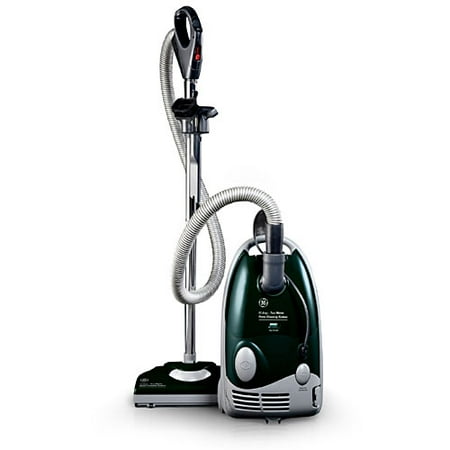
Instead, we bought a GE 2-motor canister vacuum, model 106766 at Wal-Mart for about $100, basically because it was about the cheapest thing they had on the shelf. They are about $150 now and harder to find. We ended up buying a second one for the lake house. And for the money, it has been a darn good vacuum cleaner.

Now that we don't have a cleaning lady, wear and tear is reduced considerably. Again, treat these like the consumer-grade products they are, and they will last for years. Ours have lasted over five years so far, a pretty good track record compared to the more expensive models.

The only problem I have had is that the connector for the power head (at the wand) came loose on one, and then arc'ed, causing corrosion and blackening. The power head stopped working. This is apparently somewhat common, as it is mentioned on many online sites. But it is not hard to fix, either, by cleaning the contacts and applying dielectric grease.

These units should provide a decade of good service, with reasonable care. It is a shame that we went through so many other vacuums over the years - most lasting only 2-5 years before breaking.

And the nice thing about a cheap vacuum cleaner, is that if it does break, well, you can just toss it away. But amazingly, parts for this machine are indeed available online. So if it does break, it can be repaired, if you are handy with tools.

Fancy expensive consumer goods are fine and all, but often they provide no better performance or service life than less expensive, mass-market items.

In vacuum cleaners, like coffee makers, oftentimes the cheaper model is the better bargain.

Now, like anything else, there is probably a point where too cheap is no bargain, either. Wal-Mart has a line of vacuum cleaners, mostly Dirt Devils, that are little more than $50. I doubt they would work as well or last as long. Sometimes there is such a thing as too cheap!

NOTE:  Cheap bags for the GE CN-1 can be found at the Online VacShop for about a dollar apiece.