Friday, June 5, 2015

Converting a Mountain Bike to a Cruiser Bike


 This simple handlebar stem extender can convert a mountain bike into a cruiser bike, for under $10.

Style sells.   Even things that you would think are utilitarian, are sold on style.  Even anti-style is style.  One reason I bought the Nissan truck versus the Toyota, is that Toyota has gone crazy with styling, putting swoops and boops on the sides of their pickups.   The Nissan looked more like a truck - slab sides, wheel arches, a plain and simple tailgate.   We invest a lot more into style than we care to admit.

When I was a kid, my parents got me a Schwinn "Stingray" bicycle, which was the style at the time.  It was sort of modeled after the chopper motorcycles of the era, and perhaps drag racers (later models came with slicks and even wheelie wheels).   As a bicycle, it was piss-poor, as the riding position was horrifically inefficient and gearing not suited for road riding.

My older brother saved up to buy a "10-speed" bike, and these at the time were styled after racing bikes, complete with "rams horn" handlbars, that looked like the kind the racers used at the time, but were very uncomfortable for daily riding.   The narrow rims, suited for racing, bent easily on curbs and potholes.  Nevertheless, this was what style of bike was available for the next two decades.

Mountain bikes became popular in the 1980's, and I bought my first one in 1983.   It was so much nicer than a "10-speed" mostly because it had 18-speeds.  It also had a more comfortable seat, a more upright riding position, wide forgiving tires and rims, and was much better suited for urban riding and riding on dirt and gravel bike paths.

But of course, the style changed before too long.  Serious mountain bike riders, who plunge off cliff-like mountains and perform deeds of derring-do, wanted more "serious" bikes, with full suspensions, a hunched-over riding position, handlebar extensions, and the like.   And the bike industry supplied these - and aped the style of the bikes onto lesser bikes sold to the general public.

For example, I borrowed a neighbor's bike, which he bought at Wal-Mart.  It has a full suspension and looks, from a distance, like a serious mountain bike.   But when you look up close, you realize that it is a kiddie sidewalk bike styled to look like a serious mountain bike.  The handlebars, the brakes, the derailleurs, etc, are all made cheaply and are off-brands.    The styling, however, is copied faithfully, much as cheap 10-speeds of an earlier era faithfully copied the road-racer look for customers who would never be racing.  

The 1999 Trek 6000's we bought were borderline "serious" bikes, according to the TREK catalog of the day (not being listed with their more plebian "recreational" street bikes).   But they were not "hard core" mountain bikes, either.  I suspect most were sold to people like me who never took them down a mountain, but instead road them on the street, the local bike path, and the like.

And for 16 years, they have held up well, being a well-made product.   But in 16 years, we have not held up as well.  And the hunched-over riding position is less comfortable for middle-aged men with bad backs and compressed discs.

So, do we buy new "cruiser" style bikes?   These, too, are an example of style gone awry.   They are sold as "beach bikes" or whatnot, and are designed to look like Jimmy Buffet just rode in on it.  They have tiki baskets, surfboard themes, or "woody" trim.   They also weigh a ton, have no gears, are geared too high (like most cheap bikes are) so they are hard to pedal and no fun to ride.   They are usually poorly made, too, so even at $119.99 they are no bargain.

Of course, you can pay a lot more for a quality cruiser bike, and the quality ones are very nicely made.  Or one of these commercial-grade bikes, which I would love to buy, but the one I want starts at $1000, hand-made in Brooklyn, not including options.   I've bought cars for less.  And no, I don't need to ape the "style" of Park Slope hipsters.

But could the old mountain bike be upgraded for a new era?   Thankfully, you can buy on eBay, for less than $10, an adapter that will raise the handlebars on an older Trek-style bike.   It does take about a month to ship from China, but it is worth it.   And you may need to replace the front brake cable, as it may not be long enough to reach, once the handle bars are raised.

But it seems to work well, and Mr. See loves his bike again.   And it was a lot cheaper than buying a new bicycle.   And best of all, it comes off so the bike can be reverted to its original configuration.

I may end up getting one for my bike, even!


Loser Talk


Although satire, this "Kelly" cartoon does make a point.  Whining on about the "oppressive evil corporations" never solves your personal problems in life.   And it doesn't do much to reform the oppressive evil corporations, either.


In a previous posting, I mentioned off-hand:
"And these rules weren't created by accident or fostered by the "greedy insurance companies" (if you still think in phrases like that, you are destined to be broke the rest of your life, by the way)"
And I think it is a comment that bears expanding upon.   Are people losers because they talk like this, or are they talking like this because they are losers?   I think it is a little of both, as the loser-attitude will surely make you a loser in the long run.

What sort of things am I talking about?   Well, you know the drill, as you've heard it from family, friends, and co-workers, and maybe you've even said these things yourself.   We all do at some time.
"Wal-Mart is evil, I would never shop there!"

"The Chinese are going to take over our country!  They own all our debt and will call it in one day, then what will we do?"

"I only buy American cars!" (said while leaning up against a truck made by an Italian company, assembled in Mexico).

"Those foreigners are taking away our jobs!"

"Immigration is destroying this country!"

"We should go back to the good old days!"

"The problem with America is the greedy people on Wall Street are taking away all our money!"
And so on and so forth. 

What is wrong with these sayings?   Well, some of them are factually wrong, such as the immigration thing.   The same phrase is also ironic, as it is usually spouted by someone whose ancestors were immigrants - not long ago.   Even the ones that might have a sliver of truth to them are dangerous, as they are just excuses to externalize your problems.

Losers externalize.   They blame their problems on everyone else.   It isn't their fault they got fired from their job - some "immigrant" took it away.  Or maybe one of those minorities they hired on a "quota" or something.   There is always an excuse - usually some intractable, unseen force at work, that made them a victim in life.

They never look inward to see whether going out on strike for six years (yes, it has happened) was maybe the reason their jobs were outsourced.   Maybe showing up late, leaving early and stealing from the company are to blame.

Nah.  Has to be immigrants.

Externalizing is for losers.  And losers always look for excuses for their own failures, rather than own up to them.   And owning up to failure is hard to do - but it is a profitable enterprise.   I have failed early and often in life, and my failures are what educated me and made me the person that I am.   It would have been easy to blame my failures on others (and we all do, to some extent) but deep down, I know that in every situation where I have failed spectacularly, it was largely my own malfeasance at work.

And I learn from this and move on.   For example, not smoking pot all day turned out to be a good move, as smoking pot all day was what got me tossed out of prep school, high school, and college.

Others, including my own siblings, took a different tack.   Smoking pot wasn't the source of their problems (and indeed, they still smoke it, in large quantities).   No, it was the evil corporation they worked for, their asshole boss, or the fact that marijuana is illegal.   It was always someone else's fault they failed to save for retirement or that success eluded them or a marriage was failing.

And when you take this externalization route, well, nothing ever changes because you are always right all the time about everything and thus, you never change your course, and sail off the edge of a cliff in all your evil-corporation hating glory.

Some of course, take this further, and go out in a blaze of gunfire.

Yes, it is hard to say, "I was wrong about a lot of things" but in life, we end up being wrong most of the time.  As I have noted, we are very inefficient beings, operating at a 1-2% efficiency on a good day.   Our robot overlords will no doubt do better, as soon as we get around to inventing them.

Loser talk is a dead-end.   And hanging out with people who engage in loser-talk is also a dead-end.   If your friends are spouting the drivel listed above, chances are, you'll start spouting it too.   And this will make you unattractive as a mate, a friend, and an employee.

And then there is the hypocrisy factor.   One gentleman tells me he "never buys anything made in China!" as the Chinese, for some reason, are no good.   But the joke is on him, as almost half of everything he owns is made in China or has components made in China.   For example, the iPhone he e-mailed me that missive from.   Or half the parts in his "Made in the USA!" car, or all the crap he buys at the wholesale club.

Saying crap like that doesn't make you smart, it doesn't affect our trade relations with China one iota, it doesn't "preserve jobs in America" - it does nothing but make him an old crank and a hypocrite of the first order.   It also makes him real fun at parties.

We live on a beautiful retirement island that the State of Georiga just spend millions and millions refurbishing.  New parks, miles of new bike paths, new stores, new hotels, a new convention center, and so on.   And by law, 2/3 of the island has always remained undeveloped.  So all this improvement and no over-development.   It is a beautiful paradise vacation spot.

Not to hear the "locals" tell it!   And I've seen the same thing in every vacation town.   One gentleman bent my ear at the Club Hotel bar (where drinks are half-price, every Wednesday evening) about how rotten it all was, just beneath the surface.  He was an angry, bitter misanthrope, who stayed at home all day, ate at chain restaurants on the mainland, and refused to patronize any of the new businesses on the island because "they are all no good!".   Sort of like our "made in China" guy, and I suspect he has similar feelings on that topic.

Or take another group of people who are outraged.   What are they outraged about?  The war in Syria?  Beheadings by ISIS?  Child brides being gang-raped in India?  Vladmir Putin starting World War Three?

No.  They are outraged that the hotel has beach chairs and umbrellas - get this - on the beach and uses a golf cart to haul them on and off the beach in the morning and night.   This is, we are told, a gripping issue that will destroy our world.

What makes people feel this way?   Like with hoarding disorder, it is a desire to save the world and I guess we all do this to some extent (maybe why I write this blog?  Fatwa on me!).   

The problem with this mentality is that often the world doesn't need saving, and more often, the efforts to "save" things don't really accomplish much.  Sadly, these "Save the World" types are usually the first to pat themselves on the back when things go their way, not because of their actions, but because of other factors.

For example, in 2008, "Linger Longer Developers" proposed a plan to revitalize our island, including a huge hotel on the beach.   It was kind of ugly and it went nowhere because in 2009 the economy collapsed and "Linger Longer" could barely keep up with its existing projects, much less develop new ones.   So a smaller and more appropriate plan was made - although still extensive and still hated by residents.

But the "We Saved The Island" people will tell you that it was their yard signs that did the trick!  And yes, this is narcissism of the first order.

The reality is, of course, that the island is a nice place to visit, or even live, and the new buildings, parks, bike paths and hotels are beautiful, and the ones they replaced were literally rundown roach hotels with rats in the kitchens.   Revitalization was long overdue.  Buildings have a design life.  And cheaply made buildings from 1970, sitting next to the ocean, definitely fall apart over time.

But the hypocrisy factor goes beyond this.  How many people decry "the evil corporations" while at the same time work for one or are applying for a job with one?   You can't have it both ways.   How many people decry how evil the government is, while at the same time work for it?   How many people tell you that "government spending" needs to be cut, but at the same time have put their house in a Medicaid Trust, so they can have the government pay for their nursing home care?  We all want it both ways, don't we?

And while we're on the subject, how many people decry the "evil corporations" but at the same time are shareholders of them?    We all decry profit, that is, until the quarterly reports come out, and then we are incensed that Acme corporation's profits have dropped from 5% to 3%.

Oh, right, that's another point.   Most companies out there have piss-poor profits.   The "loser talk" is that companies are raking in Billions in profit and that it is all unfair.  But if you look at P/E ratios of most companies, few are making more than a 5% return on their investment (a P/E ratio of 20, which would be considered low!) while most are making far less.

But to hear the losers tell it, everyone else is swimming in a Scrooge McDuck Money Vault.

But all of that really doesn't matter.  What matters is what is on your own plate, on your own table, and in your own bank account.   You can't get ahead in life railing against life.   You can't "make a difference" by chosing paper over plastic, either.   You can, however, keep your eye on the ball, and think long and hard about the decisions you do make and how they affect your life far more than the evil corporations or conspiring governments, or immigrants or minorities do.

Wednesday, June 3, 2015

The Retirment Meltdown is Here..

When people make horrifically bad financial choices and are then faced with a bleak retirement, do we blame them?  Or is this a predictable outcome of a system we have created that forces everyman to be a sophisticated investor?  The only real answer is, of course, don't make the mistakes these people made!


A reader sent me a link to this article, which describes how the 401(k) generation is really screwing things up in a big way.   Retirement is hitting these folks like a baseball bat to the head.  As my reader notes, "[There are] so many problems with this story."

You want to feel sorry for these folks, but then again you don't.

But that is the problem with the self-funded retirement.   Smart people and Idiots both have to save for retirement.  The idiots, of course, will predictably do idiotic things.

This is all going to blow up in a few years.  It is starting now...  It is pretty much what I have been saying would happen, in my blog.  From the article:
"Many Boomers didn't save enough, invested badly or raided their retirement accounts."
That pretty much sums it up.  Add in, "Many boomers refinanced their houses over and over again to take out equity to pay for cars, remodeling, vacations and the have-it-all-now and pay-later mentality".

About half the homes here on retirement island are paid for in full.   But a lot are not.  For pensioners, this is less a problem, particularly when husband-and-wife are both retired NYS school teachers each pulling in $70K  a year.

For those retiring on their savings?   Ouch.

Oh, and there are a few who have done the reverse mortgage thing as well.
"Snyder, who gets by on a $1,215 monthly Social Security check, says she didn't even know that her husband, Theodore, had taken out a $225,000 reverse mortgage on their Las Vegas town house. When he died in 2010 at age 77, the bank wanted its money back and "would not talk to me," Janet says."
Typical of most married couples - they don't talk about money.  And Dad takes out a reverse mortgage that doesn't list his wife on the policy, so it would continue after he dies.   Of course, this meant he got more money in the short term.  And after he's dead?  Fuck her!

Others, of course are complaining because the caviar and champagne are too warm:
"In mid-2010, Tod Lindner lost his oceanfront home in California's Marin County. He ran into trouble after the finance company that employed him was acquired and the new owners refused to pay him fees he thought he was owed and which he was counting on."
Wow, someone loses an oceanfront home.  Hard to feel sorry for him.  He could have sold it and then lived like a schmuck like the rest of us....

People are just plain greedy, convinced they were financial superstars, and that they would "beat the system".  The system beat them:
"Lindner had bought the house for $330,000 in the late 1980s. But he'd refinanced to pull out money to invest, swelling the mortgage to $680,000..."
Greed, plain and simple.  And what my Fidelity guy says I should do.  Bad advice!  In retirement, you want no debt, not more debt.  And no, borrowing money to "invest" is not "investing" it is just borrowing and them gambling with the proceeds.

Like our reader said, so many other problems with the article.  People getting greedy, being unrealistic, and just plain stupid.

This one stands out:
"At the time, Lowe was making $51,000 at an environmental consultant. Kanz was experimenting in commercial fishing and earning around $10,000."
Experimenting in commercial fishing?  I think that's another way to say "unemployed".  They took out a "liar's loan" for a whopping $350,000 at the height of the bubble market, and claim that someone else lied on the application.   And of course, it was an interest-only toxic loan that is set to explode in their face.   They should walk away from the house, but instead are suing the finance company.   Welcome to America.   Sad thing is, they'll might even win (it is California, after all).

I guess the really sad thing about this article is just that - it posits all these people are victims of the economy, finance companies, banks, employers, or whatnot.   It doesn't really drive home the point that these folks made some really bad decisions with large amounts of money - hundreds of thousands of dollars worth.

And sadly, the implication is that we should bail these people out for making bad decisions.   Folks who "had it all now" and lived the high life, while the frugal scrimped and saved.   And the frugal will be asked to pay for these spendthrifts' retirement now - I guess including oceanfront houses and $350,000 mortgages.

The reality is, of course, that few, if any of these folks will get "mortgage relief" through litigation or other means.  Few will be made whole.   Most will have to live with their decisions, which will mean having to live on Social Security, move in with their family members or friends, or buy that park model in the over-55 community.  Retirement for them will suck, and they will constantly be worried about money.

And I say this because I have seen it happen to friends of mine - who blather on about the "good old days" when they leased a new Cadillac every year but now can't afford to put gas in their old clunker.

The poor will always be with us because people will always make poor decisions.   And when it comes to the 401(k) retirement, a lot of people are just not planning at all, or planning very poorly.

How sad.

Tuesday, June 2, 2015

Glass Coverage?

Do you need to insure your windshield?  Probably not.

We recently got a rock chip in the windshield of the truck.    A small rock hit the windshield of the truck, and after sitting out in the Florida sun in the Keys, a 10" crack formed.  Time for a new windshield.

In Florida, by law, if you get comprehensive coverage, it covers glass with no deductible.  The auto-glass lobby must have friends in Tampa.  The idea is one of those carrot-and-stick things yet again.   It encourages people not to drive around with cracked windshields (as they do in Georgia).  It eliminates litigation over rock damage from construction vehicles.   It reduces (I was told by the glass guy) road rage by folks chasing down "the guy who cracked my windshield".

I suspect, however, that like most regulations, it was the auto glass lobby that paid for a lot of hookers and scotch and got the law passed.   Act Shocked.  It is also the law in a number of other States as well.

In Georgia, we have no such law, and I have a $1000 deductible comprehensive plan that basically pays me back something if my car catches fire.   But little shit like windshields?  I pay cash.

Is this a bad choice?  It depends.   I have been driving cars now for 40 years.  I have never had a windshield crack - that is until now. 

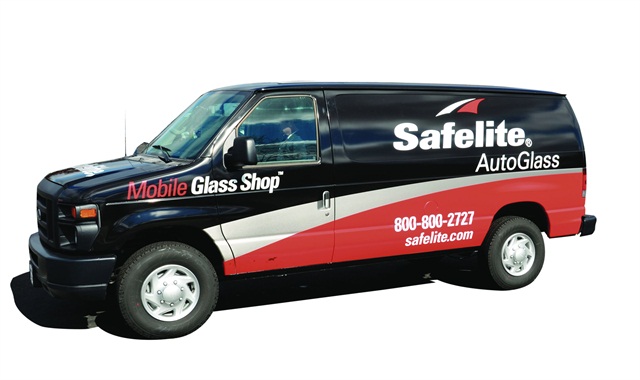
The good news is, the folks from Safelite will come out and replace it for $350 or so ($30 less if I went to their store).   So the cost of replacing a windshield is not very high (I suppose I could have shopped this around and perhaps even gotten a windshield from a junked car and had it installed).

But if you add up the additional cost of glass coverage over 40 years of driving you can see that I have come out way ahead - by thousands of dollars.   Monthly comprehensive and collision coverage is $22.10 for the Nissan truck, with $1000 deductible.  To go to a non-deductible policy would raise this to $51.20 or an increase of $29.10 a month.   In about two years, well, you've paid for that windshield.  Over 40 years, twenty windshields.

And yet a lot of folks see it the other way.  "That windshield cost nearly $400!  How can you possibly pay for that?"   And the reason they think this way is that they get a paycheck every week, and each paycheck is spoken for by a number of bills and debts to service, and the idea of having an spare $400 laying around is impossible.
_____________________________

One thing the insurance company will cover with no deductible even if you have a $1,000 deductible policy, is windshield repairs.   If you get a rock chip, they will send out a repair guy to fix it with one of those glue kits, free of charge.
_____________________________ 

But of course, one of those bills is for car insurance and Joe Paycheck has full-boat coverage on his Camry, lest this $10,000 asset be put in peril.

And sadly, most people think this way - paranoid about small losses in their lives, but oblivious to the larger ones.  And the powers-that-be know this, and make a lot of money from people's little fears.

Extended warranties on cars, for example, are often a bad deal, as I have explained before.  The part of the car ownership they insure is the part where the car has the fewest repair problems.  Moreover, they are heavily marked-up and sold on fear and high-pressure sales tactics.   "A new transmission could cost $5,000!  So paying $4,000 for an extended warranty is a good deal!" - that is, only if your transmission does blow up, and even then, you might be better off, at that point, installing a used transmission.

And those are just the legitimate extended warranties.   I get postcards and letters all the time in the mail saying "Warning!  Your Auto Warranty is about to Expire!  Call this number NOW!" and of course they are not from the "factory warranty service" but some fly-by-night company who will sell a lot of extended warranties and then go out of business before the first claim is filed.

Con artists know that people who live in fear are patsies, so they can sell fraudulent "Peace of Mind" quite easily.

But "legitimate" companies are in on this deal as well.   Circuit City (did that count as a "legitimate company"?) used to push extended warranties on its customers with the old hard sell.   They tried to sell me a $25 warranty on a $99 television set once.   What a joke.   Even Lowes will offer me "extended warranties" on items as inexpensive as $15.   Are people really afraid that their toaster will break and leave them stranded?  Then what?  You have to eat untoasted bread?   The horror!

Yes, you should have insurance.   It is a smart move.   Businesses have insurance so that some small mishap doesn't end up putting them out of business.  It is a way of ameliorating risk - spreading risk around.  But you don't insure trivial things.   The cost/benefit analysis never works out.

I mentioned before that I pay about $15 a month for $300,000 of liability insurance on the M Roadster.   If I want it, collision and comp is another $16 a month - a dollar more to cover a $12,000 car!   A million dollars of umbrella liability coverage costs about $200 a year.

Why are open-ended liability claims so cheap to insure, but trivial things like car fenders and windshields so expensive?   It is a good question to ask, and I think one reason is, insuring trivial things is far more profitable for insurance companies.

For me, insurance is a necessary evil in life - a way of reducing, but not eliminating, risk.   It is entirely possible to over-insure yourself to cover every possible contingency.  And a lot of people like to think this way.  I have been regaled with tales on car sites by people who wrecked their car and then talk about it like it was a spa vacation.  "They gave me a new Mercedes as a rental for six months, and then paid for a massage therapist!   I got my car back and it was in better shape than before, as they fixed all the little dents and scratches I had put on it over the years!   It was great!   I am so glad I've been paying $1500 a year for full coverage all these years!"

What they fail to realize is that what they have been paying was enough to buy a new car if they had invested that amount over time.

Of course, having no insurance at all might not be a workable solution either.   A high-deductible policy is a good compromise - providing some coverage to help make you whole while not costing an arm and a leg.   It is also insurance that gives you an incentive not to get into an accident.

Full-boat insurance, on the other hand, encourages fraud.   If you have a policy that offers to pay you "full replacement cost" on a car or boat, what is your incentive to not set your car or boat on fire after a year or two and get all your money back?   I mean, other than getting caught and going to jail, right?   And not surprisingly, these sorts of policies encourage fraud, which is why the rates are so high.

Similarly, low deductible policies encourage people to file trivial claims - for small dents and scratches - which cost more to process the paperwork than the actual cost of repair.

There is no such thing as a free lunch.   Well, not most of the time, anyway.  One thing the insurance company will cover with no deductible even if you have a $1,000 deductible policy, is windshield repairs.   If you get a rock chip, they will send out a repair guy to fix it with one of those glue kits, free of charge.   So before you buy one of those $20 windshield repair kits and struggle with isocyanate glues and hypodermics, call your insurance company.  They may send the glass guy out there, free of charge, to fix the windshield, and if it is done right, it may prevent a crack from forming.

I'll take advantage of that.   But windshield insurance?   I think I'll wait another 40 years and see how it pans out.

P.S. - I checked off "tinted windshield" on the online box (which is linked to Safelite directly from the GEICO website) and the windshield they installed is tinted at the top, unlike the stock windshield.   So actually, this was an upgrade.   Very happy with it, and the Safelite people.  Installed in my driveway in about an hour.

UPDATE 2020:  Since making this posting, I have used Safelite twice now, for free windshield repairs - including a rock chip on the "new" windshield they installed.  I had to drive to their facility, but they seem to have offices in most major cities, and even minor ones.   GEICO will pay for rock chip repairs, but check with your insurance company to see whether they cover this.

Free is a price I like!

Monday, June 1, 2015

Carrot and Stick and Unintended Consequences

What motivates you?  The Carrot or the Stick?

One thing that took me a long time to understand is how a society uses the carrot-and-stick approach to motivate us to do things that benefit society.  Sadly, often these motivators end up having unintended consequences as our brains are neural networks that "learn" new pathways that are not what the carrot-and-stick people intended.   Some call this cheating.   Others call it game theory.

Take for example, car insurance.  It took me a long time to learn how to deal with this, and I was whacked with the stick, over and over again.   Our society wants people to drive safely.  Why this is, is readily apparent if you think about it.  Our transportation system is about 99.5% automobiles, so just take your "public transit" fantasies and put them in your knapsack with your patchouli oil and your stash.  Because that's all they are - fantasies.  Trollies and Zepplins are not coming back anytime soon.  Like it or not, we are a car culture.

And the slaughter on the freeways is astounding.  Tens of thousands of people die each year in car accidents.  We have telethons for Muscular Dystrophy every year (well, until this year, anyway) but no telethon for the 30,000 to 40,000 people killed in car accidents every year.   It is a silent epidemic, and no one talks about it, because we are a car culture, and cars are good for business, and Americans love their cars (and Europeans and Japanese, and Chinese, and just about all humans on the planet).

So that is why NHTSA is funding self-driving car research - for decades now.  It isn't just Google who is into this - they are the Johnny-come-lately in the robot car business.   And that's why your car now has six airbags and a seat belt that automatically tightens in a crash.  And why we have seat belt laws - and why the carnage on the highway has gone down somewhat, but has not abated entirely.

Until the Google Car is a reality, we have to rely on individual drivers - millions of them - to make the right decisions, every time, every day, dozens of times a day, or at least hope their bad decisions don't lead to an accident.

To encourage safe driving, nearly every State has a draconian set of rules and laws in place to encourage safe driving.  This is the carrot and the stick.   If you get a ticket, points go on your license, and your insurance company jacks your rates.  You get the stick.   If you are young, you get twice as much stick - maybe 5-10 times as much.

If you drive more safely, your rates go down.  Carrot.  When you get older, you get a lot of carrot.  I pay about $31 a month to insure the M Roadster - a car that I could not even imagine getting coverage for when I was 22 years old.  Lots of carrot for old people.

You get into an accident - more stick.  You get a DUI - lots and lots of stick.   And these rules weren't created by accident or fostered by the "greedy insurance companies" (if you still think in phrases like that, you are destined to be broke the rest of your life, by the way).   It is a system that was intentionally designed by our elected representatives - our government, our society to encourage certain behaviors, and strongly discourage others.

Of course, there are two problems with the carrot-and-stick approach.  The first is the unintended consequences that can occur when you offer carrots for certain behaviors.  The second is the "beating the donkey to death" scenario, where no matter how much stick you apply, people's behaviors refuse to change.  You can either beat the donkey to death, or decide maybe that you really don't need to modify his behavior after all.

With regard to the first, our tax code is an excellent example of the carrot-and-stick approach to life.  I always say that the tax code is not an investment guide and yet most Americans look at the IRS as their investment adviser, often chasing deductions and tax credits as if that was the way to get ahead.  You get a tax credit for buying an electric car.  Buying an electric car isn't going to make you rich, however.  If you need one, get it and take the tax credit.  But don't confuse tax incentives with investment advice.

For example, the home mortgage interest deduction is the big sop to the Middle Class, and most folks believe that having as much mortgage debt as possible is a good thing, as you can "deduct the interest" and lower your taxes.   Taking a deduction is a good thing, of course.  Seeking out massive debt so you can get a pittance back on your taxes makes no sense at all.

And what makes sense at one age or one scenario makes no sense in another.  When I was a young hot-shot lawyer making the six-figure salary and all, having mortgage debt for my house, and a vacation home as well as depreciation deductions for investment properties really lowered my annual tax bill.   

But as I get older and lurch toward retirement, with less income and less taxes to pay, such deductions make less and less sense.   When I retire, I will live on my savings, and my taxes will be based on how much I withdraw from my IRA.   If I withdraw a lot, I end up paying a lot more taxes, as our tax system is progressive.   So it makes sense to structure my life to stay in the 15% bracket, where the effects of a mortgage interest deduction are minimal.   It makes sense for me, at this point in my life to be debt-free, take out as little as possible, and pay less in taxes and screw the deductions.

On the other hand, my neighbors who have a combined income of over $100,000 in government pensions (!!!!) have a huge tax bill.   They have mortgage debt and the income to service it - not by choice, either.   They have little in savings, too.   But their situation is becoming scarcer and scarcer.  Our generation - the 401(k) generation - has to live on savings.  So chasing deductions in retirement makes no sense at all for us, as we won't see the benefits of such deductions, or the benefits will be de minimus.

The tax code is rife with carrots and sticks, and it is the major way Congress tries to control our lives.  You may think Gay Marriage, for example, is a "social issue" - but the main reasons behind it are not social, but tax-based.   I don't want my partner to pay 50% of my IRA in taxes when I die.   If married, he pays no taxes, but only the 15% income tax when he withdraws.   It is not a matter of being "recognized by the community" or some such nonsense, but being recognized by the IRS.   It comes down to money.  Carrot and stick.

But often, the carrot-and-stick approach can backfire.   If you make very little money, you pay no taxes, so that is an incentive to make less money.   Moreover, since people in this country are decent folks who don't want you to starve, if you make less money, you qualify for all sorts of government benefits, such as TANF, SNAP, WIC, Obamaphones, Section-8 housing, and more.   In a way, these are an incentive to make less money, and yes, people have been known to structure their "family" lives to make them more eligible for government benefits.  Act shocked.   These are the unintended consequences that occur with carrot-and-stick incentives.

Unemployment is another good example.   During the 2009 recession, Congress extended unemployment benefits for years so that people could collect government money.   Unfortunately, this meant that a number of folks were making more on unemployment than they were working at a job.   And many of these folks "downsized" or RIF'ed or laid off or whatever at age 55 (the magic age for layoff) were forced, eventually, to take lower-paying jobs as part of a second career.    What extended unemployment benefits did, was to allow them to remain unemployed a lot longer.   Why take that service-sector job, when "unenjoyment" pays more - or about the same?   Again, unintended consequences.

Of course, the big granddaddy of them all - in terms of unintended consequences - was the Real Estate Meltdown of 2009.   Since the government encouraged us to borrow on our homes, many folks did. I did.  You probably did too.  Why pay a monthly car payment or a credit card bill, when you can roll it over into a home equity loan or re-fi, at a far lower rate and deduct the interest as well (perhaps not legally, but the IRS didn't check much)?

And since you can take a depreciation deduction on an investment property, why not buy a home or condo and speculate in Real Estate?  You can knock thousands off your taxes and maybe make a little money in the process, right?

So the government provides the carrot.  And boy did the Donkeys go after it!   Real Estate went crazy in the 2000's, and despite all the carrots and a huge Capital Gains stick (which was the financial crises that got me started writing this blog!) I got out.  Screw the carrot.  Screw the stick.  The people with the carrots and sticks were trying to lead us off a cliff!   I was one of the lucky few who saw it in time.  Other folks, chasing the carrot, ran right off a cliff.

So the government - or society, take your pick - needs to be careful about carrots and sticks.   Just because it would be "nice" to pass a law to do something, doesn't mean we should.   For example, in France recently, they passed a law requiring restaurants throwing out food to donate it to a shelter.  This sounds, to a liberal, like a good idea.  And that is the definition of a liberal - a person who thinks every good idea should be a law.  Liberals are not evil, but the unintended consequences of their good intentions often are.

Why is this a bad law?  Well Mark used to run a gourmet grocery store.  Every day they would throw out a lot of stale bread (which would be hard as a rock by next morning) baked goods, expired or soon-to-expire goods, fresh produce, and the like.  Now, most stores use a lot of this stuff.  If you buy the soup in the deli, chances are it is made of soon-to-expire canned vegetables or fresh vegetables ready to rot.   And those croutons in the salad bar?  Yesterday's bread, toasted.  Most food stores are pretty efficient with food.

But even then, there are leftovers.   Not wanting to see good food go to waste, he called several local shelters and food banks.   They all wanted the food delivered, so he would have to pay the company driver overtime to use the company truck to deliver these goods.  OK, so already this is costing them more.  But he wants to "do the right thing" - right?

Well, the shelter only wants 200 loaves of pre-sliced white bread.  They don't want baguettes or fancy artisanal breads.  They are making baloney sandwiches for 500 people, and they all have to be uniform and the same, otherwise the bums, excuse me, clients, get upset and knife each other.  Ditto for baked goods. Yes, they want 500 donuts, but all the same, please, delivered.

Odd lots of expiring food?  Not wanted.   So Mark would make grocery bags of food and hand it out to some "regulars" who came to the loading dock around closing time.  Even that is fraught with peril, as the City did not want homeless people congregating at the store, nor did the neighbors.  And if there wasn't enough food for everyone, well, fights would break out.  The corporate office was not pleased.

And let's not forget, this took a lot of time and effort to do, and without any profit to the company.  If you start becoming more concerned about the free food you are handing out on the loading dock, you forget about the paying customers coming in the other end of the store.  And that's why you're in business, right?  Sorry, lady, you'll have to wait.  This homeless drug addict is waiting for his free sandwich.

Sometimes, "doing the right thing" is hard to do.   Maybe a better approach is for the government to hand out food vouchers instead.  Oh, right, we already have that, it's called food stamps or SNAP.   That is a lot more workable approach to feeding people than mandating that restaurants donate food.  And how does France propose to enforce this law?  Dumpster police?  Fines?  The amount spend trying to salvage a half-eaten baguette would pay for a dozen meals.  It makes no sense. Unintended consequences.

UPDATE:  Many restaurants in France are dealing with this new law in an unexpected way.   They cannot recycle or donate odd lots of food or plate scrapings.  So every patron has to either clean his plate and eat all the food, or take home "leftovers" in Styrofoam clamshells - a disgusting habit here in America.  The food is still thrown out - by the patron, not the restaurant.  Unintended consequences, plain and simple.

The second problem with the carrot-and-stick approach to governing society is the beating the donkey to death scenario.   If you whack your donkey on the rear end, and he doesn't budge, what do you do?  Whack him more?   Pretty soon, you've flailed his flesh and he hasn't budged an inch.  You keep beating and beating, until he is dead, and now you have to go out and buy a new donkey.  Guess what?  Same thing happens again.

This is what happens when society passes laws that are impossible to enforce or that everyone just ends up breaking.   Prohibition is a good example.   No matter how much money the government spent trying to enforce prohibition, people kept drinking.   You could throw them in jail, take all their money, or even kill them - folks kept on drinking.

The 55 mph speed limit was another.  A good idea - to save gas during a fuel crises - that had unintended consequences in that it made everyone a scofflaw.   People still were speeding, but they used CB radios and radar detectors to avoid the law.   Respect for law enforcement and the law decreased.   When the law was finally repealed, an odd thing happened.  Speeding went down, only because what we defined as a "crime" changed.  Today, I can drive on I-95 in a 70 mph zone, and many folks aren't even doing the speed limit!

Today, we see this with drugs.  We have draconian drug laws and staggering mandatory minimum sentences.   You could serve less time for killing a cop than you would for selling drugs.   What sort of unintended consequences  does this produce?   Perpetrators who are willing to shoot a cop, rather than be arrested for a drug bust.  Logically, it makes sense, in terms of risk and reward (carrot and stick) evaluation.

And has the use of drugs abated?  No, if anything, it has expanded, as users look to alternative drugs when their main "high" becomes scarce.   Some in our society are starting to think that maybe we are beating a dead horse or at least beating a dead donkey.   Maybe if the donkey won't move, we should either give up, or try the carrot instead.   Because no matter how draconian the punishment, people seem to want to do drugs.  In Arab countries, they behead people for dealing drugs.   Based in the number of beheadings going on, it doesn't appear that the drug traffic has stopped.

And that is where a lot of Libertarians start to make (a little) sense.   If we are going to govern ourselves, maybe we need to minimize the amount of government to what is enforceable and what makes sense.  Trying to control every aspect of a person's behaviors, through laws, tax incentives, or whatever might not be such a good idea.  Just because something sounds like a good idea doesn't necessarily mean it should be a law.

For example, back in the 1940's, my great uncle Teddy used to hang out in gay bars in Greenwich Village.  Being gay back then was basically illegal - and society shunned gay people.  Yet the urge to be gay was so powerful that people risked everything to meet in seedy bars run by the Mafia.   And by agreement with the Police, the Mafia would allow the Police to "raid" such bars occasionally, and then the next day, the arrests would be reported in the paper, with names, and sometimes pictures of the "perverts" arrested for... well, basically drinking a cocktail in a bar.

And folks like my great-uncle would "do the honorable thing" and blow their brains out with a revolver.  That's how our society worked back then - lots of stick.  And it didn't change people's behaviors at all.

Today, we've decided that punishing people for being gay really makes no sense.  Well, most of us have - Alabama is holding out - on a lot of things.   Why bother trying to force someone to behave in a certain way if it doesn't affect society very much?   How they drive their car is far more important than who they fall in love with.

And today, with video cameras and license plate recognition systems and whatnot, law enforcement has far greater capabilities to catch and prosecute law breakers.   We need to figure out how this new technology will impact our society - in an era where technology means 100% enforcement of the laws.   Perhaps today, we need to decide which laws really are worth enforcing and chuck the rest.   Because we could end up creating a society where everyone is a criminal.  Carrot and stick, once again.

But, that was not the point of my posting (and I did have one).   The point I did have was that as an individual in society, you have to understand what these carrot-and-stick scenarios are all about, and why they are put into place.   What distinguishes the poor from the rich in our society is the ability to understand how the system works, and to either work with it (as the middle class does) or work around it (as the wealthy do).   Only the very poor try to fight it.  I fought the law, and the law won.

Our society discourages smoking, through laws and taxes.  The rich gave up smoking years ago, or if they do smoke, it is the occasional illegally imported Cuban cigar.   The poor are addicted to cheap cigarettes and pay through the nose to smoke them.  The middle class just stopped smoking altogether.

And so on and so forth.   Rebelling against society turns out to be the worst move.  Giving in to the carrot-and-stick is usually a better move.  Figuring out how not to get caught is usually how the wealthy get by (they never went dry during prohibition, did they?).

Being a middle-class schmuck, I figured out eventually that giving in was the easiest way to get ahead.   And I understood why these carrot-and-stick deals were in place.  Smoking pot was fun, but as Daniel Tosh once said, "I'm not in the 7th grade anymore and I've got shit to do."   So I gave it up, and got ahead.   Others, well, they ended up in legal troubles (stick) and never succeed much in life (no carrot).  I eventually learned to drive more slowly (stick) and my insurance rates went down to nothing (carrot).

On the other hand, I realized that some carrots-and-sticks didn't apply to me.   For example, the idea of perpetual debt - so ingrained into our society and tax code - really didn't make sense for me.  Without the burden of a huge mortgage, I could survive on a very small amount of money, which meant paying a lot less taxes (carrot!) than making big bucks and taking big deductions.   The bonus, of course, being that I work only 20 hours a week now, if that.  Which is why I have time to blather on about shit like this.

Maybe this doesn't make much sense.   But it is a thought that occurred to me.  If you are "struggling" in life and being hit with bank bounce charges (stick) and getting into "hassles" all the time (more stick), maybe it is a good idea to step back and figure out why these things are happening.  Because if you don't, it appears that just a lot of random shit is happening to you, it raining one day (stick) and sunshine the next (carrot) - and your behavior not seeming to affect any of this.   This creates a condition called learned helplessness where a person can't understand how their behavior affects their environment.  To them, carrots and sticks are random events that occur for no rhyme or reason.   And it is not surprising that the folks who end up this way end up poor, or in prison. 

Something to think about.