Wednesday, January 21, 2015

Is CreditKarma a Scam? Is it Worthwhile?


Credit Karma offers for free, what others also offer for free.

CreditKarma is a website that allows you to view credit reports from Transunion, and now Equifax.   It also allows to display your credit scores.   Is this a good deal?  A scam?  What?

Well, it does not appear to be a scam, in that they are not asking for money, stealing from you, or deceiving you.

Is it worthwhile?  In my opinion, no.  The credit reporting industry has changed dramatically in the last year, in that the once-coveted "credit score" which was touted as "intellectual property" of the credit reporting agencies, is now being offered for free by many credit card companies, such as Capital One and Barclay (both of which now offer no foreign transaction fees, too).

Not long ago, financial gurus like Suze "The Sooze" Orman were selling you your credit score as part of a $49.95 "FICO Kit" - and a lot of people were buying.  A good business for the Sooze, for sure.

Worse yet, many credit agencies were selling something called "credit protector" for $29.95 a month or some such, which provided you with your credit score and credit alerts if your score changed or your credit history changed.

And if you went on the credit reporting sites, they would provide you with an annual credit report for free - as required by law - (www.annualcreditreport.com) but would then offer to sell you the "score" for $7.95 which was considered intellectual property.

So getting your credit score was a bit of a pain in the butt, and you'd have to pay to see it.  Sites like Credit Karma seemed like a good deal, as you could see your report and score - for free.

But lately, it seems that the credit reporting agencies have largely given up on trying to play peek-a-boo with your credit score.   Many credit card companies are offering free credit score monitoring as part of the benefits package of the card - even low interest rate cards like I have.

So what is the point of CreditKarma again?  Now that this stuff is free from your credit card, their business model doesn't make much sense anymore.   And this is another prime example where an Internet startup can go from Hot to Not overnight, as conditions change.

Their business model is apparently based on advertising.  You log in, you check your score, and advertisers can then target you with credit offers.  Maybe these are good offers, maybe not.   I am inclined to think that the best offers, in terms of lowest interest rates, are going to be the ones that you seek out, not the ones that find you, through websites.

Generally speaking, it is a bad idea to bite on financial deals offered to you in e-mails, SPAM, online advertising, junk mail, and through telemarketers.   It is not that all of these deals are bad bargains or ripoffs, but that since they are paying to market to you, their bargains cannot usually be the best priced.

For example, in terms of low-interest cards, a small bank in Arkansas usually leads the way.  Simmons First doesn't do a lot of advertising or promotion.   You won't get a junk mailer from them.   They offer a no-nonsense card at a low rate (about 7%) and that's it.   Not a lot of "benefits" or fru-fru, just a basic low-rate credit card.  But they only offer the card to people with perfect credit, so you won't see come-ons from them for 0% rollovers or whatever.

Why are low-rate cards the best deal?   Well, again, if you rely on "willpower" as your bulwark against financial catastrophe, you will likely fail, as willpower ain't what it is cracked up to be.   The credit card companies know this just as a loan shark knows his clients or the pusher knows his junkies.

They know you will think you are "smart" by getting a "rewards" card with a high interest rate, and that you will say to yourself, "Gee, I will get all these frequent flyer miles!  And I'll never pay interest, because I will pay off the balance every month!"  They know this.

And they know that you will fail at this resolution.   Most people do.   It is a resolution I hear all the time from young folks.   Older people don't say this as often.   They've already made such promises to themselves and then broken them.   70% of Americans carry a balance from month to month.  Most from year to year.

So, CreditKarma is a website.  They offer you your credit score for free.  Other places offer your credit score for free, too.   The offers on CreditKarma may or may not be very good.   I would look at them with a critical eye.

The main thing, of course, is to stop obsessing about your credit and credit score.   Yes, it is important, when you are young, to have good credit.  You will need a clean credit history to get that mortgage and today, even a job. 

But as you get older, you should think less and less in terms of "Gee, how much more can I borrow?" and more and more in terms of "Gee, how many more payments do I have to make before I am debt-free?"

Checking your annual credit report for misinformation, incorrect information, or fraudulent activity is important, but you can get that information for free on www.annualcreditreport.com.   And really, once a year is all you have to check.

If you pay your bills on time and are not overly stretched on credit, your score should be sufficient.   And bear in mind that credit score isn't everything these days.  If you are applying for a mortgage, they will want to see proof of income as well, and your income/debt ratio is a huge factor in whether you are granted a mortgage.

You may have a credit score of 770, but if you make only $40,000 a year, they are not likely to approve a mortgage for $300,000 - regardless of how good your credit is.  The monthly payments would exceed your take-home pay.

When you obsess about your credit score, you let the credit industry win.   Stop thinking of money as something you borrow - but as something you own.   When you do that, you won't care about your credit score at all - and ironically, you will be offered the best deals in town.


UPDATE:  The Credit Karma site works well, although you have to provide your social security number for them to find your credit score.  Since I already know my credit score and just printed out my credit report, I did not need this information, but what Credit Karma provided, of course was identical to what I got from annualcreditreport.com and from my credit card company.

The full credit report is listed as in "Beta" mode and it did work.

As expected, there is an "offers" page and they want to sell you credit card deals.  The offers all claim they will save me money, but at 7% APR already and a $0 balance there is not much to be saved right now.  The Discover offer was "0% intro APR on purchases for 6 months. Then the variable purchase APR applies, currently 10.99% - 22.99%" and personally, I think Discover is a waste - no one takes it.

A Barclay Card offer is similar - "0% introductory APR for 12 months for each Balance Transfer made within 45 days of account opening. After that, a variable APR currently 14.99% or 18.99%, depending on your creditworthiness."

Avg. Rewards Rate Sign Up Bonus Value Annual Fees Your Earnings
calculated

over 1 year
2.00% $400 $89 - waived first year $900


What the site HYPES in large letters is REWARDS - cash back stuff.  They claim you will make as much as $900 a year in rewards cash back.   But in order to get $900 based on 2% rewards, I would have to charge a whopping $45,000 on my credit card, every year.   I don't spend that much money, period.

And with the high interest rates, the rewards will be wiped out in short order, if I fail to pay off the balance for even one or two months.   Sorry, but these sorts of deals are faux financial acumen at it worst.   Savings is what you put in the bank, not what you charge on credit card.

Note that they make taking one of these offers as simple as falling off a log.  Be sure you don't click on "take offer" by accident.

Note also that maybe one reason my credit card companies are offering free credit scores is so that I won't go to CreditKarma and thus not shop around my credit cards.   It may explain why credit score, once considered an industry secret, is being handed out like candy these days.

UPDATE February 2015:  As one reader noted, there is more than one FICO score, which ranges between 300 and 850.  Higher scores indicate lower credit risk.  Each individual actually has more than 49 credit scores for the FICO scoring model because each of three national credit bureaus, Equifax, Experian and TransUnion, has its own database.  Generally, anything 770 and above will qualify for the best loan terms.  To get such a score, you basically don't need to borrow money.  Catch-22.

Credit Karma seems to show more of a real-time scoring scenario:


Amazing how your score goes up when you don't need to borrow money.


Capital One provides a credit score from Transunion, but it only updates every two months.
 
Overall, I would say that CreditKarma is not a rip-off, but then again, no real bargain.   They provide two credit scores and credit histories, but at the expense of being advertised to with some pretty horrific "bargains."
 
For example, high interest-rate "rewards" cards are offered, along with balance-transfer 0% interest for 18 months deals.   Of course, you pay a fee for those 0% balance transfers, and if you have a score of 770 and above, chances are, you don't have a huge credit card balance to begin with!
 
The old saw is true:  In order to borrow money, you have to first prove you don't need it.
 
CreditKarma also asks demographic questions in order to "tailor offers to your needs!"   One question was "do you carry a credit card balance from month-to-month" and I answered "Yes" as sometimes I have to charge thousands in Patent Fees. 

Credit Karma Profile

Thanks for your input! We're working hard to make sure we can find you the best offers based on your profile.


 50% of Credit Karma members chose the same answer as you!


Interesting statistic.   And yet, everyone I meet claims to "pay off their balance every month".  According to the Credit Card industry, 70% of us are lying.

Credit Karma has a "recommendation" tailored especially for me!   I click on the link and it is to the Discover 0% 18 months rollover deal.   Not so much a tailored offer is it?  If they have access to my credit report, they should know the balances I have on my credit cards are ZERO and ZERO.   Nevertheless, they claim a "savings" of $295 if I roll over this non-existent balance.   Of course, there is a 3% fee for rolled over balances.  The savings of $295 are from "cash-back" bonuses of 1.18% - which would require spending a whopping $25,000 on the card every year!

Thanks but no thanks, I've done the bit with Discover and it was no real bargain.

So, what's the conclusion?  CreditKarma is no scam, but it is selling you poor bargains and the mindset that you can "get ahead" with cash-back offers and by spending cleverly.   This is the more horrific mindset to get into, if you really want to get ahead.   Not spending money is the idea, not spending it more creatively.

And obsessing about your credit score is also a bad idea.   If you are constantly worried about how much more money you can borrow, your finances are in a ruin.   Stop borrowing, stop spending, and start saving.

If you do, your credit scores will look like the ones above - but you really won't care.


Is Fibromyalgia a Made-Up Illness?

Note: This will surely piss some people off...  But note, I am not saying Fibromyalgia is fake, only asking the question.  Apparently, to some people, even asking questions is verboten!

Note: I am republishing this, as someone set up a Facebook page linking to this site and implying that I am the author of the Facebook page.  I am not on Facebook.  People on Facebook will believe anything published on Facebook, sadly.

 Is Fibromyalgia a disease with a physical pathogen, or merely the result of depression and stress?  The pain may be 'real' but the cause may be literally all in your head.

One sure way to stir up controversy is to say that Fibromyalgia or Chronic Fatigue Syndrome or some other illness that has no physical symptoms (other than reported pain) is a made-up illness.  People will get incensed and say, "Our Pain is Real!"

And that may be true.  But pain does not occur in your joints, your muscles, or even in your nerve endings.  No, it occurs in your mind.  Even if someone saws your leg off with a chainsaw, the pain doesn't occur in the leg, but in your mind, where you actually feel pain.  Similarly, you do not "see" with your eyes, but rather receive light signals.  It is the mind that assembles these into images that we see.

But mental illnesses have a stigma in our society.  And depression is one of those illnesses where we tend to blame the victim.  "Cheer up!" we say, as if it were a cure.  And people are thus reluctant to seek help for depression, convinced it is too trivial a matter to bother a doctor about.

And as a result, it is not uncommon for a lot of maladies to appear in the mind - psychosomatic illnesses.  And these do occur with regularity, particularly among depressed people or hysterical teens.  And some folks often make hay from these things - doctors or political activists with an ax to grind.

And the sufferers from these illnesses do enjoy the attention they get, and are comforted in having an official diagnosis of their ailment.  After all, just "getting too old" or "drinking too much" or "being depressed" are not as concrete a diagnosis as a mysterious disease without any physical symptoms - other than pain.  The mysterious disease has a name and a cache.  And if anyone calls you out on it - that it might be fake - even the Doctor who first gave it a name - you can go on the offensive and call them all sorts of nasty things.  Just wait for it...3.....2.....1.... FLAME!

Having a diagnosis is comforting, and I can say this from experience.  I had neck pains and a "trick neck" that would get stiff and hurt like hell, if I twisted a certain way.   And eventually, I had an MRI which revealed a very physical symptom - a compressed and ruptured disc in my neck.  But while that diagnosed the problem, the cure was..... nothing.  Unless I wanted to risk paralysis and death in an iffy operation that would cost tens of thousands of dollars, the best thing to do was to leave it alone, and apply heat or cold or massage when it got stiff.

But knowing what the problem was, ironically, solved the problem.  And the incidence of neck problems dropped off dramatically since that time.  The mind is a powerful thing, it seems, and having a diagnosis - putting a name on things - is comforting to many folks.

__________________________

The doctor who invented Fibromyalgia now questions the validity of Fibromyalgia as a disease
__________________________


And when I think back on it, my neck problems tended to flare up in times of stress -when my muscles and jaw tightened and I would grind my teeth.  And when stress went away?  The pain went away as well.

Funny how that works - the mind is a powerful thing.  And I can say the same thing for Gout and Diverticulitis - once these mysterious symptoms were assigned a name and a cause (and a cure) they seemed less threatening and scary - and mentally I felt better and emotionally I felt better - and as a result, the symptoms have largely abated (even though the physical symptoms, as measured by blood tests or colonoscopies, or MRI scans, persist).  The mind is a powerful thing.

And yes, I have friends who diagnosed themselves with Fibromyalgia, and then went hunting for a Doctor who would confirm the diagnosis.  And let's face it - there are plenty of Doctors out there who will go along with whatever you propose.  Plenty more just sigh and write you a 'script for an anti-depressant and then collect their $40 co-pay.  Why not?  Because chances are, that is what the patient needed.

But my friends with this disease were in a bad physical and emotional state - due to financial stress, marital stress, depression, alcohol use, lack of exercise and lack of mobility, and poor diet.   Stress can lead to tensing of muscles which in turn can lead to muscle pain.  Ask any massage therapist - or even a Chiropractor.  See the diagram above.

Not surprisingly, when my friend changed her situation, improved her finances, started being more active, and ate better, she became less depressed.   And lo and behold, her Fibromyalgia symptoms started to abate - which of course made her even happier, and of course, reduced the symptoms even further.  The cycle of depression feeds on itself, making symptoms worse and worse.   But similarly the cycle of cure works the same way - but making things better and better.

Is Fibromyalgia a made-up disease?  Many doctors characterize it as a set of symptoms looking for a disease.  In the classic sense of a disease vector - some virus, bacteria, organ malfunction, joint calcification, blood disorder, it defies diagnosis.  The only symptom is pain reported by the patient.  And like Chronic Fatigue Syndrome (the Fibromyalgia of the 1980's) or Spastic Colon, the "cure" is often anti-depressants, which tend to go after the root cause of the disease, depression, which in turn is often caused by stress.  The guy who invented Fibromyalgia has since recanted his findings, and decided that it really isn't a physical disease of the body, but a symptom of the mind:

According to Frederick Wolfe, lead author of the 1990 paper that first defined the ACR fibromyalgia classification criteria, "the large majority of physicians, sociologists, and medical historians" are skeptical about the validity of fibromyalgia as a clinical entity. Some call fibromyalgia a “non-disease” and “an over-inclusive and ultimately meaningless label.” Wolfe now questions the validity of fibromyalgia as a disease. He considers fibromyalgia a physical response to stress, depression, and economic and social anxiety, and believes the associated symptoms are a normal part of everyday life. In 2009, he wrote, "the tendency to respond with distress to physical and mental stressors is part of the human condition." Wolfe notes that, "opponents of the fibromyalgia concept argue that, as it is a non-disease, we are legitimizing patients' sickness behavior by providing a disease label."

In the 1980's, we saw this same trend, where people self-diagnosed themselves with "Chronic Fatigue Syndrome".  And articles appeared in Woman's magazines (like Fibromayalgia, it is mostly Women who suffer, overwhelmingly) about it.  In short order, it was on the cover of Time magazine and in all the Women's magazines, and that just bootstrapped more self-diagnosis of the disease.  And before long, more and more people diagnosed themselves with "Chronic Fatigue Syndrome" and went in search of doctors to validate this diagnosis. 

And eventually they found them.  But within a few years, the hoopla surrounding the disease started to fade and the number of diagnoses started to drop off.  And many doctors remained skeptical that a disease ever existed.  People get old, tired, arthritic.  They eat poorly, they have sleep disorders.  They overwork.  And of course, the get depressed.  All of these things lead to increasing pain levels as we get older.  And when they first set in, they can be somewhat frightening.  After all, our bodies were so good to us in our 20's and 30's, right?  You hit 40 and suddenly everything hurts all the time.

And men, perhaps raised to be more stoic, tend to complain about this less, and just chalk it up to "an old football injury" or one of the many stupid things they did as youth.  But perhaps women, being more introspective and in touch with their bodies, become more alarmed by these changes.

The net result is that these diseases tend to be overwhelmingly reported by women, and rarely reported by men.  Is there a virus that attacks only women?  It seems highly unlikely.

Is there are harm in these diseases of the mind?  Yes, to both the sufferer and our medical community.  For the sufferer, the disease can often become a hobby, which makes symptoms worse, over time.  They now look for every slight change in their welfare and makeup and chalk up whatever feeling they are having to the disease.

And if they convince themselves they are in pain and cannot walk or move (as my friend did) then they stop being active, which results in more pain and difficulty moving.  It becomes a vicious circle.

And of course, some folks use it to go on disability, which like Carpal Tunnel, can be a pretty sweet deal (and just as easy to fake, as it is hard to diagnose and often no physical symptoms appear).

They become enamored of the process  of the disease.  They are not looking for wellness or a cure, but sympathy, a support group, and of course, a chance to shout down anyone who disagrees with self-diagnosed illnesses.  The disease becomes and end in and of itself, and like the pot smoker who blathers on about legalizing pot all the time, the Fibromayalgia sufferer spends all day long on websites and chat groups, bores their friends about the issue, and of course, flames anyone who dares question the "science" of it as being utterly lacking.

They become the friend with the perpetual problem in short order.   Their meaningless lives are now filled with meaning  - a disease with a cool-sounding name that no one can prove you have or don't have.  They have a new hobby - pain.  Hey, it's almost as much fun as self-diagnosing your children with illnesses!

_____________________________

No one has ever died from Fibromyalgia.   No one has ever been "cured" of it, either.
_____________________________


A better approach, I think, is to realize that all pain is in the mind, and that perhaps there may be other causes, such as depression, old age, drinking, arthritis, and the like.  And either getting on anti-depressants, or figuring out what is making you depressed - or just moving on with your life and making the best of it.  No one has ever died from Fibromyalgia.   No one has ever been "cured" of it, either.

So when you decide to label yourself a sufferer from Fibromyalgia, you may end up hurting yourself, as you are labeling yourself a "victim" and then following that well-worn path of victim-hood.  No longer self-actualizing, you instead become a "sufferer".   It is a shitty way to spend the remaining years of your life.  A mild case of Fibromyalgia will turn into a major case, if you follow this path.

Does this hurt the rest of us?  Yes, because we all have to pay for the health care costs of people who go to the doctor for every ache, pain, and illness - imagined or real.   And increasingly, our society caters to this small group of hypochondriacs who whine and moan and won't leave the doctor's office until they have a diagnosis and prescription in hand.
This article has some interesting information about Fibromyalgia.  And while the article details some alleged physical causes of the disease, note how most of the "cures" focus on diet, mobility, and anti-depressants.  Mental state is the key.

____________________________

Is Fibromyalgia a made-up disease?  In the end analysis, it really doesn't matter if it is or not.   When you make a hobby of any illness, you can end up making it worse, not better.  You can decide whether to define your life around an illness or disease or not.
___________________________

And this is true, really, for any disease - even the ones that will really kill you.   Is Fibromyalgia a made-up disease?  In the end analysis, it really doesn't matter if it is or not.   When you make a hobby of any illness, you can end up making it worse, not better.  You can decide whether to define your life around an illness or disease or not.

* * *

Note:  Flame postings from insane self-diagnosed Fibromyalgia sufferers will not be posted, so don't bother.  Just go back to your Fibromyalgia chat group and post a message about what a rotten, heartless bastard I am, for not validating your pain.  But in the back of your mind, maybe you should start wondering where this is all taking you or whether it is really a worthwhile way to spend your life.  Get off the chat group and stop self-identifying yourself as a victim.

UPDATE:  Some people claim that there is now a proven blood test (Patented, no less, so that means it's good, right?).  However, it seems there are some questions about the blood test, which is being sold directly to patients (self-diagnosing, again) for $744 a pop.  There is a lot of money to be made off of other people's discomfort and pain!  Fibromyalgia is now an industry.

Actually, it is fascinating to research this further.  You may be interested in this article, which states:

Is FMS Really Psychosomatic?
As with other diseases whose causes are not understood, some have suggested that FMS may be a psychosomatic illness or even a psychiatric disorder. In the past, FMS patients have been diagnosed as hysterical. It is not hard to understand why: FMS sufferers look well and have normal laboratory test results. Their chief symptom, pain, is quite subjective and is difficult to document. In addition, many FMS symptoms also occur in depression and other psychiatric problems.(13) Chronic pain, for example, can accompany anxiety and depression; clinical depression can cause fatigue, sleep disturbance and pain. Some researchers go so far as to question whether FMS even exists as a physical illness. In one study of childhood experiences, FMS patients were found to be much more likely than others to have experienced maltreatment or victimization.(16)

Though psychiatric problems do not cause tender point sites (the chief distinguishing feature of FMS) and we know that FMS patients who have been cured of depression normally continue to suffer from FMS, there does seem to be a relationship of some kind between FMS and various psychiatric disorders.(14)(15)

Furthermore, studies have found that FMS sufferers, when compared to rheumatoid arthritis patients, are much more likely to have a psychiatric diagnosis at some point in their lives, and are much more likely to experience medically unexplained physical problems.
If you read the unhinged (and I mean unhinged) comments from people who have self-diagnosed with this disease, you see there is a lot of mental health issues here.   And most admit they have been prescribed with anti-depressants and pain killers.


PLEASE NOTE that any site linking to this article or Facebook page was not authored by me.   If you read my blog, you know what I think of Facebook and social media in general.  While I respect that author's right to his opinions, it seems he is going out of his way to troll and tweak people, which seems to be working, as the Fibromyalgia faithful have aptly demonstrated on his comments section, well, that they are crazy as bats.

As for knowing anything about pain, I have gout and diverticulitis.  I know far more about pain than you do, unless you have been through childbirth or have had kidney stones (the two things more painful than gout and diverticulitis).  Oh, by the way, did I mention I am allergic to most pain killers?  Yea, you go home  now.

But, I refuse to spend my waking hours on gout or diverticulitis discussion groups (and they exist!) as I visited a few and realized, quite quickly, that the people on these sites wanted to obsess about their illnesses, not work through them.

As for feeling tired all the time, having aches and pains and not being able to lift things, etc., Yea, I have that, too.  It is not Fibromyalgia, though, it is called getting old.   Move on with life.  Looking inwardly at your pain is not the answer to anything.

Then again, maybe you just have Vampire Fungus....

Temptation

Resisting temptation is nearly impossible to do.  So just don't place yourself in positions where you are tempted.

I spend the day today stuffing money down rat holes.   We had a small inheritance recently, and it was sitting in my savings account for a week before I realized what a bonehead move this was.   First of all, the savings account is tied to a checking account which is tied to a debit card that has already been hacked once.  And while the bank would likely make good on any fraudulent transactions, it might get dicier when there are six figures involved.

So where did I stuff the money?   Well, I paid Uncle Sugar first - for 2014 taxes, and all of 2015.  One less freaking thing to worry about.  And of course, State taxes, too.  They I put small amounts into all the different accounts, stocks, and funds I have.   Most of these have no trading fees, so it is possible to add small amounts without incurring a high overhead.   The balance will go into a new Merrill Edge account (more on that in another posting).

Voila.  In about a couple of hours, the money is all gone.  Safely out of reach of...myself.

Why do I do this?   Well, after 50-some-odd years on this planet I have learned a lot of things, mostly about myself and human nature.  And one thing I have learned is that the vaunted "self discipline" is a load of hooey.   If that is your battle plan - to rely on "self discipline" to manage your finances, you are in for a world of woe.

Why is this?   Because as humans, we are weak.   You cannot go on a diet and keep dishes of candy all throughout the house and rely on "self discipline" not to eat them.   Similarly, you can't order a pizza and then promise yourself to "eat only one slice and save the rest for later" because that just won't work.   You will sit in front of the TV and by midnight, you will have watched six hours of really bad television and scarfed down an entire pizza.   Again, I know this from experience.

The same is true for credit cards.   I read all the time on financial blogs, where stupid 20-somethings (are there any other kind?) boast about how they got a "great deal" on a miles or cash-back or bonus points credit card, and they are really smart financially.   When you ask them about the 15-25% interest rate, they chirp, "Well, I never plan on carrying a balance, so that is not an issue!"

Well, of course, no one plans on carrying a balance on a 15-25% interest credit card, do they?  Only an idiot would do that.   Everyone who gets one of these "rewards" cards plans on paying off the balance every month.

Guess what?  Few do.   Eventually, this high-wire act fails, and you end up with a balance and a staggering interest rate.  Pretty soon, you are paying $75 to $100 a month just in interest payments, which of course makes paying off the balance nearly impossible.

Again, according to the credit card industry - which has computers that can calculate these things - 70% of Americans carry a balance on their credit cards.   According to surveys of Americans, 70% never carry a balance.   Which is the truth?

Discipline and self-control are illusory things.   Yet so many people rely on this strength-of-last-resort as their primary means of self-control.   If your finances are set up this way, I suggest you may be in for a world of woe, in the future - perhaps the near future.

Why is this?  Because we are all weak.   We are all sinners.   We all fall from grace - on a routine basis.   So if you stuff $100,000 in your checking account, chances are, you will spend it.

As I noted in an earlier posting, a young lady recounted that she inherited $66,000 and then blew it all within a year or so on clothes and other junk and wondered where it all went.

Was she an idiot?   Was she stupid?  Was she weak?  No, not really.  She was just human.   The problem was, her Dad helpfully took her down to the local bank and instead of stuffing that money in a hard-to-get-at IRA account, put it into an easy-to-access and low interest CD.   Having that money only a checkbook or a debit card away meant that she was tempted to spend.

And we all give into temptation - even those ministers who rail against it on television (you know, the kind that snort coke and hire call-boys).

Temptation is mighty strong.  The best way to deal with it, is to not put it right in your lap.   Don't buy candy and pizza and cokes and cookies, if you are on a diet.   The idea that you will use "willpower" to not eat these things is idiotic.   Your own track record is proof enough of that.

Similarly, don't leave money laying around if you want to save it and not spend it.   A dollar in your pocket is a dollar spent - as is a dollar in your checking account.

The same is true with credit cards.   A frequent-flyer "miles" card with a 20% interest rate and a 30% "penalty" rate - and  $25,000 credit limit, is nothing short of a bomb waiting to go off.   Once you sign on to one of these deals, it is only a matter of time before you have your own personalized credit card fiasco land in your lap.   Again, ask me how I know this.

For most folks, the fallout from temptation is that they spend years paying off debts - or end up in bankruptcy.   The real damage, of course, won't be felt until they retire - by will or by circumstance - and realize they are basically broke.

Just take temptation off the table.   Put money into investments that are hard to access and thus you will be less likely to access them.   If money ain't in your checking account, you will be less likely to think of yourself as "rich" and thus be less likely to spend it.

Because in the greater scheme of things, it is not that hard to tear through $100,000 in just "miscellaneous spending" and end up broke in short order.

Tuesday, January 20, 2015

Selling Fake Status

Cruises are all about selling status, not travel.


Viking River Cruises, the only cruise line endorsed by both Dr. Evil and Kim Jung Un, ("you really should go, it's breathtaking!" - Dr. Evil) now offers cruises in the Mediterranean.

What struck me as odd, is that in the brochure, they offer four classes of staterooms, each having a higher level of amenities and privileges.  The lower two classes are identical in size and shape, but offer different levels of privilege on and off the boat.

For example, if you pay extra, you get first choice of reservations at dinner, first choice of shore excursions, and of course, first choice in embarkation which means they let you on the boat ahead of everyone else.

What they are selling, basically, is a place in line.   If you are willing to pay more, you may get a larger suite (or not) but you get to cut ahead in line, before all the hoi polloi and great unwashed who obviously are not as good as you are.

They create an artificial shortage, and then sell - at a premium - reserved seating.

There was something about this that struck me as odd.   After all, on a 900 passenger ship, getting on and off shouldn't be a major issue - not like the Allure of the seas with almost 9,000 people on board.

But it struck me that what they are selling is exactly what most people want - and that is to be able to have status, and more importantly, flaunt it before others.   People not only want to be allowed to cut in line, but to have others look on in envy at their VIP status.

It is like these nightclubs that have long lines behind velvet ropes.  These lines exist, so that the club goers who are allowed in can flaunt their status to an audience of hapless schmucks.

It raises a number of issues.   I can understand why people want to flaunt status before others.   It makes them feel important, powerful, and successful.   And having an audience to this, is essential.  Think about it, what good is status if no one knows you have it?   If a tree falls in the forest and no one is around to admire your bling, does it really matter?

Think about the way you dress at home, versus the way you dress when you go out.   Why do you wear old clothes around the house, but "nice things" when you go out?   Because you want to make an impression on other people, which in turn makes you feel better about yourself.

And this applies to all kinds of status behavior, even belligerence.   If no one is around to hear your loud exhaust pipes, do you gun the engine anyway?   Probably not.

We all seek and crave status - just get over that part right now.   The real trick is to spot where marketers are appealing to your instinct for status, and realize that you are being sold a bill of goods - whether it is an "upgraded" hotel suite or new pipes for the Harley or the "LE" model car, or the gold trim package, or an overpriced watch, or whatever.  You can save yourself a lot of misery in life if you don't succumb to the siren song of status.    The Status-Seekers, as Vance Packard noted, will bankrupt themselves trying to put on the appearance of being rich.

OK, so we all know about this.   It is human nature and the powers-that-be will exploit our human weaknesses in every way imaginable, in order to pluck the last dollar from our wallet.  We get that.

What I don't get is, what about those people in line, behind the velvet rope?  They are as essential to this game as anything else.   Status doesn't exist when there are no people of lesser status to flaunt your apparent status to.  People need an audience for their lives or it is otherwise meaningless to them (unless you are a true hermit!).  That is why many parents secretly enjoy having a bounce-back child in the basement - they like having a perpetual audience for their lives  to lord over and always be superior to, wealthier than, and smarter than.   The perpetual child is an excellent audience, particularly when you have them trained to need your money.

But for the rest of us, such a scenario is not enjoyable at all.   Why would someone (like my brother did) stand in line behind a velvet rope, waiting to be let in to a nightclub that they will never be let in to?   Do some people apparently have a sick need to be submissive and to bow down before their betters?

Apparently, this is so.  I do not understand it, but I see it in every day life.   "Fans" of rock or rap singers will stand in line for hours (even days) to get tickets to the big event.   And they will prostrate before their idol, willing to do almost anything (or indeed, in the case of groupies, anything) for the chance to meet their God-like star.

In the UK, people go nuts over the Queen - standing in line for hours for a mere glimpse of a person who really has no real effect in their lives or has accomplished much of merit by herself.   Sometimes we do this with Presidents, although lately shouting them down seems more popular.

There is this need, I guess, in our psyche, to elevate others above ourselves to romanticize and idolize our heroes.    Likely this is a survival instinct, evolved over eons of evolution.   The society that cannot rise one member above all others, has no real leadership, and thus fails and dies off (likely killed off by another society).   We need our rock stars and American Idols, it seems, to lord over us.

But on a smaller scale, who wants to sit around waiting in line, only to see some badly dressed schmuck from New Jersey cut to the head of the line with their "diamond status" membership card?  We don't idolize these sorts of people - we find them petty and annoying.   And we find it annoying when we are placed in a situation where we are forced to sit or stand in line and be an audience to this sort of nonsense.

Increasingly, however, it seems our society is headed in this direction.   If you check into a large hotel, there is a separate line for "diamond guests."  If you rent a car, the "gold club" members get dropped off first - often in a special lot, with cars under a roof, with the renters name spelled out on a lighted sign (yes, I did this once, it was handy - but why not for everyone?).  And of course, on the airplane, you have to stand there like cattle, waiting to board, while the first class, business class, club card members, people with babies and special needs, and bomb-carrying terrorists are allowed to board first.

It seems like every aspect of our lives is being divided into a class system.  Buying gas?  Are you a frequent fueler member, or should you just go fuck yourself?   Buying groceries?  Do you have a club membership card?   Are you part of the elite?  The inner circle?  The Illuminati?

Let's face it, most of these "status" deals being sold to us plebes are a joke.   Really rich people own their own jets, and I see them fly over our plebe island on the way to rich people's island next door.  Really rich people have Bentleys, Rolls Royces, Ferraris, or Lamborghinis.   They don't tool around in a 3-series BMW or a C-class Mercedes.   Only middle-class schmucks who think they are "going places" own cars that hardly cost more than a Camry.

The really rich have their own yachts - they don't go "first class" on a lowly cruise ship.

Who are we kidding?   We buy the upgrade, or get "rewards points" so that we can have a diamond check-in experience (and a free copy of USA today!) but we are hardly the upper crust of society.

And maybe that is the problem with status, right there.   In America, there are a few very rich people, a few very poor people, and a whole lot of middle class people.   You can call them lower-middle-class or upper-middle-class or whatever, they are still middle class.   And by world standards, they are some of the wealthiest people on the planet.

But when they compare their lot to their neighbor, they don't see themselves as doing anything better or different.   So marketers sell us products to allow us to differentiate ourselves, to be different, to be better than other people - even if we are being "different" like everyone else.

Oh, well, that is a lot to get out of one cruise ship brochure.   While I like the idea of the river cruise, the idea that it would become this constant battling of classes aboard ship, seems draining to me.  Unless I am willing to buy the deluxe suite, I will have to stand in line behind everyone for meals, drinks, shore excursions and boarding and debarkation.

It is a lot cheaper and easier just to rent your own riverboat and drive it yourself.   You always have priority boarding and are first on the reservation list for meals.

But then again, maybe I am just sick of status at this point in my life.

Monday, January 19, 2015

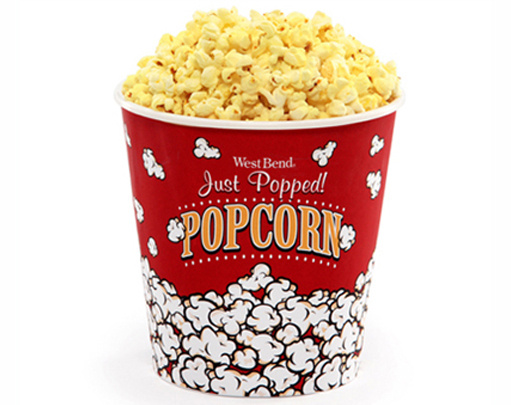
Popcorn!


Today, Popcorn is a popular snack product.  However, not long ago, this was a treat enjoyed only at the movies or circuses.


Times change and people's habits change.  New technologies are ushered in and new patterns of consumption emerge.   Popcorn is one example of this.   Futurist Faith Popcorn in fact changed her last name to "Popcorn" as she correctly identified this trend.   She foretold that popcorn would become a popular snack food, long before it actually did.

When I was a kid in the 1960's, making popcorn at home was not a regular thing.   Popcorn was a special treat, reserved for special occasions, such as the movies or the circus, which is why this snack is still mostly associated with those venues.

But by the 1970's, this pattern started to change.  I remember vividly the first time I had popcorn at home.  My parents were vacationing in Haiti (this was a long time ago!) and a house sitter, a kindly old lady (who you would not mess with) told us if we were good, she would make us popcorn.   And like magic, she got out a pan and made it on the stove.   I watched carefully, as I wanted to learn how to do this.

Until then, popcorn was a pretty labor intensive pain-in-the-ass to make.   Sure, they had Jiffy-Pop, but that was quite expensive and my parents refused to buy it, saying it was a "gimmick".   The popcorn section in the local grocery store had two brands of popcorn, that came in plastic bags or maybe a cardboard tube.

No one had microwaves back then - and microwave popcorn was a long ways away.

But around this time, electric popcorn makers, which were little more than teflon-coated heating elements with plastic lids, became a popular Christmas gift, and I begged my parents to get me one.   Perhaps the invention of teflon - an offshoot of heat coatings from the moon landing project - was what allowed home popcorn poppers to flourish.

Pretty soon, we were making popcorn on a regular basis.  Shortly thereafter, the "hot air" popcorn popper became popular, and we had to get one of these as well.   It was sort of a hair dryer with a plastic basket at one end and it blew hot air on the pop corn until it popped. Both types of popcorn poppers had "butter melters" on them, that got all slimy and gross after the first use, no matter how much you tried to clean them.

In conjunction with these new machines - based on new technologies - new popcorns started to appear.  Orville Redenbacher appeared on TV with his trademark suspenders, and suddenly there was name-brand designer popcorn you could buy, whereas only a few short years ago, there was one store brand, if you were lucky.

Pre-made popcorn snacks started to increase.  Fiddle-faddle, Screaming Yellow Zonkers, and of course, the ubiquitous orange-powder covered "cheese" popcorn could be found in the chip and snacks aisle, and actually be somewhat fresh for a change (until then, bagged popcorn was as fresh as, and tasted like, those Styrofoam packing peanuts).  Not long after, white cheese popcorn appeared, and was being touted as healthy or natural.  It certainly was salty and tasty!

Faith Popcorn was right about something.  Our generation had the muchies and popcorn was satisfying the urge - in a big way.

The price of microwaves dropped once the Amana Touchmatic(tm) RadarRange(tm) Patents expired and now almost anyone could afford one.  Problem was, what do you make with them?   People tried making boiled eggs in the microwave, if you can believe that.

Microwave popcorn to the rescue!  At first, it didn't quite work right, but before long, these pouches of magic were turning out scalding hot bags of delicious popcorn, sometimes buttered and flavored - at about 400 calories per bag!  (Ouch). 

Microwave popcorn really took off.  And people started eating it by the bagful.   In many offices, signs went up banning microwave popcorn from the office.  The smell would permeate the hallways and some folks complained that it made the office "smell like a circus!"

And we all at it and gained weight and got fat.   Well I did.   Others are still doing it.

The hulls, of course, get caught in your gums.  I think the microwave kind are worse than normal popcorn, as the hulls are hard and sharp - like little razor blades.

Not only do they attack your mouth, but your guts as well.   Before long, I was having problems with diverticulitis, and my Doctor said, "No more Popcorn, PERIOD!"

It was hard to give up.  But tasty treat versus little razor blades in your intestines is an easy choice to make - after a few nasty infections bring home the point.   I haven't had popcorn in a decade.

But others continue to munch on.  

So, what is the point of this?  Is popcorn bad?   Not really.  It's isn't health food, either.  It is a starch and has a lot of calories and if you eat a bag of it every day it will be bad for your health.

The point of this blog entry is this:  Consumption habits that may seem ingrained and a "normal" part of our environment today, may not have existed at all, just a few short years or decades ago.  We get used to things because they become norms, and we don't question them.

And it seems the cycle time for new products and trends is getting shorter and shorter.  We adapt instantly to new ideas and new products and then just assume we need them or "have to have" them, without questioning why or how it got this way.

People ridicule Faith Popcorn for her funny name.  And much of her predictions are off the wall.   But the biggest one she made - and literally staked her name on - she nailed to a "T".   Popcorn went from the margins to mainstream inside of a decade.   And most folks never thought about it, even as it happened before their eyes.

Look around in your own world and think about the things you "have to have" in your life and think about whether they are really necessary to living, or just things that are now available and cheaper and "affordable" (so we think) because of improved technology.

Our lives have changed over the last couple of decades, for better and worse, in large ways and small.   For most, they ride this wave of change and let it wash over them.   Others try to choose their own destiny.   The latter is much, much harder to do, but often more rewarding in the long run.