Monday, May 15, 2017

Using Television to Denouce Television? How Television Ruined Your Life

A BBC series, without irony, tells you how television ruined your life.


I harp a lot on television in this blog.   I was born and raised with it and assumed it was like oxygen - something that you needed to survive.  And for many people it is - they cannot live without their cable TV.   And it is everywhere, in bars, restaurants, airports, elevators, even on the gas pump ("gas TV" they call it, or some such).  The idea of not watching television is alien to most Americans - or indeed anyone in the Western world.

Recently, the FDA allegedly was ordered to switch all their televisions to Fox News.   People were "outraged!" by this, of course, but no one bothered to ask why the FDA would have televisions in the workplace to begin with.   What is it that the FDA does in any capacity that requires anyone to watch television?   Even in waiting rooms or other facilities open to the public, televisions are not necessary.  In the offices or break room?   No.  Just freaking no.   Tee-Vee has no place in the workplace!

Sadly, as Americans, we watch a lot of it.   Depending on whose survey or ratings system you look at, the average American watches 4.6 hours a day.   That's pretty much every waking hour you are not working, eating, or shitting.  The messages we get from this brain-programming machine are not all that great either.  In addition to the ads, which suggest to us that owning a new SUV or watching more television are great ideas, the programming is designed to make us fearful and depressed - so that we will be even more passive consumers than before.

And in this regard, the first episode of the BBC series tries to address this factor - in a humorous way.  The problem is, I don't  think you can denounce television on television.  Even Sideshow Bob had the guts to acknowledge the irony.

The problem with television - and indeed the Internet, as it slowly turns into television - is that the main goal of programmers isn't to entertain or inform, but to keep you watching.   And nowhere is this more evident when you try to watch a commercial show, such as anything from the History Channel, in a non-commercial environment.   A 30-minute show is reduced to 22 minutes, and of that, maybe half is squandered in "recaps" after each commercial break, to let the short-attention-span viewers and channel-surfers know what was going on before the orgy of SUV ads.

When I worked for a cable-TV hardware manufacturer, and later on a major telcom company, representatives both told me that the goal of television wasn't to entertain viewers with programming, which was in turn paid for by advertisers, but instead to sell eyeballs to advertisers.   Their "product" wasn't the programs, but in fact the consumers, who they sold off like whores at a slave auction, to the highest bidder among the major corporations of the world - or outright scam artists - they didn't care much which, so long as they paid top dollar.

This was a paradigm shift from the old-school model.   If you watch early television from the 1950's, you realize it isn't that compelling.   They don't use teasers or tricks to get you to "stay tuned!" for more drivel.   They interrupted the programs - and not very often - to have the stars of the show or the announcers, talk about the product, often unconvincingly.  I am not sure Milton Berle sold many Buicks, or Groucho Marx sold many DeSotos.  But that was the way it was done, old-school.

Today, it is all about getting you to watch and getting you to keep watching.   Back when we had three channels, there was no problem getting you to watch and keep watching.   There were not many choices, so you basically watched what everyone else watched.  Variety shows were popular, as they appealed to large audiences.   Now we have 500 channels of cable, YouTube, Netflix, Hulu, and a host of other online services.   The choice of "what to watch" has expanded dramatically.

So getting you to watch and getting you to stay engaged is harder and harder to do.   You need to use fear and outrage to keep people connected and engaged.  And this is why Fox News - the fear and outrage channel - is the most popular news channel in the country.   People who watch it are convinced that crime is through the roof and the government is so vile and corrupt that it needs to be overthrown.   This causes users to be engaged and is good for their ratings, but bad for our society as a whole.

This won't change until people turn away.  And maybe that is the fundamental flaw with this "Television Ruined Your Life" series.   Yes, the network executives put on drivel that is designed to appeal to your baser instincts.   But no, we don't have to watch it.   We have been TV-free for over a decade now - no cable, no over-the-air television.   And we don't miss it a bit.   And increasingly, we find we don't watch much "online" television anymore either, as it has devolved into soap operas and "channels" that are little more than Internet versions of old broadcast television.

Not being constantly connected to the media is always an option.   And if Television Ruined Your Life, guess what the smart phone is doing to it?


The News, Selling Fear and Withholding Information


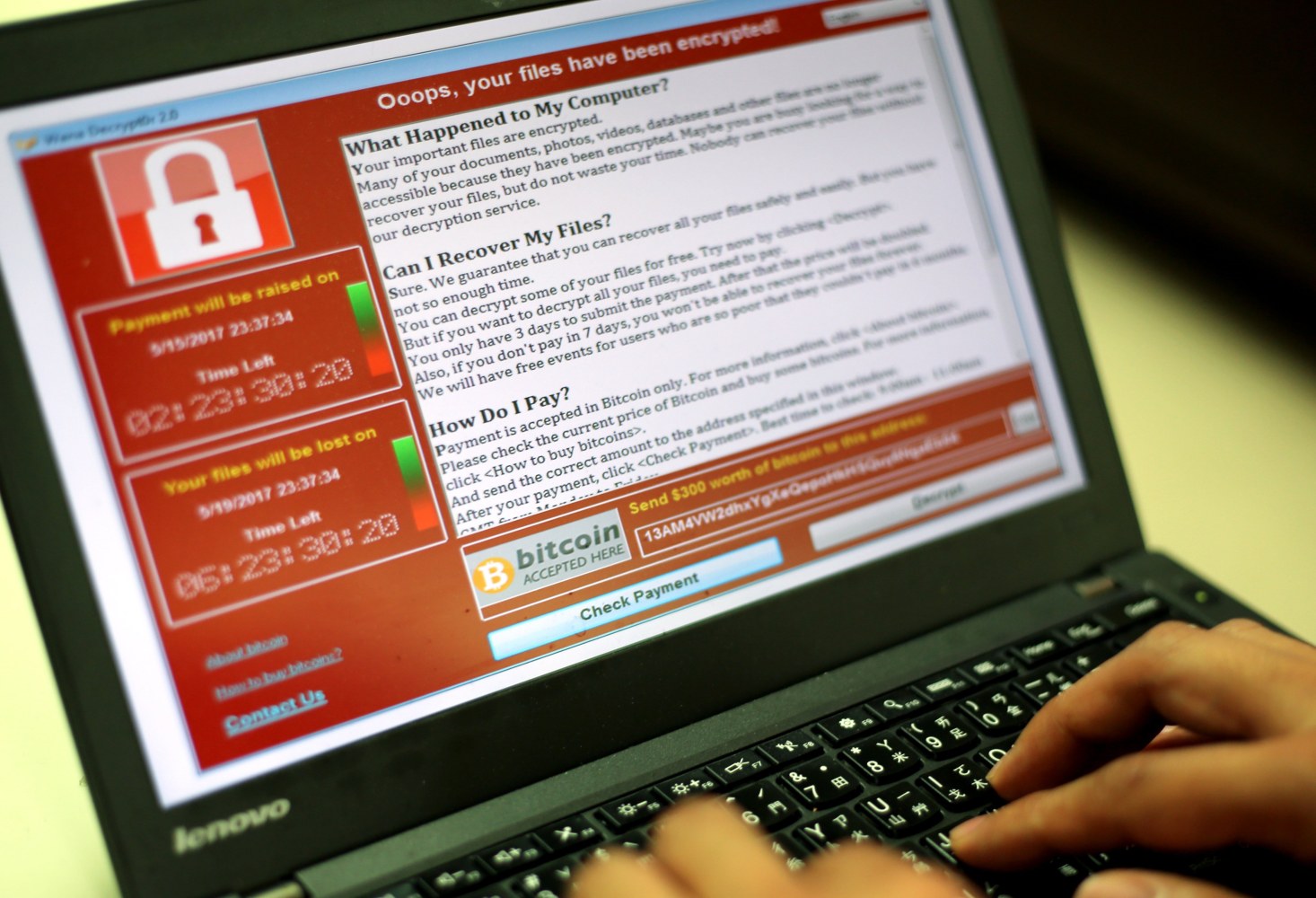
Should you be afraid of computer viruses?  Not really.

The news media loves fear - it sells eyeballs.   And today, the fear-of-the-week story is about a "virus" that will encrypt your hard drive and force you to pay ransom to "hackers" to unlock it.   Of course, if you are like me and have all your important files backed up on a removable hard drive, well, you can simply reformat the hard drive, re-install windows and re-load your programs.

But that doesn't sell eyeballs.

The problem with these articles is that they go on for paragraphs but provide no useful information to the reader.   How is this virus spread?   They imply that it somehow just jumps into your computer without any intervention on your part.   But this is not the case.

Only one out of dozens of stories I have read so far mention that this virus installs as a result of a phishing e-mail that contains a link or an attachment.   And even this story didn't mention what kind of phishing e-mail was used.  Was it the old FedEx "you have a package" gambit?  Or the Google "your e-mail was returned as SPAM, click here!"   Or was it any one of a number of "your account will be locked unless you provide us with your username and password!" kind of deals.

That sort of information would actually be helpful.    So here, let me be helpful here.

1.  Never click on a link in an e-mail if you can help it.   If your bank asks you to log in from a link in an e-mail (and sadly, many Banks do this, including Bank of America) just go to the bookmarked link you normally use instead.   If you don't know how to bookmark a link, shame on you and get off the Internet - you're clogging the information superhighway.

2.  Never click on an attachment even if it appears to be from someone you know.   If in doubt, e-mail that person and ask them if they sent the attachment.  And don't use "reply" either, but send a fresh e-mail.  Or even CALL THEM if necessary.  It isn't hard for someone to hack your friend's account and then send out hacking e-mails to everyone on their contact list.   I never open attachments except from people I do business with, and even then, these are usually WORD documents.

3.  Never give out your username and password to anyone, via an e-mail, phone call, or whatever.   No company that is legit will ask for this information, period.

4.  If someone calls you claiming to be from "Microsoft" and asking you to download a program to "fix" your computer, hang up.   It is a scam, usually a ransomware scam, too.   Microsoft does not and cannot "monitor your computer" online and doesn't call people and ask them to download "fixes".

5.  Stay off those Russian Porn sites.   And watch your URLs.  If you log onto "Bloger.com" instead of "Blogger.com" you will get hammered by pop-ups offering Russian Porn, gambling sites, and your speakers will proclaim (at full volume) that you've won a contest.
This is pretty basic stuff, really, although anyone can get nabbed once in a while.  Our IT "professional" at one firm once answered such an e-mail and downloaded a virus onto the server that crashed the entire network.  It took us days to recover our work.  Fortunately, I backed mine up on a local drive.

Now, I know what  you're saying - you never do any of these stupid things, and neither do I.  So what is the real risk of you getting this ransomware virus?   About zero.

But that wouldn't get you to watch a fear-based piece on the teevee or click on a fear-based article in the news.

So you see how the news works, right?


The WASP Radio Hour....

FM radio, like AM before it, has died a slow death - replaced by new media such as streaming on smart phones.


When I was a kid, we had AM radio.   Cars came with AM radios, and FM was an exotic thing that only rich people had.  There were few FM stations, too - mostly classical stations that took advantage of the lack of static to play Mozart or Bach, where silences are more noticeable in the music.

But over time, AM died, and died hard.   Before long, it became a vast wasteland of angry right-wing talk radio shows, Jesus channels, Spanish-speaking stations, and bad top-40 radio.   Since we all had FM radios, no one gave a damn about AM anymore, and the static and buzzing seemed painful to our newly trained FM ears.

In the beginning of modern FM, it was an amazing time.   In the mid-to-late 1970's, every city had at least one FM rock station, with laid-back stoner DJ's, often operating out of some old house somewhere.   The sponsors were oddball - the local head shop and maybe the waterbed store.   Big media was still fixated on Top-40 AM radio stations with their loud fast-talking jocks.

But that changed, too, with time.   Networks bought up the FM stations and payola and play-lists became the norm.  The DJ's became more loud and aggressive and talky.  The "morning drive-time" became the big money-maker, where the "Morning Zoo Crew" or some such nonsense would tell off-color jokes between ads.   Music went away, and Howard Stern was born.

There were still a few refuges left on the dial - places where you could have a respite from the barrage of loud DJs, who talked over the first and last parts of every song, as well as the blaring ads that were double the volume of the programming.   Like the cable companies, the FM networks set about to make their product as toxic as possible, hoping people would keep listening out of sheer habit.  Some still do.

Public Radio was one of those last refuges.   Most were classical and jazz stations, with a local DJ playing the records before formally announcing the titles and what labels they were on.   Hourly news was read from the wire services.   It was a quiet band of the radio.

This too, changed over time.   More and more programming became canned, and content providers like NPR and PRI started to take over more and more airtime - to the point today where many people think that NPR is public radio, and not merely a content provider that local stations pay (and pay a lot to) in order to get canned content.   Goodbye to that local Jazz DJ - we miss you Masani!   Goodbye to the staid and laid-back classical DJ - hello to gushing Fred Child and his top-40 classical countdown (who said Dick Clark was dead?).

But even Fred Child is under attack - from the monster that is Public talk radio.   White, Anglo-Saxon Protestant Talk Radio, that is.   Public radio has devolved into a whites-only, upper-class liberal chat-box, almost exclusively comprising canned programs from content providers.  It has become a de-facto radio network, making a few people "stars" while the rest are relegated to watching dials and pushing buttons and putting the network feed to the local transmitters.   It is no longer local, it is no longer public.  It is a money-making machine, making millions for a few, and subsidized by the Federal Government.

And it is no longer commercial-free.   The ads - and they are ads - are all for big corporations or foundations linked to big corporations.   Please don't try to convince me that an ad for the Bill and Melinda Gates Foundation isn't really an ad for Microsoft.   If they were really so altruistic, wouldn't the Gates' forego the announcement and just give the money?  Other ads are less savory.  Angie's List?   The Lemelson Foundation?   The ads are little better than those in the back of Smithsonian Magazine - another government-subsidized entity.

But it is the content that really turns me off.   We've stopped listening to the news on the radio, particularly since we can simply read it on the smart phones.   The programs are all talk, and all junk, and all white and wasp-y.   On a recent program, a wealthy "retired" couple relates how they have been "traveling the world, learning and laughing" (sorry, I just threw up in my mouth a little just then) for "1079 days now!" (which sounds a lot cooler than merely three years).   The host, Rick Steves, fawns all over them, and they tell how they live in AirBnB places - and claim it is cheaper than living at home!  I sincerely doubt that.  It all sounds like an ad for AirBnB, quite frankly, and really, I found nothing in in the program really enlightening or interesting, other than an opportunity to identify with upper-class waspishness.   The only reason I heard it, was I was traveling in the truck, putting out yard-sale signs, and I didn't bring the phone to hear Pandora.

Another snippet of programming was another one of these "Radio Lab" kind of programs where they play beeps and boops and try to tell you compelling stories.  I couldn't really follow the story too well, something about some well-off teen boys wearing Sketchers, who were misunderstood by their peers.  Something about one being named TJ but all his friends called him DJ.   I just didn't get it.   After the third garage-sale sign, came on a program with some female teen whining about how hard life was in suburban high-school hell.  I found it hard to be engaged, when you know how hard the rest of the world really has it.

This just mystified me.   I mean, the rest of the programming is drivel as well - but this new stuff is even worse.   Garrison Keillor, for example, has been on far too long (30 years plus!) doing the same dull, boring bits again and again.   And again, it is upper-middle-class WASPs who listen to this drivel, thinking it is charming.   But I doubt anyone believes Keillor has a good singing voice - he sounds like a Walrus in heat.   I really wish he would stop - and stop trying to do duets with singing guests who really have great voices that need to be heard.

Click and Clack?   They talk about broken Volvos belonging to clueless liberal yuppies, inbetween funny stories and "puzzlers".   And speaking of puzzles, they have Will Short on the weekend news program asking us to "Name a city with six letters, the first and the last letter, if combined, are the initials for the State the city is in" or some such rot.   Again, the audience for this is.... liberal wealthy white folks.   It is hardly "public" and it serves a demographic that, quite frankly, is quite well-off.

So what's the point of this?   I dunno, other than I get the feeling that whoever they are programming to, increasingly it isn't me, nor is it even more than a tiny slice of the demographics of the United States.   I'm not saying they need to have a program devoted to hog-calling competitions (and not as irony, either) or the rap-music hour, only that it seems odd that we have a "Public" radio network today that is very narrowly tailored to a very specific demographic, while at the same time, being subsidized by the government.   And the narrow demographic it is tailored to is, well, the one least needing a government handout.

It is, however, the demographic that most strongly believes that the government should provide and pay for everything.

It also strikes me that radio in its entirely is dead.   There is nothing on AM but static and nothing on FM but bad modern country music, Jesus, Jesus, and more Jesus (who apparently wants your money), bad rock-and-roll oldies, new Top-40 which consists of warbling singers who won reality-show singing contests, and of course public radio with its snarky announcers with bizarre made-up names and speech impediments.

It really is getting to the point where, well, you just don't use the radio anymore, any more than modern people use the telephone (as a device to talk to people with).   Radio is dead - I am surprised they even bother putting them in cars anymore.   Cassette decks went away in the 1990's (although BMW kept them well into the 2000's!).   CD players are pretty much obsolete and not offered in many cars today.   Could radio be next?   Today's consumers get their media from the smartphone, so a smartphone interface is far more valuable that "radio" and it really is a waste of dashboard real estate to even have one button, even on a screen, devoted to radio listening.

And I think that if "Public Radio" is going to devolve into a national network of NPR and PRI canned programming, designed for a very narrow target audience and is sponsored by huge corporations and conglomerates - as well as some pretty seedy advertisers - that maybe it doesn't need the trivial government subsidies it is getting.

Or put another way, if you are going to subsidize "public" radio, then logically you should be subsidizing Jesus radio, "The New Country Wolf FM", Radio Latina, "Classic Rock 95", "Angry Talk 102" and the R&B Rap channel.   Because these stations also serve narrow demographics, have advertisements, and make millions of dollars for a select few individuals.

Or maybe, just maybe, public radio should be given back to the people it serves?   I doubt that will ever happen!

Saturday, May 13, 2017

Garage Sale - Revisited

A periodic garage sale, tag, sale, jumble or whatever you want to call it, is a good way to clear up clutter, make a little money, and put your life in perspective.


We are having a garage sale this weekend.  So far, we've made over $450, in the first day.  This is pretty good, considering that we live on an island.  When we were in Alexandria, it was a lot easier to attract customers.

I have written about garage sales before, twice.  A lot of people look down their noses at such activities.  They let status get in the way of their lives.  "I'm not going to do something trashy like that - putting my possessions on the sidewalk and selling them!"   Or they don't think the money is worth it - "A few dollars is all you'll get - what's the point?"

Or, they take the hoarder mentality approach - "I paid good money for that item, why should I sell it for ten cents on the dollar?   I'd just be throwing money away!"

That last statement bears analysis.   Yes, you get less than half your purchase price selling something used - often far less if the items is worn in any way.  Often nothing if no one wants it.   This should be telling you something very, very important - all the crap you buy in your life is just that, junk that is worth 1/2 to 1/10th what you paid for it, the moment you purchase it.   Maybe think about buying less junk.

As for the money, well, $450 isn't a bad haul for a couple of day's work.   You'd bend over and pick up that amount of money if you saw it on the ground, to be sure.  So, it is a worthwhile endeavor, to convert things you no longer need, want, or use into cash that you can use maybe to buy things that you need, want, or use or just to live on.

But the main goal is to eliminate clutter in your life.   Every week, if you go "shopping" you bring bags and bags of "stuff" back to your house.   Now, if it is just food or soap or things you consume, this isn't a big deal - it exits your house via the trash can and/or sewer pipe within a week or two.

But that "cute little tchotchke" you just had to have, will be with you for life unless there is some sort of "end game" to it.  And everything has an end game to it.  From that shiny new cell phone you just got that is state-of-the-art (which will end up in a drawer somewhere in less than five years) to the shiny new SUV that will be in a junkyard in 10-15 years, to your own body which will be underground or burnt to a pulp in a few decades, nothing we create, buy, or enjoy is permanent in this world.  Get used to it.

The hoarder tries to defy death and defy entropy by "saving" things in life - and ends up with a house full of utter crap within a few short years.   It is hard to fight the urge, and hoarders don't set out to hoard, they merely give in to the urge not to discard.   And since we are such a wealthy society with so much shit, it is all the more easier to hoard today, as the cost of hoarding is a lot less.

But, I rag on hoarders when they serve a useful social purpose.   They come to my garage sale and buy all my old crap and drag it home and add to their piles of useless stuff they will never use.

Meanwhile, I iron the stack of $20 bills and count them nicely in my cash tray.   When it comes to hoarding,  it is far more satisfying to hoard money than to hoard objects.   Money actually has uses!

UPDATE:  Haul from Sunday was about $225 $330 making a total of about $675 $730 for the weekend.   The stuff we never thought would sell, sold first, too!

Friday, May 12, 2017

The Great Bagel-Cutting Myth Returns - With Avacados This Time!


Emergency rooms across America are being flooded with people with avocado-related injuries!  Or maybe not....

About 20 years ago, a story - an urban legend - was spread on the news (yes, that great source of truth!) that emergency rooms were being "flooded" with people who were so stupid they didn't know how to properly slice a bagel!  These stories turned out not to be true, of course. 


Well, it is a click-bait story, to be sure.  And the same motivations are behind both stories.  In the 1990's, wily New Yorkers spread this bagel story to run-down non-New Yorkers.  Bagels, once an ethnic food, started going mainstream in the 1980's and 1990's (we didn't have "cultural appropriation" back then!).   Seriously, when I was a kid living in white-bread suburbia, you couldn't find a bagel at the local supermarket, bakery, or diner.  Today, we have them at McDonald's.

And as more traditional bagel consumers saw this trend happen, well, they comforted themselves with stories like these - that those clueless suburban goyim don't know how to even slice a bagel!  It is a way, perhaps, of re-asserting cultural identity when it has been "appropriated" from you - like complaining about improperly made Vietnamese sandwiches in the school cafeteria.   Good thing they didn't make "Mexican Hat!"*

The Avocado thing is harder to parse.  What demographic is this story serving?  Avocados are becoming more popular than in the past, and prices are going through the roof.   So maybe people who think they "discovered" avocados before the unwashed masses did are using these stories to make fun of the "newbies" as they perceive them.

Hey, I was eating avocados before it became ironic, right?   That is the name of the game.  It is status-seeking, plain and simple.   People want to be unique and different and will look down their noses at people perceived as latecomers or followers or wanna-bes.

The story is from "SFGate" which borders on a parody site or fake news site.   Or maybe it is - it is so hard to tell, anymore.  With stories like this, I have to say "poorly researched news" at best.

Are emergency rooms being flooded with "avocado hand" injuries?  I doubt it - any more than they are being flooded by bagel injuries.  As I noted the other day, Mark burned his hand on a pan of bacon coming from the oven.   Obviously this was part of the great trend of bacon becoming wildly popular (and it has - and that would go good with avocado, wouldn't it?) and he was one of those clueless late adopters, right?

Just silliness, is all it is.  And this is what we call "news".

* * *

* Recipe for "Mexican Hat" from Mark's middle school, circa 1973:

1.  Fry one large slice of baloney on griddle until edges curl up.

2.  Plate fried baloney slice in center of plate.

3.  Put one small ice cream scoop of mashed potatoes (from mix, of course) in center of fried baloney slice.

4.  Serve.

5.   Since you can't spell "Sombrero" and kids in Maine don't know what that is anyway, call it "Mexican Hat."

Ah, the great school lunch classics from the 1960's!  Here's an idea:  Open a trendy restaurant in New York City that serves lunch-lady food from that era.  Comfort food and irony all in one neat trendy package.   You'll make a million!