Monday, February 3, 2020

Red State, Blue State


Why are taxes in Blue States 400% higher than in Red States?  You read that right - 400% or more!

Many of the folks who live here on retirement island have a home "up North" as well, doing the snowbird bit, as we used to do.   And before you decry these folks are "bougie" bear in mind that a lot of middle-class people "snowbird" between homes up North and places in Florida.   Even Comrade Sanders has a vacation dacha on Lake Champlain, in addition to his other three properties.

We sold our house in the finger lakes, in part because the taxes were topping $8000 and going up.  We have a friend who lives in Elmira who bought a very nice two-bedroom house for $70,000.  I'm not talking a fixer-upper or some run-down slum, but a nice house in a nice neighborhood.   Her property taxes are $3000 a year.

Our house, which according to Zillow is worth about $500,000, is taxed at $2800 a year - less than my friend in Elmira.   We have income tax, and so does New York.  Ours is less, as is our sales tax.  I asked my friend, who is over 70, if they signed up for senior tax relief.  "I did!!" they said, "$3000 a year is the reduced amount!"

Here in Georgia, when I turn 65, I no longer have to pay school tax.  My property taxes will drop to $600 a year.  You read that right.  Six hundred bucks!

I have talked to a number of folks who still have their houses in New York or New Jersey, and they tell me of $10,000 or $15,000 tax bills - and not for very fancy houses, either.   Some folks are paying as much as $30,000 a year in property taxes alone!   Houses on the water are really socked - we knew a family in Ithaca who had to sell a house that had been in the family for generations (her grandfather built it as a railroad camp) when the property taxes went to twenty grand.  It didn't even have that much frontage.

All of this begs the question - where the fuck is all this money going?  It is not like New York has 25% higher taxes, or even 50% higher taxes, but taxes that are four or five times as much as many Southern states.   That's a freaking lot of money - where is it going?   Where is it being spent?   And why are people so complacent about it?

As to the first two questions, I have some theories and observations:
1.  Corruption:   We all laughed at Tony Soprano, who broke our hearts and broke people's kneecaps, one at a time.  He was so funny, wasn't he?  Actually, he wasn't, and that show illustrated how organized crime adds to the cost of everything "up North".  Building anything can cost twice as much, as labor unions (run by organized crime) want a "taste" of the action.  Crooked contractors pad government contracts and pay kickbacks to politicians.  If you want to run a restaurant, you have to deal with mafia-related food suppliers.  Even taking out the trash means having to deal with the mob.  Corruption costs a lot of money - and while they keep trying to root it out, it is embedded in the culture. 
2.  Everyone on Welfare:  When we had our place in New York State, there were a huge number of social programs available to people - in addition to Federal programs.  I was at a doctor's office one day and asked how much I owed.  The receptionist shushed me and said, "We don't take payment here and we wish you would not mention it, it would shame the other patients who can't pay.  We'll send you a bill!"   I noticed a pamphlet on her counter and took one - it recounted how I was eligible for medical assistance payments even if my income was as much as $45,000 a year.   That is a lot of money today (not far off the median) and was even a lot more back then (ten years ago). 
Various other social programs were foisted off by the Federal Government to the States.  New York foisted these off to the counties, and in some counties, people on assistance outnumbered people working.   As a result, taxes skyrocketed and the few remaining working people flee, creating a death spiral. 
3.  Big Government:  Back in the 1960's, the "liberal wing" of the Republican Party was headed by politicians such as Nelson Rockefeller and George Romney, governors of New York and Massachusetts, respectively. They promoted the idea of big, efficiently run government that would use modern management principles to bring low-cost services to the people.  Rockefeller built a huge government complex in Albany, and created a huge bureaucracy to go with it.  This added a lot to the cost of government. 
I was raised to believe that a car became an immobile piece of iron, once the tags were removed from it and that if we didn't pay the registration fee on our boat, we'd all go to jail.   It was weird to move to the South, where you could put a piece of cardboard in the window saying "tag applied for" and get away with it - at least for a week or so.    Boat registration was a form you filled out and you kept the lower half and your old registration numbers, even if from another State.   In a few months or so, they'd send you an official registration and number.   Things were more low-key. 
Red States, it seems, find ways of doing things less expensively, and part and parcel of this is just giving up on trying to control things that, in the greater scheme of things, really don't matter much.   We have no safety inspection or emissions inspection in rural Georgia (Atlanta has emissions, but that is a big city).  Oddly enough, you don't see a lot of unsafe cars cruising around, or people belching smoke out of their tailpipes.   Turns out, you don't have to nanny people all that much - most people tend to do what is in their own best interests.   Oddly enough, in inspection-happy New York, limousines run off the road and kill over a dozen people.  Big government doesn't always mean better government.
4.  Big Government Salaries:  The myth of the underpaid teacher or government employee is largely a myth - in Blue States.   Manufacturing jobs have largely fled those States, leaving government employ as the best place to find a good-paying job with a pension plan.   Many of the people who worked in government up North retire down here and live like kings.   The salaries and benefits of government employees "up North" are easily double what they are down here.  And some argue that since it costs so much to live there, they need more money - but since they are paid more, taxes go up, and then the cost of living increases - repeat ad infinitum.   It is like the stagflation we had in the 1970's.  Auto workers wanted more money to buy the cars they made, which got more expensive because the cost of labor went up - like a dog chasing its tail. 
5.  Schools:   In the rural county in New York where we had our house, we had two large schools built in the 1970's.  One of them had a planetarium (!!)  From what I understand, the country was still paying off the bonds on those - which may have been built by Tony Knuckles Construction Company. Due to declining population, they proposed combining the schools.  The elementary school principle objected - "how will the students reach the drinking fountains?"  (and "what about my salary?").  The school systems are gold plated and luxurious.   While my home town resisted the urge to build a "look at me!" school (by a very, very narrow vote) other districts built schools with Olympic swimming pools and auto shops. 
Of course, down South, it is all about football - and some schools have stadiums that put colleges to shame.   But even with lower school taxes and lower teacher salaries, the school systems are not much better or worse than those in New York State.  As Washington, DC has illustrated, you can spend the most money per capita of any school district in the county and still have the worst test scores.  In fact, when teaching becomes all about the money - and a union job - I suspect the quality of education declines as well.
Each of these factors, taken one at a time, isn't enough to account for 400% delta in tax rates.  But taken together, they result in an economic climate that discourages industry and encourages people to leave.  Our biggest export in New York State was college graduates. Since there were no opportunities within the State, many people leave when they graduate, as I did.   The only mistake I made was coming back.   I forgot how expensive things could be, and what low expectations people had.

But the last question I raised bears analysis - why do people put up with this?   To be sure, they can't change the government there, it is entrenched - although in some rural areas, people are fed-up with the Democratic machine.  And the corruption insures that nothing really will change.  The only option people have is to leave.

I talk to people with these staggering tax bills, and they chuckled about it.  "Ain't it crazy?" they say, "I'm paying $15,000 a year in property taxes!"   They can afford it - or so they think - because they are the last of the pensioners in this country.  Either they have a pension from a company that has yet to become insolvent, or they are retired teachers or government employees with pensions.   A retired schoolteacher couple down the street each draw $75,000 a year in pension - a combined $150,000 a year (!!) which some would claim "isn't a lot of money" but it is about three times what I am living on in retirement.

As you might guess, though, they have a mortgage and car payments and credit card debt.  Since they have this "steady paycheck" in retirement, they believe that things are going OK, so long as their income exceeds their expenses.  And for them, maybe that is true.  For me, I have to worry whether this small pile of money will last until I am dead.  Pensioners don't have that calculation to make.

Since they have a high income in retirement, they are chasing deductions - hence the mortgage and hence the lack of worries about high tax bills.   It's all deductible!   But of course, you can't deduct your way to wealth and Donald Trump pushed though a tax bill that penalizes people who live in high-tax States with high mortgages.   Deductions for mortgage interest and State and local taxes are now capped - and a lot of people in New York and New Jersey are pissed. Many are moving to lower tax States such as Florida.   Donald Trump was one of the first to move.

Of course, if more people move away, then what happens?  The burden of big government and big social programs now falls on the shoulders of fewer people.  The very rich buy a house in Florida and claim residency there.  The middle-class might not have that choice.

This raises the question - will people change their minds about big government and big social welfare programs and vote for change?   If they do, it will be a long time coming, as these sort of attitudes are very entrenched, and it is very hard to oust crooked politicians from Albany.   But maybe people are starting to rethink things - after all, New York has elected a Republican mayor - albeit one that is now running for President on the Democratic ticket.

Myself, I realized that waiting for massive social change wasn't a strategic move.   We sold the lake house - it was fun for nearly a decade, but pricey.   We still return to New York - in the camper, which is a lot cheaper than owning property there.  Plus, it is a lot less maintenance.   But as "native New Yorkers" it saddens us to see the Empire State having fallen from grace so far. 

But having lived there - and in Flint, Michigan, I can say that the best thing you can do is leave places like that behind and seek out greener pastures.   Sadly, many folks feel trapped by areas like this - they can't imagine moving or living anywhere else, oftentimes because they've never been more than 100 miles from their home.    And yes, we saw a lot of that in Central New York - people from Ithaca thinking that Rochester or Syracuse were akin for foreign countries (and vice-versa), even though they were little more than an hour or so away.

It is so sad.  But that's people for you - deer in the headlights.  Paying taxes through the nose and shoveling snow and thinking, "this is the only way to live, as it is always been the way I live."

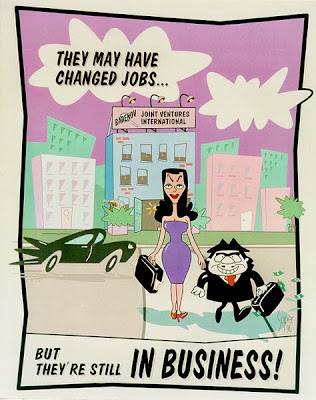
Does Obama Get Slave Reparations?

Slave Reparations were all the rage on the campaign trail just a few months ago.   What happened?

Today are the Iowa caucuses, and we'll get to see exactly how far to the left Iowans are willing to go.  In addition to issues like free college, student loan forgiveness, medicare-for-all, open borders, abolishing the ICE, is the issue of slave reparations, which has been raised many times in the past, but usually just as quickly discarded.

Again, I am in favor of slave reparations for anyone enslaved before 1865 who is still alive today.  Reparations for grandchildren, great-grandchildren, or great-great-grandchildren is another issue entirely.   There has to be some sort of generational limitation on injustice, otherwise we could spend the rest of eternity tracking down every sort of injustice that has happened to any ancestor, at any time in the past.   Because if you look at history, there are a lot of injustices that have happened.

But this got me thinking - which is always a dangerous thing - whether President Obama would be eligible for slave reparations.

His Father was black - from Africa, and a Muslim to boot (which the right reminds us of at every opportunity).   That's about as black as you can get.

His Mother was white and from Kansas - and raised Obama in Hawaii, where he learned to surf.  That's about as white as you can get.

He's half-white, half-black - does this mean he gets half reparations?  There is also the little problem that his ancestry doesn't appear to actually include any slaves, since his father was from Africa, and not descended from American slave stock.   So does this mean he gets nothing?

This is more complicated than it first looks.  Some are arguing that "reparations" should not just be for slavery, but to compensate for disparate incomes between blacks and whites, as well as for decades of discrimination.   But even that begs the question - should Obama get paid?   I mean, after all, he is a millionaire many times over, and achieved the highest office in the land.  Kind of hard to say you've been discriminated against, when you are elected President of the United States.

But some try.  Representative Omar from Minnesota, for example, decries discrimination in the USA against Muslims and immigrants.  Yet she immigrated here from Somalia and found acceptance and election to one of the highest offices in the land.   If I went to Somalia, not only would I not be welcomed with open arms, or elected to office, my life expectancy could be measured in minutes.  Ms. Omar seems to forget that salient point.

So how does this reparations thing work, then?   Short answer:  It doesn't.   If we hand out money to people based on the color of their skin alone, we then have to have some sort of standard as to what it means to be black, and then we go down the ugly road of people having to present documentation to prove that at least one ancestor is black - or what exactly is the standard?   We could look to the KKK and the Nazi party here for guidance, as they have a whole host of standards in this regard.   It gets ugly rather quickly, and odious terms like "Mulatto" and "Octaroon" start getting bandied about.

And then it begs the question, do people have to show some sort of slave ancestry, and if so, to what extent?   If you are descended from slaves on both sides of your family, do you get the full amount, or if only half of your family has slave ancestry, do you get half?   Or, like Obama, if no ancestry, do you get nothing?   I am not being facetious here, this sort of thing gets messy in a real hurry.  What happens when you have someone like Elizabeth Warren come along and claim slave ancestry - but such a de minimus amount?   Yes, you would have to set up some sort of odious race-test, and we shouldn't be doing race tests - that's what racists do.

If we are compensating people for years of discrimination, then it begs the question - do we compensate other people who were discriminated against as well?   What about Hispanics?  The Native Americans?   Italians and Irish?  Jews?  The gays?  What about women?   Hoo-boy, that last one would be a whopper of a check to write - women of all races have faced harsh treatment since time began - as well as discrimination that goes on even today.   Gee, this sounded so simple, but gets complex.

On the flip side of the coin, it is true that white people (whatever that means) got some sort of advantage out of slavery that trickles down to today?   Since Obama is half-white, does this mean he has to pay slave reparations to himself?

This is an interesting argument, but one that I think falls flat.  Maybe there is someone alive today who can point to a continuous chain of money - the so-called "money batons" that gave them some sort of advantage in life, based on their distant ancestor's enslavement of black people.   The problem is, the further you go down the ancestral line, the more diminished this advantage becomes.  And in some instances, the advantage may be wiped out by an intermediary ancestor who squanders whatever monetary advantage they achieved through enslavement.

My own ancestry is a case in point.  My Father's side of the family are relatively recent immigrants.  His Dad was either of Irish or Scottish descent (something disputed at every family reunion) and his Mother descended from Swiss servants who served on the Steinway estate.  No slave-holders on his side of the family at all.  In fact, they came from poor stock, and worked their way to what modest success they achieved.   When people put up signs saying "No Irish Allowed!" part of my family decided that they were Scottish, instead.   Even white people are discriminated against.

My Mother's side of the family is more complicated.   Her Father's family is descended from British stock who settled in Long Island - the Platts and the Wiggins.  No indication of slave-holding or slave-dealing here, and in fact, it was illegal in New York at the time.  Her grandfather committed suicide, leaving the family destitute, so her grandmother had to start a business to keep the family afloat.   Her dad - my grandfather - worked his way through City College and law school to become a fairly successful lawyer.   What "money batons" were generated through this were not the result of owning slaves, anywhere in their heritage.

Now, her Mother's family - that's another story.  They do have a slave-owner in their past, but he forgot to leave any "money batons" for his descendants.  Colonel Robert Thompson was a plantation owner in Alabama, according to family folklore (which can be an unreliable source of data - ask Elizabeth Warren!).   He fought in the Civil War - on the wrong side, of course.   And let's be clear about this - there was a right side and a wrong side in the Civil War.  I don't want to hear any nonsense about "Heritage" or "States Rights" - it was all about slavery and slavery was wrong.

He lost the war and pretty much lost everything.  His plantation was in ruins and his slaves were emancipated.  He decided to move to Texas and start a new life.  My racist Grandmother said that his former slaves followed him to Texas, as they loved him so much.  I sincerely doubt that - again, family folklore.  More likely, they followed him as staying behind without the protection of a white man meant they would fall victim to the "night riders" of the KKK.   A known evil is better than an unknown one.  So they stuck with him.

He had a son, Robert Thompson, Jr. who went to college and got a degree in Civil Engineering and became the road commissioner in Texas, laying out all the roads that today would be called "blue highways" - before the Interstate system.  Again, family folklore, but it is said he helped found the Civil Engineering department at the University of Texas at Austin.  I can find nothing online to verify that.

Did Robert Thompson Jr. get an advantage from slavery?   You could argue that he could afford to go to college because his father had money - but much of that wealth was squandered in the war.  Whatever the case, his daughter ended up marrying my Grandfather, who was a penniless pilot-in-training during World War I who she met when he was training in Texas.   It is not clear that she received any sort of "dowry" or money from her father - the bulk of my Grandfather's wealth was earned by his tenure representing Citibank as a lawyer.

So is there a money baton here?  If so, it is an awfully small one, which one expects when generations propagate. Whatever wealth there was, was diluted over the years by children, grandchildren, and great-grandchildren.   Bear in mind those generations often had four or more children - sometimes as many as a dozen.   Money gets divided up pretty quickly, which is why it is never smart to count on an inheritance.

The real "money baton" that anyone in my family got, was a baton of values.  My Grandfather worked his way through law school and became wealthy by dint of his own labor.  His Mother valued education and instilled this in all her children, who all went on to get college degrees in an era where it was rare to do so - particularly for people from the lower classes.   Similarly, the wealth of Robert Thompson Jr. was due to his work as a civil engineer - the best "gift" his father gave him was to instill the value of education in him.

Values matter more than money. You see all the time how lottery winners, rock stars, and professional athletes squander millions of dollars in a short period of time because they were not taught to value money or how to manage it.  But more than that, you see in families and ethnic groups that are successful, a valuation of education and intellectualism.   Not surprisingly, families and groups that adopt criminality as a cultural value, tend not to do as well - and yet today, there are many on the Left who argue we need to "embrace" this as a cultural value.  It is not.

There are minority groups who are routinely pilloried for having positive cultural values.  Asians and Jews are stereotyped as being smart and wealthy - as if this was some sort of bad thing.  Usually the people making these sort of slurs, argue that these groups have some sort of inside advantage - a cabal that is controlling everything from behind the scenes.  Such is not the case, however.

If you come from a family that values education, intellectualism, art, culture, hard work, and thrift, odds are, you will succeed in life.  Isn't it funny how that works?   Stereotypes are never accurate, of course.  I once worked for a Jewish gentleman who came from a poor family - take that, stereotypes!  But his family valued intellect and education.  He was beat up every day on his way to technical high school, not only because of antisemitism, but because he was trying to better himself, and the crabs in the bucket don't like that.  But he persevered and became a successful lawyer and built up his own practice and went from rags-to-riches.  Hmmmm... does he have to pay reparations?  None of his ancestors owned slaves.

Just my opinion, but I think values and not "money batons" are what are to blame for the disparity of incomes in different minority groups.  When you grow up in a ghetto where smart kids are punished and education is not valued (and anyone who tries to get ahead is accused of "acting white") then your outcome in life might be preordained - although some escape this trap.  If you grow up in a family that expects you to get good grades, go to college (even if it is difficult to do so), to save money rather than spend it on flashy things, and to value intellect, talent, ability and hard work, well, your future is a lot brighter.

The best "baton" my parents handed off to me was the expectation that I would excel.  I grew up in a house full of books, and education was highly valued.  We were expected to go to college and get good jobs - an expectation fueled in part by their understanding that our position on the social ladder was tenuous as best - both sides of our family were only a generation or two removed from abject poverty.

So how does "reparations" play into that mixture of values?  To some extent it sabotages them, entirely. To even discuss this as a real thing is only to perpetuate the notion that hard work and achievement are for chumps - why bother when you can just wait for your reparation check?  It feeds into the mentality that we are all "due" something from society, even if what is "due" is far more than we paid in.

It also raises the ugly question as to whether these new "money batons" will be passed on.  Hand someone a big check, and likely they will spend it - again, values are more important than money, and if someone who has no money values is handed money, it evaporates pretty quickly, which is why most con artists target the poor, and most victims of con artists are poor or end up so.   Why do you think the check-cashing stores are in the poor neighborhoods?   And no, "banks are mean" isn't the right answer.

If we hand out "reparation" checks today, how fair is this to the next generation who may see nothing from it?   What about the previous generation - and the ones before that - who saw even worse treatment or indeed, even actual slavery?   How is handing money to their distant descendants making that right?

Of course, the answer is, it isn't and it wasn't meant to.  And it will never happen, in our lifetime or the next.   It is just a craven move by politicians to "shout out" to a minority group to get them to vote, by literally buying votes.   Between that an student loan forgiveness, free college, and a host of other handouts, the Democrats hope to cobble together a coalition to win back power.  When the checks are not forthcoming, people may get upset.

Well, at least some Democrats hope to win back power this way.  Others are taking a more realistic view, and realize these "callouts" to minority groups are backfiring.  It is just assumed that "Latinos" and "Hispanics" are all one homogeneous group of Spanish-speaking people who all have the same cultural values and the same issues at stake.   A candidate shows up at a rally, speaks a few sentences in mangled Spanglish (something now called "Hispandering") and promises to abolish ICE and open the borders.   Problem is, not all "Hispanic" people feel this way, and in fact, they comprise a number of disparate groups.

Many are devout Catholics, and calls for transgender restroom abortion rights ring sort of hollow, when the parish Priest is saying something to the contrary (and many Latino immigrants are joining evangelical Protestant churches as well - something that is alarming the Catholic hierarchy).  And many don't feel than unrestricted immigration is the answer to anything - particularly those who came this country legally and followed all the rules.

Identity politics simply don't work - because we can't all be pigeon-holed into identity groups.  Even Obama - particularly Obama - can't be stuffed into any one category.  Even though he was a "community organizer" in Chicago, his background and experiences are completely different than most of the young black people raised in that city.  His children have an even further removed experience as well.

And that is a problem for Democrats.  As black people become more successful, they will migrate toward more middle-class issues, if they already haven't.  Again, many are devout Baptists, and the minister rails against many of the same issues the Democrats embrace - Abortion and gay marriage, for example.   This is a lot trickier than it looks.

So, what is the answer for the Democrats?  Can they stitch together a coalition of disparate minority groups - teacher's unions, gays, Hispanics, blacks, Asians, or whatever - into a winning majority? History has shown that "coalition" governments are rarely stable. And Hillary's "Better Together" election strategy fell flat outside of coastal liberal strongholds.

Just a crazy thought, but in order to win elections, you have to win a majority of the vote - not just the Presidency, but the States as well. The Electoral College isn't some holdover from the 19th Century, but a mechanism designed to prevent populous states from steamrolling less populous ones.  It worked as it was designed to.  Embracing identity politics and moronic issues like "slave reparations" - and other policies that have no chance in hell of being enacted will just insure more defeats.  The middle-of-the-road voter has no interest in Leftist politics, and even discussing these sort of things gives the GOP all the ammunition it needs to win.  The eventual candidate can try to "pivot toward the center" to win the general election, but they've already said radical things during the primaries that will come back to haunt them.

The Republicans will paint the Democratic party as a party of socialist and even communist ideals.   And the Democrats are handing them a paintbrush - and buying the paint as well!

Sunday, February 2, 2020

Point Of Use Hot Water Heaters

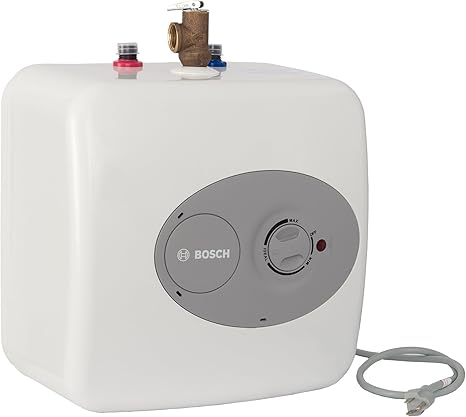
Bosch Electric Mini-Tank Water Heater Tronic 3000 T 2.5-Gallon (ES2.5)  - Eliminate Time for Hot Water - Shelf, Wall or Floor Mounted


Can these actually save you money?  Perhaps.

We live in a house designed before the energy crises of 1973.   The water lines were steel, laid out in the slab form before concrete was poured.  So far they haven't rusted out, but others have had to replace these by running them through the attic.  I am hoping we will move on before that happens.  I have already laid out, in my mind, where to run the new CPVC lines, with the minimum of sheet rock damage.  By luck or design, most of the water fixtures in our house back up to a closet, so cutting into the wall will be fairly painless.   The hardest part will be climbing up in the attic.

But hopefully that is a future event that will not happen.   In the meantime, the hot water heater is in the garage and the "master bathroom" is on the other side of the house.  To get hot water in the bathroom, you have to run the faucet, wasting gallons of hot water and a lot of electricity as well.  As you might imagine, the slab gets cold, so the water lines running through it go cold quickly as well.

Enter the point-of-use hot water heater.  I first saw one at our favorite Indian restaurant in Alexandria.  They had one mounted on the wall beneath the sink in the restroom, no doubt because the health inspector was unsatisfied with the temperature of the hot water for hand washing.   Long runs from the hot water heater mean no hot water at the sink - the exact same problem we have.

So you run the water - wasting gallons that you pay for in water bills and again in sewer bills, and then you waste electricity to heat all this water, run it down the pipes and then when it gets to the sink, you use it for mere minutes to wash your hands and then let all that hot water go cold again.   Oh, and then there is the convenience factor - wouldn't it be nice to have hot water on demand?

Sure, you can buy "on demand" hot water heaters, but they usually require huge electrical connections.  I looked at one for our barn in New York and it required not one, but two 50-amp connections - more than the load center would support!   They sell 110V units for under-the-sink online on eBay for $59 but they are 3000 Watts.   Doesn't sound like a lot, until you realize that 3000 Watts at 120V is a whopping 25 Amps - more than most home circuits (15-20A) will support.

Small tank heaters, in the range of 2.5 to 6 gallons might be a better option.   They can be plugged into a 110V outlet (which oddly enough, are hard to find under a sink!) and then plumbed into a bathroom or kitchen sink.  They provide "instant" hot water when you need it, and by the time they are expended, the hot water has made its way from the main heater in the garage.

We have two of these, one in the "master" bath and another in Mark's studio, where all we needed was the occasional hand-washing and wine-glass rinsing.   For the most part, they work well, but there are some issues.

Like most hot water heaters, they have a pressure relief valve, and this is necessary to prevent the tanks from bursting should they go over temp.  These pressure relief valves can dribble over time, and sometimes this is normal (our campers all do this - leave a small air pocket at the top of the tank to avoid this problem).   In your garage or basement, this is not an issue.  In most applications, the pressure relief valve is routed into a floor drain or outdoors, so if it dribbles or triggers, it blows the water outside or into a drain.

Under your sink?  Well, that's another story, and if the darn thing leaks, it can ruin your cabinetry or create a mildew mess.   It is a good idea to put a pan or something under one of these heaters, if you have one - something I have done, using a shallow plastic tote bottom.  All plumbing tends to leak a bit over time - even just a drip now and then.  In most cases, evaporation is greater than the leak rate, so you don't notice it.   In other cases, well...  It is always a good idea to shut off your water when you go on vacation.   And you do know where you water shutoff is, right?  And you know it works, right?

Heaters like this are pretty cheap.  I looked online for a new one, as the one in our bathroom has a leaking pressure relief valve.  I am going to try to salvage the old one for use in another sink - it may need a new relief valve.  In the meantime, I am buying an exact copy of it - now sold under the Bosch name (formerly as Ariston) for less than $150 from Walmart.

By the way, I searched online on eBay, Amazon, Walmart, Compact Appliance, Home Depot, and Lowes.   Walmart had the best price, followed by Home Depot, then Amazon, and then Lowes, eBay, and finally Compact Appliance.   Walmart wins again - and again offering two-day shipping without having to join prime.  Jeff Bezos has something to lose sleep over besides his recent divorce.

Granted, it takes some effort to install one of these.  And you may need to buy new hoses and fixtures to install them, which may run another $10 to $20.  The inlet and outlet are NPT (pipe thread) so an adapter is needed, such as a shutoff valve, to convert it to 3/8" compression fittings, and you'll need a 3/8" to 3/8" hose to connect from the main water shutoff to the tank.

Speaking of which, I need to replace the shutoff valves as well.  I have written about these before.  They are supposed to be on every fixture in your house, to shut off water to faucets, toilets, and whatnot.  But since they are used so infrequently (like every ten years when you replace the faucet or toilet) that by the time you need to use it, it is broken.  You turn the handle and either nothing happens (the water is still on) or if it is the "old school" packing-type, it starts leaking profusely, as happened in Gloria's condo.

Quite frankly, plumbing is a nightmare - the idea of putting water pipes hidden behind walls, ceilings, and floors just doesn't seem right to me.   But for the most part, it all works well, until it goes horribly wrong, that is.

Does a point-of-use water heater save money?   Probably not, or not that much.  I guess over the decade we've had this heater in place, we've saved the $150 or so it cost to buy this unit, in terms of water and electricity saved.   According to my most recent sewer and water bill, we are paying a combined $0.0128 a gallon for water and sewer.  If we wash our hands three times a day each, over ten years, and save a gallon every time, that comes to $280 saved over a decade, just in terms of water (electricity might be a little harder to calculate). 

Of course, that is making a lot of assumptions.  Before we had the heater, we simply washed with cold water - no one wants to wait several minutes for hot water to arrive.   So convenience and comfort are the main reasons for it.  But cost-savings factor in as well.

While this heater doesn't draw the astounding 25 amps of the Chinese made "inline" heaters that populate eBay, it does 1440 watts, or about 12 Amps.  On a 15 Amp circuit, this is a lot, less so on 20 Amps.  One of my goals is to run a dedicated line to this heater, so I can run other appliances as well (such as a space heater) which right now would over-amp this circuit.  I also want to run a drain line outside for the pressure relief valve, so no "drip pan" is needed.   But that will take some more effort.  

Nothing is easy in life.

But one does get tired of maintaining a house.   Eventually, we will move on to something simpler and smaller and leave home maintenance behind.   It is not that our house is falling down around us - far from it.  It is just that any house needs constant maintenance, over time, to keep it in good shape.  Neglect this, and well, eventually everything ends up broken.

Taxicab Wars - Then and Now

Everything old is new again....

I mentioned in a recent posting that the gyrations we are going through today with Uber and Lyft are nothing new - all of this was experienced before, 100 years ago, and settled by enacting regulations for the taxi industry - regulations that Uber and Lyft are flouting by claiming to be "ride-hailing apps" and not de facto cab companies.

I ran into the video above, by the "history guy" who is very earnest but has a slightly annoying voice.  But the video nicely illustrates what I have been saying - we've been down this road before.   Back then, the taxi business was largely unregulated, and there were too many cabs and not enough fares.  Fights broke out between cab drivers and people were actually killed.  And then organized crime muscled in.   Today, we don't have organized crime, but disorganized crime in the form of these Tech-that-are-not-tech companies, like Uber, Lyft, Lime, Bird, and of course, Wework.   Rather than gun down their opponents or put the squeeze on people, this new breed of robber baron gets people to willingly hand over millions in cash through private equity "funding" and of course the IPO.

Sadly, no one warned anyone in the taxi business, but then again, the way the taxi business was being run, no one really mourned the fate of the taxi companies and taxi drivers.  The medallion system, which put an end to the taxi wars, created problems of its own.   Medallions became very valuable, and pretty soon there were people who ran taxi "companies" that did little more than own the medallions and rent run-down cabs to immigrants, who worked for pennies.   At their height, medallions were worth millions, and then collapsed in value when Uber and Lyft appeared on the scene.

None other than Michael Cohen, Trump's jailed former attorney, was caught up in this medallion business, supposedly with links to the Russian mob - or so he claims, anyway.  With the collapse of medallion values (which may have been a classic bubble anyway, without Uber and Lyft) many people have gone bankrupt.  Some have committed suicide.   There are plans afoot to "bail out" medallion owners, by loaning them more money to pay off their loans.   Borrowing money to pay off debts - sounds like a plan to me!   Better off to declare bankruptcy, get rid of the medallion, and then become an Uber driver, I think.

But then again, maybe not.   Like in days of yore, many Uber and Lyft drivers are finding that the returns on investment are getting skinnier and skinnier.  As more and more people become Lyft and Uber drivers, the number of fares per driver decline.   Pretty soon, you are effectively making less than minimum wage, and the companies don't care, so long as the number of fares increases and they get 20-25% of each fare.   But of course, these companies are also losing money, so it remains to be seen how long this game goes on, before something breaks.

We tried Lyft in Anchorage, Alaska, as we didn't want the "hassle" of parking downtown.   As it turned out, it wasn't that much hassle to get around, but the service was efficient and quick - far quicker than a taxi service.   That is the problem with these services  - and public transportation.   In many cases, despite all the hoopla about traffic and congestion, it is still easier to just drive your own car.  In Vancouver, we tried using their aerial subway a couple of times, but were accosted by crazy homeless people (and nary a transit cop in sight - be careful what you wish for, New York!).   Taxi cabs were not much better.  Turns out that since we weren't commuting, it was easier to just drive our truck into town and park on the street, at least in the evenings.

Even in New York City, traffic can be manageable.  Once you realize that all the lights are timed on Fifth Avenue and Central Park West, if you want to go North or South, take one or the other of those streets, and you can fly.   Cross-town traffic, on the other hand, it a bitch - it can take an half-hour just to go a few blocks, during the peak of rush-hour.  Hence the name of the Jimmy Hendrix song

Even my hippy-dippy brother, when he lived in Manhattan getting one college degree after another, kept a car in the city, as politically incorrect as that was.  And yes, like on "Seinfeld" they had a system of moving the car twice a day to allow the street sweepers through - with people double-parking half the day (which was illegal, but no one cared).    Block the street sweeper, you get towed, block your fellow citizen, there are no consequences.   It always struck me as odd that someone who was a leftist and decried our car culture kept a car on the street in the nation's most crowded city.   I mean, wouldn't you think......?   Well, then again, it doesn't surprise me that much - most "public transit advocates" believe that everyone should use public transit, but of course they need to drive their Subaru - to the public transit planning meeting!

But I digress.  But not by much.

The question is, who controls our culture, our society, and our laws?   And it is a question that is never answered, in its entirety.   100 years ago, the automobile was a "disruptor" to the existing social structure.  Regardless of the nostalgia people today feel about trolleys, people back then (such as my Dad) couldn't wait to get their hands on a Model T Ford, and drive themselves where they wanted to go, when they wanted to go, instead of relying on unreliable public transportation, which was always on the brink of bankruptcy - if not in fact insolvent.  With the car, came the taxicab.

Today, the Internet is a "distruptor" but disrupting things in an awfully similar way to the past.  Hailing cabs by cell phone "app" isn't much different than the past model of calling a cab company and having a cab sent.  It is doubtful that we will resort to shooting wars, as we did in the past when there were too many cabs and not enough fares.   But then again, for officials to wring their hands and claim there is "nothing they can do" is also a bit disingenuous.

We can regulate these new industries, if indeed they are new at all, and not in fact just illegal operators.   In the 1980's medallion taxi drivers refused to drive to places like the South Bronx, and illegal cab services called "black cars" started to proliferate.  A new technology called the "cellular telephone" allowed people to call these psudeo-cabs from the street. There was a hue and cry from the medallion drivers, but officials realized these new cabs were serving areas that the traditional cabs eschewed.   Before long, "black cars" were legitimized, but with particular rules (you could not hail one, but had to call one by phone).

Maybe a similar thing will happen to Uber and Lyft.   And perhaps the companies themselves will do this - to avoid regulation, often the best thing a business can do is regulate itself.   That, and in left-leaning California, Uber and Lyft drivers are being classified as "employees" and may have to be paid a minimum wage.   Uber and Lyft will lose even more money if they have to pay drivers to just sit in their cars - if there are too many drivers and not enough fares.

I am not sure what the point of all this is, other than we tend to think of "today's problems" as unique and new, when in fact, they are the same old tired things we have dealt with or were dealing with before.   Just calling something "tech" doesn't make it technology - or new.

Saturday, February 1, 2020

Useful Idiots


Radical ideas like abolishing the ICE or the Transit Police sound nice in theory, but in practice would be chaos.   Why would anyone advocate the destruction of civilization?

Back in the late 1970's I used to drive my Chevy van to New York City to go to CBGB's and check out the punk rock scene.  New York City was only a few hours drive away.  New York back then was like that episode of the Simpsons (which was banned for a while in re-runs as it featured the World Trade Center) where everyone in the 1970's was a mugger - even the police.   It sounds like parody, but it was not far off the mark.


This is not really far-off the mark.

I recall driving along the river under the UN building and seeing a 1972 Ford LTD wagon sitting in the median on its roof with the wheels removed.  I guess that was easier than jacking it up.  But such was NYC back in the day - abandoned cars were just the norm, slowly stripped for parts and the remaining hulks just littering the streets - with no resources to remove them.

Today, "Times Square" is a tourist destination with cafe tables on the sidewalks and families having their pictures taken with people in superhero and character costumes.  Back then it was all porn theaters, live sex shows, prostitutes, and drug dealers.  Central Park, even during the day, was a dangerous place, where men regularly went to have sex in the restrooms, the bushes, or even out in the open.  You could get mugged anywhere, even in broad daylight.  "Times" have changed.

The subway system was dangerous.   You were quite likely to get mugged, and every surface of every subway car - inside and out - was covered with graffiti, as were the walls of all the stations.   Everything reeked of urine.   Track fires and delays were common.  No one gave a shit about anything, particularly the MTA employees.  A young man named Bernhard Goetz shot four black teenagers who he said were threatening him with sharpened screwdrivers.   Half of New York thought Goetz was a bloodthirsty vigilante, the other half nodded their head, having been harassed, intimidated, and threatened on the subway before - if not actually robbed and beaten.

Bear in mind that at the time, things were so bad that actual vigilante groups were formed to patrol the subways and tamp down crime.   But people don't remember that - they remember disco, Studio 54 and cocaine - and the flawed idea that the 1970's were the fun time they see on television shows.

Now, as bad as that all sounds, some folks want to go back to those good old days, which they believe were some sort of Shangri-La.  Not a day goes by when some kid - born long after that era - tells me how "lucky" I was to live in such a wonderful time of corruption, unemployment, high gas prices, even-and-odd gas days, staggering inflation, staggering interest rates, staggering crime rates, and a drug epidemic.

What happened since those glory days?  Nationwide, crime rates and murder rates have dropped precipitously.  Some say it is the aging population, others say it is increased incomes and a healthier economy.  Others argue that higher incarceration rates and "broken window" policing are the cause, the result of people becoming fed up with crime.  The reality is, it is probably a combination of these factors.   That, and an economic resurgence of the United States and New York City (which was near bankruptcy in the 1970's).  New subway cars were bought.  Older ones were rebuilt by Bombardier in an old factory in Auburn, New York.  Increased policing meant no more graffiti.  New Yorkers could ride the subway again without fear - or without as much fear - and experience a clean and well-maintained subway system.   Well, at least for a time.

Early on in this transition were voices - muted at first, but getting louder - that something was being lost in the "gentrification" of neighborhoods and the "Disneyifcation" of Broadway and Times Square.  New York was losing its grittiness, and grittiness was something to be celebrated.   Or was it?  Even today, we are having this debate, as if criminality was part of our "culture" - or the culture of some minority groups - and should be elevated.  There are people out there who believe that criminals are the real victims, and that victims are the real criminals.   And it goes without saying they believe that among the "real" criminals, the Police are the worst of the lot.  Anyone who has a job and a couple of dollars in the bank is an "enemy of the people."

Who are these folks and where do they come from?  Back in the days of Soviet Propaganda - before the era of Russian Propaganda - they had a term for them, "useful idiots."   Now before you cry foul and accuse me of seeing a Russian behind every tree, bear in mind that every country in the world, including the United States uses disinformation, propaganda, and other influencing techniques to shape public opinion in foreign countries.   Here in the US, we had "Radio Free Europe" and "Voice of America" broadcasting "behind the iron curtain" and to Cuba and other countries, selling our way of life and our culture.   That's just an above-board open example of propaganda.   We also used the CIA to spread influence in other foreign countries, by bribing public officials and journalists and other "influencers" and even paying kids to spray anti-communist graffiti around (guess who was paying the kids to spray the pro-communist graffiti?).

We did it, they did it.  Everyone did it.   And we all still do it.   Russia today has more sophisticated means of spreading influence, of course.  They have their overt media channels - RT and Sputnik, for example, as well as their covert Internet Research Agency, which posts comments on Reddit, Youtube, Facebook, and whatnot, spreads vile rumors, tries to organize protests, and generally just throws a Molotov cocktail into the works.   Anyone who denies the influence of Russia in American politics is likely a plant for Russia, period.  To say this isn't happening is being disingenuous or at the very least, being a useful idiot.


Thanks to a reader for turning me on to this image and site for NSA posters.   It does speak a certain truth!

And no, this doesn't mean your local protest group is funded by and controlled by Boris and Natasha. Influence is far more subtle than that. They may throw a few dollars (through intermediaries) at someone or some group they think may be useful. They may throw some propaganda efforts to support such groups, causes, or individuals.  And often, this is all it takes to move some fringe protest movement to the mainstream - or at least keep it festering and alive as a nuisance to the host country, or perhaps for use later on.  It doesn't matter whether the cause is left-wing or right-wing, the main goal is disruption and disunity - to get Americans divided against one another, or at the very least, expending their energy on unproductive things.

Getting back to our narrative, the term "useful idiot" referred to someone who was willing to follow and support a cause, even if it was against their own self-interest or indeed the self-interest of their country.  They were useful - to the Soviet Union - and they were idiots.

Since the fall of the Soviet Union, not much has changed.  There are legions of "useful idiots" in every country.  We exploit those in foreign countries, foreign countries exploit those in ours. Whether it is recruiting a bored teen for ISIS via the Internet, or getting some weepy liberal to believe in "free everything" the net effect is the same.

Two articles appeared online this morning which contradict each other.  The first recounts how protesters took over Grand Central Station during rush hour, vandalized fare machines, and calling for the elimination of transit police as well as the elimination of all subway fares.  While I cannot personally comment on what the experience of a free subway would be like, I can tell you firsthand what riding the New York Subway without effective transit cops was like - and trust me, you don't want to live through that.

The protesters argue that transit cops are being too aggressive in arresting "turnstile jumpers" who don't want to pay the $2.75 fare (New York still has flat fares?  How quaint!).  They argue that enforcing the laws unfairly targets "black and brown people" who are poor and thus cannot "afford" the minimal fare and thus "have" to jump turnstiles.  Oddly enough, the woman making this argument was white, and in fact, the protest group was a sea of white faces.   Useful idiots.

The second article recounts how a "Transgender" person was assaulted on the subway (by one of those "black or brown persons").  The transit cops arrested the offender, thank you.  This, of course, presents a conundrum for liberals - which identity group do we support here?  Who is the victim?  Who is the offender?  Oh, right, everyone is a victim, and the Police are the offenders!  Didn't they realize that the "person of color" who assaulted the transgender person was merely uninformed and needed re-education?   No need for arrests and harsh treatment!  Typical Police!

The point is, you can't have it both ways.   You can't protect people on the Subway unless you have cops.  And cops have to enforce the laws - all of them.   And turnstile jumping is no laughing matter, nor is it necessary for the poor - even the lowest paying jobs in New York pay well over the vaunted $15 that the SEUI is pushing for.  Turnstile jumping is a lifestyle choice - particularly when you can get away with it.

Once again, the New York subway system is in trouble.   After years of revival, it is falling again into disrepair and neglect.   The new administrator of the system has quit after less than two years on the job, due to disputes with Governor Cuomo (the Governor of a State runs the subway system in one of its cities?).   I am not sure what the dispute is about, but my guess is that the new administrator wasn't handing out "no-show" and "no-work" contracts to Cuomo's mafia friends.  It is only a matter of time before New York subway cars are once again covered from stem to stern with graffiti and a new Bernhard Goetz emerges.

Sadly, this is a trend that is accelerating nationwide. The Washington Metro is facing its own systemic problems, and the only thing people can obsess about is whether a worker on his break can eat a sandwich on the train.   In case you've never been to DC, when it was built, the Metro was a model of cleanliness and efficiency - and eating on the train was verboten. But because an "underpaid Metro worker" (sarcasm light is lit) was caught eating on a train, the twitter-verse torch-and-pitchfork parade was started, and we are just going to throw all those unnecessary rules out the door.

It is funny, though, if you think about it - the coincidence between the timing of the fall of the Soviet Union and the gentrification of New York, the general drop in crime rates in the US, and the rebuilding of the New York subway system.   Just a weird thought, but maybe when the Soviets ran out of money to run disinformation campaigns, Americans came to their senses and put criminals in jail where they belong and stopped feeling sorry for them, and crime rates dropped and life improved.

Then Russia became resurgent, and all you see on Netflix and in the news is how every criminal is innocent, we should let everyone out of jail, abolish the police, the ICE, and open the borders and all sorts of other idiotic and impractical ideas (like forgiving all student loans, making college free, and so on and so forth).

The Russians are back, baby!   And ready to cloud the minds of yet another generation.   Or perhaps Americans just lose their collective minds every 20 years anyway.   Could be either or both!