Thursday, July 30, 2015

The Wal-Mart Lifestyle, Revisited

Living La Vida Wal-Mart!


I was talking with a lady the other day and she made a very odd comment to me.  She mentioned that where she grew up, in a modest middle-class neighborhood, there was a family living on the street who was fairly wealthy, but chose to live in a middle-class neighborhood and drive plebeian Chevies like all of their neighbors.  "We hated them," she said, "stooping to our level of living!"

Of course, to my mind, they were smart folks - having money (apparently - how would others know?) but instead of "moving up" to a nicer house and fancier car, decided to live the very comfortable middle-class lifestyle that we have in America and then bank the rest of their money.  

That's cheating, of course.  In America, we are supposed to not only spend up to our income level, but borrow even more to go to the next level.  And our entire society is structured around this belief system.  The wealthy couple living in middle-class suburbia were literally heretics.

General Motors used to have a saying (back in the Sloane days) "a car for every purse and purpose".  You were supposed to start out in life with a Chevy - maybe an "OK Used Car" from the local Chevy dealer and then work your way up the chain, trading every three years, from Chevy, to Pontiac, to Oldsmobile, to Buick, and then - if you were lucky or retiring - a Cadillac.

As you worked your way up from the mailroom to the executive suite, you were supposed to buy a bigger house, fancier clothes, country club memberships, and of course a fur for the wife.  It was the American dream - a sign you had "made it".

Since we lived in a society where you pledged loyalty to one company for life - and they provided you with a pension based on your income - the name of the game was to spend as fast as you made it - and borrow a dollar more.  You worked your way up the ladder, one run at a time.

But of course, since those days, the rules changed.  And they changed in 1978 when laws were passed creating our present IRA/401(k) system, and suddenly, you had to be an investor and not a consumer anymore.   But no one called down to bar and explained this to the great masses, who were still interested in impressing the neighbors with a stainless steel refrigerator or one of those fancy new front-load washers.

The thing about the "ladder" view of life is that while you may spend more - a lot more - on upscale accessories for your life, you really don't get a corresponding amount of value as a result.  As I learned the hard way with BMWs, and by watching my friends with their Mercedes, you can spend 3-4 times as much on a car and only get maybe 1.5 times as much car.  Certainly you don't get a car that lasts 3-4 times as long, or even as long as a more plebeian Toyota.

The name of the game, therefore is to go after value not status.   And what you realize after shopping around is that spending a lot of money on stuff that costs 3-5 times as much as what they are selling at Wal-Mart (often the exact same products) is stupid.   Granted, there are some things in life worth spending more money on.  But not all things.    A box of crackers from the upscale supermarket is $6.  It is $1.99 at Wally World.  Same damn box.

But yet there are those who think they are "too good" to shop at Wal-Mart or Dollar Tree.   They have bought into the ladder view of life and think at their income level, they are entitled to and should shop at a certain class of store.   And this sort of thinking is nothing new, as I have noted before.  In the small town I grew up in, my Mother always shopped at the small IGA (which had higher prices) rather than the cheaper A&P (on the poor side of town).   It was food shopping based on status alone.

But like the family I mentioned at the start of this piece, there is a way around this sort of nonsense.  If you can live a nice comfortable middle-class existence, while your income climbs in life, you can accumulate wealth rather than spend it faster than you make it.  The temptation is, once you get that good-paying job, to take a quick trip to the Lexus dealer to show all the other plebes that you've "made it" finally.  But in reality, you are not "making it" but increasing your level of squander to match your increased income.

I try to live the Wal-Mart lifestyle.  And quite frankly, it ain't all that bad.  All the crap you own in your life, from your big-screen TeeVee to your iPhone 6, they sell at Wal-Mart - for a lot less money that you'd pay at other places.   And at the Dollar Tree, well, they have some nice stuff (and some real shit) but it's all a buck.   Why spend more to have about the same?

And why buy a fancy car when a regular kind works just as well - particularly these days when all cars are made from the same parts and sometimes on the same assembly lines?

For the very poor, of course, there is no choice.  But often, these are the folks who crave "upscale" goods the most - and pay the highest possible prices, using credit or rent-to-own schemes.   But the types of goods we may look down on as "plebeian" are often quite well made and ironically more reliable than upscale goods.  GM made millions of their J-body cars such as the Cavalier.   BMW made 300,000 of their Z3 roadsters.  Guess which is a more reliable car?

For me, the bonus is that by living below my income level, not only do I accumulate wealth, but I can afford not to work if I don't have to.   And not working and not being constantly beholden to others, well, that is the greatest luxury that I can think of.
Wednesday, July 29, 2015

A tale of two Hamsters

The people least likely to afford a new car buy them

Since I started writing this blog, my financial situation has changed for the better.  Mostly it was a matter of learning to live without a lot of things I thought I "needed" - the hobby cars, boats, vacation home, antique tractor and whatnot.  But on every economic level, the story is the same.  The fellow living in a trailer laments he cannot pay off his $5000 in credit card debt, but at the same time saying, "I'll never sell my Harley!"   Very few of us are stressed by necessary debt.

We decided to sell our last BMW - a 1999 M Roadster with 55,000 miles on the clock.  It is largely in original as-new condition, with some small nicks and dings, but otherwise a serviceable car.  Why get rid of it?

Well, to begin with, it is a fast car and we live on an island with a speed limit of 35 mph.  It also is very hard to get in and out of, particularly as you get older.  In fact, that was why the original owner sold it to me, with 7,000 miles on the clock, after four years of non-use.  It also is loud, particularly at highway speeds, as there is little soundproofing in the M model and very large and wide and (noisy) tires.

The air conditioning never worked quite right - a trait typical of BMWs for some reason.  While it performed adequately at highway speed, at stoplights, it could turn into a sauna.  Yes it was fun.  But one gets tired of driving a "look at me!" car, particularly when every jackass kid in a Hyundai tries to race you from every stoplight.

In retrospect, we probably should have kept one of the E36 cabrios instead, even though they had more miles on them.  A slightly more practical car, with a trunk that holds more than just your wallet.

The problem with the car was that it was so unpleasant to drive and so impractical that every time we went somewhere - even to buy groceries - we took the truck, as it would actually hold things and people.   So the roadster ended up with fewer and fewer miles on it.

We looked at some small wagons and the like.  The VW Golf "sportwagon" (which used to be called the Jetta) looked nice, but it was rather expensive, even in plebian trim.  And no, I am not interested in saving 1/10th of an MPG by going to a diesel.  It just isn't a cost-effective proposition.

The BMW/Mini looked appealing, but the wagon-like clubman was discontinued this year (coming back next year).  The base engine in the 4-door mini is a 3-cylinder (!) BMW engine with a turbocharger.  What could possibly go wrong with that?   In the larger bloated "countryman" the base engine is a Peugeot 4-cylinder turbo, which sounds like a nightmare of hard-to-find parts and esoteric failure modes.   At least Mini no longer offers a CVT. 

It was cute, but it was a British-built BMW - sort of the worst of both worlds.   And it was crowded and cramped, and very easy to slam your hand in the hood, with its odd round headlight openings.  No thanks.  No more BMWs!

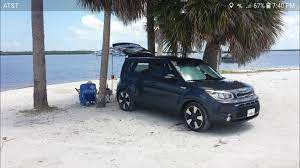
Our neighbor has a Hamster - a Kia Soul.  The car was made famous by its original "Hamster" adverts, which were clever and funny - but deemed too "ethnic" (read: black).  The subsequent Hamster videos were suitably sanitized and made more Caucasian - and even put on a diet (skinny Hamsters - go figure).

But the basic vehicle is what we are looking for - a small wagon that is easy to get in and out of, and easy to drive and park, gets reasonable gas mileage (30 mpg) and doesn't cost a lot. The  Hamsters sell for about $15,000 to $25,000 from stripped 6-speed with a 1.8 liter four to a loaded 2.0 liter four with a panoramic sunroof and air-conditioned seats.  No turbos.  No diesels.  Just a basic engine.

I could afford to buy one and write a check and not care, really.  Oh, and the warranty is far better than the BMW/Mini.  100,000 miles on the drivetrain.

So I called around and looked at a few.  Most are stripped models being sold to the younger set on payment terms - or leased.  I went online to some discussion forums and was chagrined to read postings by several youngsters (in their 20's) who were on their second or third leased Hamster.  Talk about throwing money away!

I met a young lady working at a retail job in a sandwich shop.  She liked her Hamster, but lamented that she wished she hadn't such lousy credit as, "I ended up paying twice for it, with interest and all".   That was a sad comment to me, as she paid about $30,000 for a $15,000 Hamster, financing it at high interest rates.

In short, she would pay more for a stripped Hamster (likely used) that I would pay for a brand-new one.  And the kicker is, they are offering that 0% financing on top of it (with the rebate) - but only for someone with a 770 credit score or higher.

In other words, when you don't need a good deal, you get one.  When you desperately need a break in life, they throw shit in your face.  Louis CK, who you either love or hate (or love and hate at the same time) sort of nailed this many years back in this video:

 Ever been so broke the bank charges you money for being broke?  Yea, we've all been there.

He makes a good point, and one that I have tried to make here, again and again.  And that is this:  If you go through life living in the margins, bouncing checks and late on bills, you will get hammered again and again by our system, which is akin to throwing gasoline on the fire of debt.

And often - more often than not - the reason people get into trouble like this is not because they were borrowing money to buy bread for their children, but to buy a motorcycle or a new car.  We get into financial trouble wanting things we really can't afford.  And when the chickens come home to roost, we end up spending what little money we have on interest.

And it could be a car, or a smart phone, or cable television.  Quite frankly, I don't get the two latter ones - the combined bills from a smart phone and cable would equal a car payment on a fairly nice car these days.   And at least a car takes you somewhere....

The girl at the sandwich shop didn't so much need a new Hamster as she wanted one.   A used Corolla or something less appealing could be had for a lot less.  Or, like her smarter friend, she could have simply carpooled with a friend who was foolish enough to buy a brand-new car on a sandwich shop salary.

I know this, because when I was her age, working service-sector jobs, I went out and bought a new car and spend more money on interest than the car itself.  And I spent even more money on car insurance than the car and interest combined.  And the odd thing was, at the time I had working car that was paid for whose insurance was pretty low.  It was a bonehead mistake on my part, at the time, to spend an inordinate amount of my limited income on a new car, when a used car would have made so much more sense.

The good news is, of course, that you can change direction in life.  It doesn't happen overnight and it isn't like flicking a switch.   I decided, at age 25, to stop wanting and start having.  And that meant taking my finances more seriously and taking my education and career more seriously.  Oh, and yea, not spending every day and night trying to get as high as possible.  Yea, that.  No one wants to talk about it when it comes to finances, but when you hear these sob stories from young folks about how rotten they have it, well, odds are there are drugs involved.

And about seven years later, I had not only finished college, but law school, had a good job making decent money, and had a positive net worth.   It didn't happen overnight.  It didn't take 30 years, either.

And if you do this, well, you can end up owning money and get all those good deals the bank offers people who have money as opposed to those who have not.

Of course, there are still other traps along the way.   Once you start making more money, well, you might think, "Gee, I can afford more car now.  I should look at a new $75,000 E-class Mercedes wagon!" which is what many folks do - such as friends of mine from law school.   They end up broke and on the Hamster-wheel of life, just at a new level of paycheck-to-paycheck.  And the reason they do so is the same reason the girl at the sub-shop signed herself into hock:  Status.

Myself, I am at a point in my life where I can buy a "cheap" car and pay cash for it.  Or I could stress my finances by buying another BMW or Mercedes and end up with a car that costs 3-4 times as much, but doesn't deliver 3-4 times as much car.   I think I'll take the cheap car, thank you.

And if you want to buy a lightly used 1999 M Roadster, check out eBay this fall!


Wednesday, July 22, 2015

The Lessons of Adobe


CPM, IBM, WordPerfect, Lotus, and now Adobe - companies or products that once dominated the computer world, but were quickly relegated to marginal status.

Adobe is a company whose products used to dominate the computer graphics business.  If you wanted to print something on your HP laserjet, you have to have Adobe PostScript drivers installed.  If you wanted to play any kind of animation over the Internet, you needed Adobe Flash Player.  And if you wanted to create graphical documents you needed Adobe Acrobat in order to create, modify, and read .PDF docs.

But over the years, things have changed.   The marketplace abhors monopolies, and Adobe, once the "go to" place for graphics, is seeing its market share slipping.

I am sure some would argue that their products are still in wide use.  But the beginnings of the end are already in sight.

In the last few weeks, both Google Chrome and Mozilla Firefox have blocked Adobe Flash Player as being so buggy and vulnerable to attacks as to be utterly unreliable.   I uninstalled flash player from all of my computers and you know what?  I don't miss it a bit.  Oh, sure there are a few "legacy" sites out there that still use flash.  But for the most part, you won't notice it not being there.   And you will notice the sites that have flash animation now load faster.

I suppose we should have seen the writing on the wall when Adobe started asking us to update Flash Player on a daily basis - each time asking us if we wanted some crappy "virus protector" (that other virus protectors recognize as a virus!) created by some guy who shot his neighbor in Belize - and making us use negative option to opt out of it.   It was cheezy and sleezy and came across as some sort of come-on from some clown outfit.  How the mighty had fallen.

Adobe Acrobat is OK, I guess.  I bought one copy a long time ago.  Since then, you can download version 8.0 for free online, and it works pretty well.   Some government agencies require I submit documents in PDF format, and as such, Adobe has to tolerate some piracy in order to have their standard adopted by Federal agencies.   This means, of course, there are a plethora of programs that will read and create PDF documents - all for the low, low price of free.

And meanwhile, Adobe's free "Adobe Reader" gets worse and worse and crappier and crappier.  I finally uninstalled it, as it was just hijacking my documents away from Acrobat 8.0 where I wanted them.   And the latest version of reader wants to talk to my smart phone, which I don't own.

The point, however, isn't that Adobe is a crappy company or has shitty products.  The point is, what you think is a class leader in the tech world ends up on the trash heap in only a few years or decades.   And this means investing in tech is a dodgy deal - you can never tell when a company that is on top will end up on the bottom.  And in every situation, all the pundits would say, "That company can never fail - they have a monopoly on the market!"

But monopolies are exactly why they do fail - even if it takes decades.  IBM owned the computer world for decades.  But a mere toy - the "Personal Computer" ended up being its downfall - ironically the iteration that they designed , the "IBM PC".   WordPerfect owned the word processing field for many years, but within a few years of WORD for Windows being bundled with that O/S, well, it went away in a hurry.  Lotus 1-2-3 was the last word in spreadsheet computing for DOS systems.  Today, it is a trivia question for oldsters.

And so on and so forth.  Technology changes, and often companies fail to catch on to these changes.  Microsoft fumbled with music players, and then with cell phones.   They still command a big chunk of the operating system world, but for how long?  Does anyone really like Windows 8? 

Apple has finally cracked more than half the smart phone market, while pulling in a staggering 94% of the overall profits, according to a recent Wall Street Journal article.  That's great for Apple, but it illustrates that charging $650 for a phone is a wildly profitable business.  Samsung charges about $150.   Where does the other $500 go?   And for how long will people pay 3-4x the cost of a phone?  Maybe forever.  Maybe not.

So what does a company have to do in order to stay on top in the tech world?  I am sure that is a question being asked at Nokia, Motorola, Blackberry, and Ericsson these days.   I think the answer is twofold.  First, you have to stay on top of the technology - and either lead or quickly follow to keep up with new developments.   Second, you can't try to control or corner the market - too much.  The market abhors monopolists, and eventually tears them down.

It will be interesting to see what happens to Adobe's stock price.  The stock has shot up in recent months, to over $80 a share, with a P/E ratio of over 110, and of course, no dividends.  Some are betting that Adobe's move to "creative cloud" computing will drive profits upward in the near future.  Maybe this is so - and products like Flash and Acrobat will just fall by the wayside and the company will move on to its "cloud" customers (which won't include me, I am guessing).

Or maybe people will gravitate toward other products.  Frankly, the analysts expectations for further price rises sound like so much gobblygook to me.   Increased revenues and profits are fine and all, but with a P/E ratio of 110, this still isn't a great payback for the investor.  In other words, the stock is overpriced.

In a way, it reminds me of the fate of IBM.  IBM is still around, of course, but people are no longer fearful of "big Blue" anymore.   They have reinvented themselves as a software "enterprise solutions" company and for a while there, were quite profitable at it, too.   Maybe Adobe is headed the same way.  The bottom line is, it is no longer a software company.  But maybe the era of software - as a product - is coming to an end.

After all, if the product is "free" how are you going to make a profit on it?


UPDATE:  For some reason, starting in September 2016, this posting has gotten tons of hits.   I am not sure why.  It was just me bitching about the flash player.   However, perhaps some folks are pissed off that Adobe is going "cloud" on us and using the subscription model.

I have an old copy of Acrobat 8.0 Professional (which  you can find online for free) and it works fine.   Adobe Reader DC, on the other hand, is a pain-in-the-ass as it keeps hijacking Acrobat 8.0 as the "default" viewer for PDF files from Firefox.   I finally uninstalled it.  It has so many sidebar menus and crap exhorting me to go on the cloud and pay them money.   I just want to look at a document and then store it in MY HARD DRIVE thank you very much.

But apparently, this "cloud" solution is making money for Adobe, although not enough to justify the stock price.   I guess some people and enterprises like this solution.   But I wonder how many more are like AOL users (yes, they still exist!) who keep paying that monthly fee because they think they need AOL to access the Internet, or as one oldster told me recently, "I just like the old e-mail address and don't want to move!"

People are idiots.   Sort of like paying $40 a month to a storage lot to store a rusted-out car that will never, ever run again.


Pre-Paid Credit Cards - Worse that Worthless?

Are these prepaid debit cards of any use whatsoever?  I don't think so.

If you spend any time at Wal-Mart or even the Dollar Tree, you'll see racks of these prepaid debit cards, usually VISA or MasterCard.   Are these a good deal or what?  Well, the first thing you might note is that they are being sold at places than pander to the poor, so you could just guess they are a "poor" deal and be done with it, and 99.9% of the time, you'd be right.

I bought one of these cards ($1.88) recently to try it out.  We are traveling for a few months, and those conniving bastards at Sirius XM sent me an offer for five months of XM radio service for $20 (which is about 1/5th the normal price).  When driving across the Dakotas, having satellite radio might actually make sense.

But since the conniving bastards at Sirius XM use negative option marketing techniques (which cost them more money than they make for them) you have to call and cancel the service, or they "automatically renew" as a "convenience" for you, at the regular rate of $18 a month.   The last time I used the service, I sent them a money order, so they could not charge my credit card.

This time around, I thought I might try one of these disposable credit cards and see if that worked.

It didn't.

When I tried to sign up for the service using the card, it was declined.  Reading the fine, fine, fine print (always a sign of a ripoff) of the card agreement, I realized that the pre-paid credit card could not be used for "certain transactions" such as online purchases from some retailers.  Also, some retailers won't accept these cards, particularly if they are negative option type retailers who want to suck all the money out of your credit card.  And hey, they can't do that with a disposable credit card, right?  Sort of spoils all the fun!

So, the idea of using one of these cards to avoid negative option antics is outdated.   They won't let you, so just forget about it.

And as a regular credit card, it pretty much sucks.  You have to pay $1 to $3 to get one, and then $3 a month to keep it, unless you put $500 to $1000 a month into it, for example, by automatic payroll deposit.   If you are dirt poor, have shitty credit, and cannot get a credit card any other way, this might be an option for you.   If you have two nickels to rub together and have a credit score over 500, chances are, you have other options - such as a debit card from your local credit union.

There are numerous other problems with these cards, and if you go online and read the complaints, most are user-generated problems.   As I noted in the past, one problem with debit cards is that a merchant can put a "hold" on your card which can tie up your money for days at a time.  One Chinese restaurant put a series of $15 "holds" on my debit card once, when I was younger, resulting in my rent check bouncing.  The merchant - who was a nice lady - kept swiping the card over and over again and saying, "card no work!" and each time putting  another hold on my account.  When her son came to balance the accounts at the end of the week, the actual $15 charge was made and the holds released.   But in the meantime.... well, ouch.

If you are poor and have marginal funds in your account, such holds could be a problem - and it is a problem mentioned on consumer complaint sites.  However, this problem applies to all debit cards, not just these pre-paid kind.   So you have to get your financial house in order and your shit together and have a balance in your account, if you want to use a debit card.  If you want to suck the balance dry on a regular basis, it will be problematic.

While most of these cards allow you to check the balance online or by phone for free, a balance check at an ATM may cost you a buck or two.  Throw in the $3 a month fee, and we're talking some serious change for a person with limited income - enough to buy lunch once or twice a month.

In the past, some have used these cards for anonymous online transactions (translation: ordering porn from Russian websites, online gambling, or the like).   The idea was that the card was "anonymous" and could not be traced back to you.  Maybe in 1995 this was true, but today, in the post 9/11 world, you will have to supply your name and address and social security number (!!) in order to activate the card.  So these cards are not even of use for such quasi-legal purposes.

Note also that you are liable for fees charged to the card, including the $3 a month fee.  So if you just spend all the money on the card and figure your end of bargain is done, guess again.  Unless you go online (or call or write) and explicitly cancel the card, the $3 a month fee will keep being charged and you will get a bill when the balance goes negative (and perhaps additional fees for having a negative balance!).

So, what do I do with this card?  Spend it on gas money until the balance is $3 and then go online and cancel it, and remember a valuable lesson:  A lot of shit that is marketed to the poor is a poor bargain in every sense of the word.   You are better off just avoiding bargains aimed at the poor, and when in doubt, simply use this as a filtering mechanism to avoid shitty deals.

And as for XM radio, I wish they would just come up with a rational pricing scheme instead of resorting to trickery.  I mean, if they just signed people up online at a rational price, they could fire the hundreds and hundreds of call center people and "cancellation specialists" needed to prop up their tomfoolery and trickery.

But then again, these marketing types just don't get that.   Well, they were dumb enough to pay millions to Howard Stern, weren't they?

UPDATE:   Since most gas stations place a $50 to $75 "hold" on a debit or credit card before allowing you to pump gas, a pre-paid debit card is pretty worthless unless you have at least a few hundred dollars balance on it at all times.   Otherwise, expect to be declined with regularity.   It is damn hard to spend down a pre-paid debit card to the last dollar.   You can only cancel it and ask for a refund, which may take months.   These cards are useless.
 

Wednesday, July 15, 2015

Amazon Resorts to Hucksterism

The entire point of buying things online is defeated when you "shop".

Amazon is losing money.  And that is not a good sign.  After all, you'd think one of the world's largest online retailers should be making a bundle, right?  Well, last year, it made 18 cents a share, so I guess that's something.  But at today's share price, that is a P/E ratio of 2570, which is staggering.   By the time Christ comes back in 2570 years, you'll have made back your investment in Amazon stock, at this rate.

So, they have to gin the numbers somehow.   Just selling stuff online isn't very profitable.   Why not take a page from WOOT! and offer "limited time specials" and induce people to buy things they really don't want or need?  At these prices, you can't afford not to buy, right?   (just in case you missed school, the correct answer is "wrong").

It is bad enough that Amazon is pushing this lame "Prime!" deal, where they try to trick you into signing up for a monthly subscription fee, in order to "save money" on things you buy at Amazon.   Of course, the gag is an old one - rake in subscription fees from folks who don't notice small charges on their credit cards, and of course, use negative option to make it hard to un-subscribe from these deals.

These sorts of shenanigans are what is making me less and less inclined to buy on Amazon.  eBay already has sort of burned its bridges with me - you buy things there, you basically are taking a 50% chance you will never get the item, or the item will not be as described - and you will have no recourse whatsoever.  PayPal has similarly shot itself in the foot, by trying to trick people into signing up for PayPal credit cards by making the checkout window confusing and hard to use.  eBay and PayPal are splitting up, which is not a sign they are both doing well.

At least Amazon was reliable and the prices were reasonable.   What is wrong with that selling model?   Instead, we get hucksterism.

And no, things sold through hucksterism are never a good deal at all, period.

Why is this?   Well, as I have noted time and time again, good deals present themselves.   A solid product at a good price doesn't need hype to be sold.   It sells out in short order.   On the other hand, marginal products at iffy prices require a lot of flim-flammery to sell.

Will someone get a "good deal" at Amazon's "Prime Day"?   Maybe.   Someone will crow they bought a $599 television for $299 and "saved" $300.   Of course, as we have talked about here, time and time again, that "savings" are what you put in the bank, not false "discounts" from arbitrary "manufacturer's suggested retail price" numbers.

So no, they didn't "save" $300.   If they did, they would buy 1,000 of such television sets and re-sell them on eBay for a $300 profit each and make $300,000 in one afternoon.   The reality is, they bought a $299 television, and we know this, because that is the price they paid for it, and only a fool would pay more.

It is sad that Amazon has gone this route.  They were sort of one of the good guys on the Internet, offering decent products at reasonable prices, as well as a great resource for online e-readers.  Perhaps the rise of the iPhone and iPad are cutting into Kindle sales and e-book sales at the site.   The iPad has already killed off the Nook, apparently.

But as this latest venture isn't a move in the right direction, I think.   It is just a descent into retail hucksterism hell.   And sadly, very few companies turn around once they go in this direction.   There is apparently new management at Amazon, and their ideas are more about how to screw the consumer than to just offer decent products at decent prices.

The are no "bargains" on "Prime Day" - and no, I will never, ever sign up for "Amazon Prime" no matter how they try to trick me into doing it.