Friday, October 14, 2016

The Cohn Connection

"I have in my hand 57 cases of individuals who would appear to be either card-carrying members or certainly loyal to the Communist Party, but who nevertheless are still helping to shape our foreign policy."  McCarthy never produced this list.


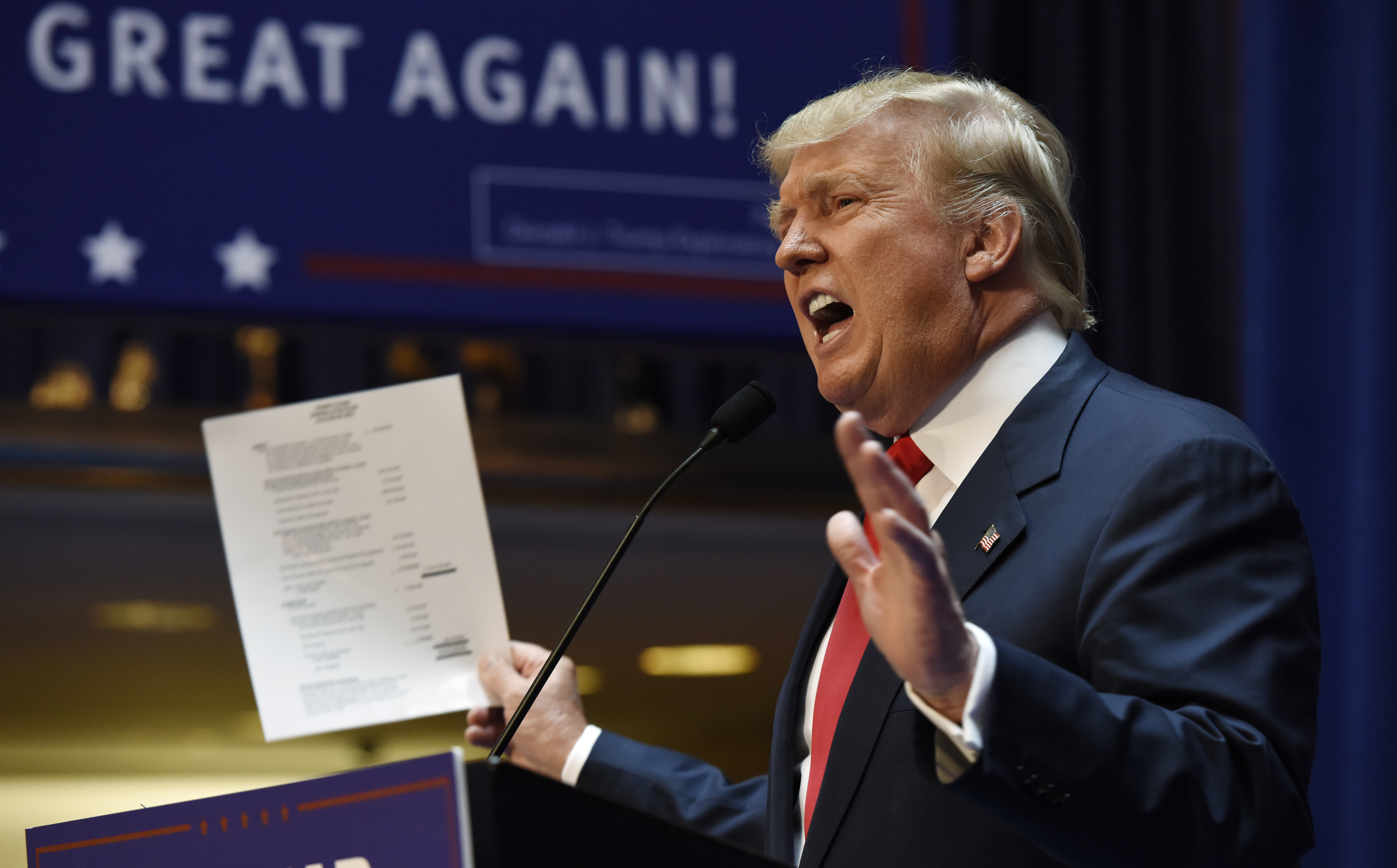
 "I do want to say that I was just endorsed and more are coming next week, it will be over 200 admirals. Many of them are here, admirals and generals endorsed me to lead this country. That just happened."  Actually it didn't.  88 retired Generals and Admirals endorsed Trump.  Given the number of Admirals and Generals in the Pentagon, this is not a huge number.  Again, we never get to see the list.

Communist-hunter (and witch-hunter) Senator Joe McCarthy and Donald Trump have more than one thing in common.   They are (or were) bombastic and insulting.  And people stayed tune "just to see what thing he says next!"   They both ruined lives of many people through their machinations.   But the one thing that really underlies their similarities is that they had the same advisor and mentor, the infamous attorney Roy Cohn.

Cohn was a piece of work - a flamboyantly gay man who insisted until the day of his death (from AIDS) that he was not gay.   Yes, gays often make the best right-wing conservatives, particularly closeted gays.  They also make the best Nazis.

Cohn was famous for taking a "scorched earth" approach to everything in life.   When he was the acolyte to Senator McCarthy, he advised him to "go after" his opponents, a strategy which failed only "after at long last" it was shown that McCarthy had no shame.   McCarthy's time in the limelight was brief, and he flared out quickly and public opinion turned against him in a big way in a real hurry.   Once a popular Senator with a popular cause, today he is viewed as the epitome of evil.

McCarthy died shortly thereafter from his alcoholism.   Cohn lived on for a few more decades.   And in that time he took under his wing another bombastic figure - you guessed it - Donald Trump.   Trump's approach to business resulted from his tutelage with Cohn.   Go after your enemies, go after them hard, never concede, and never surrender.   And for a long time, this approach worked.

Cohn died in 1986, but the lessons he imparted to Trump seemed to stick.   Although I suspect his debacle in Atlantic City would not have occurred had Cohn had lived to advise him otherwise.

But like McCarthy, it seems that the public's fascination with bombast and insults has a very short shelf-life.   Overnight, it seems, people are abandoning Trump in droves.   It is not that the recent "revelations" about his behavior have tipped the scales, but rather, I think, that people are finally waking up to what kind of person he is, and realizing that the roller coaster ride, while fun, is actually quite dangerous.

It also turns out, guys, that chicks really don't dig it when you grab their vaginas, uninvited.   Yea, it is hard to understand, I know.   But there you have it.   Not only do they not like this, it appears to be a big issue with them.   So just a suggestion to all you dudes out there, before you grab, ask.

The parallel struck me during the debate.  One of McCarthy's favorite tactics was to pull numbers out of his ass.   So many "communists" in the State Department or the Army or whatever.   Lists he "had in his hand" but would not show to anyone.   Trump did the same thing, with 200 Admirals or 33,000 e-mails (which became 39,000 e-mails later on) or other things he "didn't have time" to show us, but were "beautiful", "huge", "excellent" or otherwise "the best".

Same old shit, different day, different asshole.   I only hope that America saw through this, unlike our counterparts in the rest of the world who have fallen for snake-oil salesmen like Trump.

Brexit, anyone?

Wednesday, October 12, 2016

Is the Cloud Safe? Probably Not.

Storing sensitive data on the cloud might not be a good idea.

I wrote before about "the cloud" and how the term got started from white-board drawings.   While the Internet has been a great boon to mankind, the powers-that-be are trying to use cloud computing to basically take away power from users of personal computers.

The Personal Computer was a revolution for mankind in that it allowed individuals to operate their own computers.  Prior to that time, the mainframe computer was an enormous beast, locked away in specially air-conditioned vaults and attended to by a small army of acolytes - much as today's server farms are.   If you wanted almighty data from the computer, you had to ask nicely of the computer nerds, or you wouldn't get anything.

The PC changed all that - allowing small companies and individuals to process their own data, at first just spreadsheets and documents.  With the Internet, this expanded to include data searching and online communication.   But the PC remained the center of power for the individual.

And we can't have that, can we?

Early on, "thin client" products were bandied about - stripped-down PCs which would operate off a central office server, often with no real storage (hard drive) in each PC.   I worked at an office who bought such a system.  It worked fine until the mirrored drives in the server crashed and it took a week to recover our data.   In the meantime, we had to run WordPerfect for DOS on floppy discs to get any work done.

Thin client puts all your eggs in one basket, which is fine, so long as someone is watching that basket.

Today, the same idea is being promulgate through "cloud computing" which is the same concept only using online servers to store all of your data or even run programs (which increasingly are referred to as "apps").   So instead of loading your word processing program on your computer and storing your files on your hard drive, they want you to subscribe to a word-processing app and then store all your documents in the cloud - on someone else's server somewhere out there.

And you can guess what happens if you stop paying the subscription fees.   Once again, we find corporations getting greedy, no longer content to just sell software but instead sell subscriptions.   And over time, the consumer will succumb to "subscription fatigue" as they pay more and more every month for everything from cable TV to XM radio to Pandora to online magazines, and now, for storage and software.  It starts to add up over time - to a lot of money.

The appeal to companies, such as Microsoft, is obvious.  You get a steady stream of income every month, even if you are not really doing anything.   Unlike the software upgrade, the consumer has no choice but to keep paying and paying every month, every year, for decades.

Older software that works doesn't need to be upgraded.  I run an older version of Quickbooks and it works just fine.  Since I have the installation DVD I can load it onto any machine I own.   The only downside is that I can't export files to other users, as Quickbooks makes sure to make older file types non-compatible with newer version.   And this is not by accident.

I wrote before about .DOCX documents and Microsoft's attempt to obsolete the very functional Word 2000 in favor of a newer version.   By making the documents incompatible with older versions of WORD, they force users to upgrade to the new version (or like I do, use the shareware OpenOffice suite to view and convert those documents to .DOC format).

Word 2000 works just fine, thank you.  And Windows 7 Ultimate beats the crap out of Windows 10, particularly on an older computer.   And that is the other part of the equation - many of us stopped upgrading our PCs ages ago as Internet speed turned out to be the real limiter of PC performance, not processor speed or hard drive access time.   So my old computer (and it is nearly a decade old, an eon in the computer business) will continue to soldier on for a few more years, well into my retirement.  It may in fact be the last computer I buy as a laptop or even phone might serve my needs in the future.

Of course, the smart phone is the ultimate cloud computing device, as they don't have a lot of memory to store data (even with a large SDRAM installed) or programs.   So much of what we do on smart phones is based on the cloud.   Although I found I could install 10,000+ songs on an SDRAM in high-resolution .wav format (MP3 sucks) with little difficulty.

The cloud won't go away anytime soon, as companies will continue to push and prod us into storing data there, arguing it is "safer" than a crash-prone hard drive.   And I know a lot of folks who have lost albums of data and their entire music collections as iPods or hard drives crashed and were unrecoverable.   Of course, they failed to back up their data redundantly, so part of the error is on their part.   Also, it is not a bad idea to just let data die sometimes.   Keeping lots of records and stuff might seem like a keen idea, but it can be awkward and difficult.   You really only need financial records back about 7 years or so.  Keeping your old paper-route ledgers is really kind of stupid at this point in your life.

But the question remains, is the cloud a safe place to store data?  And with recent "hacks" of e-mail accounts, you have to wonder if it is.  I recently read online about how Yahoo! had about 500 million accounts breached.  That's a lot of accounts.  And they took their sweet time telling people about it - like a couple of years.   I changed the password on my old dormant Yahoo! account immediately, of course.  There doesn't seem to be any indication of anyone tampering with my account.

Of course, others fall prey to common Yahoo! trolling e-mails, whose badly worded pleas scare consumers into thinking their account "will be closed by the security department!" unless they provide their username and password by return e-mail.   These clumsy attempts often work, and they get less clumsy over time.   Most of my friends who have Yahoo! accounts have fallen for this gambit at one time or another.

But getting back to my dormant account.  When I logged on, I was kind of shocked to see how much personal data I had put on the cloud.   Copies of my tax returns were stored in the e-mail account, as sent from my late accountant.  These included my address and Social Security number!  I also had uploaded backup copies of my Quickbooks files, which included a lot of financial data.   I quickly erased all of these e-mails, including responses in the "sent" files.   I also made sure to empty the TRASH file once the e-mails were deleted.

If someone had hacked into the account (through Yahoo!'s data breach) they might have been able to obtain a lot of financial information which could have been used for a tax refund hack (filing a false return in my name, using my social security number, to claim a refund) or some sort of bank account or credit card hack.

I also realized that there was no point in keeping this data in the cloud.   Old financial records are just that - old and obsolete.   I would not need them for anything in the future.   My current records on the hard drive were more than sufficient - and backed up onto two portable drives, two laptops, and three PC hard drives (a septuple redundancy) which is arguably more robust than the cloud (memory sticks or SDRAMs are another viable option).

The promise of the cloud is enticing.   You can keep all your data there and never have to worry about it.  You can access your data from any device, without having to load it onto each device and sync and update it.   But that promise is somewhat flawed on a number of fronts:
1.  Your data can be hacked or stolen, if the cloud server is not secure.   In the past, this seemed far-fetched.  But major companies such as Yahoo! are being hacked with regularity, so the idea that your data is "secure" with a big company is sort of flawed.  You may also be vulnerable to social engineering hacks if you are not careful.  Either way, your data can be compromised.

2.   The company can lose the data.  Servers crash and backup files can be corrupted.  I am sure if you read the Terms of Service for these cloud deals, the companies absolve themselves of any liability for your lost or stolen data.  If they didn't they'd be fools. 

3.  Companies go out of business.  As I found out the hard way with Webshots, companies can be sold and the new owners might decide to delete all your carefully manicured data.  Webshots took all my photo albums, stripped off the lengthy captions and comments, and then tossed them into a bucket in random order.   After a while, they deleted even that.  One reason I got off Facebook (and earlier, MySpace) was that they kept changing the user interface, which required reformatting and re-doing your page again and again with each "upgrade" - it simply wasn't worth it after a while.
So when you put all your eggs in the cloud basket, you are taking a risk that the data could be lost or stolen or simply abandoned.  While it may seem like a swell idea to back-up or sync data with the "cloud" it really ends up just being an enormous pain-in-the-ass to do.   Relying on the cloud exclusively seems rather foolish.

You may have documents stored in the "cloud" and not even know it.  Google's gmail seems particularly snarky in trying to get you to upload things to google drive.  If you click on an attachment, it offers this option and it is easy to click on it by mistake.   Also, things you delete from your e-mail account may end up in the "deleted files" section of google drive.  I was kind of shocked how much data I had stored on google drive - by accident - when I checked it out.

Over time, I am learning that the smaller footprint you have on the Internet, the better.   And for that reason, I may end up deleting my blog in the next year or so, once I am done writing it.  Of course, many posts will live on in perpetuity, thanks to 3rd-world click-bait artists who republish my content without permission.

Keeping a lot of data in the cloud, whether it is actual records and documents, or just a facebook page and e-mails, does have a risk attached to it.   Quite frankly, I am seeing less and less of a benefit to uploading data to the cloud.

Tuesday, October 11, 2016

Is Trump a Coke-Head?


The sniffling and narcissism would seem to indicate he is a coke-head.  His bloating body weight might indicate otherwise.   But then again, John Belushi.

In a recent article, Carrie Fisher, who apparently knows what it is to be a coke-head, opined that the sniffling of Trump at the debate indicates he is doing lines.   We listened to the debate rather than watching it, as we were trapped in Western Georgia during the hurricane (no damage, thanks) and had only NPR to listen to.  Like with the Kennedy-Nixon debates, those listening had a different experience than those viewing.

We heard a LOT of sniffles from the Trumpmeister.  After every sentence it was "SNIFF!" and we thought either he had wicked allergies or had done a few lines before the debate.

And in a way, it makes sense - the narcissism and the constant blathering about how "great" and "beautiful" and "huge" things will be are all part and parcel of the coke-head milieu.  I have had to deal with coke-heads in the past, and I can tell you they are fucking annoying.  They always have grand plans, but are very vague on details.

And when you press them for details, they get very angry.   In the business world, coke-heads get ahead by taking credit for the actions of others and then denigrating and attacking anyone who disagrees with them.   They succeed - for a while, sometimes a long while - until eventually they crash and burn as reality, long denied, comes crashing into their fantasy world and eventually even their most ardent supporters abandon them.

Is Trump a coke-head?   It would certainly appear so.  His penchant for coke-head styles and fashions (glitzy and glamorous and tacky) seem to fit the bill.   And while usually coke-heads are deathly thin, there are exceptions to the rule, such as the aforementioned John Belushi and his successor Chris Farley.  So chubby Trump could be a coke-head, even though he is fat.

But in the end analysis it makes no difference.   Because a Presidential candidate who acts like a coke-head is just as bad as one who is - perhaps worse.   If he acts the way he does without the influence of drugs it is all the more appalling.   After all, one can blame poor behavior on drugs, and then quit the drugs and end up a respectable citizen.

But if you are just an asshole normally, well, there is no cure or re-hab, is there?

Sunday, October 9, 2016

The FEAR election - emotional versus logical thinking


This election more than any in recent history, pits logical versus emotional thinking.   Trump is using FEAR to rally supporters.

A recent article tries to analyze what is going on in Trump supporters' brains.   The answer is really quite simple:  Trump is cranking up the FEAR lever, which causes people to think emotionally and not logically, which in turn allows them to support him, even though they may disagree or even be repulsed by his positions.

In a way, he is not unique in this regard.  Look around the world today at the new generation of dictators - Ergadon, Putin, Duterte, Maduro and others - all have the same characteristics.  They say and do outlandish things, like a Reality Television star, and their supporters are entranced by them.  Entranced is the right word - it is a form of hypnosis.  It is not dissimilar to the effect Hitler's speeches had on his followers, or even us today.  If you listen to this sort of right-wing bombast, part of you wants to say, "yes, he's right, it is all the Jews' fault" until you snap out of it and realize how utterly charming dictators can be.  Charming as in a snake charmer.

Fear is the common denominator.  If you are a weak leader, you can't run on your own record, so you run on fear.  Maybe it is fear of crime, Mexicans, Muslims, blacks, or terrorists.  Or drug dealers or capitalists or Yankee Imperialists.   Or maybe secularism and Western culture.  All you have to do is convince your supporters that (a) the problems their country is having are external, not internal, and (b) these outside forces are to blame for their problems.   Classic externalizing and fear-mongering.

Your opponent tries to run on common-sense and policy wonkism.   They will likely lose.   Because in addition to making people afraid of external forces, you make them afraid of your opponent.

And to do this, you use emotional thinking.   You tag your opponents with catch-phrases and nicknames and before long, people identify your opponent by those phrases.   Trump's genius - if you can call it that - is in tagging each of his opponents with a degrading nickname, whether it is "Low Energy" Bush or "Little Ricky" Rubio.  Once you slap the label on, it sticks.

I recently talked with an old friend about the election.  He is appalled by Trump but won't vote for "Crooked Hillary" (his words).   When I asked him why Hillary was "crooked" he hemmed and hawed for about ten minutes and then gave up.  It sort of sounded like one of Trump's run-on sentences - just a word salad of "e-mails, whitewater, Jennifer Flowers" and then a period at the end.   What he failed to articulate was any specific incidence of "crookedness" just maybe a few examples of bad judgment (being crooked has to be more than just doing something stupid, it has to be doing something illegal for a profit, and no, getting paid to give a speech doesn't qualify as "crooked").

The sad thing is, it seems that more and more of the planet, trained on reality television, facebook, and twitter, seem to fall for this sort of thing.  I mentioned before (I thought, anyway) that there seems to be a parallel between world events today and events of the 1930's.   Back then the new media was radio (and the newsreels) which allowed politicians to talk directly to voters for the first time.  Bear in mind that in the US, Presidential candidates rarely even gave speeches on their own behalf when running for office, at least not until the 20th Century.  Now, with mass-media, politicians could talk directly to voters without the filter of newspapers or print.   It was a powerful tool, and it is no wonder that we saw a rise in radical politics at the time.

Today it is the same deal, only with so-called "social media."   People can live in their own informational cubby-holes and never see or hear any opposing views.  Supporters at a Trump rally when asked say they they don't believe the polls as "no one every called them and ask for their opinion" and "no one I know on Facebook is supporting Hillary" - clearly they have no idea how Facebook or most Social Media works.

It will be interesting to see how the election pans out. While polls are promising right now - showing that intellectualism and rational thought are prevailing - there are still a lot of people out there willing to vote based on fear.  And as I have noted time and time again, when someone tries to instill fear into you, they are basically lying to you and trying to deceive you for their own profit.

The narrative being sold by Trump is rife with lies.  He claims that crime is rampant, when in fact it is at all-time lows, not only for our country but for human civilization in general.   He claims that American is in deep trouble economically but in fact our economy leads the world and inflation is low, unemployment is at record lows, and interest rates are flat.  He claims Ford is "moving production to Mexico" but the reality is they are only moving small-car production there so they can re-tool their US plants to build SUVS, including a new Bronco to compete with the Jeep Wrangler.  He claims that US manufacturing is all going to "Gina" when in fact our manufacturing capabilities are increasing, surpassing Germany last year and on track to surpass China by 2020.

But the core Trump supporters don't see this.  They see only that they are in debt and can't find a "good paying job" for someone with no education and no skills.   If only we could go back to the "good old days" of the 1970's when UAW workers were paid more than Doctors to put together half-assed overpriced cars!   The stag-flation of that era was so much better than today!

Logically, of course, none of this makes any sense.   But Trump isn't trying to sell logic, which is why his antics are working - for a certain subset of the population.   They want emotional drama, as delivered by the television.  Reality television has trained an entire generation to think that having a family means having family drama all the time, that going to work means having drama at work.  That everything in life should involve shouting, confrontation, scheming, and back-biting.   And Trump delivers all of this for them, in what in past years was a major snooze-fest of policy discussions.

It will be interesting to see how this plays out - whether America will go the way of so much of the world (including the UK with its Brexit vote) and succumb to emotional thinking.   Emotional thinking, of course, usually leads to disaster, whether it is the pound dropping to $1.20 or 3,600 (and counting) people murdered in a matter of months in the Philippines.

A Trump Presidency would result in economic disaster for the United States, which is why most real Republicans are against him.  Starting a trade and tariff war with the China, Mexico, and the rest of the world would not make life better for Americans, but would just make everything far more expensive.  We would be back in the same stag-flation mode we were in back in 1975.   If you lived back then, you understand that.  But sadly, fewer and fewer people seem to recall those days.  Fewer still were alive back then.

Tuesday, October 4, 2016

Finacial Illiteracy and Trump's Taxes


Most Americans know nothing about how taxes work, so if you say that someone or some company "doesn't pay taxes" they get all outraged.


Donald Trump is in the news again for two reasons.   One is pretty bad and the other is very neutral.  But oddly enough the press - and even the Democrats - are playing up the one that is neutral and ignoring the one that is potentially very bad.

Why?  Because Americans are ignorant about taxes and the law, and if you have to explain things in anything longer than a tweet, they lose interest and don't understand what you are getting at.

The New York Times reports that from a leaked 1995 tax return that Donald Trump reported a nearly billion-dollar loss.  The media gleefully reports that this means Trump "might not have had to pay taxes for a decade or more" as if this was some sort of criminal action.

The reality is, of course, that in the 1990's Trump's financial empire imploded.  He lost many of his properties (even if his name remained on them) and he lost his airline and his yacht (the Trump Princess once the world's largest private yacht).   He wasn't broke, as he "crammed down" his lenders and ended up with a cushy deal that kept his name on his buildings and a nice yearly fee as a "consultant" or manager of these properties.

But he indeed may have taken a billion-dollar loss that year.   And here's something funny - you don't pay taxes on losses.   Simple concept - it eludes most.    And if you lost a billion dollars one year and "made" a hundred grand the next, it doesn't mean you "made money" the next year, as you have a billion-dollar hole to dig yourself out of.   So you can "carry over" losses to the next year or even the year after, or even beyond, depending on whether the losses were active or passive.

Oh, wait, that doesn't fit into the 140-characters of a tweet, don't it?   So no one "gets" it and they just hear "he didn't pay taxes while I have to!" and think he did something illegal, which he may or may not have done, but the "leaked" tax return from 1995 doesn't indicate either way.

Emotional thinkers, however, latch onto the "he didn't pay taxes" mantra and assume it means he is a bad person.   Well, he is a bad person but not necessarily because of the taxes.

Meanwhile, another story breaks about the Trump Foundation which is really scary and no one notices because it is a complicated story and again, can't be explained in a tweet.

According to the New York Times, Trump started a Foundation to distribute his wealth to charity.   Problem is, he never distributed his wealth to charity, but instead solicited money from other people, who donated millions of bucks to his foundation.

Nothing wrong with that, but if you are going to raise money from others, you need to register as a charity, which Trump failed to do.   Well, OK, that's a technical violation perhaps.  But it gets worse.

Not only has Trump failed to donate any of this money to charities (to wounded veterans as promised) but it appears he used the money for his personal use and for political donations both of which are prohibited by law, not to mention sound pretty low for money ear-marked (by himself no less) for wounded soldiers.

Worse yet, the political donation was to the Attorney General of Florida, who subsequently dropped an investigation of "Trump University".   So one could argue that Trump used this charity money as a slush fund to pay political bribes, and that is pretty darn low.

If these allegations are true, then Trump has done something not only illegal, but immoral as well (using charity money earmarked for veterans to pay himself as well as pay political bribes).

But where is the outrage?   There isn't any because Americans are emotional thinkers and financially illiterate.  They understand the emotional argument of "didn't pay taxes" even if it doesn't indicate any wrongdoing or malfeasance on the part of Trump.   They don't understand the complex argument about not registering as a charity as it is too convoluted and complex.   Perhaps the dems should drop the tax argument and use the tweet "Trump steals from charity" instead.   People might actually get that.

Sadly, none of this will be thoroughly investigated until well after the election, so we likely won't know anything definitive about his taxes or the Trump foundation until well after November 8th.