Thursday, February 6, 2020

Little Things Cost a Lot.....


It is not the big-ticket items that make home ownership expensive, but the little things.

I recently did some more home maintenance projects - the list is never-ending, and you can do as much or as little as you want.  If you do too little, you usually end up paying for it later on.  On the other hand, you can go "over the top" and spend a lot of money and achieve nothing.  Like anything else, moderation is the key.

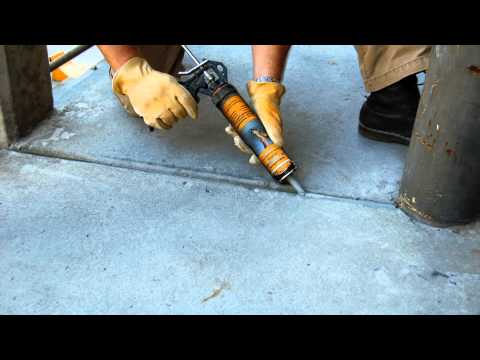
I recently bought some self-leveling caulk or self-leveling sealant, as it is sometimes called.  This is like runny caulk that is ideal for sealing cracks in concrete and whatnot.   Where the patio joins the house there is naturally a small gap.  Unfortunately, dust and dirt falls into this, and eventually seeds, and plants start to grow.    At first, it is just an unsightly nuisance, as you have to cut these down with a weed trimmer or by hand, or use an herbicide spray.   Gaps like this also allow water to ingress, which can lead to the concrete settling over time.   So you put some of this self-leveling caulk in there and it looks nicer and keeps plants from growing and water out.  The alternative - doing nothing whatsoever, would be that eventually a tree would grow out of there, crack the sidewalk, and you'd have to replace the whole thing.   This rarely happens, of course, other than at abandoned properties.

Seems like a simple thing, until you realize that a few tubes of this caulk can run $30 to $50 or more, at $10.99 a tube.  When did caulk become so expensive?  It is the kind of thing you buy at the big-box home improvement store without looking too closely at the price.  I ended up going online and finding it for $7 at Walmart, and a quart of liquid pour even cheaper on Amazon.   It doesn't sound like much, but $50 here and $50 there adds up.

It never ceases to amaze me how expensive a simple trip to Lowes or Home Depot can be.  You want to put in an outlet, for example, so you buy an electrical box, a GFCI outlet and outlet cover, and maybe some wire.  You get home and look at the receipt - $50!  What the heck happened?   The markup on electrical supplies is staggering, as is plumbing.   You want to replace a faucet in your home?  Expect to pay hundreds for some of them - no wonder they are the favorite of shoplifters.

Often it is these little things that add up.  You want to put in a new hot water heater.  No big deal, right?   You can buy a heater for $499 for your house.   But expect to pay another $100 in associated parts and plumbing supplies to install it - all those little things add up over time.

This is why I am so skeptical when people put up these click-bait articles about how they made a "tiny house" or "skoolie" camper out of an old school bus, utility truck, U-haul van, or Greyhound bus, for only $5000.  Just the trips to the home improvement store for the wiring, plumbing, and fasteners would cost a thousand bucks - before you even get into air conditioners, refrigerators, toilets and holding tanks.  Unless their "conversion" consists of throwing an old Wal-mart sleeping bag on top of an Ikea futon - and using a 5-gallon pail as a toilet - I doubt they spent that little.

It is human nature, of course, to only calculate things in our favor.  We count the big-ticket items and neglect the smaller ones.  During our fairly recent garage and laundry room makeover, we spent over $10,000.   Taking aside $4000 in appliances and $900 in IKEA cabinets, where did the rest of the money go?   Sure, there was sheetrock, a new sink, faucet, FRP for the walls - but that's maybe another $1000 or so.   The rest was all little things - glues and caulks and screws and fasteners and trim pieces and small plumbing parts and valves and PVC cement and teflon tape and paint and paint brushes, and rollers and roller trays and.... well, you get the idea.  I'm not even factoring in the pair of blue jeans that were basically destroyed, along with a couple of t-shirts, a mountain of rags, soap, detergents, and other cleaning supplies.  We tend to overlook that - not to mention the automobile expenses of driving to the big-box store at least twenty times and back (and to IKEA in Jacksonville, the appliance store - and well, you get it).

By the way, that figure doesn't include the split system heat pump I installed a couple of years earlier ($2500) or the garage door insulation, as well as a number of other smaller projects, such as storage cabinets, shelving, and whatnot.  As you can see, this has been an ongoing project!

It is, in a way, like figuring out how much a cruise really costs.  Take the "come-on" promotional price and add a zero to it - our $199 cruise cost close to $2000 when all was said and done, the $699 cruise, close to $7000.   I mean, you could spend less, by staying in your room the whole time and doing nothing like these quarantined corona virus people, but that's more of a jail sentence than a cruise.

We all like to lie to ourselves that things cost less than they do.  I know more than one die-hard cruiser who told me they went on a cruise that was "only $299!" and when I replied, "Well, that was per person, right?  Plus port fees, fuel surcharge fees, taxes, drinks package, meals package, internet service package, shore excursions, prepaid gratuities, and such, right?" they get mad at me.  "It only cost $299!" they almost scream.  No one likes to have their world-view challenged.

So, how to avoid this home trap?   Well, it is a trap that can happen with a boat, RV, or car as well.  One approach is to worry less about making your home "perfect" - so-called "house polishing" as I call it.  Another is to own less house and thus have less to maintain.  And the same is true of boats, cars, or RVs - trying to make them "perfect" or "upgrading" is often a waste of time.

But I guess the bottom line is this:  Don't lie to yourself about the actual cost of things.  Calculate in those "little expenses" as a big chunk of any such project.

Another lesson learned:  Figure out in advance all these "little things" you'll need and shop around online.   It won't make these things "free" of course, but the big-box stores are betting that you will pay a lot extra (or not even look at prices too closely) when you need that fastener or other small part to finish a project, and will value convenience over price.

Wednesday, February 5, 2020

Groundhog Day


The actions of a small rodent don't predict the weather, but it makes for a good story.

First, an update:  The results of the Republican Iowa Caucuses are in!  Donald Trump has narrowly beaten former Hawaii Rep. Tulsi Gabbard for the Republican nomination.  While many in Iowa praised Gabbard's conservative views on many issues, they felt that Trump should be given four more years to build his wall.   Tough luck, Tulsi!

* * *

Journalists like to use unimportant criteria to predict Presidential Races, the economy, the stock market or whatever.  For example, they will say something idiotic, like, "The winner of the Superbowl has accurately predicted who will win the White House 50% of the time in the last 20 years!"   Sounds impressive, until you realize that is the last four elections, and even then, it wasn't much of an indicator.

There are others - how the stock market does for the first five days of the year indicates how it will do for the year!  And this has been accurate since 1982 - at least 60% of the time!   You might as well practice VooDoo.  It is akin to saying the weather is controlled by a small rodent in an obscure small town in Pennsylvania.

Why do journalists engage in this sort of nonsense?  Two reasons.  First, most don't have a technical education - they never took math in college or probability and statistics.   So anything mathematical to them is indeed VooDoo or supernatural    The second reason is obvious - clickbait.

When you have no sort of technical education, the world seems like a scary and random kind of place.  As a result, people devolve into a cargo cult mentality.  They adopt superstitions in the place of science.   And yes, I've met otherwise rational people who think that these "tells" or indicators actually have meaning and value.  That groundhogs predict the weather, and how the stock market does for three random days of the year predict the overall behavior.

And these same folks believe in "momentum" when it comes to elections.   Journalists are batting around other specious "statistics" these days, that in the last so many elections, whoever wins Iowa or New Hampshire ends up winning the nomination.   That may have been true, but that doesn't mean anything.  There isn't some sort of mystical control mechanism that prevents anyone else from getting the nod.   It is just correlation being confused with causation.

The results of the Iowa caucuses - if they are even completed by now - are anything but clear.   In an attempt to make the process seem clearer, they have succeeded in making it only muddier.   At the present time, Bernie Sanders can claim he won the "popular vote" while Pete Buttigieg can claim he won the most delegates - a situation oddly reminiscent of the outcome of last year's election.  Meanwhile, the remaining combatants can all claim that combined, their votes outpace the two top finishers - if Warren threw her support behind Biden or vice-versa, they would have won handily.   With so many people in the race and such a fractured outcome, it is hard to call a "winner" here at the present time.  Garnering one-quarter of the vote is hardly a clear win for any of the candidates.

But the media will have none of that.   Going into New Hampshire, the candidates have "momentum" and these two tiny States will pick the eventual winner!   The votes of the rest of the country don't count.   How odd, coming from the same party that decries the electoral college as "unfair".

The point is - and I did have one - is that we shouldn't let junk statistics influence us.  Which team won the Superbowl only indicates which team won the Superbowl.   Presidential elections are determined by who wins the most number of electoral votes - not by superstition, "tells", or "momentum".

Similarly, economic forecasts based on "the first three days of the year" are utter nonsense.   Far better data can be found in manufacturers orders, sales, profit-and-loss statements, and other hard numbers, which tell you more about the economy than any made-up "test".

But getting back to clickbait - why do people eagerly want to see the results of these arbitrary "tests"?   People get up early to see "Punxsutawney Phil" or stay up late on caucus night to see who "won" and get pissed off when no one does.  Why do we click on headlines that announce a coming recession or a bull market, based on little more than tea leaves or other arbitrary criteria?

It is a dark side of human nature, I guess.  And marketing people know this and play to it.  It is no different than so many of the "sponsored content" links which have questions in their titles or incomplete information, or "You'll never believe...." kind of things.   We are curious, and curiosity killed the cat.

Whoever wins the Democratic nomination and goes on to lose in November to Trump remains to be seen.   No sense calling the game before even the first play!

Tuesday, February 4, 2020

Blue State Exodus? Maybe.

Population growth rate in the US is slowing, but in some States, population is actually decreasing.  In others, while birth rate means net growth, more are leaving than moving in.

In  a previous posting, I mused why anyone would want to stay in a State with five-figure property taxes.   The reasons given are many - some want to be near their relatives - brothers, sisters, parents, children.  Others have jobs they need to make a living.   But as you retire, and particularly if you retire on a fixed income (doesn't everyone?) or worse yet, a fixed amount of money, the idea of paying high prices for taxes, food, gasoline, and every other expenses in your life seems rather foolhardy.

If you live in a major coastal metro area, odds are even a basic three-bedroom, two-bath house could cost more than a half-million dollars.   You could sell this and move elsewhere to a better house that costs less than half as much.  As a bonus, the taxes would be far, far less, and the cost of basic living expenses a lot less (and the crime rate lower, etc.).  That is the selling formula for The Villages and other retirement communities.

A lot of people do the math on this and "cash out" of expensive properties "Up North" and move away.   Kind of compelling - you cut your cost of living in half and walk away with a quarter-million dollars, tax-free.   Why not?

It is funny, but some prognosticators argue that there will be a "Silver Tsunami" in the coming years as old people die off and sell off their retirement homes to move back North to be with their kids or to move into assisted living.   Maybe, maybe not.  Many are "aging in place" with home health care workers, rather than going to a home.

These same "experts" claim that all these retirement homes will hit the market at the same time, and no one will want to buy them, as they are not in or near major coastal cities.  So you know where these "experts" live - New York City - and nothing else in the world really matters to them.

I think it could be the opposite, at least in the short-term.   And the trend has been going on for some time.  A neighbor of mine had a home in Connecticut with a $20,000 property tax bill - and this was a decade ago.  They owned a lot of land, which in retrospect, was a big mistake.   They sold that house and moved here and never looked back.   It literally wasn't affordable to stay.

It could be that in the near-term, you will see a migration away from such States and towards lower-tax, lower cost-of-living States.  And when that happens, who will buy the properties up North?  My Connecticut friend had to wait a year or so to find a buyer for their house.  When their parents passed away, the same thing happened - not many people were chomping at the bit to own a home in high-tax Connecticut.  A reverse silver tsunami seems far more likely to me.

The 10 states that lost population were New York (-76,790; -0.4%), Illinois (-51,250; -0.4%), West Virginia (-12,144; -0.7%), Louisiana (-10,896; -0.2%), Connecticut (-6,233; -0.2%), Mississippi (-4,871; -0.2%), Hawaii (-4,721; -0.3%), New Jersey (-3,835; 0.0%), Alaska (-3,594; -0.5%), and Vermont (-369 ; -0.1%).
Of course, these statistics can be a little misleading.  There are States that are not on this list which are still showing a loss of citizens.  California, for example, by dint of birthrate, is still showing population growth.  But if you look at migration trends, more people are leaving the State than moving in.   If it weren't for the babies being born, the trend would be negative - but babies don't get to choose where they are born:
Twenty-seven states and the District of Columbia lost population through net domestic migration between 2018 and 2019, six of which had losses over 25,000, and three of which experienced losses greater than 100,000. The top states with net domestic migration loss were California (-203,414), New York (-180,649), Illinois (-104,986), New Jersey (-48,946), Massachusetts (-30,274) and Louisiana (-26,045).
Getting back to overall population loss, the "tri-State" area (New York, New Jersey, Connecticut) are represented here, of course.  West Virginia is there for different reasons - loss of jobs and economic opportunity, as fracking gas continues to trounce the coal business (and looks to continue to do so in the foreseeable future).  Illinois has its infamous budget issues and of course manufacturing job losses.  Louisiana is struggling with an economy that is based too much on extraction of minerals - mainly oil - as well as historical corruption and inept government.

Hawaii?  Just too damn expensive to live there.  Ditto for Alaska, and again, the traditional oil business is declining.  Mississippi is an outlier - a Southern State that is losing population.  But then again..... Mississippi.   Vermont has a pretty high cost of living, and economic opportunities (outside of Ben & Jerry's) are limited as well.  So you could see why people might leave.

But where are they going?  Another table from the same study shows which States are showing the highest population growth:

Top 10 States in Percent Growth, 2018 to 2019
RankGeographic AreaApril 1, 2010
(Estimates Base)
July 1, 2018July 1, 2019Percent Growth
1Idaho1,567,6571,750,5361,787,0652.1%
2Nevada2,700,6773,027,3413,080,1561.7%
3Arizona6,392,2887,158,0247,278,7171.7%
4Utah2,763,8913,153,5503,205,9581.7%
5Texas25,146,09128,628,66628,995,8811.3%
6South Carolina4,625,3665,084,1565,148,7141.3%
7Washington6,724,5407,523,8697,614,8931.2%
8Colorado5,029,3195,691,2875,758,7361.2%
9Florida18,804,56421,244,31721,477,7371.1%
10North Carolina9,535,75110,381,61510,488,0841.0%

For the most part, these are lower-tax States with lower costs of living.  People flow from high-cost areas to low-cost areas, presuming there is opportunity in those low-cost areas.  It is not unlike the worldwide migration occurring today - largely from South to North.  People are fleeing places in Central America and Africa and looking for a better life in the US and Europe.   To them, though, the "high cost" of living is represented more by limited economic opportunities and violence and warfare in their home countries.

We "migrated" from a high-tax, high-cost-of-living areas (Northern Virginia, New York) to lower-tax, lower-cost-of-living areas (Florida, Georgia) and may migrate again in the future.  The appeal of "cashing out" hundreds of thousands of dollars from a home is only made more appealing by the thought of not having to take care of a home as one gets older.

Government actions always have intended and unintended consequences.  Staggeringly high tax rates eventually force people to do odd things to avoid taxes.  And often these things are either nonproductive or counterproductive.   People will only pay through the nose for so long out of sentimentality, before they wise up.

Smarter Than Ever? J.C. Penny


Is J.C. Penny "smarter than ever" or just irrelevant?

A reader writes, "Is J.C. Penny a good stock buy, or circling the drain? These folks at Fox Business seem to think it might be a good buy!.  I don't know. I bought a bunch of clothes from JC Penney last month and thought the store was good. Decent quality dress clothing at affordable prices."

My response was this:

Buy thousands of share of this. It is a sure thing winner! They will find a way to overcome all the lost sales from the disastrous efforts of their previous CEO, and will not suffer the same fate as Sears, Belk, or any of the legion of department stores that have gone belly-up or will do so in the next year or so.
Their debt-load is negligible, and the pension plan is fully-funded. Oh, and the demographics of their shoppers is favorable - mostly younger, wealthy millennials who favor "Mom Jeans" and other outdated styles which they now view as "retro".
Their prime mall locations are a sweet spot - low rents and high foot traffic! It is only a matter of time before Americans put down their cell phones and go back to the mall! This online shopping thing is clearly a fad, and from what I can understand, Walmart is teetering on the edge of bankruptcy - no one ever goes there anymore!
Yes, JC Penny is indeed "Smarter than ever" and a really good stock pick - and stock picking is the sure way to make money! 
Oh, and FOX BUSINESS NEWS is the best source of financial information!

NOW JUST TAKE THE OPPOSITE OF EVERYTHING I JUST SAID.
Sorry for the sarcasm, but..... really?  The reason why this sort of thing angers me, is that a lot of  "small investors" (read: chumps like you and me) think we can outsmart the market and make a lot of dough.  And they let us do this just once in a while, just like casinos let us win once in a while - to keep us gambling.

A year or so back, I was perusing some "financial investment" site that was basically utter bullshit.  People were pretending to be "players" and making financial analysis of various companies based entirely on the stock price.   They had all these confusing charts showing stock price trends and very serious pronouncements using gibberish words and stating their "target price" for a stock - as if you could look at pricing trends and divine something from that.

At the time, Sears stock was in the tank - a buck or two a share, I guess - and definitely was circling the drain.  But these "prognosticators" would have none of that!   Trends in the price were sure indicators that the stock would go up!  Better buy now!   You might as well read tea leaves or divine intestines.

It was no better than a penny-stock pump-and-dump, and it may likely have been one.  The "expert prognosticator" took an option on the stock before making his pronouncement.   Think I am being paranoid?  Believing in conspiracy theories?  It is no secret - they do this right out in the open.  As I noted before, someone filed a complaint with the NHTSA claiming that the Tesla "auto-pilot" was defective and should be recalled.   A minor note in the overall scheme of things, until it was revealed that the fellow filing the complaint was a famous short-seller of the stock.

That's how you work the system today - stocks like Tesla are bought by dweebs who believe in Musk and not in P/E ratios or dividend yields.   It doesn't matter if Tesla does well or not - these are the types of investors who invest emotionally and will buy the stock when they read a news story favorable to Tesla, and then dump it when they get scared by another news story.  I am not picking on Musk - Tesla is just a convenient example.   Most of these "Pop Stocks" and Tech-that-are-not-tech companies are the same way - people want to think they are "players" and "invest" $1000 in a company they read about in the papers.   It never ends well.

So what happened to J.C. Penny's?   Changes in habits. Department stores and malls were all the rage at one time.  Shopping "downtown" was the rage before then.  Before then, we had the Mom-and-Pop stores on Main street.  I covered this all before.   The mall that I thought was a permanent part of the landscape when I was a teenager (and three years before, did not exist) was already declining by the time I moved from the area, and is gone now - replaced with a grocery store and "out-parcels."  The "anchor" of that mall was a Sears, by the way.

The big department stores downtown were undercut by mid-level department stores in the suburbs, which in turn were undercut by chain discount stores which in turn were undercut by Walmart.  Oh, sure, some of these stores still exist, just as some malls still exist and thrive.   But a lot of people have developed new habits.  I haven't been to a mall in years, a department store in ages.   It is just inconvenient, a hassle, the prices are "meh" and it seems to take forever to just buy a pair of pants.  I can go online and get them for less and never leave home.

Times change, habits change.  We stopped wearing suits - as a society.  This isn't some small thing.  back in the day - maybe 50-60 years ago, everyone wore a suit, even bums.   I mentioned before buying a "Popular Mechanix" book from the 1930's on home repair.  They advised that when you painted your house, you should wear your old suit as you might get paint on it.  The accompanying drawing showed a main with a full suit, tie, and fedora, applying white lead paint to the side of his house.   I guess it was a lot colder back then, or maybe people sweated a lot more.  Times have changed.

Today, we barely wear clothes.  We go outside wearing sweatpants and stretchy leggings.   What was considered underwear (t-shirts) is now considered outerwear.   Our generation won - what, I don't know, but we won.   Going to the Mall or a department store and buying a suit or a dress and having it "altered" is no longer a thing.   Getting "dressed up" these days means wearing your least-worn pair of blue jeans.

Will J.C. Penny make a comeback?   It is hard to say.   Aging customer demographics, high cost mall rents with low foot traffic, competition online and from Walmart - these are all hard things to deal with.   Servicing debt is an issue - $4B of it.   Like with GM, as you lose market share and close stores, it ends up that you have more retirees to pay than employees.  If you run out of money and can't put it back into modernizing the stores, people will stop showing up - as happened to Sears.

Sure, J.C. Penny could overcome all of these problems.   Other retailers don't have these problems.  Walmart and Amazon don't have any unfunded pension liabilities as the former doesn't generally pay pensions, and the latter hasn't been around long enough for anyone to have retired.  Other retailers are also making money which according to J.C. Penny's balance sheet, they haven't done in at least a couple of years.

Balance sheets.  P/E ratios.  Profits.  Dividends!  Bah!  All you need to look at is the stock price and what the "experts" say is their "target" price!  That's all that matters!   Yes, I am being sarcastic.

What is interesting is that large retailers can fade away slowly over time, as Sears did - a "zombie" company that was "too big to fail" and indeed is still going through its final death throes as its former CEO and now-owner pick the last bits of meat from that carcass.   Smaller retailers don't have that luxury, and when their debt cannot be serviced, they may go out of business and liquidate rather suddenly, as happened to a local chain of organic grocery stores recently.

And sure, I've made money buying companies that were "circling the drain" but pulled out of that nosedive.  I bough AVIS at 74 cents a share - but also bought GM and Fannie Mae at the same time.  My gains in AVIS were neatly offset by my losses in those other stocks, whose value went down to zero and stayed there.

Similarly, buying stocks based on your personal familiarity with the company or product can be short-sighted.  And yes, I've done this, too.  I bought stock in Fleetwood Enterprises, thinking that since the RV business was booming and they were the General Motors of RVs, what could go wrong?  Well, they were the General Motors of RVs and went bankrupt.   Turns out the iconic leader of the company had retired, and his children took over and made some boner business moves - trying to buy-out the legions of independent mobile home dealers (a business they were also in) and run them as corporate stores.  That failed badly and then the recession of 2008 was the coupe de grace - RV sales tanked.   Just because someone has a nice product doesn't mean the company is being run properly or indeed is even profitable.

Stock picking is for chumps, and I say that as an A-number-1 chump material.  I've done well over the years with a panoply of stocks - mostly dividend-paying stocks.  But quite frankly, most of my mutual funds have done as well, if not better.

If the economy retracts in the near future (which it may - but signals are still mixed), I may take some cash and buy back in - to some index fund or something.   It just takes too long to research individual stocks, and betting on one stock or another isn't investing - it is gambling.

Kumbaya Politics

Kumbaya politics are destroying the Democratic Party.

What do people want from government?   Do they want left-wing policies?  Right-wing policies?  Well, sure, they'd like their political views represented.   But what they want most is an effective, efficient, and well-run government that gets things done.  Sadly, the Democratic Party is gaining the reputation as the party of inefficient, corrupt, and ineffective government.  In the name of political correctness and cultural sensitivity, we are engaging in what I call "Kumbaya Politics" - named after the wishy-washy touchy-feely song of the 1960's.  A song that when you hear it the first time, fills you with wonderment, but the second time (and subsequent listening) only makes you want to throw up.

Sure, at the Womyn's Lesbian Pottery Collective and Free-Range Organic Aubergine Cooperative Market, we can afford to have three co-Presidents (or as some want to call them, "co-facilitators" as the term "President" is too hetero-normative).   That's an organization that will fail in short order anyway, as people resort to back-biting and bickering as well as gossip-mongering and whatnot.    I've seen it happen - it's pretty predictable.  The best thing you can do there is back away slowly, and don't get involved.   It will just lead to aggravation and heartbreak.

We see it also in the modern trend of "participation awards" or the "everybody is a winner!" mentality.  In the attempt to make everyone feel good, we end up making everyone feel bad.   While that sort of thing is fine for a 5th grade potato sack race at the annual picnic, it really has no place in national politics.

We are seeing the meltdown of the Iowa caucuses.   The Democratic party there decided to change almost every aspect of the caucuses, how they are tallied, and how they are reported, without really training anyone or installing the necessary infrastructure.   Unlike before, where results are counted, today we are going to count the initial "vote" and then the re-alignments, write this all down on slips of paper, and then communicate the results by standing outside the caucus building in a candlelight vigil so the results can be tallied by telescope from the International Space Station.  Just stand so you are spelling out your candidate's name.   They'll see it.  Trust me.

Why did they go through all these easily spoofed gyrations?   I say easily spoofed as the "app" was apparently easy to hack and I suspect our friends at the Russian Internet Research Agency just performed a Denial of Service (DDoS) attack by throwing garbage data at it.  And when people called in to present their tallies?  Not a complicated matter for the Russians to simply program auto-dialers to call those numbers again and again - for hours.   I suspect in the coming days, we may hear more about this - unless the Democrats try to bury their embarrassment.

But getting back to why, the entire process was overhauled - badly - to appease one candidate from 2016, the one candidate who wants the nomination of the party he steadfastly refuses to join.  Just as Tump and his ilk are always alleging "voter fraud" but never coming up with any evidence of it, Sanders has continually attacked the election process as "unfair" because not enough people voted for him.   Why these changes were made and what they hoped to accomplish is anyone's guess.  As some pundits noted, with three caucus "results" reported, it was possible that three candidates could claim victory as a result.   We went through that in Georgia once, it didn't end well.

So we bend over backwards to appease Bernie.  It is akin to appointing co-facilitators at the Co-operative.   Sounds like a great idea at the time, and one that would make everyone happy.   But in the end, no one is.  Whatever the result of the caucuses turn out to be, you can be sure no one will be happy with them, as even the "winner" will have a cloud over their win.

Oh, and we've handed the Republicans more ammunition, to be sure.   As Trump is gloating, how can Democrats claim to run the country when they can't even run a caucus in one tiny State?   How, indeed.

Maybe they should have just handed out participation awards instead!