Wednesday, May 18, 2022

Plastic Totes

For some reason, these became wildly popular in the last year or so.

Over the years, we have bought or found quite a few plastic totes.  Our first set was from Rubbermaid, and had blowmolded lids.  We took them camping with us, and put our sleeping bags in one of the bigger totes.  We still have two of those totes - and the sleeping bags, which are now over 30 years old.  Funny thing, you don't have to "buy new" every few years, although there are many other things in my life I foolishly discarded and then bought back again.  There is a fine line between hoarding and being wasteful.  Overall, I have to say we've stayed on the side of light and goodness.

I suppose we could have kept the tent we bought 30+ years ago with the sleeping bag, but once we bought an RV, it was kind of pointless to keep it, when we could get a few bucks for it at a garage sale.  We used the sleeping bags over the years (the rectangular kind that you can zip together to make one king-sized bag for two).  The tent would have just dry-rotted in the attic.

While rehabbing the condo, we would go to Tippy's Taco for theiir $1.25 tacos and walk by the trash pile for the townhouses nearby.  Someone was throwing away totes!  By the time we got back, there was only one left - almost the size of a coffin.  We grabbed it and sanitized it (it was already pretty clean) and used it as a coffee table for the 11 days we were there and then packed it with "stuff" to take home.

It was a yellow-topped tote like shown above, only larger.  These appeared out of nowhere about two years ago, and yes, we bought three as the back of the pickup truck is not waterproof (and never are, no matter whether you have a tonneau cover or a "cap" on the back - they leak).  I noticed lately they have red tops on them.  No doubt some place in China is cranking these out.  And every time I go to the "big box" store, someone is piling three or four of these in their cart.  They are popular.

Hence the first law of plastic totes:  Never buy a huge plastic tote, unless you only plan on putting pillows and blankets in it.   The things are so huge that if you fill them with ordinary objects, they become too heavy to move.  I have one such tote - the size of a child's coffin - filled with photos and "mementos" that are too precious to throw away (Not!) and it never moves from its place in the garage as it simply weighs too much!

The second law of plastic totes is this: Do you really need one?  Is the stuff you are putting in the tote worth saving?  Once it is in the tote, it is "out of sight, out of mind" and you forget you own it.  As I have noted before, if you can't remember where you put something - or forgot you owned it - you might as well not have it.  More than once I have opened a tote after many months or even years and said, "I forgot I had that!" or "So THAT'S where that's been!"

Totes can be an entry-level drug to full-blown hoarding disorder.  I noted before a friend who has this problem - one house, two condos, and two storage lockers filled with carefully curated totes, each labeled with its contents, each containing stuff they will never need or use at age 70 and beyond.   At least they are not living in a pile of filth, but this is how it starts.   Dead cat in the freezer, coming up!

So you have to be careful with totes - they are alluring as a siren's song, and can lead you down the path to keeping "stuff" you really don't need or want.  If you go the tote route, you have to go through them over time and toss things away.  If you find "stuff" in a tote that you haven't put your hands on in two years or more, chances are you don't need it.  Totes are dangerous - and not just as a potential suffocation hazard for small children, either.

The third law of totes is to not pay much for them.  We got this one for free from the trash, but others we have been given for free or were bought for pennies-on-the-dollar at garage sales.  Plastic totes are one of those things that you may pay a lot for (the one above is about $13 plus tax), but is immediately worth almost nothing in resale value - as evidenced by the fact they appear in trash bins and garage sales for a dollar or two.

But the real danger is the fact that totes accumulate - and accumulate junk.

It is worth noting that most of these totes are not water-tight or air-tight or bug-proof.  If you put your precious woolens in a tote, you might want to throw in a box of dollar-tree mothballs as well.

What was refreshing about rehabbing the condo was that we went there in the hamster with a suitcase and sleeping bags and a few tools and paintbrushes.  For two weeks, the only possessions we had to worry about was what we could pack into our car.  It was liberating.

We get back and it's like, "What the heck is all this stuff we own?" and you start to re-think things.  Sometimes, less is more.  And after cleaning up someone else's mess, you start to look around your own home and recoil in horror as the same sort of things.  How did the laundry room sink get that filthy?

Shit never ends!

Tuesday, May 17, 2022

Pandemics And Air Travel

International air travel has allowed diseases to spread like wildfire.

Long before there was Covid - and now the monkey pox - and before even ebola and swine flu and bird flu and Asian flu or whatever, we had a pandemic of sorts with the spread of the HIV virus.  No one is really sure who "patient zero" was, although there was speculation it was spread from animals to humans when someone contracted it from monkeys.  How, I do not know.

But it is also speculated that that person - or a person who had sexual contact with that person and so on - had sex with a flight attendant, who then traveled the world inadvertently spreading the virus with hookups in various cities.

In the 1970's, promiscuous sex was quite common, and mostly unprotected.  No one thought that an STD would turn deadly.  So in short order, the HIV virus spread like wildfire across the world, exposing to the general public for the first time the extent of homosexual behavior on the planet (as well as intervenous drug use).

It was a wake-up call, but most people hit the "snooze" button because they thought that only "other people" would get HIV as it was pretty hard to get compared to say, Covid.   So we ignored a pandemic because it was contained - or so we thought.  And life went on as before.

About that time a movie came out called "Outbreak" and I recall watching it on a plane.  There was a scene in the movie in which an infected man is on an airplane and they are handing out cookies and milk, which United used to back when airlines were airlines and seats were more than 12" apart.  The infected man takes a bite of the cookie and sets it down.  A curious child tries to snatch the cookie, and we are all on the edge of our seats until the kid's Mom grabs him and pulls him back.

Just then, on the real airplane I was on, the flight attendant comes up behind me and says, "Would you like a milk and cookie?"  I think she did that on purpose.

The movie illustrated what we had already known - that international air travel, which spread dramatically from the 1970s onward, was capable of spreading diseases worldwide in a matter of days, if not hours.

Prior to that time, air travel was largely limited to the very wealthy, business travelers, and the like.  Today, well, they let just anyone on board, and low, low fares attracted a lot of new customers to air travel over the years.  Jumbo jets could fly you across the Atlantic for $99 or so.

The jet airplane put the ocean liner out of business.  Travel by ocean liner took days to reach a destination.  Oftentimes, if someone contracted a disease, it would manifest itself before the ship reached shore.  Medical professionals would board the ship before it docked to see if anyone needed to be quarantined, or indeed, whether the entire ship was a "plague ship."

With airplanes, no such restrictions are required.

Of course, the other half of the problem is population growth.   When you concentrate a huge number of people into small areas, diseases break out.  Indeed, this is why the norovirus spreads in prisons and - ironically - cruise ships.    It is inevitable that as the population of any living creature increases, the odds of an epidemic increase.  This often kills off a huge part of that population, at which point the epidemic peters out as the remaining population is either immune, or has decreased in density to the point where the disease cannot be easily spread.

I am not sure what the point of this is, only that as Covid is declared "over" (before it is really over) and people go back on cruise ships and airplanes as if everything was back to normal, we are quite likely to end up back where we started - if not with Covid than with some new disease, or an old disease rearing its ugly head.  The latest gag is Monkey Pox - apparently an incurable illness that has been found in London and New York.  It is thought that having the smallpox vaccine may make you immune.  We'll see.

People act like a pandemic or an epidemic is some sort of unusual event, an "act of God" that is totally unforeseen.  Yet we should have seen this coming - with world population increasing and international travel increasing at the same time.  The only real "cure" is the same one that stopped pandemics in the past - enough people die off to the point there population density doesn't support the spread of disease.

Cheerful thought, I know.

But as we are seeing today in China and in North Korea, isolation only works so far.  You can lock people up in their houses and wear masks and social distance and so on and so forth, but the end result is that as soon as these restrictions are lifted, the virus spreads like wildfire.  In fact, the analogy is apt.  You can try to suppress forest fires by dumping flame retardant chemicals and water from airplanes.  You can put out those spot fires, but so long as the dry underbrush continues to accumulate, a huge fire is inevitable - one that you cannot put out.  What we have learned is that sometimes letting fires burn in a controlled manner removed the fuel from the forest and oddly enough improves the health of the ecosystem  It's a great idea, unless you happen to be the tree that is burned down.

The advent of nuclear arms has meant that mankind has no way of culling its herd anymore.  World wars, as ugly as they were, reduced the world population - both in terms of casualties and in terms of reduced birth rates.  If population was not reduced, at least growth rates were checked.  It seems we are doomed to suffer, until we can figure out a way to control our population growth and create an economy that is not dependent on continual growth for survival.

Perhaps that was the point of war in the past - the intelligent elites planned and profited from wars, while the least educated and least intelligent were the cannon fodder, much as they are today, as Russian pours more and more conscripts into the meatgrinder that is Ukraine.  But that is an isolated case - we have these small regional proxy wars that do little to attenuate population growth.  Unless we launch the Marching Morons into space, the "go forth and multiply" set will take over the planet.

But not before they die off from a pandemic.  Maybe I am jaded, but maybe the powers-that-be are the ones pushing anti-vaxxer and anti-masker theories, so as to weed out the stupidest segment of the population.  And so far, it seems to be working, too.  How's that for a conspiracy theory?

Again, happy thoughts.

And again, I am not sure what the point is, other than pandemic might become the "new normal" and we will wedge ever more people onto the surface of this planet (and below it, most likely) by working from home and learning to live like ants in a colony.  The crowded cities of Asia illustrate exactly how much more dense our population can get.  We've got a long way to go.

But of course, this means that for every successive generation, life will be one of lesser and lesser expectations.  My parents dreamed of their "dream home" on a half-acre of land.  Their parents had acres - and the parents before them, hundreds of acres.  Today, the "dream home" is on a tiny lot, with the house built out to the lot setbacks.  But most cannot hope to afford even that - instead settling for a compact apartment or town home, wedged in-between identical apartments and town homes.

I noted before our condo is being torn down to make way for higher-density housing.  It is inevitable as the population grows.  The condo today has a nice greensward outside the door, with plantings and trees.  The block-style condominiums going up all around us have only a few ornamental shrubs by the entrance, and a small patch of grass between the sidewalk and foundation, that is mowed with a weed-wacker.

My expectations for living in that area were much different than those of people today.  Today, people in Northern Virginia are used to a much higher-density form of living - one that I would find unappealing, which is one reason I left when I did.

Yes, this is a long way from pandemics - or is it? Crowded living conditions and worldwide jet travel can spell only one thing - more epidemics and pandemics to come, no matter how fast we create cures or vaccines.

Pretty sad, but there you have it.

Monday, May 16, 2022

New Chairs. Sort Of...

If you wait long enough, someone will throw away exactly what you are looking for!

One part of the condo rehab was how we "found" stuff on trash day.  If we stayed there another week, no doubt we could have furnished the whole condo.  Someone, for example, threw away two sturdy kitchen chairs (or dining room chairs) that were sort of a colonial motif.  They were built solidly, clean, and in good condition.  It is a shame there wasn't four of them.  Of course, Mark sanitized them with wipes before we brought them into the condo.  When we left, they went out on trash day for someone else to nab.

The key to trash-picking is to go to nice neighborhoods on the night before trash day.  Chances are, you will see others doing the same.  When we lived in Northern Virginia, there was a fellow with an old pickup truck who would cruise our street on the night before trash day, looking for decent furniture or recyclable metals.   You'd be surprised what people throw away sometime.

We got these four "Chinese" style chairs this way - from a dumpster at the Arts Association.  Someone donated them and they didn't need them anymore, so the President of the Arts Association was tossing them.  We used them for years, as-is, but the reed seating was wearing out.  The arms are a bit patina'ed but Mark likes them that way (we did find a matching paint if we wanted to "restore" them).  Anyway, we decided to upholster them and found a remnant of fabric at Jo-Anne's fabrics, along with some foam.  A little more dumpster diving at a construction site produced four sheets of plywood, about 2' by 2', which could be cut to fit the shape of the reed frame.  A little cutting, a little sanding, and a little stapling, and we're back in business, with four occasional chairs.

Our dining room chairs we actually paid for - at a junk shop.  We have an old church pew on one side of a table that came from the mansion Mark's Dad bought after the war to convert to a rest home (which he later sold when the State of New York declared it a fire trap - some rich guy owns it now).  Anyway, these chairs appear to be oak or some other solid wood, perhaps from a restaurant or a school.  But they were stained a dirty grey color.  A friend suggested painting them - gold.   We tried one color, but it was too bright - the color of my Mother's 1973 Vega.  So we tried again with a slightly darker color that turned out more like School Bus Yellow.  We used a spray gun, and it took about two coats.  There are eight of these chairs!

It's yellow - love it or hate it.

I am not sure about the color, but we do have a lot of "brown furniture" which is not very fashionable down by the shore.   But it's starting to grow on me.

The point is, you can make things from nothing, or just find things that others are tossing away and make them into something - for not a lot of money.  The television tells us that we have to whip out a credit card every time we need something - and conveniently, they tell us what we need and how much it will cost.

Getting off the consumerist bandwagon doesn't mean living like a Monk, only that you can live with more for a lot less....

Sunday, May 15, 2022

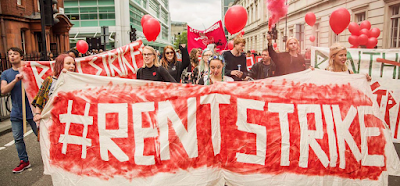
Have Rents Gone Up - Or Wages Stagnated? Or Both or Neither?


People complain that rents are too high today.  Are they, or have wages stagnated?

Returning from the condo via the Blue Ridge parkway, we camped out overnight at Big Meadows campground, in a tent, no less.  It gave me time to think.  In 1987, I moved to Alexandria, Virginia to work at the Patent Office and met Mark See.  We moved in together in a one-bedroom apartment that cost $650 a month, utilities included.  Our condo is one-bedroom also, although sligthly larger and somewhat nicer, I think, and rents for $1450 a month, which seems like a lot of money to me (well, so does the price of a cup of coffee - you did read the title of this blog, no?).

But according to an online calculator, $650 in 1987 would be about $1650 today, so if anything, the cost of rent has gone down.  I looked up the actual building we lived in, and sure enough, rent for a one-bedroom is about $1600, so it appears rents in this very hot metro market are in line with inflation since 1987.  Rents in the depressed little town we live near aren't much less - you can expect to pay $1000 or more for a decent apartment in a good neighborhood.

But what about wages?  Mark went to work for Williams-Sonoma for the princely sum of $14,850 a year and I was working as a GS-7 Patent Examiner for the whopping sum of $22,000 a year.  Doesn't seem like much today, but it was an OK salary back then.  Today, well, some things have changed, others haven't.

A new Patent Examiner makes about $57,000 or so today, which compares favorably with inflation.  If you have a worthwhile college degree and are working in a high-demand profession, salaries have kept up, if not in fact, accelerated.  For an "assistant store manager" at Williams-Sonoma, however, things might not be so rosy - about $40,000 a year.  But actually, if you take into account inflation, that is not a bad salary at all - actually more money than Mark was making back in the day.

So what is all the beef over rents and salaries?   Well, for starters, I am using two selected data points (which I know the data for).  Not everyone is an assistant store manager or a Patent Examiner.  There are people working as clerks and other minimum-wage jobs, and Federal minimum wage is stalled at $7.25 for what seems like forever.  For such folks, life is not so hot - they are making Mark's 1987 salary but paying nearly triple the rent in 2022.  The numbers simply don't add up for them.

Of course, things are changing.  The so-called "labor shortage" is resulting in a bevy of new union activity.  And most retail and fast-food outlets are advertising wages far above minimum wage these days - often double the amount.  Still hard to get by on $14 an hour in a major metropolitan area.

Now, of course, some on the right are blaming Democrats for this "labor shortage" - claiming that it was government giveaway money that caused people to stay home and not work.  But my memory goes beyond 18 months (I'm not a goldfish for chrissakes!) and I do recall President Trump signing those "stimulus checks" and making a big deal about it - and the "stimulus" being approved by a Congress that included a Republican majority in the Senate - the same folks who approved extending and enhancing unemployment benefits as well.  Yea, we did get one final check in the first days of the Biden administration - but that was over two years ago.  I don't know about you, but stingy or not, I haven't been living on that $1400 for the last 28 months!

So what is going on with the strikes and the "no one wants to work anymore" nonsense?  Well, I think there is a demographic shortage of labor.  Assholes like me took early retirement and the next generation is smaller than the baby boomers.  They have choices - people are hiring.  It is not that "no one wants to work anymore" but that people prefer to work for the company that pays more money because inflation is eroding their buying power.

As workers, we may not think we have leverage in the wage bargaining world, but there reaches a point where it simply doesn't pay to work at some jobs.  For example, if I was to go to work at the local Home Depot (and indeed, they offered me a job, unsolicited!) I would have to drive about 15 miles each way, which means about an hour of my time, unpaid, as well as 30 miles on the car which even at IRS deduction rates (and commuting is NOT deductible!) I would have to spend at least $15 a day just going to and from work.  At minimum wage, that means I spend the first two hours of work just paying to get there.  And if I go out to lunch, well that's two hours more.  You don't start making money until the afternoon, and even then, you gross only $29.  When you take out payroll taxes (for social security and medicare - about 10% with State and Federal Income tax) you are making $22 in take-home pay for a full day's labor.  Sorry, but that's just not worth it to me.

And I can see where it isn't worth it to someone else, either.

Of course, the people who are motivated and work hard have no trouble finding jobs and getting raises and getting paid more.  We hear a lot online from complainers who claim they can't find a job in this tight-job economy and that they can only find low-wage jobs.  But if you scratch the surface of these stories, they are from people who are serial quitters (staying at a job just long enough to collect unemployment) or people who steal from their employers.  If you think I am kidding, check out the losers on "antiwork" sometime - they brag about stealing from work and "ghosting" employers and trying to scam the unemployment system.  For them, the world sucks, but largely because they made it suck.  Depression is a helluva drug.

The upshot?  Well, things aren't quite as bad as they seem.  Sure, for the dude or dudette who got a degree in "liberal arts" from an expensive college, who borrowed way too much money, had a good time and got shitty grades, the world sucks.  And I agree we shouldn't be allowing 18-year-olds to sign their life away.  Then again.... personal responsibility.   The same people whining about their poor life choices would chafe any restrictions on their "freedums!" if we tried to regulate how much they could borrow.  It is a tough balancing act.  And I am not sure that "blanket" loan forgiveness is the answer - and the continual talk of it only encourages young people to take out such loans - or graduates to not bother paying them back.

Speaking of student loans, I had those as well - about $38,500 of them.  In today's money, that's nearly a hundred grand, and yes, I paid them all back.  Then again, I didn't major in Agitation Studies, nor did I take out as much in loans as they offered to me.  And in graduate school, they throw money at you.

For the majority of people today, well, life isn't so desperately bad.  People who made better choices in life - for example, to borrow less money for a degree, to study something worthwhile, and to take the courses seriously - they are not in such a bad situation.

It is like the homeless "problem" in the USA - we think it is some huge problem of insurmountable proportions, until you realize that the homeless population in the USA is less than 0.2% of the overall population of the United States.  Yes, it is a problem.  No, it is not a staggering problem, except for the homeless people involved, who are often victims of mental illness and/or drug abuse, not financial setbacks.

But people want to push narratives, and one of the most popular in any era is "we have it so much worse that folks who came before us!" or "the world is going to pot!" as we all like to feel sorry for ourselves, wallow in depression, and externalize our problems.

But "doing the math" in this case would seem to illustrate that for two young people starting out today in Alexandria, Virginia, with the same or similar jobs that Mark and I had, at the same or similar apartments that we rented, well, the wages and rent would be about the same, as adjusted for inflation.

For someone working a more menial job, back then or today, well, life would be harder.  But then again, being poor has always sucked, hasn't it?

Saturday, May 14, 2022

You can tell a lot about a deal by the way it is presented!

I recently clicked on an online ad. Yea, I know, a stupid thing to do.  But it was for some really cool looking Hawaiian shirts at a place called "Royaura" and I couldn't help myself.   Now, a good Hawaiian shirt, made of pure silk (which wears like iron - it is not  "delicate" fabric!) can cost $200 or more.  If it is well-made, the pattern matches on the pocket and where the buttons come together - this uses a lot of fabric.  A cheap shirt, like the one that Tom Selleck wore on "Magnum" is made of cheap cotton and the pattern doesn't match anywhere.  His is in the Smithsonian.

So when I saw these shirts for alarmingly low prices, like $29.99, I was intrigued.  We looked at the site and it seemed like some good deals on stylish clothing.  But then the e-mails started.  At first they were circumspect - just a reminder of the clothing and prices.  But as time went on - in terms of hours, not days - they became as desperate as a person at a singles bar at closing time.   One e-mail featured some sort of roulette wheel, where you could spin to get a discount. And prices were as low as $3.99 a shirt!

Or so they said.  I realized it was too-good-to-be-true and checked out the reviews online. On Sitejabber and Trustpilot, (which I wrote about before) the reviews were not so great.  Well, on one site, there were a number of five-star reviews in pidgen English, all with the same or similar text, from new users who never reviewed any other side.  It wasn't hard to read between the lines.

Some reviews were succinct:

Scam Chinese site

Almost all the good reviews are fake. You can tell this as some of the titles are eerily similar. Almost all these good reviewers have only reviewed this one business.

People will sign up to post a sole negative but who creates an account here to post just one good review for a generic branded shirt? No one.

I’ve reported several of these fake 5 star reviews
.
The "real" reviews - mostly 1-star, noted that the place was in China, that things were shipped by mail ("China Post") and took weeks to arrive - if they arrived at all.  And the products received were not what was ordered, or the sizes were way too small.  Customer service was non-existent and the "tracking numbers" they provided were fake.

This is not to say ordering things from China is a bad deal.  I have ordered dozens of things from China via eBay and they arrive - weeks later - in oddly-shaped packages marked "China Post".  But these were small items - usually a buck or two or three - and the price was so good it was worth the risk.  The prices were not obscenely low, however.  Pigs get fat, hogs get slaughtered.

On the other hand, there are weird sites like "Wish" which has such a bad reputation that anyone ordering from it should have their head examined.  And "penny auction" sites like "Quibids" and its clones are not even auctions at all, but gambling sites, basically.

Of course, these scammy sites serve a useful purpose - they corral the great masses into ordering only from Amazon - a "trusted source" that lies to you every time you check out.  It is like how people justify leasing brand-new cars every three years because once they went to a shady used car lot and got ripped-off.  As if the only two alternatives were being ripped-off by a used car dealer, or being ripped-off by a new car dealer.  There are other options.

(CAVEAT:  I had to saw 1/2" off the closet doors on the condo, so they would clear the carpeting.  I needed a circular saw and the only place that had the Black & Decker 20V max saws (I am committed to that ecosystem as I own a half-dozen of those tools and maybe eight batteries!) was Amazon.  They have been pestering me to sign up for "Business Prime" so I did, they delivered the saw the next day and I promptly cancelled my "Business Prime" account.  So yea, you can steal the cheese, and this is not the first time I have signed up for "Prime" and then immediately cancelled once the goods were delivered.  By the way, this is my new favorite tool - you can finesse a battery-operated tool in a way you can't with the plug-in kind.  Drill, Sawzall, circular saw, whatever, battery has better finesse and control).

In this case, it wasn't hard to spot a raw deal at 100 paces.   It was from an Internet ad.  They had obscenely low prices.  They had no indication of where they were located, from their website.  They sent desperation e-mails, basically SPAMming me, offering even further too-good-to-be-true deals - in e-mails full of heavy HTML and animated graphics.  Finally, they have horrible reviews online and worse yet, had clearly tried to groom their image online (apparently a dozen women "bought three shirts for my husband" and were quite happy!).

So it wasn't that hard to walk away.  Lesson learned: Never, ever, click on an Internet ad!