Thursday, May 6, 2010

Do You Really Want Hydronic Heating?

Hydronic Heating is complicated, expensive and a nightmare when it ages.


Hydronic heating, as its name implies, uses hot water to heat your home. Is this a good thing or not? Hydronic heating is very popular in northern regions of the country where heating is a major issue.

There are some advantages to Hydronic heating of course. But I think these are overstated:

1. Zoning: You can switch off zones to rooms not in use, and thus save energy. Of course, those rooms go cold, and unless you have a large house with unused rooms, chances are, this feature is of little use to you. If you have a large house with unused rooms, ask yourself why. When installing hydronic heating, adding zones adds to the cost of installation, so if you want each room on a different zone, expect to pay for the privilege.

2. Warm Floors: You can heat using baseboard hydronic (sometimes called baseboard hot water) or with through-the-floor hydronic heating. The latter was hyped heavily on "This Old House" in the 1980's and 1990's which is when a lot of these systems were installed. Do you really get "warm floors"? Well, they aren't cold, that's for sure, but they aren't toasty warm or anything. The big disadvantage of this type of heating is that you can't "spot heat" to warm the house on cold mornings. If you turn on the floor heat, it heats the house all day. Even in the dead of winter, this often means the house is overheated during the day and underheated at night, as the system has a very slow response time. In Spring and Fall, you either freeze or roast.

3. Makes Hot Water, Too! Yes, the misnamed "boiler" (more on that later) will also make your domestic hot water. Not very efficiently, as it has to heat the water through a heat exchanger. Plus, this means the "boiler" runs all summer long to make your hot water. And that means a warm basement. So if you have A/C, it will run longer to cool off the house, due to the heat generated the boiler. Not efficient, not smart.

4. Heat with Wood: You can tie in an outdoor wood furnace in to a hydronic system and heat with wood. All you have to do is go outside two or three times a day and load the wood furnace with wood. The neighbors love the smoke, by the way. Makes your house look like a smokey crash site. Wood furnaces cost staggering amounts of money - $7000 and up.  Some as much as $15,000.  The "savings" in heating bills take years to rationalize, perhaps decades.

5. Doesn't dry out the air: Some people complain that forced air heat dries out their house in the winter. Hydronic heating is touted as keeping the house humid (and if you break a pipe, it certainly will!). However, you can add a humidifier to a forced air system for less than $100. It's been done. And as for dust, at least a forced air system has a filter to capture dust. With hydronics, the dust just settles everywhere.  Note:  This site claims that hydronic heating does not make a house drier or more humid than a forced air system, and dismisses this claim as a "myth".

OK, so the advantages of hydronic heating are not all that great. The disadvantages? There are so many, where do I begin?

1. Cost: Running all that piping costs money, and copper ain't cheap. The floor piping is plastic. Um, more on that later. Labor to connect all these pipes isn't cheap, either. The boiler, controls, circulation pumps, and associated hardware are far more expensive than a cheap gas furnace.  A typical hydronic system can cost three times or more than a gas furnace.   If you add a forced-air A/C system as well, the costs get even crazier.

2. Efficiency: The "boiler" is often an actual a boiler, but running at below boiling point. So it runs in an inefficient range. Some folks replace the boiler with a special condensing hot water heater, which sort of makes sense. But such hot water heaters are very pricey - like $6000 or more.  Even a simple boiler can cost a few thousand dollars - and last about a decade before rusting through.

3. Boilover: If the boiler DOES boil, it can damage your pumps and plastic piping. Boilovers can occur if the system runs low on water (more on that later) or if the control unit fails.   We lost six brand new pumps in a boilover incident. $300 each.

4. Water, water, everywhere: These systems, particularly the in-the-floor heating models, run pipes all over your house. What could go wrong? Leaks for one. A freeze for another. Pipes get old and leak. With plumbing that is a problem. With a hydronic heating system, it is a nightmare as there are basically pipes in every single wall, ceiling, and floor. If a pipe breaks, it will dump rusty brown water all over your house, and the take-up water will continue to re-fill the boiler and flood the house. You'll never have this problem with forced air, which when it leaks, leaks air.

5. Aging and Replacement Cost: Unlike a gas furnace that can be replaced easily and cheaply, hydronic systems require regular maintenance of their many parts - boiler, pumps, controls, etc. And when it all needs to be replaced, the replacement cost is staggering.  Few companies work on these systems, so your options are more limited.

6. Hard to do A/C: A gas furnace can be retrofitted with an A-coil in the plenum. Put an outside compressor and condensing unit and Voila! You've got central air! Not so with hydronic heating. Adding ductwork to an existing house is nearly impossible, without a lot of work and sacrificing a closet or two. One neighbor installed hydronic heating in their new home AND ran the ductwork for a heat pump. My question: Why bother with the hydronic if you have a forced air system as well? It's like paying for two HVAC plants - effectively doubling your installation costs.

7. Freezup: If you lose power in an ice storm, the system will shut down. If you are running water in the system, the pipes will freeze, flooding the house and ruining everything you own and destroying the system. Fun, eh? Regular plumbing can be easily shut off, blown out, and winterized. Winterizing hydronics is not as easy. Many run anti-freeze in their systems, but it degrades performance somewhat.

My experience with Hydronic Heating:

Our Lake house came with hydronic heating. The system was 15 years old. There was one split-system A/C unit in the house when we bought it. I quickly had to add three split-system A/C units and two portable A/C units to air condition the house. The split systems and one of the portables are heat pumps, and we find that they work well for taking off the morning chill or making the bedroom warm at night. We never use the hydronic heating in the Spring, Summer, and Fall. But the boiler ran all the time to heat domestic hot water.

Our boiler room.  It was very fancy looking, but also very complex.  I was lucky that I had a friend who got me a replacement boiler for $1500 wholesale ($3000 retail) and that I installed it myself.  The local HVAC guy (the only one who worked on hydronics) wanted close to $5000 for the job.  Each of those circulation pumps was $300 and all five had to be replaced.  Due to a boilver problem (caused by a broken controller) they had to be replaced again.  The boiler is cast iron and rusted out in about 15 years.  Hard water is problematic with these systems.  I would highly recommend using anti-freeze as it includes corrosion inhibitors.

The boiler warms the basement, which makes the A/C unit there work twice as hard. And it is not very efficient for making hot water. This year, we installed a 50-gallon electric hot water heater. This allows us to shut off the boiler in the summer and save on energy, as we are not paying to cool off the basement while the boiler heats it.

One pipe burst in the ceiling this year. Hopefully this is an anomaly and not a sign the entire system is ready to fail. If an in-floor hydronic system starts leaking a lot, the only way to fix it is to tear out the whole ceiling, remove the insulation, and re-install all the piping. Fun, eh? Even repairing a "small" leak requires tearing open the ceiling to get at it.

Many folks, when confronted with this problem, convert to baseboard hydronic heating, as it involves a lot less plumbing, and soldered copper is less likely to leak down the road than all that plastic piping.

We replaced the boiler this year as well.   They are made of cast iron and rust through in about 15 years. Ours is over 15 years old and has started leaking. Newer ones are made of aluminum or stainless steel. But even then, they wear out. The cost of replacing it is higher than replacing a gas furnace. Since they are not as plentiful as gas furnaces, they are plenty more expensive.

We plan on running the system with anti-freeze as well, so we will have the option of leaving the house "cold" in the winter while we are away.  Many folks leave their hydronic heating systems "on" while they are away, convinced that it is "safer" to leave it running than to risk a frozen pipe. But if the hydronic system breaks a pipe, it will pump your house full of water. A winterized plumbing system, shut down, might freeze a pipe, but since it is OFF, the damage is limited to one area.

So, do you really want hydronic heating? My answer would be "No" after owning an older system. The touted advantages of the systems are over-stated and the costs and disadvantages far outweigh them. If you are going to install A/C anyway (which even in colder parts of the country, is becoming a reality for most houses these days) it is simpler and cheaper to just go with a forced air furnace as a heating source than to dick around with miles of tubing and a boiler.

But, the choice is yours. Pardon me while I go mop up.....

Should you Insure with GEICO?

Should You Insure with GEICO?
You should at least check them out.


GEICO started out years ago as the "Government Employees Insurance Company" and was popular among the government drones in Washington DC. Back when I was working at the Patent Office, I had insurance with GEICO, and it was cheap. But back then, it was dangerous as well.

For example, a friend of mine had his stereo stolen out of his Suzuki Samurai (it was the 1980's, remember?) and he filed a claim with GEICO. They canceled his policy as a result. I had a similar experience after getting a couple of speeding tickets. And once my policy was canceled, I could not get insurance except through a high-cost "risk pool."

Lesson learned: Speeding ain't worth it. You literally can save thousands, if not tens of thousands of dollars, over the years, by obeying the speed limits and driving defensively.

Since those days, GEICO has changed hands.  Warren Buffet, through his Berkshire Hathaway company, has bought a controlling share and re-worked the company in a new direction.  No longer is it focused on Government Employees, but it is aimed at the general public as well.

The business model is novel and makes sense. Traditional insurance companies sell insurance through local "agents", each of whom runs their own office, hiring their own employees and running their own business as they see fit. The problem with this agency model is that it pads the cost of insurance considerably, as each agency has to eke out a profit from its clients and also contend with the staggering overhead of leasing office space, hiring employees, etc.

And in many cases, there is a tension between the local agents and the parent company.  It is similar to the tension between car dealers and car manufacturers.   Car manufacturers would love to cut out the middleman and sell cars to you directly and keep all those profits.  But they need dealers to service cars.  The dealers cause no end of headaches for the company, and the company causes no end of headaches for the dealer.  It is a love-hate relationship.

The same can be said of the insurance business.  Captive agents (who work with one company) often have a love-hate relationship with the home office and increasingly, they are finding it harder and harder to eke out a living from the business.  Many agents are branching out into financial planning and investments in an effort to milk more money from their clients.  And many agents are sticking it to their clients in an effort to keep their agencies afloat.

And some companies, such as State Farm, are allowing anyone with a pulse to become an agent.  In small towns such as Brunswick, Georgia, there are at least four State Farm agents listed - all selling the same products and services.  Does this make sense from an economic standpoint?   In our small upstate community there are at least ten (10) local State Farm agents to choose from.  It is easier to find a State Farm agent than a Starbucks!

For customers, this agency model can be a nightmare.  Caught between the agent and the company, the customer is often given the shaft.  Call the agent for customer service, and chances are, you'll have to deal with the lowest possibly paid hair-brain of an assistant, who, in response to a question about your policy renewal date, will do something stupid like cancel your policy.  And yes, that has happened to me on more than one occasion.

Buffet and the new GEICO decided to take a different tack. They eliminated the agency model in favor of a centralized system using computers, online systems, and good customer service call centers.   And for the most part, it is a system that works well.

Most people dread calling a 1-800 number as they know they will have to wade through a series of DTMF menus before they finally reach "Chuck" in Bangalore India, who will ask them "how are you today?"   And "Chuck", who can barely speak English, can only tell them the balance on their account and what the weather is like in Bangalore.   Anything more serious than that requires a 20-minute hold time to talk to a "supervisor" and chances are, you'll get disconnected before then.

GEICO is different.   In the two years I have been with them, I have had to call several times over various issues, some major, some minor.  In every case, they have answered the phone on the first ring.  No waiting on hold.   And the people you talk to are in America and speak English.  And in every case, they have the authority to make whatever changes are necessary to your account.  And in every case, they have the knowledge to advise you on every aspect of your policy.

Imagine that, a call center where they train people and empower them.   Who knew it could be done?

My policies are pretty much on auto-pilot now.  I can go online and check on them, and they automatically renew every 6 months.   The premium is about $850 a year for five cars (no collision, no uninsured motorist, no rental, towing, comp, free windshield wipers or whatever).  So I don't need to call their call center.

I also have an umbrella liability policy through them.  It is more costly than from other agencies, but this is more than offset by the savings in the auto policy.  Their boat, homeowners, and other products are not as attractive and are more difficult to deal with (run out of a separate department and I think merely a re-packaging of someone Else's policies).

But their basic car insurance product is packaged well and easy to use.

I have not had to file a claim under this policy, so I can't analyze how well that works. In fact, since I have only liability coverage, I never will file a claim myself, only someone else, if I hit them with my car. With any luck, I should never have to file a claim, anyway. Again, your goal, when buying insurance, should not be to file claims.

The purpose of insurance SHOULD be to provide you with a safety net, in case something awful happens. Too many people shop for insurance like it was a Chinese Take-Out menu, and view a car accident like some sort of spa vacation with "all inclusive" pricing - a free rental car and a trip to the chiropractor. If you stop looking at insurance (all kinds) as a "something for nothing" proposition, you'll be able to get a better deal on insurance.

People who look for the payout on insurance as the big goal, tend to over-insure and pay top dollar in premiums. If you expect a payout, then you have to pay-in, it is a simple as that.

So buying collision coverage with a $500 deductible, on a $5000 car is pricey. The premiums involved will, over a period of a few years, exceed the possible $4500 payout. If you think what is parked in your driveway is a "major asset" of your estate, then you need to start re-thinking your priorities.

The GEICO model seems to work well - delivering excellent service at low prices. GEICO recently has opened service centers in some areas, apparently to snag some of the business from people who still distrust the Internet and want to deal with someone face-to-face. I hope this doesn't cause them to abandon their successful online model, however.

And you may read complaints online from people who take the something-for-nothing approach to insurance. They wreck their car and then complain that GEICO won't buy them a new one, or they get a DUI and three speeding tickets and wreck their car and wonder why GEICO cancels them or refuses to write. Take online evaluations and endorsements with a grain of salt - they are often spiked and shilled by competitors these days.

And you may have read about how GEICO fired its Gecko voice actor for leaving insulting voice-mail messages on some teabagger answering machine. You can't blame them from walking away from a controversy. Here's a hint to wanna-be actors: If you land a gig like that, don't blow it by being found with a prostitute or doing something stupid. It would be like the Verizion "Can you hear me now?" guy being seen smoking a crack pipe. Career ended, period.

They will likely find another vaguely British-sounding guy to do the lizard voice, although I think the Gecko campaign was tapering off anyway.

UPDATE:  June 18, 2012.  By dumping junk coverages (towing, car rental, $10,000 medical, uninsured motorists, collision, comp) my insurance has been as low as $15 a month through GEICO.  You should understand the coverages you are buying, and what they mean, and then make an informed decision as to whether to keep them.  Whether to drop collision and comp, for example, is a personal decision.  For young people, it is often unaffordable (more than the cost of the car).  For older cars, it often will not pay out much.  Do the math and decide for yourself.

Wednesday, May 5, 2010

Cheap Stereo Solution


Looking for a cheap stereo?
Check out your local computer store!

Stereo equipment has to be one of the biggest scams going. When I was a kid, there were two or three stereo stores in town, and they were all total rip-offs. We paid enormous amounts of money for basic receivers, amplifiers, turntables, speakers, and tape decks. You could spend more on a stereo "Hi-Fi" set back then, than you could on a good used car.

Everyone wanted to have the "wall of electronics" which looked impressive and let's face it, we used it to wow our friends. We thought that having an impressive stereo was a sign of wealth and status. In reality, it was just a sign of debt and spending.

Some of the big box stores, like Best Buy still try to play this game, with the glass-door listening rooms and "stereo consultants" trying to pry money from your wallet.  But CD-quality sound has put audiophile quality within the reach of everyman.   And true audiophile quality sound has moved way up the scale. If you want to dump tons of money on a "high end" system, you still can, but chances are, for most people, the difference in sound quality between that and a consumer grade set is negligible.

Of course, so-called audiophiles would turn up their noses at that last statement. After all, they, having sophisticated tastes and refined hearing capabilities, certainly can notice the difference. But again, this is just status-seeking plain and simple, like the wine snob or the so-called sports car enthusiast.

Blind people have a very sensitive sense of hearing - and this has been proven out again and again. Yet, the blind people I know all have (and had) fairly cheap consumer-grade audio systems. Why is this? Perhaps because they can selectively tune in to the actual sound and filter out, mentally, any distortion and noise. Or perhaps there just isn't that much difference between an adequate stereo system and a "high end" one.

Like any technology, you pay twice as much, you don't GET twice as much.   Incremental improvements are costly in any technology.   So a BMW is twice as much as a Chevy.  But it doesn't go twice as fast or last twice as long. Stereo works the same way, and the law of diminishing returns quickly applies when you spend money on sound equipment.

As costs of manufacture for stereo equipment have dropped rapidly (most everything is made in China these days) the whole "high end" concept of stereo equipment has become largely obsolete. Like my $3000 gas grill that doesn't cook a hot dog any better than a $50 one, the $5000 stereo isn't going to sound much different playing your Dean Martin CDs than a $500 tabletop model.

Adding to the mix are the iPod and other MP3 devices. MP3 players are great for headphone wearers, but they compress and thus degrade the sound quality of your original CDs to the point where, when played back on a good stereo, they sound flat and tinny - even on car speakers.

CDs are bulky and difficult to use and can scratch and degrade over time. 5, 10, 20 and even 100 CD players are out there, but are hard to program and use. Who wants to mess with bulky CDs anymore?

You can upload (rip) your CDs to a computer using Windows Media player or other audio software.   If you set the sampling rate to equal that of the original CD, there is no degradation in sound quality. I rip my CDs using Windows Media Player in the original sampling rate and then convert using iTunes in order to load my iPod. Given the number of devices that play WMA files, I am not sure I would buy another iPod anytime soon, frankly.  Proprietary formats suck.

UPDATE:  Since writing this most cars and audio systems will "read" memory sticks which can be loaded with music you've ripped from your CDs.   And yes, they will read Windows .wma files, which can be ripped at the same resolution as the underlying CD.   And you can tell when a .wma file is playing and when an .mp3 file is playing - the latter sounds like crap.

Loading the CDs at the original sampling rate does take up a lot of space, though. If your hard drive on your laptop is getting thin, you can add a USB 500 GB external hard drive for about $100, and it will more CDs that you will ever listen to in your lifetime.

It may take you a week or more to load all your CDs onto a computer, one at a time. But you can do this as a background job, between other tasks. Once loaded onto you computer, you can back up the files to other computers and external hard drives, so you do no lose all your music if one computer crashes.

Windows Media Player, iTunes, and other software will go online and find album art and song lists for you, so you don't have to type all that data in each time you load a CD onto your computer.

Once you have all this music loaded online, you have a virtual jukebox in your laptop, and can use it to select and play songs. It is handy, and easier to use than the tiny controls on an iPod. The original iPod was great, but when you add 6,000 songs to it (as I did) it gets clunky to find and play songs you like.

You can connect your laptop or other computer to an existing stereo using any common type of patch cord. A computer or laptop with a good quality sound card is essential, as a cheap sound card will sound, well, cheap.

But another alternative is to use computer speakers as a "stereo" system. We use this in one of our homes, as we didn't want to go out and buy a new stereo right away. We ended up using it for years. Not only can we play all our CDs from the laptop, since it is on the network, we can listen to radio online, with no static or interference from those new "HD" channels (radio is dead, I am afraid).

Good quality computer speakers usually have a subwoofer nowadays and sound remarkably good. A set that came with my new computer was so well made, I decided to use it for my main stereo, and then use the set from my old computer on my new computer (I don't do gaming or whatever with my work computer).

So not only was this stereo cheap, it was free. And how many of these high-end computer speakers are languishing on desks, going "beep" or playing the Windows log-in song as their only function?

If you don't have a good set of computer speakers, your local office supply or computer store will have them cheap. The most expensive sets are usually $150 or less. Some decent ones can be had for $75. 

UPDATE:  Of course, today, you can buy a "sound bar" and subwoofer at the local shopping club for not a lot more.

Put the same subwoofer and speakers in a stereo store, and the price would no doubt double. And the other problem with stereo stores today is that most of the stuff they push are "surround sound" systems for use with televisions. Surround sound might work great with Dolby surround sound or THX sound, but for regular Hi-Fi stereo, it is an unnecessary waste and often sounds odd, as the "rear" speakers create echos or cancel the front speaker sound. And often, these surround sound systems are more complicated than you need, just to play some song you want to hear.

Computer speakers are simplicity in themselves - usually a volume knob and a subwoofer adjustment. Some audio cards in computers support basic mixer capabilities, if you want that. But sometimes, simple is best.

We are fortunate to live in an era of cheap consumer goods. A decent stereo from the "Stereo Store" back in the 1970's would run you $500 to $1000 easily. Today, you can buy CD systems that would trounce a stereo from that era, for less than half the cost.

Take advantage of today's cheap consumer goods prices by saving money on these items - not by spending yet more to chase status.

Should You Follow Ayn Rand?

Like most Gurus, Ayn Rand had some pretty wacky ideas, beginning with the spelling of her made-up name.

One thing about getting an Engineering Degree is that you miss a lot of the aspects of a liberal arts education. Many young people, in college, take up Ayn Rand, usually in their Sophomore year, as part of a reading assignment for class - Atlas Shrugged, or The Fountainhead.

And some folks take her pro-corporate, pro-individualism, pro-capitalism message to heart. Others outgrow it very quickly.

A few years back, I had a nice discussion with a friend who was a Rand enthusiast. Ayn Rand had been on the periphery of my radar, but I never got into the philosophy. I tried to read Atlas Shrugged once, but it was like driving a snowplow through a pile of bricks. I kept thinking to myself, "Gee, I must not be getting this, as this book doesn't seem all that great. The characters are flat and two-dimensional, the dialog embarrassingly juvenile, and she beats you over the head with her political views."

Years later I re-read the book and some of the criticisms of her and her works and realized that I was in fact "getting it" with regard to Atlas Shrugged. It is a boring soap opera about capitalism.

This is not to say her books don't make some points. The scene, early on in the book where Hank Reardon arrives home after his first pouring of his new Reardon steel, echoed events in my own life. His wife and relatives and hanger-on friends, are all sitting around, drinking his cocktails and eating his food, and making fun of his business. I've seen this happen before myself, but I chalk it up to nervousness and insecurity, not to a political movement to discredit capitalism. But it was one of the more compelling scenes in the book, and her portrayal of boorish liberalism and weak thinking was, in that scene, right on target.

Other parts of the book, including the overall plot about industrialists going on strike and then retreating to a hippie-like Shangra-La commune in the Colorado Rockies, well, they were a little far-fetched. And the idea of industrialists working together in a commune-like environment sort of undercut the principle message promoting capitalism. Is the answer to socialism in government going to be private communism? Rand diffuses her own arguments here.

But even a stopped clock is right twice a day. Many of the issues and themes raised by Rand are certainly worth a lively discussion and contemplation. But, unfortunately, Rand, like many gurus out there, set herself up later in life as a cult-like figure, and even expelled members of her inner circle, discrediting her own ideas about individualism. Individualism for some, but her followers were to be sheep. Today, more than one group of people claim to bear the mantle of Rand, although I am not sure why they would be so eager to do so. I have no desire to be someone Else's sheep. Do you?

And to put it bluntly, the material is dated. Perhaps in the 1930's and 1940's when the labor movement started gaining steam, and perhaps started to engage in the excesses which would inevitably result in its downfall, the propositions raised in Rand's work had some currency. The ideas of limiting competition through legal means, and elevating the common man as the ideal for society were being bandied about, and Rand's work was a reaction to that trend. She pointed out that without the movers and shakers in the world, such as the mythical Hank Reardon, the head of Reardon steel and one of the protagonists of the novel, progress would not occur.

The fact that one of the protagonists is a steel baron is another example of the dated aspect of the material. Perhaps in 1930, the smokey steel mills of Pittsburgh were an example of the apex of capitalism, but today, these mills are gone, and steel-making is view more as a commodity business, except for some high-end specialty steels. A steel baron. How quaint.

And today, the titans of industry are indeed the rock stars that Rand wanted them to be.   Donald Trump has made a second career as an actor portraying a successful businessman.  But more to the point, we laud the Bill Gates, Steve Jobs, and Warren Buffets of the world as examples of superstar capitalists, who saw opportunities and took advantage of them (never mind whether there is any truth to the story, a good myth is a good myth).

Today, the Republican Party promotes "trickle-down" economics and tax cuts for the rich - and middle class and poor people buy into it, lock, stock, and barrel - and it is likely that very few of these "teabaggers" ever read Rand.  But in effect, they are espousing the philosophy.

So to some extant, she is largely irrelevant, as much of what she predicted in Atlas Shrugged has in fact come true.  The ruling class in this country can "go on strike" and wreck the economy as a warning to those not willing to go along with their political agenda.   "We're too big to fail" they tell us, "Pay us off, or we take the whole country down with us!"  Who is John Galt? I think he worked at Enron and perhaps Lehman Brothers.

But following Randian philosophies is, to me, not worthwhile.   To begin with, I fail to see how obsessing with one person's ideas about capitalism can add to your own personal bottom line.  Even assuming arguendo that all of Rand's theories and concepts were "correct" - how does being a fan of her ideas help you pay down your mortgage or reduce your credit card debt or increase your real wealth?

It doesn't - anymore than following conspiracy theories or pining for the air-powered car or thorium energy does.   Following Randian philosophies and Libertarianism is just another form of externalization of your own internal problems.

The fact that this champion of individualism devolved into a cult-like figure who tolerated no dissent, seems to detract from her message.  As I have noted time and time again in this blog and my related Losing Weight Now blog, following guru advice, whether it is financial, dietary, spiritual, or whatever (and many gurus tend to cover all three bases) is never a good idea.

And yes, I write a lot in this blog on financial matters. But this is merely to discuss, not teach, to understand based on my experiences, how personal finances work, not whether government subsidies for the steel industry are a good idea.

As I have noted in my Beware of Movements posting, becoming obsessed about political movements rarely adds to your personal bottom line - but it does help propel someone Else's political agenda.

So becoming a Randian may be fine and dandy, but ask yourself what it does for your own personal financial situation. If it is just a time-waster, then what is the point?   If you are using it as a crutch or an excuse not to address your personal issues, what is the point?  If you make yourself unpopular and difficult to deal with by spouting off Randian philosophy at cocktail parties, what is the point?

If you don't get that job you applied for, because you spouted off about Ayn Rand during the interview, what's the point?  Making yourself toxic to other people is never a good idea, unless you are in a position in life where you don't need other people.

Blindly following one person's advice is never a good idea. Learn to think for yourself. Be the rugged individualist that Rand espoused.  The true "ideal man" that Rand postulated would not be a follower of Rand, that much is clear to me.

Tuesday, May 4, 2010

Cheap Coffee Makers - The Best Kind


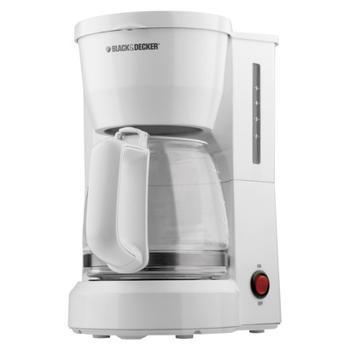
Of all the coffee makers we've had over the years, cheap ones, like this Black & Decker model seem to work best and last longest.

Coffee is probably not good for you, as I noted in my Coffee entry in my Losing Weight blog.

But if you are going to drink coffee, you'll probably need a coffee machine. Over the decades, I have probably bought a dozen or more. From the cheap dented aluminum stove-top percolators that you can find at a thrift store for less than a dollar, to a Bunn-O-Matic commercial-grade unit that cost hundreds, to a fancy espresso machine with a milk foaming feature, to programmable machines with thermal carafes. You name it, chances are, I've bought it.

And you know what I have discovered? After 30 years the only ones I have left are the cheapest models out there. They last the longest, work the best, and make the best coffee. Spending a lot of money on a coffee maker might impress your friends and take up a lot of counter space., but in terms of making coffee, they really aren't a good buy.

This is the most cost-effective coffee-maker,
But you do have to monitor it.

The cheapest and best coffee maker is the old aluminum stainless steel percolator type that you can buy new for a few dollars or find used in a thrift shop for a few cents. These are very simple units with no moving parts and require no electricity. They take up no counter space and are easy to use. You do have to watch them, though, as they are not automatic. Just fill with water, add coffee to the basket (coarsely ground) and put it on the stove and wait for it to perk. No filters to buy or flashing clocks to program. How simple is that? But like watching water boil, they can be frustrating when you first wake up in the morning.

We use these types of percolators in our camper and in our boat. They are lightweight, easy to store and cheap. And since the bed is almost on top of the stove anyway, you can watch them perk while you snooze in the morning. In terms of durability, cost-effectiveness, and ease of use, this tried-and-true standard works the best.

Coming in second place are the basic, cheap electric coffee-makers that you can buy in home improvement stores and drug stores for $20 or less. The Black & Decker Smart-brew, shown at the top of the page here, is an example of such a coffee maker. But there are hoards of such cheap coffee makers out there, and they are all about the same. We have two right now, the Black & Decker at the lake house kitchen (about 15 years old), and one in the ceramics studio, a hoary old Braun that we've had for over 20 years.

These coffee makers are simplicity in themselves. No clocks to program, nothing to set. Just put in a filter (or use the gold filter), add water, insert the carafe, and turn it on. Mr. Coffee started the trend toward these devices, and those are another example of a cheap coffee maker that works well.

Third place goes to the programmable types and the thermal carafe kinds. We have a programmable Mr. Coffee with Thermal Carafe in Georgia, and it works well. The only problem with programmable coffee makers is that the manufacturers always seem to mount the electronics and display under the carafe area. So if the coffee maker overflows or water is spilled on it (and that never happens, right?) the electronics get wet and the unit stops working.

I have disassembled the Mr. Coffee a couple of times and dried out the electronics, in defiance of the "no user-serviceable parts, refer service to authorized personnel" label (I am an Electrical Engineer, do not try this at home!). It still works, but I am a lot more careful about getting it wet. It has lasted about 7 years so far. In other cases, we have not been so lucky. The electronics get wet, the machine goes Pfft! and off to the curb another coffee maker goes.

The thermal carafe thing works OK, but one problem with these types of makers is that you have to make sure the carafe lid is properly attached, otherwise, the coffee maker can SPEW COFFEE AND GROUNDS all over your kitchen. We had this happen in the condo, and it is a total mess - coffee and worse yet, grounds, overflow from the top of the filter basket and then run down behind the cabinets and get everywhere.

Progress, it seems, comes with a price. The convenience of being able to program when the coffee makes itself is nice, but if you set it for 8 AM and then sleep until 10, your coffee may be less than hot. And if you forget to program it, well....

Dead Last are the fancy overpriced machines. If you are spending over $100 on a coffee maker, take a moment to look in the mirror and then slap yourself very hard, repeatedly, over and over again, until you come to your senses. Keep saying to yourself, "It's only coffee, you idiot" and think about how $100 would look a lot better in your 401(k) plan, your children's college fund, or paying down mortgage debt, than in increasing your credit card debt load.

We had a Bunn-O-Matic "professional" stainless steel coffee maker than was a total counter hog. It certainly impressed guests, or maybe they just shook their heads and thought privately what fools we were.   Did it make good coffee? For a while, yes, but just as good (no better) than other makers.

The gimmick of the Bunn-O-Matic was that it was always on, and the water was always "hot". So as you added water, it started making coffee right away (Real commercial models are plumbed into your house plumbing and refill themselves). One problem with this unit was that guests couldn't figure out how it worked. They would put water in from the carafe and then panic as the unit instantly started making coffee, which spewed all over the counter-top. Worse yet, they would turn the unit OFF, not understanding that it took nearly an hour for the internal tank to heat up and make coffee.

Here's a clue: Any coffee maker that requires INSTRUCTIONS to work is probably not worthwhile. The Bunn-O-Matic eventually stopped getting really hot and made only lukewarm coffee. Off to the curb it went and the hoary old Braun came out of storage.

We also had one of those espresso machines. This was another counter-hog as well, and my partner kept "putting it away" for more needed counter-space. Here's a hint: Unless you have these things OUT all the time, you will never use them.

These are also horribly expensive, although we got a deal on it as a scratch and dent return at a store my partner worked at. While it mostly worked as advertised, we found ourselves not using it. Let's face it, frothing milk is a pain in the ass and not really worthwhile. After the second sip, your foamy "latte" is just coffee with milk in it. Get over it.

Also, "home" versions of these machines do not froth quite as well as the commercial ones (they take a lot longer to make steam). The frothing wand broke off (houseguest again) and that was the end of the espresso machine, as replacement parts are not available, like most consumer appliances these days.

So off to the curb that went, too.

Fast forward another decade and the hoary old CHEAP coffee makers we've bought at home improvement stores or drug stores or Wal-Mart or wherever continue to soldier on, while their more expensive, finicky brethren, have gone to that great coffee shop in the sky.

My experience with coffee makers mirrors my experience with a lot of consumer appliances and electronics. Buy standard "consumer-grade" appliances for cheap - that is the best bet. Chances are, they will give good reliable service, if treated well, and will cost a lot less than the fancy esoteric types. And if they do break, well, you are out a lot less money.

Sub-Zero refrigerators are all the rage in "gourmet" kitchens, but a standard refrigerator from Lowes or Home Depot will work just as well, if not better (and be more reliable) and cost maybe 1/4 as much. High end audio may be impressive to your friends, but you'd be surprised how cheaper consumer-grade electronics can sound (room acoustics being one of the major factors in any system) and cost 1/10th as much.

The common denominator in all of this is STATUS. As I have noted time and time again, many of us (myself included) succumb to the need to achieve status, and purchasing and displaying consumer goods is one way we chase after STATUS. Surely our friends and neighbors will be impressed by our sophistication and wealth, as evidenced by our selection of consumer goods, no?

The reality is, real wealth is not in displays of things bought, but in money in the bank, which is never apparent to others. It takes no talent or skill to select merchandise, other than to look for the best bargains. Any idiot can whip out a credit card and buy shiny things and go deeply into debt.

If you can look beyond your own status-seeking motivations and look at what really is a real value or real bargain, you can live better on less money and be happier. As my experience with coffee-makers illustrates, it is often the least expensive option that turns out to be the most useful and durable.

Live well by spending less. Live stingy!

P.S. - if you really want to save money on coffee, switch to tea.  Even using a cheap coffee maker and cheap coffee, it comes to about 22 cents a cup.   Tea is about 2 cents a cup.   Quite a savings - several hundred dollars, over the period of a year.