Monday, March 7, 2016

Is the Real Estate Market bound for a correction? Probably.


The Real Estate Market is somewhat overpriced right now and could be due for a correction.

One thing millennials like to whine about (and boy howdy do they like to whine about what a raw deal they got in their lives, as sent from their iPhone) is how expensive rent is, and how they likely will never be able to buy a home - as if owning a home is a great deal or some inalienable right.

I also am not sure why they feel entitled to own a home at age 25.   I mean, maybe out in the country where houses are still cheap, but in the city?  Come on, here.  Let's be realistic.

And I am not sure rents are so outrageously high just yet.  In the DC area (Alexandria Virginia) I own a condo which I rent out for $1100 a month which includes utilities.  It is also next to a Metro station and has off-street parking.   It sat unrented with no takers  for six months.

I lived in the same area in 1987 and paid $900 a month for a similar apartment.   Um, please tell me again about how "unaffordable" rents have become.  Because in nearly 30 years, we are looking at a $200 a month increase here.   I just don't get it.

The good news for millenials is that capitalism does work and pretty soon, they are going to find themselves in the proverbial catbird seat.   As the baby boomer generation lurches off to retirement, there will be a lot of new job openings out there.   No, you won't be making a hundred grand to start, but there will be opportunity which is the key.

Second, the market has responded to high rents and high home prices (in some areas) and I've seen a lot of apartments being built in places like Florida, as rentals are more attractive than condos these days.  As a result, we may have a glut of rental apartments on the market in short order, which will bring prices down, or at least stabilize them. 

Some folks are predicting that housing prices will remain flat, increase slightly, or even go down during 2016 - particularly in some overheated markets.    Of course, it depends on which "expert" you consult.  If you consult six "experts" from a home mortgage broker website, they all will say "Now is the time to buy!!!!"  I think they said the same thing in 2007.

But is housing overpriced?  I think so, across the board.   For example, my house, according to Zillo, is worth $384,369 which is less than we paid for it.  Since similar homes are selling in the high $300's, I think this is a realistic number.   Similar homes rent, full-time for $1700 to $2000 per month, although few are available for rent right now.   The overhead carrying costs (excluding utilities) for insurance, lot lease, fire fee, and whatnot, run about $450 a month, leaving $1250 to $1550 per month to service a mortgage, if you were to rent one out at a break-even point.  A 30-year mortgage, assuming 20% down payment (leaving a balance of about $300,000) would run about $1432 per month at 4% interest.

From this, we can divine that the price of the home is about right, perhaps a little on the high side depending on what kind of rents you can get and what the home would sell for.   This is, of course, not taking into account some pretty hefty expenses such as home repairs, vacancy and the like.   As a landlord, I would want to see a greater rate of return than that before buying and renting out such a home.

The condo in Virginia, which is supposedly a hot market is worth (according to Zillo)  $139,031, which again seems to be what they are selling for in the market from the listings I have seen.   The overall carrying cost - condo fee, insurance, and taxes, is about $844 a month.  It currently rents for $1100 a month, although if you stretched it, you might get $1250.  Some are asking more, but not getting it (six months' vacancy negates any increase rent in such schemes).  That leaves (assuming the higher rent of $1250) about $405 a month to service a mortgage.   Even if we put down over 40% to make the mortgage an even $100,000, the monthly payment at 4% would be about $477.   It's clearly cheaper to rent than it is to buy.

Throw in a couple of $10,000 assessments every five years or so, and you are coming out behind.  Toss in a month of vacancy every years and you lose even more money.  The market in Virginia is clearly ahead of itself.
Now to some folks, the idea of "supply and demand" in the housing market seems an anathema.   "You have to have a place to live!" they cry, "You don't have a choice!"  But indeed, you could make the same arguments about food or gasoline - things we need to get by (particularly food) but the laws of supply and demand kick in with them, all the time.

The thing is, even though you "need" a place to live, you do have choices.  You can rent a cheaper place, or get a roommate or chose not to live in a certain city if it seems too expensive.   Often companies will move out of some locations, when it becomes too expensive for the employees to live there.   A vast migration of tech companies occurred in the 1990's - seeking greener pastures in Colorado and Texas, where they could pay employees less but since the cost of living was far less, they would make more.

And even a small displacement in the difference between supply and demand can cause huge disparities in prices.   If there are 10 homes for sale in town, and nine buyers, well, someone is going to lower their price to lure away another buyer or convince a renter that it is time to buy.   Similarly, when there are 10 apartments for rent in town and 9 renters, someone will lower their rents - considerably - to attract someone else's tenant.

It doesn't take much to switch from a buyer's market to a seller's market - often overnight.   And in 2008, when the City of Ft. Lauderdale had dozens of new condominium high-rises "topping out" at the same time, dumping literally thousands of units on the market at once, well prices simply collapsed.  There were no buyers at any price.

Perhaps the same thing won't happen this time around.  Although in South Florida, it seems that new apartment complexes are going up like the condos were last time around.

The point is, prices cannot remain "unaffordable" for too long.   People will simply stop buying or buy less or commute further or live elsewhere or look for other alternatives.   Eventually the market reaches equilibrium.  And we can go from boom to bust in a matter of months.

After all, it was only about five years ago that you could not give away a house in many parts of the country, right?   How soon before something like that happens again?


Sunday, March 6, 2016

Cadillac?

Is Cadillac making a comeback?  Perhaps.


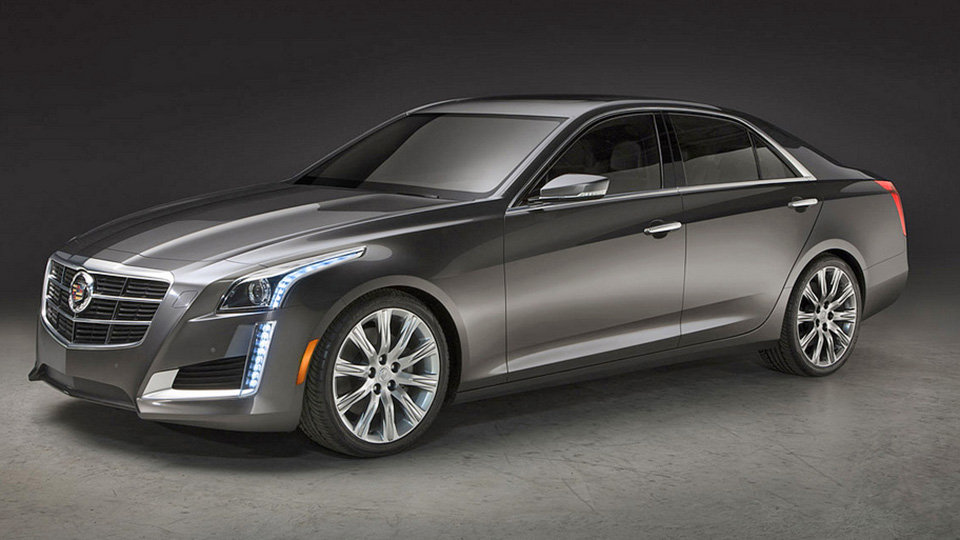
A friend of mine who buys nothing but Mercedes just showed up in my driveway in a 2014 Cadillac CTS.  XTS. I initially presumed it was a rental.  But it turns out he bought it, and for him, it was arguably a good choice in cars.  For him, that is.

He likes a "status" car and as we have discussed here, everyone is status-seeking.   And that is one reason he always drove Mercedes, as they convey success and status.   Well, he didn't always drive them.  There was a point in his life he was poor like the rest of us.  All the more reason to seek status once you "make it" I guess.  I'm sort of over that kind of thing - or at least I keep telling myself that.

He got a good deal on the car.  Although two years old, it was a dealer "loaner" car and had never been titled and had only 14,000 miles on it.  So technically he is the first owner and the full warranty applies.  And I suspect he paid a lot less than the $53,000 sticker on a new one.   Good for him.  And that illustrates how a late-model, low-mileage car can be an astounding deal, if you go looking for one.   And they are out there, if you look.  But you have to look.

Of course one reason the price was so good is that Cadillacs have had huge depreciation issues, compared to other cars.  As I noted in another posting, all cars depreciate in value precipitously, so the idea of a "low depreciation" car is something of an oxymoron.   But GM products and Caddy cars seem to have low resale values in general.   Topping this off is that while Cadillac can't keep $100,000 Escalades in stock (the car the salesman immediately tried to sell my friend - he took a pass) they are having trouble moving their sedans, and thus are offering "deals" on them, new and used.  Often the best bargains are not to be found with the most popular cars but with less popular cars that may be up-and-coming.

What I thought was interesting was how the car had all the same electronics as our Hamster.   LED marker lamps, projector-beam headlights, key fob entry with push-button start, heated and air-conditioned seats, heated steering wheel, and so forth.   The Caddy had a few other toys as well, such as dual power seats, but today, even an "economy" car can be ordered with all the toys and goodies that more expensive cars come with.

And I suspect all this electronics stuff is made by the same supplier company - regardless of brand or manufacturer of the car.   The car reminded me very much of a Mercedes, which is a comment on how much the Cadillac has improved and how far the Mercedes has fallen.   No longer Teutonic tanks, the Mercs are now just as fussy and fault-prone as many American cars.  They are no longer a real value in my opinion.

(The one thing I thought stunk was that if you want to use navigation on the car, you have to subscribe to the 'onstar' service and then call them whenever you want to navigate.  Seems like an unnecessary waste of money to me on a subscription service that isn't needed to navigate.  Fortunately my friend has a portable GPS.  If you have a cell phone, the car can link to it and you could use google maps, I suppose, too).

What sealed the deal for my friend was the availability of a dealer nearby to work on the car.  As cars become more complex, it is harder for small shops to work on them, once out of warranty.   Sure, you can do things like brake jobs and tire changes, but fussy electronic bits?   Often these are dealer-only items when it comes to repair.

Our local small town has a Caddy dealer and a Buick and a Chevy one as well.   They are all over the place.   A Mercedes dealer is at least an hour North or South of us (and you want to go North, as the one to the South is, well, not a place you want to go).     And that is one reason I shied away from BMWs as well.  They were a lot of fun, but BMW dealers have an odious reputation as palaces of rip-off, with expensive parts, expensive labor, and always, of course, the suggestion you dump your current load for a brandy-new one.

We'll see how my friend's new ride works out.   I suspect he will be happy with it.  The basic bones of the thing are made in sufficient numbers and share enough parts with other GM products to be fundamentally reliable, even if not Honda-like in quality.  Whether the electronic bits hold up under use will be interesting to see.

But I have to give hum kudos for thinking outside of the box and also scoring an untitled low-mileage used car for a very good price.  Given that he drives about 7,000 miles a year, I think he'll be pretty happy with this ride.

Madness of Crowds and Martha Stewart

Once the queen of the domestic arts, Martha Stewart and her media empire have since fallen from grace.

We were traveling recently and on the hotel teevee I was sort of shocked to see Martha Stewart was still on the air.  She looked a little tired and sad, but perhaps that is just because she is older now.   Maybe also because her once vaunted media empire, Martha Stewart Omnimeda is now a shadow of its former self, being sold off this year and de-listed from the stock exchange.

This is not to bash Martha Stewart, but to illustrate how we tend to over-value things based on their perceived popularity and frequency in the news.   Back in 1999 before 9-11 when the only real thing we had to worry about in the world was which monster SUV we would buy next and whether Bill Clinton really got a blowjob in the White House, I actually bought Martha Stewart Omnimedia stock.   Yes, I am that much of a chump.

Worse yet, when the stock shot up to $38 a share, I didn't sell it and take a quick profit, thinking at the time that this company was "going places".  Of course, the only place it was going was in the toilet.

Now to be fair, the company did sort of hit a bump in the road when Stewart, a former stock broker herself, was accused of insider trading and went to jail.   But I think the bloom would have quickly fallen from this rose as people realized that the company was a one-trick pony and the mother of all self-serving IPOs.

Steward sold off only about 4% of the company in the IPO, not to raise capital for expansion (as a real IPO is supposed to do) but to create a means of cashing out of her empire.   If you own all the stock in your own company, that is a fine and wonderful thing.  But if you can't sell it on the open market, then what's the point?

On paper, at least, Stewart was a Billionaire once the stock price hit $38 a share.  But that was just on paper.  When the company sold last year to Sequential Brands, the sales price was undisclosed.

Why did we go crazy over Martha Stewart Omnimedia and drive the price up so high?   The answer lies in bubbles and the Madness of Crowds, which I wrote about before.  Oddly enough, some folks will try to tell you, with a straight face, that market bubbles simply don't exist.  One reader tried to convince me that the Tulip bubble of the 1600's never happened or was exaggerated.   While that was a long time ago and thus we really have only the historical record to rely on, I tend to disbelieve the theory that it never happened, only because in my lifetime, I have seen similar bubbles take place, again and again.

Why did I buy the Martha Steward Stock nearly 20 years ago?  Well I was an idiot - or at least a novice investor.   I was looking for "the next big thing!" and tended to view stocks in terms of their short-term prices and not long-term gains and dividends.   Mark said that Martha was "hot" and we should buy the stock (not that I'm blaming him).   I saw her name and face everywhere - in the news, on the television, in her magazine, and whatnot, and thought, "Yea, this has to be something worthwhile, otherwise everybody wouldn't be talking about it!"

And that is a stupid way to invest.   Everyone today is talking about ISIS and Donald Trump, but I would not "invest" in either.  This is not to say Martha Stewart is like ISIS, although the similarities between her and Donald Trump are pretty close.   Both get a lot of media attention and the media - for the sake of a story - tends to over-emphasize their importance in the world.

When you got down to brass tacks, Martha Stewart had some cooking shows and magazines and that's about it.  This is not to say what she had was worthless only that it was worth less than we imagined at the time.   And as with all things, it had the markings of a fad.   She hit the scene and became popular, it seems, overnight.   People - particularly women - became enthralled by her, even if no one actually sat down to make her fancy Christmas cookies that took 20 minutes to decorate - each.  It was a "thing" at the time and emblematic of the excesses of the 1990's when the economy was doing well and people were spending money.

It was not to last, of course.

So what is the point of all of this?   Only that when something seems important in the media, you have to step back and ask yourself if the importance hyped by the media is really substantive or just hype.   The media reports all the time about Twitter because people in the media tend to use it.   But in terms of user base, not many folks are on it, and thanks largely due to horrifically generous stock options for the founders, the company continues to hemorrhage cash.  Is this a good investment?   No matter how many times you hear about "tweets" in the media, I would have to say "no".    It may recover and go up in value, that is true.  But are you going to risk your life savings on it?  You go first.

Sadly, for us "little investors" there is not a whole lot we have to go by in terms of how to invest or what to invest in.   So we tend to get snookered by whatever is hyped in the media.   A few years back, all you heard about was gold, gold, gold, which was going to go to $5000 an ounce, for sure, according to some people who just happened to be selling gold.   But the price peaked and then fell and sort of has been loitering at $1000-$1200 an ounce.   Not a stellar investment as it doesn't even pay a dividend.  You'd make more money on some dumb savings account earning fractional interest.

And so on and so forth.  When Enron hit its peak,the media talked about nothing else, and a lot of people were buying, even as the place was unraveling.   We only know what we hear.   One way to avoid this, of course, is to unplug from the media, particularly television, whose "financial" shows often offer the most horrendous advice based on nothing more than one man's personal opinions - which are often conclusory statements such as, "I suggest you BUY WilGrowCo, as my target price is $50 a share and this company is going places!"

Going places, as in bankruptcy court, in a matter of months.   And yet today, my "Spam" e-mail box still gets regular pleas from stock market "insiders" who want to give me tips on "the next big thing" as if we haven't all heard about how a pump-and-dump penny-stock scam works.

I guess the pool of suckers is never-ending.

A question for you readers:  What do you think is today's Martha Stewart Omnimedia investment?  Something hyped that "everyone is talking about" that is sure to tank within 24 months?

Friday, March 4, 2016

Carrying Cost of Owning a House


Owning a home involves certain monthly expenses above and beyond the mortgage payment.  These can add up pretty quickly, particularly in areas with high property tax rates.

Not having a mortgage sounds like a sweet deal, and in part, because it is.  But even if you have paid-off the mortgage on your house, it doesn't mean you live there for free.  In my previous posting, I pointed out some of the joys of home ownership - having to replace things like roofs, sewer and water lines, furnaces, air conditioners, and whatnot.   Maintenance is one big cost.

But property taxes and insurance can also add up, particularly in some jurisdictions.   Even though "paid for" our house costs us about $7500 a year just in taxes, insurance, utilities, and other costs - or about what it would cost to rent an apartment or condo nearby.  If you are not careful, you could end up squandering tens of thousands of dollars on a home, particularly a vacation home or a home you are not occupying or renting out.

The mentality that "I own it, so it isn't costing me anything" is fatally flawed.  For depreciating assets like cars and machinery, you lose money every year you keep something, due to depreciation.   So if you keep an old car around on the premise that "It's paid for, it isn't costing me anything!" you fail to realize that each year you keep it, it is worth less than the year before, and it is indeed costing you something, even if you never register it and drive it.   Until it is about 30 years old, it will continue to depreciate, and even then appreciate only gradually if at all, depending on make and model.  No one will pay you "beaucoup bucks" for your "Cherry" 1981 Chevy Citation.  No one.

With houses, the mentality is that "they appreciate in value" so you might as well keep it!  It's an investment, right?   Well, it is if you rent it out and make money from it - or at least cover your carrying costs (and maybe get a nice depreciation deduction out of the deal).  But if you just let it sit, there are serious fixed costs that will be far greater than any appreciation in market value, particularly today when market values are largely stagnant.

I met a lady the other day in Flordia, on the FastCat to Key West.  She related how she inherited her mother's house in central Florida and decided that rather than sell it, she would keep it as a "vacation home" but not rent it out.  Instead, she and her siblings would go there on vacation and see Disney World and have a "free place to stay".

It ended up being an expensive vacation.

Her Mother paid about $2500 a year in property taxes, because in Florida, they have an insane property tax system that keeps taxes locked in, basically, to the year you bought.  So Mom, having lived in the house since 1985, had low taxes.   Once the property was transferred to the children, it was re-assessed at "full market value" and the taxes shot up to $9,000 a year.   Not only that, since they were not living in the house they did not get the homestead exemption and thus each year, the taxes would be re-assessed at market value.

Owning investment property in Florida can be an expensive proposition, just from a tax perspective!

On top of that was insurance - fire, flood, and hurricane - which was about $3000 a year, which is cheap for Florida, let me tell you what.   Then there was lawn care - $200 a month, the pool guy - $150 a month, the Homeowner's association fee, and so on. 

Since they didn't know anyone in the development, they paid someone to check on the house and flush the toilets and so forth when they weren't there.   This person called one day and told them the A/C wasn't working.  So, $10,000 later, a new A/C system.

The siblings did this for three years before it hit them that this "free house" was getting awfully expensive.   But they had inherited in 2005 and market values were going up, Up, UP!   So they would make back their expenses plus some, right?

Well, wrong.  They sold in 2008 and the house was worth $150,000 less than when they inherited it.   Whether or not they could claim a loss on this is problematic, as I noted before.

Hanging onto a house you are not living in and paying thousands of dollars a year in expenses sounds like a ridiculous thing to do, but as I have noted in earlier postings it happens more often than you thinkAbandoned house people, as I call them, will hang onto a house and let it fall in on itself - while still paying the taxes.  These folks are often hoarders, and I lived across the street from one such house.   As the absentee owner put it, "it's cheaper than renting a storage locker!"

In our nearby town, there is such a house on the streetcorner, in a neighborhood where it could be rented for at least $800 a month.  The elderly couple visit the house regularly and put a few nails in the boards over the windows and then tsk-tsk about the vandalism since their last visit.   Why they didn't sell it years ago is anyone's guess.   They likely believe it is an investment and every time a neighbor asks them why they don't sell it, they take this as a sign it is worth a lot of money.

Of course, my lady friend I met on the way to Key West could have rented out the home on a full or part-time basis and covered her costs.   But since the house wasn't in an area where weekly rentals were the norm, this would have meant she and her siblings could not use the house for those "vacations" they rarely or never took.   Similarly, abandoned house people could rent out their houses and make money, but often due to mental illness this is not possible.

But suppose you live in your home?  Then this doesn't apply to you, does it?  But au contraire, it does.   If you live in more home than you need then you are paying dearly for something you aren't using.  And no, the "appreciation" isn't likely to outweigh the overhead carrying costs.

For example, say you live in an area with somewhat normal taxation principles (this excludes New York, New Jersey, and Florida).   You have a $500,000 house and pay $3000 a year in taxes, $2000 a year in homeowners insurance, and $3600 a year in utilities, including gas, electric, sewer, and water.  The overall cost of owning the house - not including any mortgage - is about $8600 a year.  That's pretty cheap living (about $700 a month) and for most people, this would not be an issue.

But suppose you are living on a fixed income, such as social security and having trouble making ends meet?   If you sold that house and bought a $250,000 home, you could cut your monthly expenses nearly in half.  Suddenly, you are paying under $400 a month.

If you live in a high-tax State like New York, New Jersey, or Florida, the savings are even greater (and even greater if you move to a lower-tax State).

Some folks, when faced with financial pressure in later life, resort to things like a reverse mortgage which sounds like an "answer" to the carrying costs of a house.  But as we explored in earlier postings, these financial instruments can limit your options, and you likely will have to pay back the loan within your lifetime.

At the present time, we are comfortable with the overhead carrying cost of our home.  But we certainly could live with less "stuff" and less maintenance.    When you get older, taking care of a house can become a full-time task, and keeping up with things gets harder with each passing year.   It is probably this latter concern that will motivate us to downsize and not so much the financial aspect.   Either way, owning more house than you need is certainly "costing you something" just as owning empty houses does.

Realtor Grass

Some call it fake grass, while others call it Realtor grass.  Still others call it spray-painting your lawn.  What is Annual Ryegrass and why would you want to use it?


As I noted in earlier postings, when you plant a lawn, you are declaring war on nature.  A smooth, uniform, trimmed lawn is not a naturally occurring thing, and Mother Nature will do her darnedest to thwart your intentions.   She will send down plagues of insects, moles, weeds, and various forms of blight.   She will strip your lawn bare or cause it to grow a foot overnight.   She will make it turn brown in the winter from the cold, or brown in the summer from heat.  She will dry it out until it crackles or douse it with water until it dies of root rot.   The only thing she will not do is cooperate in your designs to create an outdoor organic carpet.

As a result of all of this, people spend a lot of money on lawns.   My neighbors put in sprinkler systems and then when they get the water bill, they dig a shallow well to run the sprinkler.  The brackish water ends up staining their houses and sidewalks a dark brown (Rust and scale remover from the dollar tree will remove this, with some scrubbing - one side of our house was doused by a neighbor's sprinkler this way).   They fertilize, they insecticize, they put down grub control, ant control, lime, and god-knows-what-else in bags.   Here on the island, the soil is basically sand, so growing grass here is an experiment in hydroponics - there is little in the way of organic matter in the soil.

And what little there is, is scooped up by huge lawn mowers from a lawn service, or blown with leaf blowers, into huge piles of organic matter which is then scooped up by the trash people and taken only God-knows-where.  All this money is spent, and in many cases, their lawn still looks like crap.   Oh sure, you might get it to be "perfect" for a season or two if you poison your existing lawn, scrape it all up and throw it away and lay down a perfect bed of sod.   For "only" a few thousand dollars you can have a lawn that is the 'envy of the neighborhood' - that is, if anyone in the neighborhood even cared.

One neighbor did this, but was paranoid that people would park on the lawn, so he has arrayed a perimeter of punji sticks made from PVC pipe, to keep people from parking by the side of the road (which is part of the right-of-way and not even his property).   Perfect lawn, surrounded by scrap pieces of plumbing pipe.   Attractive.

But eventually, the perfect lawn develops bald spots, from insects, moles, lack of watering, over-watering, lack of plant food, too much plant food, or whatever.   And these patches drive the lawn-master nuts.   His perfect lawn!  Ruined!  How?'

What I have learned over the years is that a lawn can be a real money-drain to your finances.   And no, no one really gives a shit about your lawn, driving by at 35 miles-per-hour.   No one - and I mean no one - says, "Hey, look at that house!  They have a perfect lawn!  I am so envious!"   Maybe in the dream world the Lawn Nazis live in, but not the real one.

Depending on where you live, the things that attack your lawn may vary.   As I said, we live on a sandy island, and the problems are enormous.  In the summer the heat goes up to 100 degrees, and only hardy Southern grasses like St. Augustine or Bermuda or Centipede can take the heat - and thrive.   But they do require constant watering in the heat.   Other grasses simply shrivel and die.

In the winter, these same grasses turn to an even brown color and look like a cocoa mat.  You can water all you want, they just thin out and look like crap.  In fact, too much watering can make them look even worse.  And of course, the more you water, the more you have to mow, mow, mow, which is either a lot of work for you, or a huge expense with a lawn service.

One cheap trick that some folks use to have a nice lawn in the winter is to spread annual ryegrass seed.   As the name implies, it is an annual grass that lasts one season.   The cost is low - a huge bag of the stuff can be like $25 or so, and often you can plant an entire yard for less than $100.   Toss it in the spreader and spread it around.   A few days of rain and it comes up like topsy (or you can water with a sprinkler and hose for a while).   It stays green - bright green - until the first days of hot weather.  It loves the cold, doesn't need much in the way of fertilizer or water, and grows only to about 6-8" in height, which means you might not need to mow it for months.

In the winter, mowing the lawn is a monthly chore - if that.  And instead of bagging and removing organic matter, it is far easier to leave the bag off and then set the mower to "mulch" and let all those leaves and grass clippings get chopped up.

As the nickname implies, "Realtor Grass" is often used to sell a house that might have a lackluster lawn.  You throw $100 of rye seed around and in a week or so, you have a lush, luxuriant green lawn that looks great.   Of course, next year, it is gone entirely and you are back to dirt and weeds.   But for the price of fertilizing your lawn once, you can bring it right back.

I planted ryegrass seed last year as an experiment and did it again this year.   It didn't cost much and the lawn looks like I actually cared for it.   It lasts from about October to April, and by May or June gets burned to a crisp.   In July we leave, so who cares?   The summer grass is just a pain in the ass that I have to pay someone to mow if I am not here.

Best of all, since the ryegrass needs little water (and the rainy season is in the summer) I don't have to spend enormous sums of money on watering the lawn (installing a sprinkler system, maintaining it, paying the water bill or installing a well).  A good looking lawn, all based on benign neglect.

The neighbor, who is obsessed with a perfect lawn, can't understand why my lawn looks so green while theirs is turning brown.  They water constantly!   Their lawn should be perfect and mine look like a junkyard!  It's not fair!   So they turned up the watering until puddles formed on the lawn, leading to mildew, mold, and root-rot which turned even more lawn brown.   You can sense their frustration.

Maybe I should tell them about ryegrass.   Maybe.   Maybe not.  It's sort of fun to watch lawn Nazis melt down.