Saturday, August 11, 2018

The Sad Tale of Billy Brown - The Company You Keep

Decisions you make in life, particularly decisions made early in life, can have profound affect on the rest of your life.  One key decision is who you choose as your friends.

I had mentioned or alluded to Billy Brown in earlier postings, but never, I do not think, did an exclusive posting on his sad life story.   Don't feel too sorry for Billy - it turns out he did some pretty horrific things.   But what is "sad" is that he had so many opportunities in life, but squandered them all in a fit of drug and alcohol abuse and self-pity.

I met Billy when he moved to our small town in Central New York.  Billy was from Virginia - what today they call "Northern Virginia" - Fairfax County and its environs.   It was hardly "the country" or rural Alabama, but to kids from Central New York, three-feet-deep in snow, it seemed like an exotic, far-off location.   At the time, Southern things were coming into vogue.  The whole "Southern Rock" thing got started, with Lynyrd Skynyrd and all.  The "Dukes of Hazzard" was playing on the television (and no, there is no Hazzard County here in Georgia - I checked).

But to us frozen Northerners, Billy was as exotic as a Pacific Islander would have been.  We pestered him with questions about living in "The South" even though his experiences in the suburbs of Washington, DC were about the same as ours in New York.   And he relished the attention.  Pretty soon, he started affecting a Southern accent, wearing big-buckle belts, cowboy boots, and even a cowboy hat.   And the girls loved it.   The more attention he got from this, the more "southern" he became.

It might have all been harmless fun at that point, but things took a turn for the worse.   There was some talk that he had some difficulties with his parents.   And maybe there were difficulties in adjusting to a new school and a new town.   But the main problem was that he started hanging out with the wrong people.   At first, I used to hang out with him.  Back then, we were all smoking pot and drinking beer.   Not good for your psyche or your grade average, but it wasn't about to kill anyone.   But pretty soon, he gravitated to harder drugs and harder folks, and I sort of lost track of him at that point.

A friend told me he was arrested for breaking into the town's pharmacy and stealing prescription drugs.   At that point, I walked away.  He was headed down the wrong path and headed for self-destruction.   His parents, being somewhat wealthy, were able to extricate him from legal trouble.  Since he was only 17, he was adjudicated as a minor and sent back out on the streets.   Our legal system assumes that until you're 18, you don't know what the fuck you are doing (which is largely true) and that there should be no legal consequences as a result (which is a very bad idea).

Like I said, we drifted apart after he started doing shit like that, and the next year I went away to college and General Motors.  When I came back to my home town on occasion, I would meet some of my old friends, and we would talk about what everyone was up to.  And Billy was up to no good. After graduating from High School (or being asked to leave, I am not sure which) he decided to hang out around town, work odd jobs, and live with his parents.   He hung out in bars (the drinking age being 18 back then) and also hung out with high school kids who looked up to him because he was older, had a secondhand Camaro, and would buy beer for them.

Even though adolescence for him was a nightmare, he chose to continue living it for years to come.  And this is the part I don't understand - people who live with their parents and at the same time say they detest their parents.   If you don't like hanging out with them, why not leave?  But maybe there is some sort of crippling emotional tie going on here.  They stay at home, living in the basement until age 30 and beyond, hoping for a parental bond or love that is never forthcoming.   Perhaps, like the addict, they are entrapped by smaller and smaller doses of reward, the longer they continue the game.

Whatever the reason, things went from bad to worse, to horrific in short order.   Billy lost his car to a DUI wreck, and lost his license as well.   To get around (to the big city to buy drugs or get drunk) he would "borrow" cars from the local gas station.  Our town was like Mayberry, RFD.  People would leave their car at the gas station, put the key under the floor mat, and leave a note on the dashboard saying what work they wanted done on it.   It was a small town, and a trusting place.

Billy would pick a car and drive it to the city and then bring it back before sunrise.  He did this a number of times and never got caught, as the car was always right back where it was supposed to be, before anyone noticed.  He had graduated from breaking and entering to grand theft auto.

But one night, he decided to "borrow" a Cadillac from the gas station and go into the city to visit some bars and buy some drugs.  Early the next morning, drunk as a skunk and wired on who-knows-what, he sped back to town, weaving all over the road.  Coming in the other direction was a bride-to-be, returning from a "girls night out" on the night before her wedding.  Billy hit her head-on, crushing her Datsun into a ball of tin-foil.

She might have survived, if help had been summoned quickly, or first-aid administered.  But Billy, worried for his own safety from the law, ran away.  The young lady bled to death before help could be summoned.

Strangely enough, Billy's strategy worked.  Since no one could tie him to the scene of the crime, and since he wasn't around to take a breathalyzer test, it was nearly impossible for the State to build a case against him - not even for stealing the car, much less DUI, manslaughter, or second-degree murder.   So they plea-bargained it out and Billy went to jail for an alarmingly short period of time and was back out on the streets again in no time, hanging out with, and buying beer for, high school students.

Now, one would have thought that after killing someone like that, you would not have returned to your home town. But apparently the well of low-self-esteem is bottomless.   That was the last I heard about Billy - third-hand as it was.

I am not sure what the point of all this is, other than my Mother used to have a saying, "chose your friends wisely" which I never understood entirely.  After all, you don't choose your friends, do you?   Isn't it some sort of mutual thing?  You can't force friendship on other people (although I've seen it tried!) so you don't really have a "choice" of who to be friends with - right?

I think what she meant was, you do have a choice who not to be friends with, and when you start hanging out with sketchy people, well, you will end up doing sketchy things.  The normative cues provided by crackheads will eventually persuade you to start smoking crack.

One reason I ran away from Billy and his new friends is that I saw him doing horrific things and didn't want to be drawn into that.  If I had continued to hang out with him, I would end up doing harder drugs and start to think that maybe breaking into stores and living with Mom and Dad weren't such bad deals after all.

I had another friend - a relative, actually - who started to go down the same path.  He started to hang out with noxious friends - sketchy people from the other side of the tracks who had checkered histories.  One had been dishonorably discharged from the Army and - surprise, surprise - lived with his Mother in a trailer.  He encouraged my relative to do stupid and reckless things.  And through this one friend, he met another, and pretty soon, they were hanging out, smoking pot, doing LSD, and driving drunk.   He was fortunate that he got caught early on, as I think even he realized his friends were taking him nowhere fast.

A similar thing - on a lesser scale - happened to me, and it is one of those "there but for the grace of God" kind of deals.  When I dropped out of college (again, poor choice of friends, plus drugs and beer) I moved back to my home town and got a job in the nearby city.  And I started to hang out with some of my old friends - and new ones - who liked to smoke pot and drink beer.   At least I wasn't living at home.   But the nexus of it was, I was going nowhere fast, and neither were my new "friends" who were getting into harder and harder drugs - smoking opium (no, really) and doing this crazy new thing of the 1980's called "rock cocaine" - you smoked it!

I noped out of that.  Maybe after seeing what happened to my relative and to Billy Brown, I realized I wasn't much different than them, but just luckier.  If I had kept going down the same path, I would have ended up like Billy Brown - in a world of woe with no way out.

Older people like to say stupid things to young people, such as "these are the best years of your life!" and other nonsense.   A better adage is "youth is wasted on the young" - and if you see some of these YouTube videos where teen-somethings dare each other to jump off the roof of their parents' house, you can see what is meant by that.   What seems like ten seconds of thrills to a youngster, looks more like a lifetime of aches and pains to an older person, who still feels the pain from that knee injury incurred at a tender age, decades ago.  Again, decisions you make while young have profound impact later on in life.

Wednesday, August 8, 2018

Filtering Mechanisms

Creating difficult-to-use websites or making customers jump through hoops can be an effective filtering mechanism to filter out difficult or skeptical customers.  The ones remaining will be as pliable as sheep.

I had two recent and polar opposite experiences with websites and apps recently.  The first was for Lyft.  We are in Anchorage and wanted to get around without driving the truck and looking for places to park (which largely require payment).   Since we are going to be traveling to some places (Palm Springs) where we don't want to drive around, we thought it would be a good idea to test out one of these "ride sharing" apps and see how it worked.

Well, as you might expect, signing up for Lyft was like falling off a log.  The hardest part was entering a credit card number on the phone.  Once you did that, you entered where you want to go, and within minutes, a car shows up - a car whose picture appears on your phone, along with that of the driver.

It was pretty simple and painless, but of course, it is not cheap.  But it is cheaper than a taxi and a lot more convenient than a bus.  The company wants you to sign up, and if it is a pain-in-the-ass to deal with Lyft or Uber, you'll just say to heck with it and call a cab instead.

The second and opposite experience was with Holland America.   Mark wants to go on a cruise in the inner passage in Alaska, and taking the car ferry is expensive and not very glamorous.  For about the cost of the car ferry, we can take a cruise from Vancouver.  So, why not?

At first, it is pretty easy to sign up - but of course, like all cruise lines, deciphering the itineraries and figuring out the actual costs is nearly impossible to do.  Hiding the candy is the main idea for cruise lines - if you see a come-on ad for a $299 cruise, expect to spend 5-10 times that much after you've paid that fare for the two of you, plus taxes and port fees and fee-fees, and drinks and tips (mandatory gratuities as well as optional ones) travel to and from the port, hotel stays, parking, etc.

But we sign up anyway.  And once you sign up, you then have to go online and sign up for "shore excursions" and start the whole process all over again.  Like I said, take the advertised cost of a cruise, and multiply it by five - or better yet, ten.   That is the actual cost involved.   I guess if you stayed on the ship and drank only tap water, you could save money, but what's the fun in that?

Anyway, an e-mail arrives exhorting us to "check in" to a cruise that won't occur for over a month.   They want you to check in 30 days in advance (!!) of the cruise date.   So we click on the link to "check in" and get boarding passes.

Nothing.  Nothing but a 404 error.   Bad HTML.  I call "customer service" and am told their offices are closed - only open from 9-5, Eastern Daylight Time.   Very helpful when you are in Alaska.  I call the reservations number and after a half-hour on hold get a human being who says, "well, the website is working fine for me!"

Yes, when you are attached to the server by a five-foot optical cable, it works great.  When you are on a hotel computer or a laptop or cell phone in an area of sketchy service or filtered content, maybe not so good.   I search online and see an article in a trade paper on how Holland America has a new site design - on June 22 - that features "stunning graphics" and "user experiences"and I quickly figure out why the site isn't loading.  It is loaded up with unnecessary HTML fru-fru like auto-loading videos and high definition images, and the hotel WiFi is locking me out because it thinks I am loading a Netflix video.

IT people create these web page nightmares and never bother to think that maybe someone more than 50 yards from their server or someone not on a Cable Modem or fiber optic line might want to use the site.   You know, people who are travelling.

Oh, right, why would one expect people on a cruise to be travelling?  I mean, it makes no sense!

I finally get the site to load on Marks cell phone - it loads an abridged mobile version that doesn't bomb out.  But they want all sorts of information - much of which I already provided, such as passport numbers, birthdates, citizenship, and so forth.   Just redundant data-gathering.  And each page is slow to load and buggy.  Typing numbers into tiny fields on a cell phone is just aggravating.
I finally get to the end of the seven-page endeavor, and the site freezes and bombs out.   Great.

So I try my laptop.  Again, it loads about half the main page before going into freeze mode and displaying their version of an hourglass.   On a whim, I try moving the mouse around and can sort of "feel" by braille, where the icons are supposed to be.  I click on one, which turns out to be "deals" and it loads a new page - a page without self-loading video apparently.  I can then see the login icon and log in from there.

From there, it is just seven more pages of data to enter and disclaimers to read and then, of course, they want a credit card number to charge drinks and onboard activities to.   That is the real deal, ain't it?  The money, that is.

I finally finish all that and click on "print boarding passes" and nothing happens.   It says, "click here if you are having trouble printing" but all that does is load a "help" page with the message "nothing found on this topic".

I realize that Chrome is blocking the print pop-up, using its internal pop-up blocker.  Yes, the site uses pop-ups to print with - very 1990's retro, much like the ships in their fleet.   And it dawns on me that maybe that is one reason the site loads so slowly.   Between adblock plus and Chrome pop-up blocker, the computer is just convinced the entire page is nothing but a load of SPAM.  Which in a way, it is.

And I suppose for grandma, who responds to SPAM messages because she's still using Yahoo!, this all makes sense.   She doens't have a pop-up blocker or Adbock plus enabled.  They want people onboard who are passive and submissive, like cattle to the slaughter.  People who will fill out seven pages of crap online on slow and difficult-to-use websites for the privilege of spending money on their cruise ship.

And we see this, firsthand, here in Alaska.  The cruise lines run "shore excursions" and trips before and after the cruises.   If you see the Princess bus a-coming, run for the shelter of the nearest bar.  It will get ugly fast.  The first thing cruise line passengers do, is form a line, even when there is no need for one, or the boarding of the train or sightseeing paddlewheel is a half-hour away.   Form a line!  You have to get there first!  Never mind that your seat is reserved and they aren't going to leave without you.   Better to spend a half-hour or better yet, an hour, standing in a parking lot doing nothing.

And sadly, they are like that - like cattle.  We went on a "glacier tour" and the cruise line people show up in a bus at the train terminal and start forming a line and crowding the boarding area.  The train won't board for a half-hour and they all have reserved seat tickets.  So why spend a half-hour standing for no reason?   The reason is, they are utterly clueless as to what to do, unless someone tells them explicitly what to do.

We get to the glacier cruise boat and the same process is repeated - only this time they are standing in line in the rain.  We get our boarding passes, figure out which seat we are assigned to, and manage to find a nearby bar and have one of Alaska's fine microbrews.   These folks surge onto the boat, block all the aisles and say, "where are we supposed to sit?  No one told us where to go!" - because instead of figuring this out, they brainlessly stood in a line for nearly an hour - standing in a line unnecessarily as the seats are all pre-assigned.  There is no point to "getting a good place in line" when you have a seat assignment.

But, you see the same thing at the airport - people rushing like cattle to get on a plane that won't leave for 45 minutes at least.   It is not like you are going to "get a better seat" (except maybe on Southwest).  But of course, these are the kinds of people who bring too much onboard and hope to "score" a good overhead or whatever.  Shallow, sad people.

But they make good consumers.   They are convinced that it is a privilege to do something you paid good cash-money to do.   That somehow the hundreds or thousands of dollars you put on your credit card are not enough to insure that you are going to get the services you are entitled to.  No, no, no!  You have to get a "good place in line" and "know the hidden insider secrets" to scoring freebies on a cruise.

And these companies cater to this mentality.  All companies do.  They want you to believe you are "lucky" to score a deal on Cable or Satellite TeeVee, or that having the latest cell phone is worth sleeping out overnight in line for.   They get you to believe that you are lucky to be allowed to spend money.  It is power-shifting at its most basic and finest.

It is no different from the car dealer who makes it seem like a privilege for you to sign away five years of your life for what ultimately is a mediocre car.   If you are "lucky" enough and obsess about your credit score enough (another area where they power-shift) maybe you can get 0% financing!  But if not, you'll take whatever they deem to give you, because deep down, you know you are a worthless sack of shit who deserves no better.   The low-self-esteem engine is so good for business!

I mentioned credit scores, and indeed this is one area where power shifting has succeeded utterly.  People act like a credit score is a magikal thing - how to I get mine to go up?  I need a 770 to score that new Camaro!  Please Mr. Credit company, loan me more money!  It is such a privilege to be in debt!

The reality is, though, they make money off you, and that is a privilege for them.   And your "credit score" is something you have complete control over in your life, and should easily be over 800, once you get out of the mindset that borrowing money is some sort of privilege and moreover you stop borrowing so much.

No one wants to run a business where the customers are picky and complain and demand service for their money.  The Starbucks model of doing business took off in the 1990's and is the model for most businesses today - charge outrageous prices for trivial products, tell the customers it is a privilege to be allowed to buy the product, serve the product with a sneer, and then let the customer believe it is a sign of "status" to go through all this nonsense.

It is a filtering mechanism, much as this Holland America site was.   The folks who go through seven pages of bullshit to get a boarding pass - or wait on hold for a half-hour as I foolishly did - are going to put up with anything you dish out.  After all, they've "invested" time and energy in this (not just their hard-earned money) and thus will look forward to the cruise not as something they paid good money for but rather some special treat or gift they are being allowed to have.

It is like these crudely worded e-mails from Nigerian Princes that you get - promising millions of dollars in ill-gotten bounty.   Only a fool would believe such a primitive and poorly written missive and that is exactly the point.   When they do get a response, they know it is from someone who is either not very smart, or has lost their faculties.  Skeptics are filtered out.

But of course, not all businesses run this way.   Lyft is in direct competition with Uber and local taxi services.  They cannot afford to "hide the candy" or have a website or app that doesn't work well or takes seven pages to sign up for.   If they did, people would just say, "fuck it, I'll just drive or take a taxi!"

And you'd think that would be the case for the cruise line business - after all, there are so many companies!  But if you parse it down, many of the companies are just congomerates of smaller companies.  Princess is a subsidiary of Holland America, which in turn is owned by Carnival.  It may seem there are a dozen cruise lines out there, but in reality, there are only three or four.  And the difference between them (within the corporate families) is about like the difference between a Chevy and a Pontiac.  There is an appearance of competition, but in reality, not much competition.

So they can make it a pain-in-the-ass to deal with them, and if you go through all of that, well, they know you are prime Grade-A chump meat, who won't blink an eye at $12 beers with a 15% mandatory gratuity factored in (mandatory gratuity - an oxymoron if there ever was one!).  The cable company knows, once you put up with waiting at home for 12 hours for the "install" guy, that you are not going to bark at a $150 cable bill (once the "promotional period" ends) or switch to "another service" because in reality there are only two services (cable and satellite).  Pay no attention to the man behind the curtain with his streaming and Netflix and whatnot.   Besides, now that net neutrality is gone, we can simply filter that dude out.   Whacha going to do?  Stop watching television?  Ha-ha!  Oh, wait, come back, I didn't mean that seriously.  Everyone has to watch television - it is the law!

Anyway, I approach this cruise with trepidation.  There will be lots of old people milling around, standing in lines, and worse yet, standing in the "choke points" of every room or hallway, preventing others who know where they want to go from getting there.   The only consolation is a bottle of vodka and gin they place in the room ahead of time (supposedly - I paid for it!) and free room service.   One can avoid the cattle-call at the all-you-can-eat buffet, if one chooses to.

But the scenery is supposed to be amazing and if it makes Mark happy......

Sunday, August 5, 2018

Merely Existing

Just existing is OK, I guess, but life should be more than merely eating and excreting, over and over again.

One interesting phenomena we see while traveling by RV are people who are living in RVs but doing little more than existing.  They're not exploring new places or having new experiences but rather just traveling from place to place and sitting inside their recreational vehicles and watching Fox News.

For example, we met a couple in Anchorage Alaska who are work camping.  Work camping is an interesting way to make a little extra money while you were traveling by RV.  Unfortunately, that usually means you have to stay at one park for several weeks or even months at a time, cleaning bathrooms two or three days a week, or doing other menial chores.  In return for this, you may get a free place to stay, or even make a small wage.

We asked this fellow, after he had spent nearly three months in Alaska, whether he had any tips about places we should go or see.  He gave us a blank stare.  He hadn't left his RV since he arrived, other than to go to Walmart to buy groceries.  Other than sitting in the RV watching television and hanging out with his wife, he hadn't done anything that could be considered "touristy."

Part of the reason is that some of these activities cost a lot of money.  If you want to get on the train and take it up the valley to the glaciers and go on a nature hike, this can cost a few hundred dollars.  If you want to fly in a helicopter to Denali, this can cost several hundred dollars.  But there are other things you can do, such as take local hikes to mountains or hiking trails, that cost little or nothing. But many people refuse to do even this.

Part of it is the inability to do things.  Many older people lose their faculties and can no longer walk long distances or do strenuous activities.  But also it is fear that is involved.  Fear of the unknown, fear of the uncertain.  And of course fear of new things.

It is all too easy to wallow in your comfort zone and not do things, particularly when you are traveling.  And we see this in many other venues.  For example, we have friends who like to go on cruises to faraway locations.  However, they never leave the cruise ship even as they arrive at these exotic ports.  They argue that these trips ashore could be dangerous and are overpriced and are not all that interesting.

They also argue that if you stay on the ship, there are fewer people there and the experience is more enjoyable.  However, just sitting on a cruise ship for 7 to 10 days is really no different than just staying in a nice hotel.  For a lot less money, you can fly down to Miami and stay the nice hotel on the beach and have largely the same experience without having to leave the country.

I realize that it is hard to do things and to try new experiences.  And as we get older, this gets harder and harder to do.  You have to make a concerted effort to get out and do things rather than just stay home in your comfort cocoon.  Faith Popcorn, the futurist, predicted that in the future cocooning would become a trend.  She predicted - quite accurately - that we would become more home-centric and be less willing to try new things, but instead stay in our homes watching our cable TV or Internet and sending out for pizza or food kits.

Of course Faith Popcorn is the classic example of the stopped clock being right twice a day.  She predicted a lot of other things that never came true but we tend to remember the things she said that did.  But I think she was prescient in her prediction.  We do seem to be more in a mode of hunkering down in our homes and avoiding interacting with other people.

Not only are we afraid of violence in the streets, we are afraid of interacting with people whose political opinions are different than ours - and whose political opinions often devolve into violence, particularly these days.  It's a lot easier to just sit at home and watch the television channel whose pontifications agree with our preconceived worldviews.

Fear is never an emotion to be trusted, as I have noted before.   Fear drives us to do things that are often antagonistic to our best interest.  Fear can stampede the herd off a cliff to their death.  Fear prevents us from taking advantage of opportunities presented to us.

It is hard work to overcome fear.  It is hard work to seek out new experiences and new ideas.  It is difficult to accept things that are foreign to us or even to interact with people who are foreign to us in language, manner, religion, or color.  However in the long run, it is worthwhile to seek out these new experiences and overcome fear, rather than to hunker down and experience the same things over and over again - monotonous and boring.

Thursday, August 2, 2018

No One Cares What You Did

Once you retire no one really cares what you used to do for a living.

When we lived in Alexandria, Virginia, the topic of conversation at every party we went to, related to work.  The first question people would ask you, once you were introduced, was "what do you do?" by which they meant what you did for a living.  And as I noted in an earlier posting, if what you did was of no use to them (in terms of networking) they often would simply walk away from you in mid-sentence.   (The only other topic of conversation was, of course, where did you live and possibly what schools your kids went to - other methods of evaluating the "worth" of individuals in major metropolitan areas.   I am so glad to leave all that behind!).

But once you stop working and retire, no one really gives a shit what you did for a living, other than perhaps as a curiosity.

When you travel by RV do you meed a lot of interesting people.  Sometimes you can meet famous or quasi-famous people as well.  I was talking with a fellow next to us who was pulling an older fifth wheel trailer with a Dodge diesel pickup truck and I mentioned that I used to live in Michigan because that was his home state.  I told him I went to General Motors Institute and he said, "I have one up on you I went to Chrysler Engineering Institute."

And he certainly had one up on me. That was a very prestigious program back of the days when corporations engaged in corporate socialism - which I wrote about before.  The Chrysler engineering program was a master's program for people already had a degree in automotive engineering.  Only the best and the brightest were accepted to the program and received a master's degree as a result.

As Automotive Engineers went, this fella was the cream of the crop.  But not only that, he was very famous for two very important products that came out of the Chrysler Corporation - now the Fiat Chrysler Corporation - over the last three decades.  He was one of the folks instrumental in working out a deal with Cummins to install Cummins diesel engines in Dodge trucks.  Before that time, Dodge trucks were viewed as kind of dowdy and outdated.  But once they were updated with Cummins diesel engines, they became a hot commodity - flying off showroom floors for thousands over list price.

"Dodge makes it, Cummins shakes it" was the slogan.  He also was involved in reviving the "Hemi" moniker for Dodge, which has been very successful for them.  He left, however, when the AMC engineers and marketing people belittled his efforts.  He now runs his own business which is not automotive-related but shows up at Dodge/Cummins fan club events as a featured speaker.  It really was an honor to meet him.

Clearly, like most Automotive Engineers, he never made a pile of money from his work.  He did okay and has a nice pension and retirement but never became a superstar millionaire. Such is the fate of most Engineers.  He can take some comfort, as I told him, that he created a product which has become a cultural icon in America.  Few of us could ever be so fortunate - as Engineers.

For example, take my career.  Now that I've retired, most of what I have done has faded into oblivion. No one remembers an important patent that I wrote twenty years ago, that may have saved a company millions of dollars or earned the company millions of dollars in royalties.  That is all water over the dam, and means nothing today.

It is like the last day of school in your senior year.  You're cleaning out your locker and throwing away all those papers that weeks before seemed so important - that book report, or final project, or exam paper which you got an A on.  At the time it seemed so important, but now it is just so much trash.  Suddenly, school is out and everything you strived for over the last 12 years means nothing whatsoever.  Nothing, whatsoever, period.  No one gives a shit what you did in High School, the day after you graduated.

And the same is true for your career.  And maybe that is why some folks claim they will "never retire" even when they can afford to do so.  Their job gives their life meaning and themselves status.  They are not just some bloke with some cash, but a profession and a job title.  This in turn generates respect, a form of status.   And if they quit that job or profession, they lose this status and respect.  And overnight, everything they did in their working lives becomes largely meaningless.

Jack Nicholson, as Schmidt, discovers that his life's work as an insurance actuary ends up on the loading dock next to the dumpster.   Depressing?  Perhaps.  Reality?  To be sure.

There are two ways to look at this.  You can be depressed about it or you can be liberated by it.  As I've noted before, the purpose of a job is to accumulate wealth so that you can live independently and not be beholden to others.  And this is not a choice but a necessity.  Eventually you'll become too old or infirm or develop dementia, and not be able to perform the tasks that you used to be able to do in order to make money.

When that time comes, you'll wish you had set some money aside so that you could live off the proceeds of your earlier labor.  Sadly, most young people today - or indeed in my day - believe that their incomes will continue to increase exponentially as they age, and that by the age of 65 they will be making a million dollars a year and be able to afford to do whatever they want to do.

The reality is, of course, that by age 55, you will be shown the door because you're too old, your skills are too obsolete, and your health insurance costs too much.  You can rail against the unfairness of this all, and vote for Bernie Sanders (who should have been retired long ago!  Talk about someone whose life's work amounted to nothing, right?) and hope that he forces companies to keep you employed until age 65.  However I doubt any of that is going to happen.  A better approach is to plan for the inevitable rather than pretend it doesn't exist.

For the best of us, the reward of a lifetime of work is a huge pile of money.  However, that happens to very few people.  For the rest of us, the best we can hope for is that we did something significant that is recognized by other people, such as with my friend who worked for Dodge.  He is known as "Mr. Cummins" among the Dodge diesel enthusiasts.  And that's one hell of an accolade to have in life - for an Automotive Engineer, anyway.

The rest of us will end up like Jack Nicholson in About Schmidt - having careers that earned us a decent income and a decent retirement, but that in the long term mean little or nothing in terms of our impact on our society - other than the slight nudge we might make on the gears of the mechanism that is our world. We will not be lauded or remembered much, particularly once we are gone.

Again, you can you view this as depressing or liberating and it is your choice how to view it.  Myself, I tend to view it as liberating.  A client recently contacted me by email asking me a convoluted question about priority claims of US patents in view of the various changes in the patent law since 1977.  At first, I was ready to jump in and research the issue and give him a concise answer as to how the laws have changed over the years and how the priority claims in the patent in question would be affected.

But then I realized that since my practice is closed and my malpractice insurance is no longer in force, I could not advise him even if I wanted to.  And what's more I realized I really didn't want to.  I didn't want to do the research, I didn't want to give him an answer, and I didn't want to be liable for making the wrong answer or making a mistake.  It was a very liberating feeling to say to him that while I wished I could help him, he should consult with an attorney who is currently practicing.

As it turns out, being a lawyer is something that I did for a small part of my life that provided income that will support me for a larger part of my life - or at least I hope so.  It is not my identity or my being.  It is not my raison d'être.  It is not who I am.   I am more than a job title or a job description.  I am more than merely some work I did for a living.

We should all be so lucky.

Birch Bark Mentality


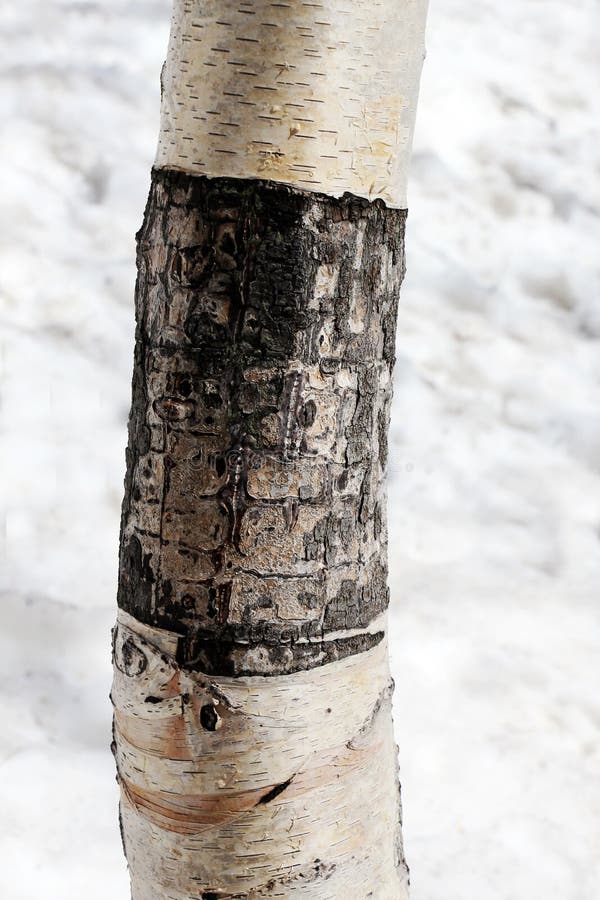
Stripping birch bark off trees can injure or kill them, with no real profit to yourself.  So why do people do this?

In northern climes, one thing we see while camping is evidence of people stripping birch bark off of trees.   Birch bark does have some uses, for example for makers of Adirondack furniture, who use the bark as a veneer for their pieces.   But these furniture makers buy logs and carefully remove the bark in large sheets to use for their furniture.   I have such a piece of furniture, and it is beautiful.  But it was not made from bark stripped off a tree by some drunken Bubba as a half-assed souvenir.

But others, mostly campers, have heard somewhere that "birch bark is worth something!" and so they girdle a living tree to remove a small strip of bark, which then languishes in the trunk of their car until it rots into nothingness, at which point they throw it away.  In the meantime, the tree has died.

It is a problem nationwide and in Canada as well.  And it is a problem that has been going on for a long time, too.   I recall my Mother saying, back in the 1960's, that it was a shame that these idiots were girdling trees in public parks for strips of souvenir birch back.   So it has been a problem for decades now.

It struck me, looking at this tree, while sitting in my hammock, that it is a metaphor for so much more than merely the bark involved or the trees injured, but rather an aspect - a nasty aspect - of our human nature.  "That's worth something, I've heard, I should take it!" is the thinking of these folks.   They are not entirely sure where they are going to fence their purloined 6" strip of birch bark, but maybe the guy at the pawn shop knows someone in the underground birch bark trade.  But again, the reality is, these chunks of bark languish and are thrown out - often in the same campground they are harvested in.

"It's worth something!" is the cry of the hoarder, of course, who keeps complete junk, often at considerable expense to himself, both financially and emotionally, because he thinks that the crap carpeting his lawn is somehow a precious collection.   It is also the mentality that cripples the poor and middle-class, who look upon the trivial in their lives as having great value, while neglecting greater opportunities available to them.

Cars are a prime example of birch-bark mentality at work.   As middle-class and poor people, we obsess about cars - and the poorer you are, the more you obsess about them.   It is only in the poorest neighborhoods (or in the parking lot at Wal-Mart) that you see the most worthless pieces of automotive transportation tricked out with hundreds, sometimes thousands, of dollars of worthless add-ons and customization.   That old Saturn is sure a slick machine!  And 22 inch "dub" rims really trick it out!  Hey, it's a great car, it's worth something.   Check out the birch bark veneer on the dashboard (hey, why not go all the way?).

I am not sure entirely where this is going, only that sitting in my hammock at Quartz Lake in Alaska, staring at this wounded tree, I thought that something wasn't quite right about it.   The secret to "getting ahead" on life isn't in snagging free birch bark, or taking all those little soaps from the hotel you are staying at, or maybe clipping coupons or trying to "score" on a purchase by getting something "on sale".   These are all false economies - trivial things that are of little value to you in reality, or, like birch bark, of no value to you whatsoever.

The birch bark mentality is a trap - a mental trap.  And economics and finances for the middle-class and the poor have more to do with mental attitude than with understanding financial theories or knowing what "next hot thing!" to invest in (the latter being another example of birch-bark mentality).

The Moneyist column on Marketwatch illustrates this phenomenon in almost every column.  Rare is it that someone writes in asking what money market fund to put their money into or what mutual fund to invest in.  Rather, the inquiries are along emotional lines - how can I get my husband to stop lending money to his brother? - and that sort of thing.  These are not people who need financial advice, but relationship advice or psychological help.  They are thinking emotionally, not rationally.  So to them, a relative who borrows money from them constantly is an insurmountable problem - how to I get them to stop?  (Answer:  Stop loaning them money - duh!).

But to the birch-bark mentality set, such simple direct answers are confounding.   "I mean, how do I get my relatives to stop asking me for money, other than to stop lending it to them?" 

Well, I suppose the only other answer is that you could suggest to them there is a lot of money to be made in stripping birch bark off of trees.