Saturday, March 5, 2022

Affordable Connectivity Program (Teething Pains)

You needn't spend a lot of money on cell phone service.  And if you are "poor" it may even be free.

I recently wrote about the Affordable Connectivity Program (ACP) which was the successor to the Emergency Broadband Benefit (EBB) program started during the pandemic.  This is NOT the same thing as "Lifeline" (Obamaphone) service which was started under Reagan with landlines.  Obamaphone requires you be a beneficiary of some other program (e.g., Food Stamps) or have an income near or below the poverty line.

The EBB program has expired and the ACP program (which is not a generous) replaces it.  It knocks $30 a month off your phone bill if you qualify, which means your income is below about twice the poverty line. You can apply online and submit a copy of your tax return and you'll get a notice within a few hours (if that) telling whether you qualify.  As my income for 2020 was pretty low, I qualified.

But then what?  As I noted in my previous posting, I thought about getting a 5G mobile hotspot with 100GB of data, which costs $55 a month normally, but would be $25 a month with the ACP.  Presently, we have 20 GB of hotspot data as an "add on" to our existing phones, which costs $20 a month combined.  For an additional $5, we could drop the 20GB and have a ton of hotspot (Internet Service) which we could use on computers, televisions, laptops, pad devices, "smart" home appliances or anything else that you might connect to the internet with a conventional router - AND it would be portable as well!

Well, that was the theory, anyway.

I went back to the AT&T site and plugged in my confirmation number from the ACP people and the AT&T prepaid website said, "Thank you for your submission, someone will contact you within 24 to 48 hours."

That was a week ago.

I tried calling AT&T (611 or 1-800-CALL-ATT) and "Tony" in Bangalore didn't know what I was talking about.  He gave me the phone number for the FCC ACP program, which was nice as I could confirm my acceptance to the program.  I called AT&T again and they said they had no idea what I was talking about and suggested visiting the local AT&T store.

So I did.  People actually go to these places?  They try to power-sell you a phone "plan" the same way mattress stores sell overpriced mattresses.  The AT&T store had huge posters proclaiming "FREE PHONES!" but no prices.  The Verizon place (next door) has prices starting at $70 a month, which is $15 more a month that I am paying now.  No bargains here.  Such stores are for the sort of people who buy cell phone insurance.  Geez.

You don't have to be poor to save on communication costs - there are many "pay as you go" plans that not only are cheaper than "contract" plans, but have no hidden fees, taxes, access charges or whatever.  Every "contract" plan advertises low, low prices, but when you get the actual phone bill, the actual amount is always higher because of these "hidden fees".   Prepaid plans, on the other hand are what-you-see-is-what-you-get.

Well, as you might expect, the lady at the AT&T store had no idea what I was talking about and told me the messages I got on my phone were "scams" and I should ignore them.  I asked her whether they handled AT&T prepaid plans and she demurred and admitted that the "store" was not a real AT&T company store (it had all the logos and signs, though!) but just a franchise that sold phones and plans - sort of like those kiosks in the mall or the wholesale club with earnest young men trying to buttonhole you into signing up for a contract.

This sort of thing is one level above an MLM scheme. I feel sorry for these young kids who are dragooned into selling like this - might as well be selling vacuum cleaners!  Most of their pay is commission, which is why they quickly ignore you if you start asking pointed questions about monthly price instead of salivating about a "free" iPhone XXXIV.

What was interesting about the stores is that they use psychology to make it seem like you are lucky to get a phone and be "approved" for a plan - much as car dealers act like they are doing you a favor by selling you a car.  "Congratulations! You've been approved to give us your money!"  People are dumb enough to go along with this.

Of course, at this point, I was getting frustrated, but tried to keep my cool.

I called the ACP number again and told them of my experience.  They were appalled.  But they gave me a phone number for AT&T ACP service (866-986-0963).  I have been on hold for nearly over a half-hour so far.  I think it will never answer.  (Update, I pulled the plug at 1:17 and no, it never answered). I went down the list of other ACP service providers and many of them, on their websites, talk about the new ACP program but say, "try again next week" for more information.  The program is still too new for them to figure out.

Two providers, Access and Assurance wireless, cleverly combine the Lifeline (Obamaphone) service with the ACP service to provide an unlimited data and 10GB hotspot service with a free phone and no monthly fee.   Obamaphone comes with no data and no hotspot, so if the two services are combined, well, that's pretty nice.  Problem is, I qualify for ACP but not the Lifeline.  So an interesting option, but not for me.

Out of curiosity, I tried to "see if I qualify" for this combined service and the form refused to load.  I am beginning to suspect that this new ACP program is still in the Beta-testing stage and the call centers and websites are overwhelmed with applicants and not enough support people.

I suspect in the coming months, these providers will get things straightened out and once everyone who is eligible signs up, the call volume will die down.  And once you are signed up, well, it is sort of on autopilot.

It never hurts to look into these things.  Recurring monthly subscription fees are what drives most Americans to middle-class poverty.  Cable TV, Internet, cell phones, car leases, online subscriptions, an and now, streaming subscriptions, add up to hundreds if not thousands a month, slowly bleeding the consumer dry.  I was chagrined the other day to see an "app" or service online that promised to find "ghost" subscriptions that you are paying for but forgot all about.  I mean, what the actual fuck.  A subscription to manage your subscriptions?  People sign up for subscriptions and forget about them and don't bother reading their credit card bill (or checking the balance and charges on a daily basis?).  That's the sort of shit that keeps AOL in business. And yes, here on retirement island, we have a number of friends with AOL e-mail accounts.

It's true what they say, you watch the pennies and the dollars take care of themselves.  Well, you have to watch the dollars, too.

Friday, March 4, 2022

Lessons from Laptop Repair

You can keep older equipment running, but eventually there is an end game.

The new (used) motherboard for the Toshiba C655 arrived a day early.  I installed it, which is to say, re-assembled the laptop as the motherboard is sort of the heart of the thing and you have to disassemble everything to replace it.  It booted up and once I re-authorized my copy of Windows 7 Ultimate, it ran fine.

But of course, for how long?

Many folks think you can indefinitely repair or "fix" things and you can, provided you continually replace parts over time.  But eventually the cost and hassle gets to be too much and the equipment gets outdated and it is time to replace.

Also, as I noted before, whenever you take apart something, whether it is a computer or a car or a blender or whatever, there is a finite chance you will break something else.  In computers the big bugaboo is static electricity.  When trying to "fix" a computer you can accidentally shock it with static and blow out all the memory.  Or leave the hard drive next to your magnetic screwdriver - goodbye!

Even if you do all that right, there are screws you can strip out or reassemble wrong.  I don't know how many cars and computers I have worked on that someone else before me worked on, and forgot to put back all the screws or bolts or whatever.  What's worse, so much today is made of plastic that snaps together and when you unsnap it - after years of the plastic getting brittle - it just snaps, period.

Funny thing is, I went through this before with my old Dell laptop, and I kept that on life support before finally throwing in the towel and buying these Toshibas.  They were $300 new - why bother messing around with repairing an outdated Dell running Windows 98?

It is interesting, having two identical laptops.  As I noted in my previous posting, when I took apart the broken one, I noticed the lefthand hinge was shot- the ferrules had pulled out of the case, which had cracked.  I fixed the one laptop and noticed the other had the same problem, so I fixed that, too.  But a mound of superglue and baking soda is not a permanent "fix" and I suspect they will pull out again sometime down the road.  Come to think of it, I see a lot of old C655 Toshibas on eBay with the notation, "broken hinge" - I can fix that!

But eventually, something else will break and then something else again.  Semiconductor chips don't last forever - the transistors (which is all they are - tiny transistors and capacitors) eventually fail, and all it takes is for one to fail.   I've already replaced memory, keyboards, batteries, hard drives, and now a motherboard.  It is only a matter of time before some other component calls it quits.

That's the problem with high-mileage cars.  I read online about some poor single Mom trying to get her 200,000 mile Subaru to keep running.  She goes to get it repaired and they fix it - for now.  Next month, something else breaks.  Where will it all end?  In the junkyard!  When you reach the end of the Weibull curve, it is time to pack it in.

So why did I bother fixing it?  Well, I enjoy tinkering and being able to manipulate your environment is a way of staving off depression.  When I put it all back together and powered it up and saw the opening screen, it was like 'Woo-Hoo!"  Of course, if I got a black screen, I guess I would have been depressed - but not for long, as the new Chromebook arrives Friday.

I suspect if the Chromebook is worthwhile, I will end up using it more and more (and maybe buying a second one) and the old Toshibas will sit in a closet somewhere, their batteries slowly going dead, until one day, I realize I haven't used them in a year and that they are worth nothing to anyone, and they'll get thrown away.  It is like leaving an old friend or having your dog put down, somewhat.

Maybe that is why people like to fix things and restore old things - it is a way we can cheat aging and death.  Entropy makes things fall apart over time, and we can add energy to these systems and bring their energy level back up, reorganizing the machine to a higher state.

But quite frankly, spending even $40 on a new motherboard was a waste of money.  I would not recommend it to others.  Better off to put that $40 toward a newer machine!


Thursday, March 3, 2022

Bootstraps - What It Really Means

Pulling yourself up by your bootstraps is physically impossible!

Our language is pretty funny and it is weird how sayings enter the lexicon and then end meaning something else entirely.  For example, when I was a kid, they had this Art Linkletter show (and books) called, "Kids Say the Darndest Things!"   One of the "Darndest Things!" a kid said was that such-and-such a famous person was "spinning in their grave!" which was accompanied by guffaws because everyone knows that the correct phrase is "turning in their grave" and that stupid kid got it all wrong!

Well, fast-forward 50 years and it is commonplace to hear someone say so-and-so is "spinning in their grave" which I guess came from that Linkletter bit.  It has become so commonplace and I doubt anyone saying it today even realizes what it means - if it means anything at all.

Similarly, the phrase "pull yourself up by your bootstraps" has taken on the opposite meaning of what it first meant.  The phrase was originally designed to be humorous - the idea of someone levitating themselves skyward simply by pulling on the straps of their boots.  It is sort of like how Bugs Bunny survives a plane crash by jumping out of the crashing plane when it is mere feet from the ground.  That works in cartoons, not in real life.

I remember hearing the term "bootstrap" for the first time when our prep school got a brand-spanking-new PDP-11 computer and no one knew what to do with it (except me and a couple of other guys - what a shame! he-he!).   It was a big improvement over the PDP-8 we had which had "core" memory and individual "flip cards" - printed circuit boards, each of which represented a logic gate.  Imagine, an entire circuit board for one lousy XOR gate.  Today, a single chip has millions of them. And the whole damn thing was hand-wired with a wire-wrapping tool, all in yellow wire (tracing wires?  Just give up!).

The PDP-11 had a more modern configuration, including dual 8" floppy drives.  No, the alumni who donated it didn't spring for a hard drive - those were expensive (and huge!).  One drive contained the operating system and the other was for "data".  When you turned on the computer, it would "Bootstrap" from the first floppy and load the operating system.  They used the term "Bootstrap" because the computer was, in effect, programming itself by loading the O/S into memory.  Later on, that term would be shorted to "boot" as in "booting from the hard drive" or "hard drive boot."

And I suspect there are many computer geeks today who have no idea where the term "boot" came from, either - if in fact it hasn't dropped out of the lexicon already.

What is weird about "bootstrap" is that today, it is used to denigrate young people or people who have yet to (or many never) achieve success.  "Just pull yourself up by your bootstraps!" they say, as if you could levitate yourself into the air by tugging at your shoes.  Nice theory, but it doesn't work in practice.

The reality is, every successful person succeeds in life from a number of factors, luck being one of them.  Like I said, never confuse being lucky with being brilliant - it is the cause of hubris.  You make a few good decisions and lady luck comes your way and you begin to think you have a knack.  So you keep going and lose it all, because you didn't have a knack, you just got lucky.  This is how gamblers end up losing their life's savings.

This is not to say effort and knowledge don't count - they do.  But being born to a middle-class family, going to a decent school, being imbued with proper social values - those are all things that you have no control over, and if you were the beneficiary of them, then good for you - you were lucky.  But making the effort is the other half of the equation - working hard and having the intelligence to set rational goals and trying to achieve them.  Things like depression, alcoholism, and drug use can derail the best plans and destroy the best luck, as I have seen firsthand in my own life and that of friends, family members, and acquaintances.

But I digress.

The point is, people saying "You should pull yourself up by your bootstraps!" have no idea what the phrase actually means and are oblivious to the irony of it all.   What they are saying, in effect, is that you are not successful in life because you can't do the impossible - levitate yourself through magic.  And that's a pretty cruel thing to say, really.

Wednesday, March 2, 2022

The Laptop Dies

After a decade of service, my old Toshiba Satellite dies.  Or will it come back from the dead? What should I replace it with?

The other day, I was thinking to myself, "Gee, this old laptop is pretty old!  I hope it keeps running!"  And as if to answer my prayer (in a negative sense) the next morning I turned it on and got nothing but a black screen.

Fortunately, I have two identical Toshiba Satellite C655 laptops.  Over the years, I have maintained them and upgraded them to 8GB of memory (the max they will recognize) and a half terabyte hard drive (again, the max).  I spilled a martini on one of them and shorted out the lefthand CTRL key, which I "fixed" by cutting the trace to it and disabling it.  Later on, I just bought a replacement keyboard on eBay for $10.  Parts are cheap for these old machines as they are so woefully outdated.

Anyway, I pulled the hard drive from the computer and installed it in the other one and backed up the data immediately onto my two portable hard drives.  When it booted up, it gave me a message that the CMOS battery was dead during the previous boot.   I looked online and saw a lot of extensive videos on how to replace the CMOS battery - one was a half-hour long and had 15 minutes of video explaining (with cute music in the background) how to set the system clock.  Gee, that's hard!  Clickbait videos strike again!

Another text document claimed you had to take the back cover off (only 20 screws) and I later realized that you could access the CMOS battery by simply removing the keyboard (four screws).   You know, I downloaded the service manual for these things, you'd think I'd read it!   I tested the battery at it seemed fine - 3.2V.  I think the motherboard is shot.  But again, these are so old that parts are cheap.  A used motherboard with twice the clock frequency was available on eBay for $40 including shipping.  Given that I paid less than $300 for one of the machines new and less than $200 for the other used, $40 seems like a lot of money, until you realize what a new machine costs.

Nevertheless, I took this as a sign to move on from my techno-Luddite position and move into the modern age.  2010 was a 12 years ago - time to move on.  But to where?  I was never a fan of Windows 10 (these old machines run Windows 7 Ultimate just fine) and Windows 11 requires a connection to the Internet to run, or so I have read online.  Maybe time for a netbook?

I had bought an early Netbook running Android "Ice Cream Sandwich" (really?) and it was little more than a child's toy - it was even toy-sized.  But they only cost $50 or less, and for reading e-mails or surfing the Internet, it worked OK until I tried to update it and it bricked on me (lesson learned:  leave well enough alone!).   Since then, "Chromebooks" have moved on and moved up - they are rivaling conventional laptops in terms of features and power.

None of them have things like a DVD player or a hard drive.  Instead, they have volatile memory (8 GB) and then SSD (Solid State Drive) memory of 256 GB.   So, no moving parts, other than the keyboard.   We use one of the old Toshiba laptops to stream videos to our television, as our television is an older model that is programmed only for Netflix, Youtube, and Vudu.  It isn't upgradable to add more channels, so it is easier to just plug the laptop into it and use a wireless mouse and keyboard to select our shows.

So I was looking for a Chromebook with a lot of power and an HDMI output.  I searched online and all the review sites seemed to pick the Acer Spin 713 as the top pick.  Again, no Chromebook has a DVD drive and indeed, they don't support such video (no codec) but I found a place online that sells USB DVD players for $30 and there is an "app" you can download, the VLC media player, which they claim will run any format of video.

The catch, of course, is that it runs about $600 new.  I found some online from Acer direct - factory refurbished - for about $440 so I ordered one.  It does come with a two-year warranty. We'll see how well it works out.  We also use one of the old Toshiba laptops in the camper to watch videos, so the Chromebook may work out well for that, too.

Of course, this means giving up on all my "legacy" software - my WORD2000 and Quickbooks Pro 2002.  Funny how the decades fly by while you are having fun.

But on the other hand, it isn't like I am starting from scratch.  The Chromebook runs Android and this is more akin to how my phone works - even to the point of using apps instead of programs.  So it should be a familiar interface for the both of us, and perhaps easier to use as well.

In the meantime, I have my auxiliary Toshiba Satellite to type on, and the motherboard for the other one should arrive on Friday.  Maybe they'll last another decade.  I doubt it.  Or at the very least, I will get tired of dicking around with them the next time one breaks.

Three notes:  First, when I disassembled the computer, I noticed the air duct was clogged with dust (dead human skin).  They use a heat pipe to pull heat from the processor to a finned air duct with many fine passages about 1" long.  Easy to blow out and this was probably what caused the motherboard to fail (overheating).  User error!  You can be sure I vacuumed/blew out the air ducts on the other machine.

Second, when I took it apart, one of the hinge mechanisms was broken - where the hinge screwed to the case, the case had cracked and the ferrules had pulled out.  Marty's Matchbox Makeover repair to the rescue!  I built up the mounting using superglue and baking soda around the ferrules.  It went back together just fine.

Third, the Acer Spin 712 is sold in different versions - some had 256GB SSD, others only 128.  Similarly, some have 8GB RAM and others only 4GB.  If  you see one for sale cheap, check the specs!

Tuesday, March 1, 2022

The Nature of Engineering

Engineering isn't as glamorous as people think it would be.

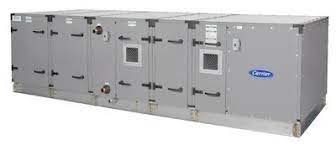
When I worked at Carrier, I spent the better part of two years building a prototype multi-zone air handler   If you don't understand how commercial HVAC works, often for large buildings there is a "chiller" in the basement (a machine about the size of a small shipping container) which makes chilled water.  This is piped to each floor in the building where there is an air handler.  In the air handler, which is a big metal box with a big fan in it, there is a chilled water coil (and usually a hot water coil as well or the chilled water coil is converted to hot water use as the seasons change).  Air blows through the coils and into ductwork to each office.

To control temperature, there are air-flow control boxes mounted above the drop ceiling. These are attached to thermostats which then modulate air flow to control temperature in the corresponding office.  It is not a perfect system as the HVAC part is usually installed before the final "build-out" of the office space.  As a result, often the thermostat is in one room while the corresponding air duct in another.  Hilarity ensues as one office is too hot and another too cold, and doors blow shut or open because of air pressure.

The system isn't cheap, either, as it requires you install all these air-flow control boxes and then install thermostats and run wires (or air pressure hoses) which often means a call-back to tweak and "balance" the system to make it work.  Suppose you could put these air-flow control boxes right on the air handler?  Then you do one install and route the ductwork and your're done!

The Engineers came up with the design - or multiple designs - and had the model shop build prototype parts.  As technician, I was to assemble the thing, instrument it, and test it.  The first model was pneumatic and involved bundles of air hoses.  The second version was electric and a little more modern.  The big problem was measuring air flow - the dampers we used tended to spoof the air flow meters (how they do this in cars is beyond me!).  I spent a couple of years of my life on the darn thing.  A few years later, I came back as a Co-Op student, working in another lab on a computer data logging system and I visited my old lab.  The techs told me they took "my" machine out to the scrap dock, after it cluttered up the test bay for several years.  I went out to see it, and it was bittersweet - so much work, such a part of my life, and now it was just scrap.

And this is typical of Engineering - you spend years on a project and it might not work out.  Or you spend years on a project and it is successful - but the scrap dock is still lined with all the failures you encountered in the process of designing the success.  And much of the work is drudgery - testing and re-testing, again and again.  Re-designing a part or tweaking a system and then testing again.  You go down so many blind alleys - and they all need to be investigated - before you figure out what works and what doesn't.  And getting an increase in efficiency of even 1% is heroic, saving a dollar from a design is Olympian.   It isn't just sitting around and dreaming up sexy products.

When I was at GM, it was the same deal.  People think "Automotive Engineer" means sketching sexy car bodies and then molding them into clay.  The reality is, that's design, not Engineering.  An Automotive Engineer might be coming up with a new piston ring design - or a more economical and easier-to-assemble hinge for the ashtray.  Oddly enough, both are important.

Specialization is the nature of the game.  There really isn't someone "designing a computer" but rather a plethora of companies designing components, which someone then assembles into a computer system.  One company may make the graphics chip, another the processor, and yet another the memory chips - I've written Patents for all three.  Someone else may do the network chip and yet another company make a network card from it.  Connectors, keyboards, mice, cases, wiring, fans, cooling systems - each has its own supplier, or if done in-house, its own department and Engineers.

Many lay people fail to understand this.  They think that Steve Jobs "invented" the computer or the iPod or the smart phone. The reality is something different. Jobs and Wozniak (mostly the latter) assembled their first computer from components made by other companies.  And they actually came late to the game, as CP/M systems already existed before them.  The "Genius" of Apple was in marketing an inexpensive computer to the masses at a time when most "home computer" users were hobbyists who assembled their machines from components.   What created the personal computer wasn't the actions of one company or one or two people, but the perfect storm of inexpensive memory chips, processor chips, and other components which made the PC possible.

But that's not a sexy story.  A better story is the Edison-type "Eureka!" story, where a lone inventor toils day and night and one days shouts, "Watson!  Come here!  I need you!"   Both stories are sort of bullshit, as we later learned.

This is not to say the lone inventors don't exist.  The Wright brothers were the first to produce a workable heavier-than-air craft, but others were not far behind.  It was the combination of inexpensive internal combustion engines (made out of aluminum, which was newly cheap) and an understanding of airfoil designs (pioneered by predecessors to the Wrights) that made it all possible.  If the Wrights hadn't done it first, others would have shortly thereafter.

This is not to denigrate or take away from their efforts or efforts of other inventors or entrepreneurs, only to illustrate that behind the scenes, there are dozens, if not hundreds, if not thousands of people toiling away at computer screens or working in laboratories, designing, building, and testing machines, before they become products.

And just as prototypes end up being scrapped, so do Engineers end up being shown the door on a regular basis.  When I lived in Syracuse, there were a number of defense contractors, including General Electric.  They would bid on a big defense contract and hire Engineers for the project before it was even granted to them, so they could hit the ground running if it was.  If they were not the winning bidders on the contract, the Engineers were laid off.  As a result, Engineering became a peripatetic profession, and most Engineers (and their families) had to move from one place to another as jobs came and went.

Being "vested" in a pension became something of a joke for Engineers.  No one ended up staying the five or ten years needed for a pension to "vest" and even then, if you were laid-off thereafter, your pension wasn't all that great.  When the 401(k) was introduced in 1978, many in the Engineering field felt this was a big improvement - you could put money in, tax-free and maybe get some matching funds from your employer and take it with you when you left without onerous vesting rules (except maybe a short vesting period for matching funds).

It's not an easy job.  And the pay is... well, it depends.   You won't get rich as an Engineer, even if you are some hotshot "coder" (which some argue is not Engineering in the classical sense) making six figures (which isn't what it used to be).   The problem is, your experience and knowledge is only good for so many years.  Eventually, everything you know will be outdated and outmoded, unless you are very good at keeping up with the latest in technology.  The other problem is common to almost any profession  - management figures out that it is a lot cheaper to fire you at age 55 and hire two youngsters whose combined salary and benefits is less than yours.

Granted, some end up in management, but few Engineers have the "people skills" for that sort of thing.  And maybe a few end up starting their own companies - but history has shown that most Engineers are lousy business people and often they get forced out of their own company after a while.  Even Steve Jobs was fired from Apple after a while.   They brought him back as an icon more than anything.  I doubt he was the driving force behind the subsequent products (iPod, iPhone) but I could be wrong about that.

I am not sure what the point of all this was, only that I recalled visiting the scrap dock the other day and seeing all that work sitting there waiting to be converted to scrap metal.  That was nearly 40 years ago.  Since then, they've torn down the factory and even the Engineering department has moved away.  The products I worked on are all obsolete.  I designed a circuit board for a heat pump that I am sure is now woefully obsolete and went out of production decades ago. Life goes on, and for Engineers, it means that much of what you did for a career becomes irrelevant in short order.  Given the shorter and shorter product cycles these days - particularly for electronic gadgets - it could be a matter of a few years before your work is all in the trash.

This is not to say that Engineering is a bad career.  And for some types of Engineering, your work may last for decades or even a Century.  The guy who designed the Brooklyn Bridge left behind a lasting legacy.  And regardless of how long your designs last, there is a great satisfaction in bringing something to life - from the drawing board to reality.  It is like birthing a child, I guess, and sending them out into the world.  Funny thing, too - we use the same terminology in both cases - talking about "teething pains" and "infant mortality".

But sexy?  Engineering isn't very sexy.   And neither are Engineers!