Wednesday, October 1, 2014

Life is Fragile


Most of us bitch and moan about how hard we have it in life.   Most of us are clueless.

You've heard it before, at a party or just while shooting the shit with people.  Some idiot tells you how hard is life is, because he is living "paycheck to paycheck" and if it weren't for Obama/Republicans/Wall Street Fat Cats/ Liberals/Whatever, he'd be living on Easy Street instead of "suffering".

Or you hear some yahoo moaning about how the "American Dream" is shattered or some news reporter blathering on about how some "victim" is losing their overpriced and under-financed home and how awful that is to lose a THING that you never could have afforded anyway.

But what these folks don't realize is how fragile life is and how unimportant "things" and money are.   If you are sick, injured, or killed  - or someone you love is sick, injured, or killed - then none of the "things" in life - or money - really matter.

I met a man last night who was injured in a car wreck.  He is OK, but his wife died in the wreck and his two children face months of surgery and rehabilitation, if they are ever to walk again.   One moment, he is worrying about credit card bills and asking the kids to pipe down back there and worrying about traffic.  The next moment his life is torn apart.

I mentioned before a friend from college who was in a major wreck like that and faced years of back surgery and rehabilitation.  She said that the experience really put life in perspective - and insinuated that I was pretty superficial and lazy.  She was right.

Sadly, most of us never figure these things out.   For some, it takes a life-changing event to finally put things in perspective.  For others, the fragility of life becomes apparent over time, as one realizes how quickly things can change in an instant.

Now, some folks might take what I am saying the wrong way.  "Well, it could all end tomorrow, so you might as well enjoy today!  Get a new smart phone! Watch Cable TV!  Spend it all!"

But that is just the opposite of what I mean - and the thinking I had when my back-injured friend told me I was superficial and lazy.   Life is precious, short, and fragile.  And that is all the more reason to get your shit together and stop spending money like a drunken sailor.  It is all the more reason to save for a "rainy day" as it can rain buckets at any minute.

Life is too short to go through it being unhappy because of bills, material things, or "living paycheck to paycheck".   It can all end in an instant, and if you've wasted it all by running a treadmill so you can have "things" - whose fault is that?

The fellow I met last night was in remarkably good spirits considering all he had been through.  I suspect that the experience put his life in perspective.  He realizes now what is important in life and what really isn't.   And he realizes how little control we have over fate and destiny.

No, we can't control the fates.   But we can balance our checkbooks.   Bouncing a check is not destiny, but a choice.

* * * 

Speaking of which, a story on Evening Liberal Claptrap is a case in point. They are talking about bank service charges and how ATM fees are a way for banks to make money off of other banks' customers.   "Unlike a bounce check fee," they drone, "with an ATM fee, at least you have a choice!"

Really, bouncing checks is inevitable?    No, it is not.  Not if you balance your account every day - which is so easy to do in this day of smart phones and Internet.   Yet the people with the smart phones are least likely to do this.  One fellow admitted to me that he checks his credit card account once a month.   Once a month?  And in his hand is a device that allows him to check it hourly.  But that would interfere with his texting, I guess.

Monday, September 29, 2014

Seven-Year Car Loans?


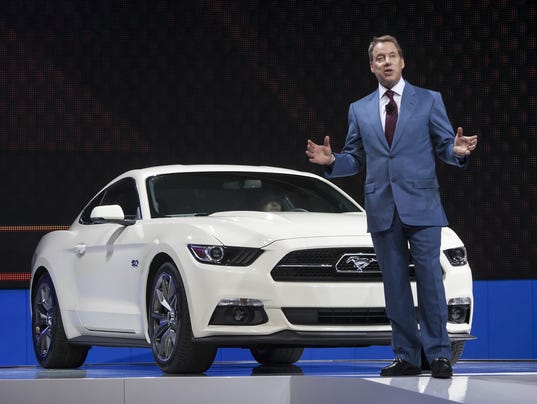
Bill Ford, Chairman of Ford Motor Company, recently made news by decrying seven-year car loans and other financial gimmicks.   Why is he against these, if they sell cars?


The real reason our economy had a meltdown in 2009 was because of funny money.  Banks were offering loans that didn't require any financial background checks, and some of these loans had "optional payments" which meant that the balance on the loan increased over time.  Other loans had low "teaser" rates that then skyrocketed after a few years.  The thinking was, the house would be worth so much more, the owner could "flip" it and make a huge profit - or refinance at a lower rate.

That didn't work out, obviously.

And the fault for all of this wasn't the banks or the government, but the undisciplined idiots who signed these loans.   And when I say "undisciplined" I am referring to financial discipline, although most of these folks were ill-mannered as well.

In that era, consumer loans were being offered at low rates and for long terms, for everything from Boats to RVs, to Jet Skis - and you-name-it.   Banks are still offering 20-year loans on Boats and RVs, which means you will be "upside-down" on a boat or RV for most of the term of the loan, as I noted before.

Car loans were less of a problem, but terms for those were rising in the 2000's, from the traditional 36 or 48 month loan, to 60 or even 72 month loans (five and six years).   Seven year loans are now being offered.   Again, this does not mean you have to take them!

Worse yet, many car dealers will "roll over" upside-down loans into a new car loan to make a new car sale.   I recently was at a campground where I met a loan officer for a bank, and he told me of a client who came in and borrowed $40,000 for a $30,000 car.   The additional $10,000 was to pay off the negative-equity on the trade-in.

I had a friend who did this same thing.  She was young and liked to party and wasn't very astute with money or about cars.  She bought an economy car and put it on a five-year loan.  She never cared for the car.  She never washed it, waxed it, or even cleaned the interior.  She never changed the oil.  She regularly forgot to put gas in it, and ran out by the side of the road, regularly.   She was a very irresponsible person.  Mental health and drug issues were part of the problem.  Laziness and stupidity were the other half.

When the car died of a seized engine, she rolled over the negative equity on the loan into a new car - and the car dealer was more than happy to do this.   She then repeated the process, and trashed another good car (a Japanese econobox that should have lasted 10 years with proper care) and repeated the process yet again.

But of course, you can only do this sort of thing so many times.   Eventually, there was more negative equity in the loan than the value of the car.  And the car dealer didn't help matters by charging her an exorbitant price for the car and tacking on a lot of junk fees (as did the loan company).  And the interest rates, well into the double-digits, were murder.  As the payments increased with each iteration, she could less and less afford the car, and was late on payments, which made her loan rates with each refinance even higher.  It was a death spiral.  Eventually, she ended up in bankruptcy.

Car dealers will sell bad deals like this.  You don't have to take them.  But people do, because they want a new car, they are not particularly smart, and maybe drugs, depression, or other mental health issues are involved.

Such deals are bad for the person involved.  They are also bad for society as a whole, as people who are dragged down by bad deals are a drag on society, and we all pay for their eventual bankruptcy, in terms of higher interest rates and costs, if we have to borrow.

It always amazed me that loan companies would even do deals like this.  After all, bankruptcy is a foregone conclusion - so why loan money when you know the loan will blow up?   You will lose money on the deal, no matter how high an interest rate you charge.  But then again, they collect so much in interest before bankruptcy, that they get all of their money back and then some.  And today, in bankruptcy, the balance may be "worked out" so they get more.  In the old days, when debts were wiped out in bankruptcy, lenders were more reluctant to loan money to insolvent people.  Hmmmm.... maybe we should go back to that standard.

But the answer is even more complex than that.   The persons originating the loans are paid to make loans, not make good loans.  So they offer bad deals, often knowing they are going to blow up, as no one at the loan company seems to care if the borrower is a bad credit risk - as they re-sell the loans as bundled investments.   They charge extra interest and fees to cover the "risk" of course, but how much do you have to charge in interest if the borrower is a guaranteed default?  To me, it makes no sense.  And it is why our economy collapsed in 2009, when all those bad loans, which were sold to investors as good loans, did the inevitable default.

Today, we risk going back to the same old problem.   Bill Ford is sounding the alarm about seven-year car loans.  Why is this?   Because while it might sell cars today, it means you are probably killing your market tomorrow.

Simply stated, a borrower who signs a seven-year loan may be upside-down on his loan for a significant period of the loan.  When he wants to trade-in his car after three years (which Ford would like you to do, but is probably a bad idea), he will still owe money on it, and the amount of equity in the car may be insufficient for a down payment on a new one - if in fact he is not upside-down.   So either he walks away from a new-car sale, or he ends up borrowing more in the next car (financed over an even longer term, to make the monthly payments smaller).

Granted, a car may last ten years or more.  But being in debt the whole time is a bad idea.  And in fact, you may be upside-down on the loan.   Let's use an example, a $25,000 car loan at 5% interest for seven years, commencing January 1, 2015.  The monthly Principle & Interest would be $253.35.  The total payments would be $29,681.21.  The total interest would be $4681.21

The amortization table would look as follows:

Date Interest Principal Balance
2015 $1,180.51 $3,059.66 $21,940.34
2016 $1,023.98 $3,216.20 $18,724.15
2017 $859.43 $3,380.74 $15,343.40
2018 $686.46 $3,553.71 $11,789.69
2019 $504.65 $3,735.52 $8,054.17
2020 $313.53 $3,926.64 $4,127.53
2021 $112.64 $4,127.53 $0.00


Now, your typical car depreciates in value by 50% every five years.  As I noted in another post, this is a pretty inflexible rate.  Cars with "low" depreciation may be about 40% and those with "high" depreciation about 60%.   So please, no arguments about how a Jetta TDI is going to "hold its value" because it isn't - it will depreciate down to nothing in short order, as will a BMW or a Honda or whatever.   Depreciation is the largest expense in owning a car, particularly a new one.

If we apply this 50% every five years rule, we see that the vehicle doesn't depreciate linearly.  At five years, it is worth $12,500.  At ten years, $7250.   Thus, depreciation is a decaying exponential type of curve.  The exception, of course, is the first year.   A car can depreciate by as much as 10% the moment you drive it off the lot, which is why in the past, lenders required at least 10% down, in order to get a loan.

Thus, after five years, it is possible our buyer actually has equity in the car, as the loan balance is $8054.17 and the car may be worth $12,500 (although if it is an American car, perhaps slightly less).   In the interim, however, the buyer maybe "upside-down" on the loan, particularly in the first three years.  The buyer cannot re-sell the car without paying to do so.

But of course, I am assuming that the borrower can get a loan at 5%.  Despite the "come on" loan rates being bandied about by the car makers, most folks, even with good credit, are going to pay about that much for a five-year loan.   A seven-year loan for someone with bad credit could cost more.  And even small increases in interest rates make big changes in the paydown rate.


Bill Ford wants to sell cars - and more often than every five years.  So you can see where he is coming from.

But what about your perspective?   As I have noted in the past, the best deal is to pay cash for a late-model secondhand car, and then driving it forever.   If you can keep a car for ten years, it pays off in lower monthly costs.   Even if you have to get a short-term loan, in later years, you can drive a car with no monthly payments - which comes in handy, as the incidence of repairs and maintenance will go up.

And there is another rub with these long loan terms.  Many folks are chagrined to discover that they've signed a five-year loan, and the warranty on their car is less than that.   Four years into the deal, they need to buy new tires, pay for a brake job, and other repairs - and still make car payments at the same time.   You see this a lot on BMW discussion groups - delayed buyer's remorse, is what I call it.

They bought a new BMW which had a four-year warranty, but paid for it on a five year note.   After four years, it needs $1500 worth of tires, and maybe a brake job and a host of other repairs, which if done at the dealer, could cost thousands of dollars.   And the owner realizes he is still making payments on the car, which is now worth less than half what they paid for it.  So they go on a BMW discussion group and bash BMWs as unreliable.

And this could even be worse for Ford, whose cars depreciate even faster and are far less reliable than BMW.  As a result, a buyer could find himself making payments on a car that is long out of warranty that also requires thousands in repairs.

In the olden days, car loans were paid off long before this situation occurred.

So I see where Bill Ford is coming from.   Seven year car loans are bad for business on a number of levels.  And bad for our country.   And needless to say, bad for the individual.

If you are looking at a seven-year car loan, chances are it means you really can't afford the car.   Look at a cheaper car and a shorter-term loan instead.  Or better yet, buy secondhand and pay cash.

Sunday, September 28, 2014

Skype lookalike site and Astromenda malware


When installing programs from the Internet, make doubly sure you are on the right page.

I am not a big fan of Skype.  The concept is neat - the idea of a video telephone.  But the problem with video telephones is what the Bell System (no relation) discovered back in the 1960's - people really didn't want a video phone, as it turns out.   Even today, with the technology available on the web and almost everyone with a computer (or smart phone or pad) having the hardware to connect online, very few people actually use video phone.   Kids today rather text than even talk!

But a friend of mine uses the service and I thought, "what the heck, I'll re-install Skype and call him!"

Yes, re-install.  I had removed it from my computer as it slows down most computers, and thus is a PITA to have loaded.   And the problem with Skype is that unless the other person is on their computer all the time, well, you aren't going to reach them.   You have to call or e-mail ahead of time to arrange a Skype call, and this takes all the spontaneity out of it.  So I gave up on using it.

I Googled "install Skype" or something of that nature and clicked on the first hit which appeared to be a Skype install page.

It wasn't.

I should have noticed a problem when it diverted me to skype.appcenter.com instead of skype.com

How did this happen?  It is a mystery to me.  I have adblock plus on the computer, so Google advertised hits (which are often links to virus sites) are blocked.   When I tried again, later on, the real skype.com came up as the first hit.

(Conspiracy theorists would note that Skype was bought by Microsoft, a deadly and mortal enemy of Google in the O/S marketplace.   It would help Google if fewer people installed Skype and instead installed a Google alternative.  So, could this redirect to a rogue site be an accident, a happy accident, or by design?  Not hard to write code that redirects every 10th search to a malware site!).

Anyway, I started to become suspicious when the "installer" dialog started asking me if I wanted to install a lot of junkware (anti-virus programs, weatherbug, registry scanner, etc.) and I finally closed it out.

Too late.  On both Explorer and Firefox, the default search engine was set to "astromenda" and the home pages to astromenda.  In order to fix this, I had go into the tools section and reset both browsers.

Removing the programs proved more difficult.  The uninstall feature of windows didn't seem to work completely.  A malwarebytes scan showed a lot of registry entries, some stray files, and the like.  A search of the hard drive turned up an empty astromenda directory.   And on my desktop, a link to an astromenda game.  This thing really embeds itself!

What is all this nonsense?  Garbargeware.   They put ads on the pages you display and get paid for it.  And they re-direct your searches to other sites.

I've seen similar redirects on other folk's computers - along with junkware like weatherbug.   I can assume that they clicked on a similar link and fell into the rabbit hole.

Of course, people say, "Well, you should be more careful!" - which is classic blame-the-victim mentality.   But I was careful.  I run Microsoft Security Essentials, Malwarebytes, and Spybot.   None of them warned me (nor did Firefox) that I was being redirected to a rogue site.   And the search from Google somehow redirected me to this bogus site.   How?  Beats me.   I thought I could detect these things.  It is getting harder and harder to do!

Spectator America


In America, we no longer do things, but rather root for other people to do things.  We are spectators of life, not participants.  Today, Julia Child would never have been given a television show, unless she started throwing pots and screaming at people.


The camper has a little flip-down television which we use to watch DVDs.  The other day I turned it to tune off-the-air programming and was appalled at what was on the television.

Wow, was that a mistake!

One thing that struck me was all the food shows.  Well, not real food shows, but "reality" food shows, where "contestants" competed to make a cake or something, and then all got mad at each other and threw pots in the kitchen.   Just like the motorcycle show, only with kitchenware.  The point of the show is the competition and controversy (both manufactured) which we are supposed to be interested in.  It was Professional Wrestling in the Kitchen!

Apparently, the plebes love this shit - seeing people argue, but also seeing people compete.   We have all these reality shows today, and most of them are competitions of one sort or another - Dancing with the Stars, America's Idol, The Great Race - you name it.  We even have shows where people compete to clip coupons or pick through the trash.

And always there is some sort of "controversy" you are supposed to have a valuable opinion about.  And you have to have a favorite dancing star or trash-picker or whatever.  Which member of Duck Dynasty are you rooting for?

And of course, there is (and was) always sports.  You root for your team, as a spectator in the stands.  You don't actually play a sport, but you go to a "sports bar" and be a pretend-jock, washing down gallons of lite beer and screaming at the flat-screen television.  Sports Fandom has taken off since I was a kid, and has reached ridiculous proportions.  Back in 1968, people didn't paint their cars in their team colors.

What struck me as odd was how we have changed over the years.  We used to actually DO things in America, not just watch others do things.

For example, these food shows are not the old "how to" shows that taught you how to cook.   Network executives derisively refer to those "old school" shows as dump and stir as the cook would cut up food, dump it in a pot and stir.   It was not really exciting to watch, unless you wanted to learn how to make the item in question.  You know, learning and all that shit.

Today, it is all about food you would never make at home - often ludicrous foods made in crazy contests from arbitrary ingredients (a box of cracker jacks, a side of meat, and 100 ball bearings).  And I am not being facetious.  One of these cooking "shows" did just that (minus the ball bearings, of course).

If Julia Child were coming up today, she would never have gotten on the air.  Dump and stir just doesn't cut it, Julia!   Teaching people that they CAN make French cuisine, without having to attend the Cordon Bleu - that just won't do!  What she taught (and she taught) was empowerment - that you CAN do things that initially seem hard to do.   That we are all capable of so much more in our lives.

That sort of thing is no longer on television.   Today, the so-called "how to" programs generally advise you to "leave it to the experts!" - whether it is "This Old House" or "Car Talk".   Either they don't want the liability when someone's car slips off the jack and crushes them to death, or they'd rather steer the viewers to the advertisers (excuse me, SPONSORS, as PBS doesn't have ads, right?).

Now, some of you are going to say, "Well, what about Martha Stewart?"   Well, what about her?   First of all, her star has faded since she went to jail.  No one watches her anymore.  And back when they did, it was not to learn "how to" make things, but to learn only that making things was incredibly complicated and you cannot possibly "do it yourself" like she did.   She had an army of assistants making her 100 hand-made Christmas Ornaments (which took 10 hours each to make).   No one in their right mind would do that.  She taught helplessness, not self-empowerment.   So it was no wonder everyone was glad when she was arrested.

Empowerment is important.   If you are a spectator in life - a consumer as they want to call us - then your only power in life is in choosing what to purchase.   You cannot create, you cannot control.   You are at the mercy of merchants and retailers and service providers.

And increasingly, this is what our Corporate Overlords want us to do.  They want us to be passive, weak, and unempowered.  They want us to be ignorant as to how things work - even basic finances.    And since so many of us are unempowered, we end up believing that being "smart" about money involves clipping coupons or scoring cash-back bonuses.   We end up playing their game, because we don't know how the real game of life is played.

Being a spectator in life is not living.  Having a favorite team or a favorite television show is not the same as having a real personality.   You are more than a collection of "Likes!" on Facebook.   You have real talents and abilities.   And watching television isn't one of them


* * * 

Sighting of the day:   In Natchez, Mississippi, the "Family Check Cashing and Payday Loan Center" - as if putting "Family" in the name makes it all OK.   Here's a hint:  If you are supporting a family, the last place on Earth you should be going to, is a check cashing center or payday loan joint!

Friday, September 19, 2014

Live from the Grand Ole Opry! Parker Millsap!


We saw Parker Millsap at his Grand Ole Opry debut.


Keep an eye on this kid, he's going places!  Sort of a cross between a young Johnny Cash and Elvis!

See:  https://www.youtube.com/watch?v=Ksf46WnZI5Y

That was his opening number, which blew the audience away.  21 years old.  Not bad on the eye, either!
Here is his new video on NPR, "Truckstop Gospel" which he also played.  Sort of confused the audience a bit, I think.


An interview by a clueless NPR reporter trying to be trendy:

http://www.npr.org/blogs/therecord/2014/09/11/347466848/an-emerging-voice-of-americana-and-oklahoma


Let's just hope he doesn't get fat like Elvis!