Monday, June 8, 2020

It Is Better to Receive....

The Joy of Receiving, Managing, and Sharing God's Blessings - ppt ...
Maybe it is better to give than receive, but receivin' sure is nice!

Recently, a reader asked me if he could make a donation to my blog, and asked me for my PayPal address.   So I gave it to him and didn't think much about it, until a few days later, I got a note from PayPal saying I had received money.   Gee, that was nice of him!   Since then, two other readers have made donations, which is appreciated.   But of course, this gets me to thinking, and that is a dangerous pastime.

First of all, I am not sure how to handle this.  I see on some YouTube channels and blogs they have something called "Patreon" or other service to donate with.  Sometimes they list the "Patrons" in the video or on a sidebar.  I am not sure my readers want to be identified by name, lest they lose their security clearances or jobs or spouses, when folks find out they've been reading my blog.   After all, this is subversive stuff!  You know, personal responsibility and all - heresy today.  If you have donated and want your name listed (or don't mind if I do) then let me know.  Or I can use a pseudonym.
'It's better to give than to receive' is from the Bible, Acts 20:35 (King James Version): I have shewed you all things, how that so labouring ye ought to support the weak, and to remember the words of the Lord Jesus, how he said, It is more blessed to give than to receive.
This is an interesting quote, and this sort of thinking underlies most of Christianity these days - well, except for Reverend Cashflow and his pals, who are all about you giving and him receiving.   No more of this wasting money on the poor!

It is an interesting quote in that I often rail against handing out money to the poor or homeless or drug addicts and whatnot - it often doesn't help the person involved, but actually makes their lives worse.  They become dependent on handouts and stop seeking remedies of their own.  Some have argued that our aid to African countries has served only to destroy local economies, as local farmers can't compete with "free" food from America, and aid money ends up in the Swiss bank accounts of corrupt dictators, who remain in power, in part, because we pay them so well.

It gets complicated, this giving stuff away thing.

The funny thing is, there is another Bible verse, which is not actually a Bible verse, but is a popular aphorism:
Give a man a fish and you feed him for a day; teach a man to fish and you feed him for a lifetime
This is an interesting quote, as many people think that it is in the Bible, and that Jesus said it (after all, he was a "fisher of men"- right?).   I think it was a Victorian era attempt to sort of wash out a lot of the feel-good Socialism from Christianity.   After all, we can't have people handing out money - that's Communism, or at the very least, bad for business.

I think, however, there is a happy medium here - that there is a way of reconciling these two schools of thought, which may actually be one.   I am not sure that Jesus wanted to create a welfare State.  Well, maybe he did - it has been 2,000 years and people have distorted and translated his message many times.   Maybe Jesus was some radical Democratic Socialist or Antifa agitator of his age, or an Andrew Yang wanting Herod to hand out 1,200 shekels every month to every citizen.  Could be, but I doubt it, somehow.

I think the first quote has two interesting meanings.  It is indeed better to give than receive, as the giver feels better about themselves than the recipient.   Emotionally, we feel good about ourselves when we donate to charity and help out our fellow man.   A neighbor locked himself out of his camper the other day, and we all tried to help him, trying different keys we had to see if they would fit.  We all wanted to be the guy who would help him out, and be a hero, for at least five minutes, before everyone moved on with life.   A local locksmith ended up being that hero - for a hundred bucks.

This is, of course, why altruism is somewhat evil.  People make a big show, sometimes, of donating to a cause or volunteering at the Parcheesi club - and then nailing themselves to the cross and moaning about how no one appreciates their great sacrifice.   We give to feel good about ourselves.  It is better to give than receive.

The recipient?  Well, they appreciate the hand up, but again, emotionally, when you rely on others for help, it creates a condition called learned helplessness which I wrote about before.   People who are dependent on others for sustenance often resent their supporters and rescuers.  The welfare recipient isn't grateful to the government, but resentful. The relative who gets $500 a month from their siblings, will talk trash about them behind their back. If you give money to someone, don't expect their eternal thanks, if you get any at all.

By the way, I met another fellow who sends money to a sibling, in order for the sibling to pay for their pets.  As you might imagine, this is causing difficulties with his spouse, who wonders why they are spending (and in a marriage, it is "they") their money on a ne'er-do-well relative. They have separate checking accounts - the husband and spouse.  It makes me sad to think about it.  And I am sure, like with other siblings I have seen in this situation, the recipient accepts the money, but holds a simmering resentment of brother.

I kind of fell out of love with David Sedaris in his later writings.   In the last article I read, which I think was in The New Yorker, he talked about how his sister killed herself (no doubt after he mocked her in his books as a broken-down drug-addicted loser) and how he was buying the seaside cottage he had dreamed (and written) about.  In the future, all the family reunions would be at his oceanfront home!  He would be the patriarch of the family and in charge of everyone!   I wonder how the rest of his siblings feel about that.

My friend who is supporting his brother's dogs is somewhat the same way, organizing family reunions and being the patriarch of his family.  I guess people like that feeling of control or being in charge.  Like I said, altruism can be evil.  And speaking of evil, the brother who receives the money does so by saying he can't afford medical care for his dogs, and thus shames his sibling into giving him money.  Sort of like how people in Mexico will rent a small child and smear his face with dirt, and ask you for money for "medicina" for their rented child - trying to shame you into donating.

Yes, this whole giving-and-receiving thing can be quite evil at times.

We had a situation in Jacksonville where a lady nearly drowned due to the rip currents.  If you get caught in a rip tide and are being swept out to sea, don't panic.  Just tread water and stay afloat, eventually the current subsides.  If you swim parallel to the shore, you will get away from the rip current and can than easily swim back to land.  The worst thing to do is to try to fight the current, which just exhausts you until you drown.  And we've had a couple of those lately, too.  We get them every year.

Anyway, this lady was caught in the current and a man went out to rescue her, which is tricky, as sometimes drowning people will drown you if you try to help them (there is a metaphor there somewhere) so it helps to have some sort of flotation device.  Anyway, the lady was rescued and the man disappeared.   Where was the hero?   Everyone wanted to know.  He went back home and didn't realize he was a hero until he googled the incident out of curiosity as to what happened to the lady.  They met up and everyone lauded his heroism, as is appropriate.  But I suspect that meetup may have been a bit awkward.   Would it be like in the newspapers or novels where they would meed up every year to celebrate the event?  Or would eventually everyone forget about it and be happy to move on with life?  Would the man get tired of the moniker "hero" - it seems many do, as they tend to downplay their own actions.   I don't have answers here, just questions.

But getting back to our two quotes, the second actually ties in with the first, in a manner of speaking.  While it is appropriate to rescue a drowning person (if you can safely do so), on the other hand, it gets tiresome if you rescue them and they immediately jump back into the ocean and start drowning again - and then again, and again.   If you could rescue them and then teach them how to deal with rip currents that would be better.  But what if they say, "Yeah, yeah, yeah, whatever, I don't need to know this, because you'll always be there to rescue me - or someone like you!"  Mere giving can breed dependency.

The best gifts, therefor, are ones that allow the recipient to grow and learn - and learn to take care of themselves.  Handing out $1000 to someone to do with as they please might help them for a short period of time.  Handing out a $1000 scholarship might help them support themselves for life - and what's more be in a position later in life to help someone else.

When Jesus (allegedly) said, "It is better to give than to receive" he wasn't talking about free-money cash handouts a la Andrew Yang.   After all, he even says, it is better to give, and receiving sucks.  So would Jesus today say, "yeah, let's do guaranteed annual income!  It is better to receive, man!"  I don't think so.   In fact, his quote would seem to indicate the opposite.

Of course, it is an entirely different thing to pay someone for services rendered, as that is not "giving" but exchanging money for services.  And maybe this modern world of Patreon is something along these lines.  In the Renaissance era, artists would have "patrons" who would pay them a stipend to create - to paint, sculpt, write symphonies. The patron gets something out of it, in the form of recognition for their good deeds, and often a piece of artwork or a symphony.   Today, people donate to YouTube channels, and apparently even blogs, because they feel they have gotten something of value from it.  I have donated to such sites in the past.  Not a lot of money, but if you can get even a dollar or two from a lot of people, it adds up.

Some other sites sell swag - t-shirts and coffee mugs their logos or artwork on it.   This moves the transaction more towards commerce than patronage, but it is a neat way of allowing people to show their support for your project.

Of course, few, if any, of these folks are making money on blogs or YouTube channels.  A few people - often odious ones like stinky-pew or whatever his name is (some sort of Swedish fascist that is popular with gamers and 14-year-old girls) makes millions by putting up the most inane YouTube dribble - mostly him talking into the camera.  Or that kid who plays with toys - but that is basically sponsored content.   Still others make money from advertising more than from patronage. Again, a few make a lot, most make little or nothing.  And even those who make a few dollars for a few years, find themselves falling in the "stats" as their channel gets stale and people move on to "the next big thing, incorporated."

So, I don't feel weird about receiving money from patrons.  First of all, it doesn't add up to enough to live on.  Second, I feel at least I have done something in return, so it is not a handout or anything.   But it has got me to thinking - several readers suggested I condense some of my postings into some sort of book-like form with a coherent narrative, and maybe this is something I should look into.  Then I could sell this as swag. Maybe.  That sort of smacks of effort, however.

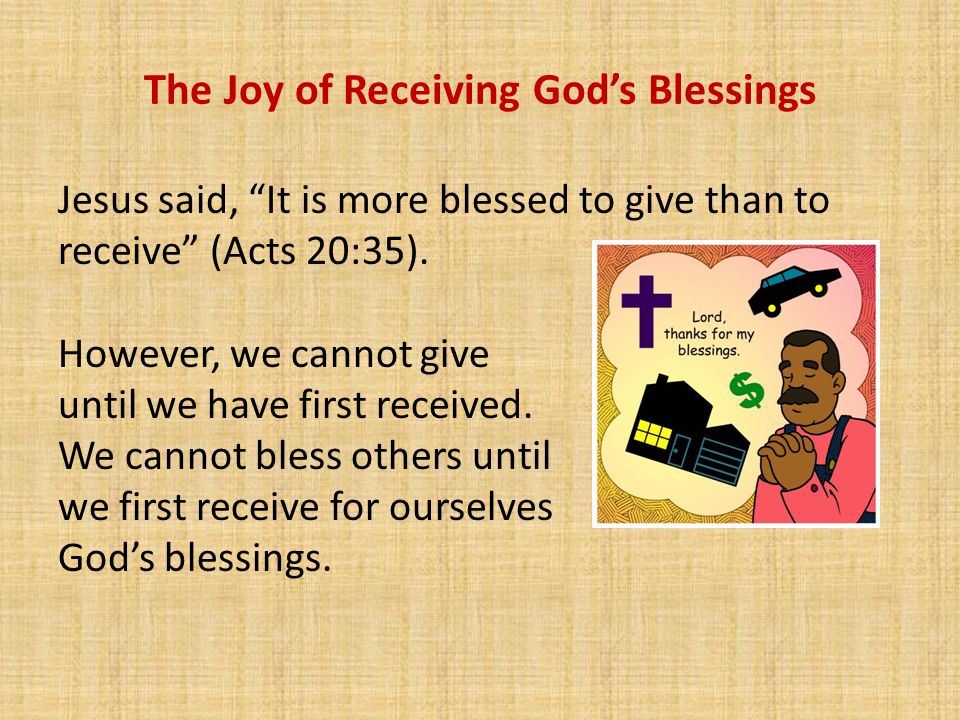
The image above, I scraped from the Internet, and it has an interesting interpretation of Acts 20:35.  I am guessing that is from Reverend Cashflow's page - telling parishioners that it is better to give than to receive, once of course, God has showered you with his largess.  And if you are going to give, well, make sure it is tithing to the church - right?    Maybe that is the fundamental message of that Bible quote - hand over the dough, minister needs a new Cadillac!
Sunday, June 7, 2020

Upside-Down Option? Maybe!


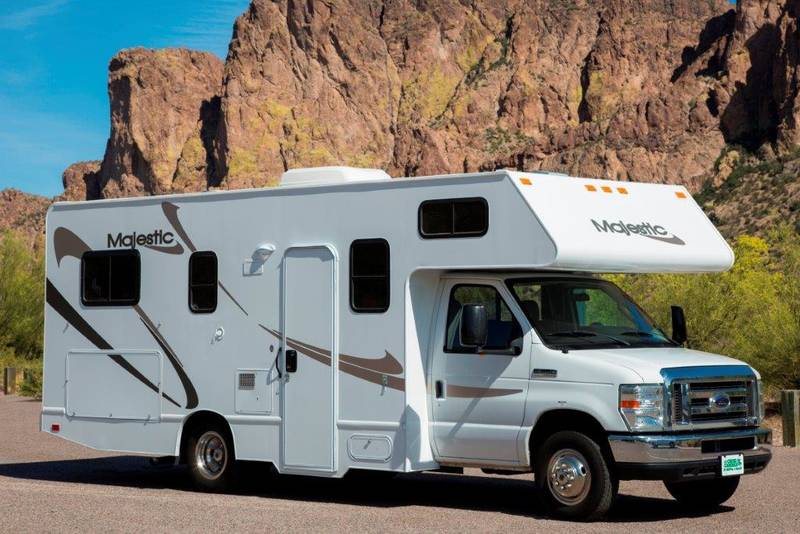
When you are upside-down on a house, a motorhome, or a boat, there may not be much you can do about it - unless....

I ran into a fellow who knows a lot about the RV business, and he buys and sells RVs and makes a little money on the side doing it.  I've met a lot of folks like this - who do this with cars, or houses, or boats, as well.  Every time I see them, they are in a different car, or boat, or whatever.   They are astute salesmen, who know the market values of certain commodities and buy strategically from motivated sellers, fix things up and clean them (you'd be surprised how dirty a lot of people are, and how clueless they are about how to sell something - clean it!).   They then use the item in question for a few months or a year and then sell it, pocketing a small profit and having "free" use of the commodity in question.

It isn't an easy thing to do, and not everyone can do it.  You have to know market values to the penny, find distressed and motivated sellers, and know how to fix small things or know people who can.   My friend told me he trolls Florida and Arizona and other retirement States for retirees or their heirs, who want to unload a motorhome or camper in a hurry.   "They always end up on those States" he says, and there is a lot of truth to that.   Some retirees get sick and realize they can't use - and can't afford to keep - the motorhome.  Or the kids come down to close out Momma's estate and want to get rid of the motorhome that has been sitting in the side yard for a year or two.   So long as they are fairly late-model campers and haven't been sitting too long, they can be fixed up and sold for a tidy profit.

In some instances, however, the owners (or heirs) owe more on the camper than it is worth.   In that case, my friend goes right to the bank - he says credit unions are the most amenable - and explains the situation.   The seller want's to sell, but the rig isn't worth as much as the loan balance.   The bank has been collecting interest payments for several years.  They can risk the owner defaulting on the loan (particularly back in 2008) and losing tens of thousands of dollars, or cut their losses and actually come out ahead if they cut the loan balance and "short sale" the camper.

He walks away with a clear title to a camper that, fixed up, is worth $10,000 to $20,000 more than he paid for it.  Of course, it helps that he has cash to pay for it, so there is no mucking about with loan approvals or fees.  He told me he felt guilty once, flipping a small Class-B within a month for an $11,000 profit.  I told him not to feel guilty, after all he bought something from an individual owner for more money than the owner would have gotten from a dealer or trading it in, and sold it to a new owner, for less money than a dealer would charge.  If he was pissing anyone off, it would be the dealers, who derisively refer to such flippers as "curbstoners" as they are selling cars, trucks, RVs, and whatnot at the curb.

Of course, today, the RV market is going nuts with the "Corona Campers" and my friend isn't buying right now - but might sell the remaining rig he has - good time to sell, when everyone is buying.  Good time to buy, when everyone is selling.  And we agreed that this time next year, there will be a lot of people who rushed into RVing and realized it wasn't for them, and now want to get out, particularly if they lost their jobs and can't make the payments.

So, it may be possible to get out from under an "upside-down" camper, boat, or whatever.  Possible, but not probable.    Like I said, he had better luck with credit unions and local banks.  Large institutions may be less inclined to deal like this, as the mid-level managers don't have the authority to make deals, and corporate policies say not to leave money on the table.   And of course, if you have money in the bank and equity in your home, why should the bank cut you a deal in the first place?  They would be better off going after your other assets.

So while this is possible, I doubt it happens too often.   The usual scenario is that in a vehicle "short sale" the debt is still owed, and either folded into another rig or car, or paid for by other means (or a judgment assessed against the borrower).

Nevertheless, it never hurts to ask, and if you are in financial distress and have more debt than assets, you are technically bankrupt, and thus the bank should realize that you are unable to pay back those debts, and than bankruptcy could result in their seeing even greater losses than a short-sale.   Then again, banks are not known for having a lot of common sense when it comes to managing collateral.  

When they foreclose on a house, for example, many banks will let them sit for months or years before selling them, often losing tens of thousands of dollars in the process.   I've seen parking lots near credit unions with "re-po'ed" cars for sale - at prices higher than blue book!   No manager wants to be seen as "giving away" an asset, when the bank is on the hook for the balance, so they often make poor choices, and the house, RV, car, boat or whatever, will sit for months or years before they finally unload it.  Why they do this is beyond me, but again, it is the middle-manager decision matrix - if he loses money on a loan through re-possession, he gets a bad mark for that.  So they try to avoid a small loss, letting it blossom into a huge one.   People are funny that way.

Of course, the real problem is that banks shouldn't be writing these low-money-down or no-money-down loans in the first place.   It is a lot harder to be "upside-down" on something when you put 20% down, and impossible when you pay cash, or course.  In the old days (a few decades ago) that was the norm - you didn't make crappy loans, and they rarely went to default.  And if they did, well, you had positive equity in the collateral.

So, it is kind of hard to feel sorry for banks for making shitty loans, isn't it?  But every time we talk about tightening up loan requirements, the same loud voices who decry the "evil banks" for "predatory lending" will say that making it harder to get a loan hurts minorities and "the little guy".   I just don't see it.  If anything, these sort of loans hurt the little guy the most.

Well, we can't change the world, here.   But we can change our own behavior by not taking on shitty loan deals.  And if you are really astute and want to invest the amount of time my friend did in learning the ins and outs of the RV business, you might be able to make a buck or two at buying and selling these commodity items.

Myself, I am content to just own one, and use it.

Thursday, June 4, 2020

Why Trump Will Win (Return to Normalcy)

Photograph of a protester prepared to throw a Molotov cocktail ...

Every Molotov Cocktail is another 10,000 votes for Trump - maybe 100,000.

The left doesn't get it.  While Bernie's staff goes into meltdown, attacking each other on Twitter, young people argue that we need to get rid of Trump, so they burn down black neighborhoods and loot them, to prove their point.   And many of these looters don't even live there - they commute to the riot from the suburbs.  I hope they carpool.  Molotov cocktails and arson tend to increase one's carbon footprint.

"We'll show them!" they seem to be saying, "Change has to come, or else!"

Nice theory, but it was tried before in the 1960's.   What happened?  Nixon.

You see, the vast, vast majority of Americans don't live in Detroit, Brooklyn, or even South Central LA.   Take an airplane ride sometime, and marvel at the endless suburbs that ring our major cities, sometimes going on for 100 miles or more.   That's a lot of people.  And most of them don't want to rock the boat, and most of them are appalled at police brutality - but even more appalled by protester violence that has claimed the lives of more people (including police).

When push comes to shove, the vast majority of Americans will side with law-and-order and with the police.   They aren't going to side with anarchy, antifa, proud boys, or buggery brothers or whatever these idiots want to call themselves.  The vast majority of Americans would prefer to crush that, like an ant.

So the New York times gets all in a huff over Trump threatening to bring in the military.  But unless the governors and mayors put a stop to this violence, the vast majority of Americans will say, "Good - and shoot them all in the head, while you're at it!"   People get tired of rioting and lawlessness, and in very short order.  No one has any sympathy whatsoever for someone who burns and steals.  There is no legitimate justification for this.
Maybe it is time the grownups took charge. We have had enough of this childishness from the far-right and the far-left, dominating the political debate. 
The left is making a major miscalculation here - thinking that Americans are going to sympathize with looters and arsonists.   It just isn't going to happen.   And no, "oppression" by the police doesn't justify looting and rioting - and the vast majority of this violence is being caused not by protesters, but by opportunists.

Sadly, the left is falling all over itself to court the looter vote.  Looters don't vote.  They don't contribute to political campaigns, they don't get involved in voter registration drives.  If you ask them, they will tell you the whole system is fixed, so why bother voting?  If they can't have their candidate, then why bother?

The folks living in these cities, seeing their stores and homes burned to the ground are not going to be sympathetic to looters, either, and they aren't likely to vote - and if they do, not for someone who is pandering to criminals.

Maybe it is time the grownups took charge. We have had enough of this childishness from the far-right and the far-left, dominating the political debate.   We have had enough of these wild one-size-fits-all political theories that claim to solve everything "if only" we follow one philosophy.  Not only do these ideas not work, but the odds of having one political philosophy dominate are slim.  And the track record of when it has occurred is miserable.

No one is in love with Joe Biden.  No one feels strongly about him.  GOOD.  That is exactly what we need in government, not feel-good celebrities with cult followings who promise the moon and deliver nothing.   Trump or Sanders - same shit, different day.  Wild promises, wild cult followers, and wild orgy-like mass-meetings that are more reminiscent of Nuremberg rallies than anything else.

Government should be adult-time, not some sort of reality show.  But sadly, the average American has the emotional maturity of a 12-year-old, if that.  Most don't even read at that level.  A staggering number don't or can't read.  This is why my blog gets only a few hundred hits.  If I made a YouTube channel of me droning into the camera for a half-hour, it would generate thousands of hits.  People want things spoon-fed to them, because thinkin' is hard (as is spellin').

Just a thought, but maybe what we need isn't radical change, but a Return to Normalcy.   That was the campaign slogan of "Silent Cal" Calvin Coolidge, and maybe Joe Biden could resurrect it. Because, let's face it, after six months of 2020, we're ready to go back to something even approaching normal.  Please.

Sadly, I am in the minority on this.  Most folks want an "exciting" candidate that they can fall in love with, someone who will motivate them to put a bumper sticker on their car.  Trump understands this - his minions all have Trump stickers and Trump flags and are emotionally in love with Trump, even if they don't understand that his policies probably impact them negatively.   Bernie supporters are the same way - and tearing each other apart over his failed campaign.   Most middle-of-the-road folks I run into are "meh" about Biden.   They'd rather have him than Trump, but I get the suspicion that many are not really too motivated to vote.  I mean, if there is something good on television on election day - a new season of some Zombie show on Netflix - well, you know, priorities.

Meanwhile, Republican voters hold their nose and vote for Trump.  They realize they will get more of what they want from him - tax cuts, judges and justices, deregulation, and so on and so forth, even if he is a buffoon.   Republicans fall in line, Democrats fall in love, and like I said, no one loves Joe Biden.   Poor Joe!

Voting for Biden is making the intellectual decision that putting a Democrat in the White House (even a moderate Democrat) and filling the seats in the House and Senate with Democrats (even moderate and conservative Democrats - and yes, the latter actually exist) will move the needle in the direction you want to go, even if it doesn't take you all the way there, yet.   Letting Trump win, by not voting, will only insure that things will get worse (depending on your point of view, of course).  And no, letting things get really, really bad, isn't going to catapult a leftist like Bernie into office.   We tried that four years ago, right?   Things today can't get much worse, and here we are, with Trump looking at another four years.

And no, if Bernie got the nomination, he would not win - Americans would hold their nose and vote for Trump over a socialist.  Newsflash - Bernie didn't get the nomination, not because, as Jane "I'll bankrupt a college!" Sanders claims, that the "big money PACs" were out to get him.   Bernie lost because we don't like him.  He's a loser, and always has been a loser, who has accomplished nothing in his entire life, other than to cling to a cushy government job.   Sorry, but that's the reality of it, and that's just the problem - the "Bernie Bros" are so delusional as to think that this Senator Nothing from Vermont is Presidential timber.   We need to move beyond delusions.  If you want to put up a progressive, find a successful one, preferably not one with one foot in the grave.

We ended up with Biden as Hobson's choice - there wasn't anyone else in the crowded field who had the experience or had rational ideas.   Andrew Yang?  Case in point - delusional thinking that we could just give money away and that would work.  Grow the fuck up.  And no, he is not some "Silicon Valley Billionaire" - he is a guy who started a test-review company and has a net worth possibly less than mine.   In other words, a middle-class schmuck.  Why do his supporters and the media keep perpetrating this "dot-com billionaire" nonsense about him?  Perhaps it is because we love the story more than the reality.

Therein lies the problem.  Since the vast majority of Americans refuse to grow up, we will see four more years of Trump.  The children in the Trump brigade will vote for him, presuming they can find the polling station and read the ballot. The "progressive" children (like Mrs. "what's a disposal?" AOC) will just pout - like the tykes they are - and refuse to vote at all.

Four more years of Trump - it seems inevitable.   People get the government they deserve.

Why Your Pay Sucks

Monopoly Man Broke Uncle Pennybags Boardgame Character Poster Logo ...
You can make ten thousand or ten million, it never ends up being "enough".

I wrote before about how Wesley Snipes went to jail after being caught up in a "tax protester" scam.  In a way, it was not his fault - he bought into these poisonous ideas that people sell, telling folks what they want to hear - that you don't owe taxes, in this case.  I am sure Mr. Snipes is a decent guy and all, he just wasn't smart enough to realize that when someone tells you something that sounds way too convenient for you, it probably is a lie.

But the rest of us don't feel sorry for him one bit - after all, he made tens of millions of dollars and was "set for life" if he could learn to live on just a few hundred thousand dollars a year - right?   But his case is typical of what happens to movie stars and professional athletes, lottery winners, dot-com millionaires, and so on and so forth.  No matter how much they make, it is never enough.

There is a lesson to be learned here, even for us mere mortals who maybe might make the six-figure salary for a few years in our lives.   No matter how much you make, it never seems like enough - and it always seems your pay sucks.   But it doesn't have to be that way.

When I dropped out of college, I got a job at a hydraulics distributor, filling orders and making hydraulic hose assemblies.   I made a little more than minimum wage at the time,  I recall maybe $4.25 an hour or so.  But I had a car that was paid-for and a small efficiency apartment that I could afford, and I could buy groceries, and maybe a few beers, and life was good.

But it never seemed like enough.  I wanted more and started spending more. I decided I needed a pet - and didn't bother to think of where I would get the money for shots, neutering, pet food, and so on and so forth.   And of course, drugs were involved - I "needed" to spend money on pot, right?

I managed to get a job at Carrier - as a contract technician - making $8 an hour, a princely sum at the time, nearly doubling my pay.   Surely, I would be in the catbird seat, making sixteen grand a year, right?   No, I went out and bought a brand-new car.  And I got a sheaf of speeding tickets and got into an accident, so my insurance rates were more than the car payments.   I wasn't doing better than before - I was actually poorer!

I was taken on full-time at Carrier, but my pay didn't go up too much.  I recall maybe I topped out at seventeen or eighteen grand a year - but the benefits, including health insurance and tuition reimbursement, were nice.  I was able to buy a small house.   I graduated from college and went to work for the Patent Office - for the princely sum of $22,000 a year!

So, now I am making money, right? Well, the cost of living in Washington, DC was high, and of course, I had to go out and buy a brand-new car again.   Duh!   And my driving habits were about the same as well.   So my insurance was murder.

I went to night school and my pay went up over time - to $32,000 a year (back then, thirty grand was like the "six-figure" salary today).   But that wasn't enough to buy a house in Fairfax County.  So I took a job with a law firm for $52,000 a year.  Filthy rich!

Well, I would have been, if I hadn't spent $53,000 a year.  We found we "needed" a host of home improvements, more cars, and restaurant meals - the latter put on credit cards and never fully paid off.  My income rose slowly and after graduation, I got an offer for $86,000 a year.  Rich yet?

Of course not.  We needed to put in a swimming pool!   By then, my income from my own law practice was over $100,000 a year - for a few years, at least.  And Mark and gone from store manager to real estate agent - during a boom time - and we were making good money - and spending it, too.

We did some right things - Mark maxed out his 401(k) as did I, and we invested in some real estate that we fixed up and rented (and later sold, before the market collapsed).  We both started to realize we were on a treadmill, and that no matter how fast we ran, the goal seemed to get further and further away.

I remember back in my college days, visiting a neighbor in our apartment complex.  He had "nice" furniture and new wall-to-wall carpeting.   They were nice folks and I thought they were "rich" because they had nice things.  What I didn't know until later was that they were in debt up to their eyeballs with payments to the furniture store and whatnot.    I thought they were wealthy because they had "things" but they were actually broke - and that lead to them breaking up, a year or so later.

It took a long time for both of us to get off the consumerist bandwagon - and it is hard to leave it behind entirely.   Eventually, you reach a point in life where you realize that all these possessions are just work - work to pay for, work to maintain.   You want less in life - less worry, less need for money.

Suddenly, that one-room apartment I started out in sounds a lot more appealing.   No lawn to mow, no utility bills to pay, no hassles, no worries, no staggering monthly costs - and no room for "things" to accumulate.

People complain about their pay sucking.  They complain their rent or mortgage payment is too high, and that things are too expensive.   This is not new.   Today's generation seems to believe this is something novel visited only upon them - and the news media loves to pander to this idea (Headline in the NYT - "Millenials Unluckiest Generation Ever!").  But if you go back through time, you will see that "my pay sucks!" and "everything costs too much!" are cries that echo through the ages.

In the 1960's, we called it the "high cost of living" and in the 1970's, "stagflation".   My parent's generation called it "the depression" - they were so lucky having that and World War II.

The secret, I believe, it not necessarily to want more, but to live on less.  Because as my example illustrates, it may be possible to make more money if you apply yourself, but it isn't possible to make an infinite amount more.  And as Wesley Snipes' experience illustrates, even millions isn't enough, if you desire billions.  Somewhere along the line, you have to learn to live within your means.

And the earlier you start, the better off you are.  Some people get this at a very early age.  I'm just sorry I didn't.   I could have been far wealthier, but more important, far happier and less stressed in life.

You pay always sucks.  Get over it!


UPDATE:  Some folks argue that their pay sucks because someone else is making more money than they are and obviously, those folks "took away" the money from them.  But if you go through the sheaf of receipts and credit card statements in your life, you'll realize that you gave away your money to those folks, in terms of interest payments and bright shiny objects you had to have.

Others argue that if the unions were brought back, we'd all make more money.   Nice idea, but I worked in union plants in the heyday of the unions.  A forklift driver at GM was making $42,000 a year in 1980, which is over $130,000 today.  Guess what?  Those folks back then would tell you they were "underpaid" and go out on strike.  Bear in mind they had full medical coverage, even in retirement, and also had a fully-funded pension plan.

Why did they feel broke?  Because while they could afford  an Oldsmobile, their neighbor had a Buick.   They spent as fast as they earned, often borrowing money to do so.  When they got laid off (and when the factory eventually closed) everything got repossessed.   They were making enough money to create dynastic wealth, but spent it all on depreciating assets - usually things with motors attached to them.

You can pine for massive social change - it ain't happening.   You can try to make more money (and probably succeed, if you apply yourself).  But if you spend more than you make, the treadmill will never cease.

Wednesday, June 3, 2020

Hitch Carriers - A Bad Idea? Generally.

Putting a lot of weight at the very end of your vehicle is usually a bad idea.

When traveling we see a lot of people try to create extra cargo room by putting one of these hitch cargo carriers on the back of their car, truck, or SUV.  In some instances, the weight of the cargo and the carrier is such that the front of the vehicle is pointed skyward, and the  headlights are blinding oncoming cars.

Are these a good idea or not?  Well, the problem is, when you put such weight so far behind the rear wheels, it acts as a lever, and reduces the weight on the front wheels.  A condition called understeer can exist, where you turn the steering wheel and nothing happens - or very little, anyway.  On dry pavement, maybe you can get away with this - the adhesion of the rubber on the tires will still provide some grip.  But on wet, snowy, or icy pavement, the increased understeer could mean you lose control of the vehicle.

Some folks put these on the back of motorhomes and trailers.  For a motorhome, the weight of the vehicle is such that unless you are loading 1,000 lbs back there (and we've seen it - with motorcycles and such) it isn't going to affect the steering too much, depending on the load and the size of the vehicle.  A motorcycle hanging off the back of a Prevost might not be noticeable.  On the back of a 23-foot Class-C, it could be a white knuckle nightmare.

On a trailer, it is a different story.  I related before how we put a bike rack on the back of our first trailer - an 18' Prowler.  The lashup was never good to begin with - for some reason, Toyotas make lousy tow vehicles.   When we added the bike rack and bikes, it went from white-knuckle driving to nearly wiping out - sway induced by poor trailer balance.   You need at least 10-15% of the trailer weight on the tongue of the trailer.  Any less and the trailer is "tail-happy" and will sway out of control.  It is not controllable, either, just as a tail-happy airplane is doomed to crash.   You cannot counteract the sway, and in fact, whatever you try to do to stop it, usually makes it worse   It is a dynamically unstable system.

And yet we see people with these racks, loaded up with coolers and what not, swaying down the highway, the first strong breeze, passing truck, or rainstorm ready to put them upside-down on the side of the road.

Now, knowing all that, you would think I would know better than to put something on the back of our trailer.  But Mark wants to stay at some "Harvest Hosts" en route this summer - wineries, breweries, museums, and farms which allow you to stay overnight for free.   The caveat being there are no hookups and no electricity, so if it goes up to 90 degrees, you will suffer.  No problem, bring our old Honda EU2000i generator, which will run the air conditioner (soft start) but not much else.  In fact, nothing else.    But where to put it?

The Escape people put a class-III load receiver on the rear bumper of the trailer - this is just inviting trouble!  The hitch has a label on it "Capacity 150 lbs."   Now, you know a Class-III load receiver is generally rated for 5000 lbs towing capacity and 500 lbs hitch weight (or so - real capacity is determined by the vehicle).   So clearly the hitch itself could carry more weight, but they don't want you putting that kind of weight on there as it would make the trailer unstable.

The Escape 21' weighs about 5,000 lbs, which means we need to have at about 500 lbs on the tongue of the trailer.  As you can see, even 150 lbs on the other end of the trailer could reduce this to well below 10%, assuming the weights are evenly positioned around the axles.  Most trailers today, however, are designed with the axles further aft, to insure that more weight is on the tongue.  I assume the Escape people did the math on this and realized 150 lbs is about the max you want to hang out on the end of the trailer.  Let's hope, anyway.

So, against my better judgement, we set out to do this.  The Honda generator weighs about 45 lbs, so any carrier and enclosure has to weigh less than that.    We visit Lowes, and they have a six-foot-wide all-steel "cargo carrier" that I cannot even lift.  It must weigh 100 lbs easily, just by itself.  Already, I realize why people are driving around with these like they are doing wheelies - the rack alone weighs a ton!

But we find, at Harbor Freight, an aluminum rack that is 42" wide and I can lift it with one hand.  It weighs only 31 pounds and moreover, is the least expensive option at under $70 with their online coupon deal (I hate these - one reason I never buy anything at Harbor Freight is that I feel I am being ripped-off unless I shop with a coupon!  Just put real prices on things - sheesh!).   So far, we are up to 76 pounds.

If we leave the generator on the back of this rack, it will likely be stolen, and also exposed to the elements.  Some people make generator enclosures, but they cost more than the generator, in some instances.  We found this diamond-tread aluminum truck tool box at Lowes.  Kinda pricey, but good looking.  We cut out 12" x 10" holes in the back and riveted air conditioning vents (painted black to match) over the holes.  I added a 12" electric radiator fan to circulate air and keep it cool,  The fan will run off the generator's 12V output, which I don't normally use, and this way it will run whenever the generator is on.  A local welding shop welded on a 1/2" nipple to the exhaust, and with some galvanized pipe and a Briggs & Stratton lawnmower muffler, the exhaust vents outside the box, through a hole made by my hole saw.

Why do we need all these vents in the box?  Seems moronic to buy a box and then cut huge holes in it.  But the deal is, you can blow yourself up - or blow up your generator - if it is not vented properly.  The tool box came with a sticker saying, "Do not put cans of gasoline or gasoline-powered tools in this box!" and if you think about it, you can see why.  From the factory, the box is watertight - nearly air-tight in fact (a smother hazard for children).  If you put a can of gas in there and left it in the hot sun, the gas vapors could leak out and fill the tool box - a perfect stoichiometric ratio of fuel and air.  You hit the latch to open the box, and it makes a spark to ignite this and.... Blammo! it goes off like a bomb.

The other problem is the generator is air-cooled, so if you don't have fresh air going into the box, it will overheat in short order and goodbye generator.  So two large vents and a fan are needed, at the very least, to keep things running smoothly.  Hopefully, it keeps out most of the rain, and the thieves. 

It fits neatly on the aluminum rack and weights maybe 20 lbs, so we are well under the 150 lb limit on the hitch.  Of course, there is the matter of how far it sticks out, as even a small weight on a long moment arm can leverage the tongue of the trailer.  Spend some time at a child's playground on the see-saw and you'll see what I mean - a 50 lb child can leverage a 200 lb man, if the see-saw is adjusted properly.

We made a few other adjustments - adding a courtesy outlet to the box as well as a stick-on LED light inside.  I also bought some stove-top firestop fire suppression canisters to mount inside (found cheaply on eBay), "just in case".

So hopefully this will work.  I also put a cord out the side with the requisite threaded RV coupler, which connects to the main power supply port on the trailer - which is helpfully located on the rear of the trailer, near all of this.  All told, the whole deal probably cost close to $500, but less than what some others want for factory-made boxes.

The key, of course, is whether it destabilizes the trailer at all.  If it induces even the slightest amount of sway, it gets tosssed.   I am not going through that again!

So, are these cargo racks a bad idea?   They certainly can be, and what I see going down I-95 is certainly scary enough.  The key is the weight.   These heavy steel racks that are six-feet long are heavy enough - and encourage you to load more and more stuff on them.  I see people putting coolers on these, the size of a child's coffin.   Ice and beer - at 8 lbs per gallon - you could be talking about hundreds of pounds of weight at the most inopportune location.   Worse yet, some people put a "stinger" hitch extension on these, so they can open their van doors or pickup truck tailgate.   This creates additional leverage to the point the front wheels are touching the ground only every third revoltion!

If the front end of your car is pointing to the sky when you get done loading one of these, something isn't right.

It is pretty easy to overload a vehicle by putting weight on the very end.

I would stick to the smallest and lightest rack, and put something lightweight on it, rather than a heavy object.  You want to move pillows?  Good idea.  Bricks?  Probably not.

There are, of course, other options.  You can use a roof rack and a roof box - which are not cheap, either.  Most roof racks are rated only for 300 lbs or so, probably to prevent the vehicle from becoming too top-heavy and rolling over.

The ultimate option, of course, is just to have less stuff to haul around!

Duesenberg Trunk SOLD!!!! - Auburn Cord Duesenberg (ACD) - Antique ...

Oddly enough, in the early days of the automobile, cars did not have trunks. Instead, many had a luggage rack which would fold down in the back which a steamer trunk or even a custom trunk (such as on this Duesenberg) could be lashed to. A hundred years later we've gone back to the same thing!


UPDATE: A reader notes that in the illustration above, you can't see the license plate.   This is probable cause to be pulled over and possibly ticketed.  Some of the fancier carriers have licence plate brackets and even auxiliary taillights.   For someone who has a "mobility scooter" permanently attached to their car, this may be a good idea.  Sadly, those sorts of contraptions are usually the ones driving around nose-high, overloaded.

In general, I think these cargo racks can be a really bad idea.  If you do get one, go aluminum and keep an eye on the weight!


UPDATE:  We have nearly completed our generator enclosure.  We are going to add some more vents and maybe a second fan.   But it seems to work well and doesn't affect the handling of the trailer.  All set for summer!

UPDATE:  Oddly enough, after going to all that effort, we ended up using the generator only once or twice - usually to cool the trailer while we were shopping in WalMart (a Honda eu2000 will just barely run the air conditioner and nothing else).  We may leave it behind this summer.  We'll see.