Saturday, February 25, 2012

Coke Heads

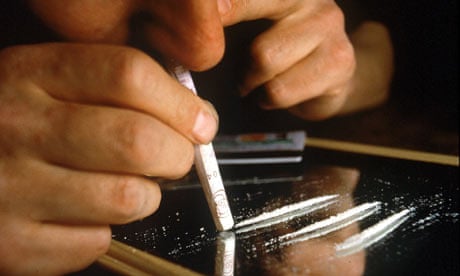
Drug users can be annoying as friends, employees, fellow workers, or family members.  Coke heads are probably the most annoying of all.

Cocaine is an interesting drug.  The main problem with it (and methamphetamine) is that it strokes the ego so much that the person taking it thinks they are a bloody genius, and moreover, whatever they decide to do is just fine.

And of course, it is addictive.  A hit of coke makes you feel like a new man, the saying goes, and the first thing a new man wants, is another hit of coke.

Coke turns people into first-class assholes, and worse, they create a trail of wreckage wherever they go, and the rest of the world has to clean it up.

When I was growing up, drugs were pretty freely available.  About 80% of the Senior class of my high school had at least tried marijuana, and I suspect about 30% were regular users.  At about this time, the Disco era started, and cocaine use started to take off.

Cocaine was and is, staggeringly expensive, which leads to the first problem. The users will bankrupt themselves to get it - and then go about trying to bankrupt you - or their company or business, or wherever else there is money to be found.

I had a friend who was a carpenter, and he owned his own business and owned a home (which was pretty impressive for a 23-year-old) which was a duplex, so he rented out the upper level and actually had a pretty good gig going.  He smoked pot and drank beer, but it never interfered too much with his life.

And he had a sweet girlfriend, who was a nurse, and we all assumed they would settle down and get married and have kids and do that whole "happily ever after" thing.

Cocaine had other ideas.

He got into coke through some other friends.  He liked to go to bars and such, and it was available there.  He tried it, and it made him feel like a million dollars.  He was a genius, suddenly, full of great ideas and business plans, and nothing - nothing - could possibly go wrong.

Of course, the cost of the drug was a problem.  He and his tenant (who was also into it, and possibly the one who turned him onto it) started holding weekly poker games.  They would invite over other folks, such as myself, and then try to get us drunk and take us for everything we had.  I saw this going down and bowed out of it quickly.  Others were not so lucky and I saw one of his "friends" writing checks for hundreds of dollars for gambling debts.   Some fun.

He dumped his girlfriend shortly thereafter.  She was alarmed about the coke use and wanted him to stop.  Her ideas of settling down and getting married didn't include coke.  And my friend decided it was easier to marry coke and dump the girlfriend.  Besides, he was a hot young dude, and could pick up "girls" whenever he wanted to!

And by "girls" I mean 15- and 16-year-old girls from the country who thought that this guy "from the big city" who owned his own pickup truck, was pretty cool.  At that point, he and I went separate ways.  Underage girls is a line that I don't cross.

But before that, the signs were there for everyone to see.  I recall he had a party once, and within a hour, he and several of his friends disappeared.  I stayed on for a while, but slowly, everyone filed out.  I was the last one left. I finally found them all, in the back stairwell - him and his three coke friends, all talking 100 miles a minute right in each other's faces.

Cokeheads do weird shit like that - they will hang out in the least desirable places, just to do their drug.  Restrooms and the like seem to be popular.  Icky.

Whatever happened to my friend, I do not know.  He lost his business, over time, and he seems to have disappeared from the face of the earth.   I'm not sure I want to find out, or care.

In the workplace, cokeheads are very good at disguising themselves.  Management (particularly the inept kind) initially is enthusiastic about the coke head.  "What a go-getter!" they say, so pleased to see an employee brimming over with ideas and enthusiasm.  But beneath the veneer of cheer-leading for themselves, the coke head really has no real concrete ideas, and nothing to offer other than general enthusiasm and an aptitude for taking credit for other people's ideas. They are brimming over with bullshit and not much else.

Unfortunately, many companies look at drug use as something only lower-level employees engage in.  But cocaine use can spread to upper management, professionals, and the like.  Drug-testing is one good way of preventing this problem, of course.  But while companies are willing to drug-test truck drivers and hourly workers, they often are more reluctant to test CEOs and COOs, even if they represent more of a risk to the company and may in fact me more likely to be abusing drugs.

So what's the harm of the coke head?  Well, at first, they may appear to be creative, funny, and dynamic.  Indeed, in Hollywood, cocaine use was a real problem - but not recognized as such - for a long time, and even today.  Entertainers and writers would argue that cocaine would make them more creative and provide them with more energy.  And in the early stages of the drug's use, this might even be the case.

But over time, the cokehead has less and less to contribute, and starts "phoning it in" big time.  And you can tell when a Hollywood movie, or an entertainer, or a comedy skit, is being done by coke heads, over time.  It stops being funny in short order.  And eventually, the coke head's life starts to spiral out of control.

But few want to admit to this, of course.  Because the number one problem with cocaine, is that you feel you are not only in control, but in super-control of your life.  The drug fogs the part of the brain that is telling you to get off the drug.

To non-drug users, cokeheads are annoying as shit.  They are so buzzy all the time, but contribute little or nothing to work or family life, and eventually end up dragging everyone down.  And eventually, they resort to thievery - on a petty or grand scale - to fuel their drug habit.

How do you deal with a coke head?   You don't.  You have to walk away - completely.  If you have friends or family members that are into coke, just leave, period.  Even if it is a spouse or friend, the best thing you can do is to salvage your own life and not sacrifice it on the altar of saving someone else's.  Interventions and other techniques simply don't work - and only feed the attention-whore with more of what they really want.

It is only when people desert the coke-head do they ever realize (if ever) that the drug is doing them harm.  By sticking around - and being a target for their various forms of abuse - you are not "helping" them, but enabling. Just leave.

If you work for a coke-head or have a coke-head fellow worker, it is tougher.  You have to find a new job, plain and simple.  The problem is, management, as I noted before, may view the coke head as a "real go-getter" and view your complaints about the coke head as sour grapes.  And in fact, management may be doing coke as well.  It happens.  Either way, you work for a company with very shitty management, and things will go South eventually.  So finding a new job is not a bad idea. Find one where they drug-test.  Everyone.

Of course, it goes without saying that crack is just more of the same, only worse.  I recall another friend going down that road - sacrificing a marriage, with children, for a crack pipe and a series of brief highs.

And yes, all of these people started out smoking pot.  But Marijuana is not a gateway drug and donchuforgetit!  And of course, po-theads are never annoying in the workplace or as family members, right? 

Drugs in general - and that includes alcohol - are a dead-end.  People like to say that they have their drug habit under control, and that they just need their drug to "relax" or "be creative".   But that argument sort of negates itself.  If you need a drug in order to function, then by definition, you are not functioning very well.  Maybe a better approach is to figure out why you are stressed and uncreative in the first place.

Just a thought.

See Also:

Invoicing Scams

Do people pay bills they don't owe?  Yea, it happens all the time.


Invoicing scams have been around a long time.  They rely on the disorganization of people and companies to generate income from nothing.  Sometimes they use insiders to perpetrate fraud.

For a small- to medium-sized company, the scam works like this.   An invoice arrives, addressed to "accounts payable" for some office supplies.  It may be stamped "overdue" or "payment due" and may be for a fairly trivial amount of money - a few hundred to a few thousand dollars.

The new Accounts Payable clerk, being new on the job, pays the invoice without thinking, and the fraud is never noticed.   Or, for smaller companies, the Accounts Payable chores are handled part-time by a secretary or clerk, who doesn't think to question the invoice.  No office supplies were ordered or shipped, just an invoice shows up, and ends up getting paid.

In some extreme examples of this sport, the person working in the accounting department is actually in on the gag, and gets a percentage of the take for approving and paying the invoice.   In still other scenarios, a crooked company employee signs off on the invoice as "approved for payment" even though no services or supplies were ordered or sent.  Again, the crooked employee splits the proceeds with the outside "vendor".

I saw this firsthand in the Patent business, where an inside counsel was approving invoices from an outside attorney - for Patents that were never written or filed.  Both the inside counsel and outside counsel were fired and their careers were, well, short-lived.  But not before they skimmed a few hundred thousand dollars from their company.  And this sort of thing goes on in other companies, undetected.

Sometimes this scam is used for "legitimate" services or supplies.  A company may actually ship a load of office supplies or copy paper and then invoice the company.  No one actually ordered the supplies, but since the company accepted the shipment and used the materials, they end up paying the invoice.

Another gag is to send out a subscription to a trade journal, magazine, or newspaper, and then invoice the company with an "Order Number" and the like.  Legal journals do this all the time, using the addresses that lawyers might provide to the journal when they attend a seminar.  Of course, nowhere is it listed that the "subscription" was a free trial, and that the company is in no way obligated to pay.  But once the invoice arrives, accounting pays it, and suddenly the firm is getting the journal every day.

Individuals also get such invoices, and often pay them without thinking.  In the Patent business, there are a host of off-shore companies that send official-looking invoices to Patent applicants, that appear to be from the Patent Office.  These invoices, which sometimes go into the thousands of dollars, are worded in vague and technical-sounding bureaucratic language.  A $2536 fee is now due to register your Patent!  And many applicants, thinking this means their Patent is now allowed, will pay the fee, not realizing they are sending over $2500 to a Hong Kong company that has agreed to "publish" their Patent on a CD-ROM, which is meaningless.

Or, they send invoices for maintenance fees, which inventors pay, not realizing that the company, for the fee specified, agreed only to send the FORM for paying the maintenance fee, and moreover, is not affiliated with the government in any way.

How do you avoid invoicing scams?  If you are running a small company, be sure that each invoice is "signed off" by an employee and confirm that the materials or services were in fact, ordered.  At the very least, you can hold that employee responsible for any losses and then fire them or even prosecute.   Paying invoices without approval from someone other than accounts payable is risky.

Most larger companies only pay invoices to approved vendors, which prevents the drive-by invoice from being paid.  Before a vendor can be paid, they have to be approved and vetted, to make sure they really exist and are not just a criminal entity sending out invoices at random.

Use your accounting software to track which employees are signing off to what.  If you see one employee that seems to be approving a lot of invoices, you should check to be sure that the money being spent is in fact going to real products and services.

If you are an individual and you get an invoice or bill in the mail which doesn't look right, question it.  Don't be cowed by threats of legal action or the like.   And don't fall for "sound alike" company names or faked-up forms or letters that sound like they are from government agencies, when in fact, they are not.

I recently started getting this law journal in the mail.  It is not a bad newspaper, printed daily, with all of the court decisions in Georgia, as well as some excellent articles.  But it was sent to me without any authorization or subscription.  I presumed it was one of those free trial deals.  A month later, I get a "bill" for my "subscription" which I throw away.  Two weeks later, I get a "Final Notice" from their subscription department in the mail.

Of course, I pay neither.  And I called them to let them know what I thought about their marketing technique.

The local paper did the same thing - sending me "free" copies of the newspaper and then sending "invoices" for a subscription.  Not a nice letter saying, "We hope you enjoyed your free trial subscription, perhaps you would like to subscribe?" but an INVOICE stating that I now owed them money.  It is a rotten way to do business.  And yes, I called them to let them know.

20 years ago, a similar thing happened to me in Fairfax County.  They started dumping County newspapers on my doorstep at my apartment building.  Everyone in the building got one, and I assumed it was some promotional subscription deal (years earlier, as a kid, I used to deliver such papers - once a year, we would deliver sample papers to EVERYONE to try to increase circulation).  Two weeks later, I get a bill for the "Subscription" that I "Ordered" and then later on, "final notices" and threats to go to collection.

I called the paper and actually found the name of the Publisher and called him at home, which did not please him too much.  We finally got to the bottom of that deal.  He had hired a company to go out and solicit subscriptions.  The company paid people to go door to door to get subscriptions.  They got a commission on every subscription they sold.

So, not surprisingly, these folks they hired (from a labor pool company or an ad in the paper) went to apartment buildings like mine, wrote down the name and address of everyone in the building (from the mailboxes in the lobby), collected their bonus checks and moved on.   In the meantime, the "subscribers" are now inundated with newspapers and dunning notices from the subscription department.  This is why a lot of people don't put their names on their mailboxes, either at home or at an apartment.

Just for the record:  You are not obligated to pay for things you did not order.  You do not have to pay for newspaper or other subscriptions you never ordered.  You do not have to pay for merchandise that is shipped to your home that you did not order.  You do not have to pay bills for things you never bought or ordered or consumed.

Today, of course, this technique is morphing to the Internet.  People pay bills for virus protection services they never ordered and never got.    A pop-up window warns them their virus scanner is about to "expire" unless they pay a fee.  Before you whip out your credit card, think long and hard about this.  In most cases, such virus scanners are unnecessary and in fact may slow down your computer.  Free or shareware scanners are available online, and of course, most "viruses" are spread through social engineering, not computers, so just changing your online behavior often is the best solution.

But it goes without saying, if you see a bill or invoice that doesn't look familiar, don't pay it without really understanding it, first.

Friday, February 24, 2012

Buying a Home for Your Things - Dumb!

Do you need a house for all your things?  Owning less things is a better idea.

One of the biggest mistakes I've made in my life - and one I see a lot of people making - is buying a home for their crap.  No really, people think this way - I need a house for my furniture, clothing, boxes of crap, and of course my cars.

Or they buy a vacation home with a dock, so they have a place for their boat.  A $300,000 house so they can park a $50,000 boat.  Makes sense, doesn't it?  Particularly when you calculate in the overhead and carrying costs.   Ouch!

When a developer knocked on our door and offered us $300,000 over market value to vacate in 30 days, we panicked, and said, "we need to find a house to live in!  We need a place for all our stuff!  Our furniture!  Our cars!  Our boat!  Our precious collection of Elvis memorabilia!"  OK, maybe not the last one, but the rest.

And so we bought a house - a big one - and filled it up with our crap.  The owners of the house sold it and built a larger house to put all their crap in, because they had overfilled a four-bedroom, five-bath, three-car-garage house with finished basement, with crap.

How do you do this?  By valuing stuff over ideas and experiences.  They had every piece of electronics they ever had bought - tape decks and record turntables, plus old televisions.  "Well, that's still good, let's put it in the guest room".  And furniture - their own, their new stuff, their parent's stuff - it filled up even the new house.

And clothes - she kept every dress and outfit she ever bought, even though, as a retiree, she would be wearing little else than golfing togs for the rest of her life.  And most of it didn't fit, was wildly outdated, or just worn out.  But they needed "more closet space!" to put it all in.  How did our ancestors get by with the tiny closets they had back then?  Answer: They had less crap and more fun.

I got off the bandwagon, but only after making an expensive mistake.  I realized that "things" were weighing me down, financially and psychologically.  After a while, you start to worry about "things" - where did I put that?  Will someone steal it?  Will it get broken?  Will it get damaged?  I paid good money for that, I need to preserve it!

But in most cases, the junk we buy is just that - junk.   Stuff you use and then should get rid of by selling or throwing away.  But today, we keep.  And we live in huge houses to keep it all.

I see this here on the island - where retired couples live in four bedroom houses filled to the brim with furniture, clothing and stuff.  When it comes time to downsize, they freak out.   "I can't let go of this stuff, it has sentimental value!"

By then, it is too late for them.  And perhaps by then, hoarding disorder has set in.  And I think that is the real problem - if you don't renounce "stuff" by a certain age, you will become a hoarder later on.

Eventually, you die, and your kids throw it all away or sell it at a garage sale, or worst of all, rent a U-haul and haul it off to their over-stuffed house and add it to their pile of crapola.

It is hard to get off the "things" bandwagon.  Probably the most difficult thing you can do, period.  I recall my Dad looking into a retirement condo.  It was a great idea - two bedrooms, an eat-in kitchen, with a porch overlooking the Rockies.  But the idea of downsizing was problematic.  All their friends had big houses chock full of stuff!  Living in a retirement apartment would seem like "giving up" or giving in, or worst of all - being poor.

So he bought a split-level ranch home that was mostly stairs and the week after closing had heart surgery and wished he had that one-level condo with handicapped access.

The joy of LESS STUFF is multifold.  First, it frees up capital for investing and living on.  Selling off junk raises money, period.   Second, you can live in less space, which costs less.   So your money goes further and you aren't paying property taxes and utility bills (and a mortgage) on hundreds of square feet of storage space.  Third, you can now DO THINGS instead of just OWNING THINGS.  Freed of the material, you can take that trip to Europe that you always wanted to do, and see the world.  Or just goof off at the beach all day.

But alas, many folks feel they can't leave their things behind, and never take that trip.   One friend turned down a trip to Florida on the premise that he had to stay home and make sure the pipes didn't freeze.  Does he own the house, or does the house own him?

How do you know if you have too much stuff?

1.  Are there more cars than people in your house?

2.  Are there more bedrooms than people in your house?

3.  Are there more bathrooms than people in your house?

4.  Do you have boxes of things that you don't even know what is in them?

5. Do you have multiple closets of clothes?

6.  Do you keep old electronics around on the premise that "someday I might use that?"

7.  Do you have an alarm system or worry about people breaking in and stealing your stuff?

If you can answer YES to one or more of these things, then maybe the things you own are owning you.

We come into this world with nothing and leave the same way.   Hanging on to things is a futile attempt at immortality.  Use things, and then sell them or discard them.  But accumulating is never a very good plan.

And if you find yourself buying a house that is larger than you need, just to house your "stuff" then maybe you might want to think why - and where this is going.

Because in the end, possessions are just a form of slavery.

The Material is Mortal Error.

* * * 

Exercise:

Think of all the stuff you own in your life.  Think of the most precious thing you have - some collectible, keepsake, memorabilia, a fancy car, watch, jewelery or item of sentimental value.

Now think of what your life would be like without this item.  It is hard, but try to envision it. 

Would your life be worse off, about the same, or perhaps even a little better?

Would your life be horribly worse without this one particular "thing" in your life?

Now think about the most important person in your life and how your life would be without that person in your life.

How do the two compare?  There really should be no comparison.

Apply this to the lesser important "things" in your life, and very quickly, you realize that "giving up" on stuff isn't that hard to do.  And in fact, it is liberating.

Do You Need A Safe Deposit Box? No.

A safe deposit box, like a storage locker, is just an additional expense you likely don't need.

When I was younger, we had a safe deposit box.  Why?  Well, my parents always had one, and it seemed the responsible and adult thing to do.  What do you keep in it?  Well, your valuable papers!  Your expensive jewelry!  Your gold coin collection!  Your stock certificates!

Or maybe not. 

Very few papers are all that valuable.  If the deed to your house is recorded at the County Clerk's Office, having the recording copy is not such a big deal.   Even if you lose it, no one is going to say you don't own your own home.   And no one wants to steal such papers, either.  A small house safe (with a good fire rating) is probably a better bet - it pays for itself within a year (compared to safe deposit box rental fees) and can hold any papers you think are that important, such as your birth certificate and passport.  But in reality, even these can be obtained if the originals are lost.  Being paranoid about documents is really kind of silly.

Things like Wills, Medical Powers of Attorney, Durable Powers of Attorney, and the like are important documents.  But a home safe is more than adequate in most cases.  If you had an attorney draft your will, they might keep a copy in their files.  Or you can make multiple copies (with original signatures) and keep them in different locations, if you are that paranoid.  For most middle-class people, however, a Will is really unnecessary, as most properties can pass by right of survivorship.  Even if all copies of my Will were lost, much of my Estate would transfer as I have indicated anyway, as my retirement accounts, bank accounts, cars, houses, etc. are all in joint tenancy with right of survivorship.

If you have made your estate more complicated that this, ask yourself why, and why you are relying on a Will (which can be challenged) to transfer assets, when there are other ways.

Our local hospital keeps a medical power of attorney on file.   Some financial advisers recommend keeping original signed copies in your car.  If you are traveling and your partner is injured, you need access to these documents right away (if you are married, this point is moot).

What about your expensive jewelry?  That diamond necklace that you don't dare keep around the house, lest the crack addicts steal it?  Well, if you own something that you think is always on the verge of being stolen, I suggest you sell it, or move to a better neighborhood.  Fancy jewelry is nice and all, but if you are too scared to keep it and wear it and have to keep it locked up all the time, what is the point?  And as an investment, you are probably better off selling it and buying some equity or bond that generates income.

As a rule of thumb, I think it is a good idea to never own anything that, for your income level, you could not afford to lose.  Particularly tiny things like watches, jewelry, electronics and the like.   A $5000 (or $50,000) Swiss Watch is a nice toy - for someone making a Million dollars a year.  But it is just unnecessary stress for someone making $100,000 a year.  Simply stated, you can't really afford it, if you can't afford to lose it.  You're just playing at being rich, which is short-sighted.

Gold coins and collectibles are usually bad "investments" as historically, they under-perform the stock market.  Even gold, with its meteoric rise from 2005-2010 (but relatively flat since then) is not big money maker.  A 200-300% gain is nothing spectacular, over time, particularly when it can go down just as quickly.  And if you have to pay rent on a place to keep it?  That sort of adds a carrying cost.  Physically owning minerals can be the most expensive way to invest in them, anyway, as you have to pay a premium to buy them and sell for below market when you sell.  Dealers want a taste at either end of the transaction.

Physically holding stock certificates, other than as wall decorations (and some are rather attractive) is nonsense today.  You can keep your stocks in an online trading account, or on the "book" of most companies.  Not only is it safer, it is easier to buy and sell when the time comes.  Physical stock certificates, when lost, can be a pain to replace - and your ownership even then is determined by the book entry of the company, not your physical ownership of a piece of paper.

Safe deposit boxes end up like storage lockers.  People put things in them and then forget what they put there.  And then when they finally go to look at them, they realize what a load of junk they have in there.

I gave up on the safe deposit box about 15 years ago.  It just seemed so unnecessary for someone in my income and wealth range (average schmuck).  I will leave them to the folks with stolen Nazi gold bars and the proceeds of that bank robbery or diamond heist.  Because frankly, I can't think of any real need to pay $100 a year or so to store a lot of junk.

Thursday, February 23, 2012

The Music Industry


The music industry is probably the first serious marketing exploit that most young people interact with.  The Music business takes talentless hacks, packages them into a salable commodity based on emotional hooks and posturing, and the sells it to kids, at a huge mark-up.  It is only years later, if ever, that most people realize they were snookered.

The Music Industry is an oxymoron.  Music is art, not an industry, and when someone takes art and makes it commercial, in general their intentions are not good.  They are taking something that is basically free or inexpensive, and hyping the price into the stratosphere.

Mankind has always had an affinity to music, which seems to calm the brain and encourage creativity.  But until fairly recently, not many people made much money in the music "business." Early composers never made very much - Mozart died broke and was buried in a pauper's grave. Musical performers were usually itinerant and traveled from town to town, hoping to play a few gigs and get fed and maybe a few coins.  You never let your daughter marry a musician.  The Rock Star, as we know it, did not exist.

The emergence of mass media, first in the form of the Victrola (record player) and later in the form of radio, lead to the establishment of major bands, singers, performers, record companies and record labels.  Prior to that time, if you wanted to hear music, well, you pretty much had to learn a musical instrument and then play it.  Music was home-grown and home-made.  Perhaps a few superstars existed - such as Jenny Lind, "The Swedish Nightingale" who was heavily promoted by P.T. Barnum.  But most music was local and homegrown, before the emergence of media.

But by the 1930's, musical superstars were emerging, as a single performer could perform for millions at a time, over the radio, and sell millions of copies of his songs, via records.  Prior to that time, a performer could hope, at best, to sing to a few hundred at a time, at most, and maybe a few thousand, over a year.

And early on, record companies and radio networks realized they could take a lion's share of this money.   A successful performer back then might make tens of thousands of dollars (today, Millions) but the record companies and radio stations would make Millions (today, Billions).

And early on, the record companies realized that the largest audience for their product was young people.  The dawn of the youth culture was emerging, and an entire generation defined itself by the music it listened to - music that often annoyed their parents, which often was the point.  Jazz and Big Band music seemed modern and hip.  And one way to be "with it" with your peers was to be sure to select the same popular songs they liked as well.

But another trend emerged early on.  Despite being an aural media, the music business is very visual as well.  Successful music acts, even back then, had compelling stories behind them or charismatic band leaders.  Bobbysoxers went nuts over a young Frank Sinatra not only because of his golden voice (or in spite of it) but because of his exuberant sex appeal.  That is why they screamed so loudly - 30 years before the Beatles.

After World War II, the process accelerated.  A new generation of even more affluent youth was arising, with more money to spend on music, and a need for even more compelling imagery and posturing.  Rock and Roll became the music of rebellious youth, and Elvis, like Sinatra before him, found he could sell 45's by swinging his hips just so.

The process only accelerated into the 1960's and 1970's.  Kids quickly identified themselves with rock groups, starting often in grade school.  And whether you liked the Beatles or the Monkees said volumes about who you were.  Not surprisingly, both had television shows - the Monkees a sitcom, and the Beatles a Saturday morning cartoon show.

Despite the inherent visual nature of music, the "industry" would not catch on to this aspect for another 20 years, when music videos came onto the scene.  Prior to that time, rare guest appearances on "American Band Stand" and "Soul Train" as well as the "Ed Sullivan Show" meant that most rock fans saw their favorite stars only at live concerts or in the album art.

And many trace the decline of the music business to the introduction of online music sharing or the iPod.  But I think the CD is the real start of the decline.  Large format LP albums allowed for large format artwork, particularly in double-albums or albums with page inserts or liner notes.  Fans could get a good look at their favorite band, along with the outrageous costumes and de rigeur posturing, all carefully designed to appeal to deep psychological needs of teens.

Sexuality sells, of course, and even sexual ambiguity sells, hence the popularity of the "Glam Rock" era as well as many songs which celebrate androgyny or sexual confusion (Lo, lo, lo, Lo-la!).   Tied right in with this are, of course death images (skulls and the like) as well as the whiff of danger and violence.  It is a potent incense that appeals to the teen spirit, and sells like hotcakes.  The music is often only secondary.

Without the large format of the album cover, it was harder to sell music based on image.  But MTV did come to the rescue - at least for a while.  Music videos sold the imagery of music much more effectively than album art.  And if you close your eyes, you can see, in your head, snippets of a Michael Jackson video, as I type this.  It was compelling imagery and a powerful "hook."

But alas, video did not kill the radio star - reality television did.   For some reason, MTV decided that music videos were so-last-year and switched to reality shows.  And this is a shame - for the music business - as music videos sold a lot of records.  Kids need to be told which records to buy, and today, there is no mechanism for doing so.

In the days of Payola, DJ's took bribes to play new artists, which then became popular -and the kids bought the records.  Today, most radio stations play a prescribed playlist of "classic" rock, which is not new music and doesn't generate album sales.  Kids today are listening to music over a half-century old!  The radio stations and record companies had a falling out, as the radio stations realized that their sell-job for the record company was fine and all - for the record company - but that they got nothing out of it.

How do the kids find the stars today?  Reality TeeVee.  Shows like "America's Idol" end up creating pop stars, who go on to sell platinum albums - mostly singing the same old standards from 1930 until today, but with these weird warbling voices.  The industry is eating itself, at this point.

But the main reason for the decline of the music industry is that our population is getting older, and many of us look back on our rock and roll days and cringe.  We used to think that band was good?  We listen to it today and scratch our heads.  It seemed good at the time.  But then we realize that we bought into not the music, but the posturing and the package being sold - and emotional package, not a musical one.

The few songs still popular from that era are still being sold to us, on a different emotional level, nostalgia.  I recently was roofing a house with a neighbor and was listening to the "same old oldies" station, which plays "Brown Eyed Girl" twice an hour.  With each song, my friend had a story about growing up in Connecticut, dating some girl, or making it to second base in the back seat of his '62 Chevy.  The music still sells - and still has great emotional hooks.

The image above is of Def Leppard, the band who ruined my love of Rock and Roll.  When this band hit it big, I was just reaching that age where playing music all the time didn't seem as important to me as it had just a few years previously.  Newer bands were coming on the scene, and the music they played sounded, well, like crap.  A friend told me that at the local radio station where he worked, the Def Leppard records were hyped by the station owner, who was paid by the local record promoter - in cocaine - to make sure they got air play.

And they did, and I am sure that some kids listened to the music - and more importantly saw the images of the pouty and sexually dangerous rock stars (who for some odd reason, in the image above, appear to be three middle-aged men about to sodomize two teenaged boys) and thought, "Yea, man!  Rock On!" and went out to buy the album, the t-shirt, the concert tickets, and the whole package of crap that goes with it.

One could ague that the Internet and/or YouTube are going to revolutionize the music business.  And I think they will.  But what will revive the business is not postage-stamp size album art on iPods, but the music videos on YouTube that once again allow a band to sell its imagery, not just the music.

And today, as in years past, imagery sells.  Whether it is the dangerous and sexual "gansta" of the rap world, or the moody and depressed (and sexually ambiguous) "Emo" grunge-look dirge band, the effect is the same.  Image sells.  No one buys music in the abstract, and perhaps they never did.

And that is the deal right there - music is all about marketing.  And marketing is all about selling to you emotionally, not logically.  A logical argument to buy music would be "Hey, this is good music" - but that rarely carries the day.  What sells is, "Hey, this is one bad-ass rap star" or "The drummer is on Heroin".

I realized this the other day in an antique store.  The proprietor was playing (on his iPod) a vocalist that sounded familiar.  I asked him who it was, and he said "Amy Winehouse."  Now, for most folks, Amy Winehouse was a troubled bad-girl drug-user (a popular image) who died too young (a popular trope) who wrote a song about going into rehab.  Or not going - whatever.

And that is the image the media sells, because image sells albums.  But she did do a small body of impressive work outside of the pop song genre.  But alas, those songs rarely get airplay.  Because people want to hear the bad-ass rehab song.  Marketing.  Posturing.  Selling emotions.

So, it is hard for me to take the music industry seriously anymore, mostly because they don't sell music, they sell a set of pre-made adolescent attitudes that you are supposed to try on and wear like a suit of clothes.  And increasingly, people are wearing these suits of emotions which are wildly inappropriate for their own lives - the suburban white teen, for example, who listens to hard-core rap and wears his pants down so his underwear shows.  It is a ridiculous set of values to adopt, and arguably a very harmful set as well.

And I guess what cracks me up about that sort of thing is that when you question them about it, they say, "Well, I'm just trying to express myself and be an individual!"  But being an individual doesn't mean copying, or more correctly, purchasing a persona off-the-shelf, particularly one identical to millions of others.  That is not expression or individualism, but just being a Lemming.

And unfortunately, that is what the "music industry" sells - far more than just music.