Thursday, March 17, 2016

Emoting


A lot of what you think of as "thinking" is really reacting emotionally to stimuli.

The media loves to taunt us.  They are cruel - like a bully at school.  They know what trips our triggers, what sets us off.  And they are all-too-willing to push our buttons to get us to push theirs - to click on their articles or to push the remote to their cable station.

They know we want to be outraged.  They know we will react emotionally to certain stimuli.  They know we are like Pavlov's dogs.

Consider this.  One of the media's favorite topics in the last few months has been this Martin Shkreli guy, who supposedly is some "hedge fund manager" or "Wall Street Whiz" who raised the price on an drug used to fight parasitic infections related to, among other things, AIDS.    The story we are told is that he "bought" this company and then raised the price on this drug and there were no other alternatives to the drug.   And of course, he would make huge profits which he would use to do stupid things like buy a record album so no one could ever hear it.

The media loved this guy.   He was better than Trump in terms of "guy you love to hate".   It had all the makings of class-warfare, the 1%'ers, the Wall-Street Fat cats, and "everything that's wrong with America/capitalism/the world today" or whatever.  All you had to do was mention this guy's name and you'd get an audience.

Of course, as a Patent Attorney, I had to wonder why a 62-year-old drug could be monopolized in this manner.   After all, the Patents (if any) had long expired.  No one had a monopoly on the drug, right?  Well, sort of, as they were the only FDA approved pharmaceutical company selling it.  But of course, a compounding pharmacy could make the same drug for you, and did. 

But that is not as sexy as the story of capitalism run amok, is it?

And why is this?   Why does the media like to taunt us?   Because we react.  Most of what you think of as "thinking" is really emoting and on a big scale.   If you talk to people about news stories or read comments online, the common denominator is that people react almost instantly to stories, without waiting for verification or confirmation of the truth.   People are ready to start a lynching party on short notice.

A few years ago, the Duke University Lacrosse team was accused raping a stripper.   Now, hiring a stripper is arguably a stupid move - you might as well invite homeless people or drug dealers into your house.  People who strip for a living can often be living on the marginal side of life.   Better off not to hire strippers.  Just saying.

But the story turned out to be false - but not before lives were ruined and people (including myself) condemned the young men as rapists and worse.   The District Attorney, who was running for re-election, ended up fired, disbarred, and thrown into jail.   There were no winners here.

And the same is true of other sensationalized cases where accusations are made and later retracted.  The Tawana Brawley case, for example, seemed to be a clear-cut case of racism.   But it wasn't.   Or take the  whole Ferguson case - which the President of the United States has pointed out was a complete fabrication.   Today, people still talk about the "unarmed black man" who was shot by the Police as if it were prima facie evidence of wrongdoing.  Turned out to be something else.

On the Internet, headlines abound about Police shooting "unarmed" suspects, or mentally ill people, or dogs (the latest trend, for some reason).   The headline writers know that we will click on these stories because they appeal to a certain emotional mindset - the mindset of continual outrage.   It is the mindset of continual emoting - reacting rather than thinking.

Emotives are not hard to spot.  If you tell them that the government is the source of all their problems and they nod their heads, you've spotted one.  If you tell them the 1%'ers or the Wall Street Fat Cats or "The Evil Corporations, Man!" are responsible for their woes and they believe it, you've got an emotive.

In short, they are willing to believe whatever pile of horseshit they want to believe, provided it is convenient to their way of living.   And blaming unseen others for the woes in their lives - externalizing - is often seen as the answer to their problems.   But in reality, it isn't an answer to anything.

What causes this?  Well, emotional thinking is present in all of us.  It is what causes the Flight or Fight reaction when confronted with stress.  The Law even recognizes this.   If someone comes up to you and says your wife is a whore, and you punch them in the face, the consequences to you (if any) are far less grave than if you just started punching people at whim - or for personal gain.   We recognize that people can be provoked and that this is a normal part of the human condition.

So, the powers-that-be try to provoke us as much as they can.

But this natural reaction of humans can go off the rails in a big way.   Emotional thinking can start to dominate the brain to the point where a person is just a bundle of nerves and reactions, and never bothers to sit down and think about things.   And with 500 channels playing on the television and the smart phone constantly Twittering and texting, who has time to think about things?

Drugs and mental illness also come into play.  In fact, mental illness really is just emotional thinking taken to its extreme.   And sadly, I saw this happen to a friend as he grew up.   As a kid, I always looked up to him, as he was smarter, bigger, and older than me.   He was into science and math, and brought home a slide rule one day from school.  He was quite proud of it - and got straight A's in science and math classes.   He built model rockets at home and started a club.  He built his own crystal radio set.  My parents were sure he was going to have a career in science or Engineering.   I was looked upon as the dumber of the two, never to amount to much, if anything.

In his teen years, my friend started smoking pot and losing his mind.   His logical thinking abilities started to erode and he started to lose his critical thinking skills.  One day he brought home a book called "Chariots of the Gods?" by a huckster named Eric von Daniken.  He read the book and told me with a straight face that all the wonders of the world were created by space aliens.   He really believed this, and I could not fathom why.  After all, not a year before he was a very logical boy, calculating the altitude of his latest rocket with a slide rule.

It went downhill from there.  He stopped studying math and science and concentrated on English Lit and other "soft" courses.   His grades were up and down with his moods and drug use.   And when he went to college, it was not to get the Engineering degree his parents had hoped for, but one in the dubious field of "communications".

At the time, I did not see the train go off the track, as I was young and smoking pot myself (at age 13 no less).   But for some reason, the idea of not taking Calculus - as hard it was (particularly when stoned) - didn't seem like an option to me.

Today, my friend is full emotive.   He believes in Space Aliens in Area 51, and he is sure if he "researches" it enough on the Internet, he can solve the mystery.  And of course, the reason he got a raw deal in life was "the big corporations" and of course the bitchy ex-wife (all women, according to emotive men, are either whores or "care only about money").

It was sad, watching someone slowly melt down in life, and going from one trial and tragedy to another.  And it is doubly hard if you are younger, as you expect your elders to go great things before you - to set a standard that you might have trouble matching.   And then without much effort on your part, you outstrip them, not by design, but because you got tired of waiting around for them to finish their turn at bat.

Emotional thinking is all around us.  It is why Donald Trump is in the lead of the GOP nomination race.  It is why people get all riled up about political issues every four years, but never bother to vote in the more important mid-term elections.  It is why people love to go to protest and shout slogans, rather than sit down and talk about things logically.   It is why the political parties would rather have stalemate than compromise.

Emotional thinking is, above all, dangerous and evil - on a personal level, a national level, and a societal one.

There is not much we can do to change these over-arching social trends.  We can, however, choose not to be emotives ourselves, and to avoid dealing with emotive people and engaging with emotive media - and recognizing it when we see it.

Sadly, most folks today cannot distinguish between a logical argument and an emotive one.   As the recent Presidential debates illustrate, logical discussion of policy issues puts the plebes to sleep.  But a carefully hurled insult triggers the emotional side of our brains.

Wednesday, March 16, 2016

Where Did the Jobs Go?


A lot of middle-class jobs have disappeared over the years.  While many were sent overseas, I think the bulk were lost due to automation.   How will this pan out over time?  By the way, guys, don't get your hopes up, this ad was listed under "Help Wanted, Women".


There is a narrative going around the Internet, probably spread by the Communist Party or Donald Trump.  The narrative goes like this:  "Millennials are being given a raw deal unlike any that their ancestors faced.  Back in the day, a man could graduate from college, get a good job, buy a house and raise a family - all on a single income.  Today, it is a joke - no one can pay off their student loan debts and the American Dream of Home Ownership is out of reach for an entire generation!"

There is so much to parse in this narrative, it is hard to know where to begin.  Let's take the easy ones, first:

  • The "American Dream" is not home ownership, but the chance to succeed on your merits.
  • The idea of supporting a family on a single income went away decades ago.
  • While housing is expensive, is has been expensive for most every generation.
  • Scrimping and saving is nothing new, it was the norm for all of us, our parents, and our grandparents.
  • "Back in the day" you could not get a good-paying job with a college education.   You needed only a high-school education.

It is this last tidbit that is interesting.   A friend brought by the classifieds section of the Hartford Courant from June 1957 that was found in the bottom of a packing box.  It is fascinating reading.

To begin with, you have to appreciate that comparing our era to previous ones is an exercise in futility.  So much has changed, it is hard to compare the price of canned peas today to that in 1957 and draw comparisons.   The world is a different place.

To begin with, the "help wanted" section is divided into "Help Wanted - Men" and "Help Wanted - Women" and this was not only the norm in the 1950's, but 1960's and even into the early 1970's.   We take it for granted today that job openings are available to all - even if wage discrimination and other forms of subliminal discrimination exist.   But back then, if you wanted to be a backhoe operator, you'd better have a pair of testicles, or the deal was off from the get-go.

Our world is a better place, in that regard.  On the downside, well, many couples today feel forced to work two jobs to support their lifestyle.  But again, our lifestyle has changed a lot.  And a lot of what we think of as "essential" to our current lifestyle - cable television, smart phones, designer coffees - were not even available to our ancestors.   And if they were, they certainly couldn't afford them.

Flip over a few pages to the car ads for 1957.  A "loaded" Cadillac with "power everything except seats and windows" (hardly loaded, is it?) is going for under a couple of grand, used.   If you read the car prices from back then, you realize that cars depreciated very quickly, and anything over 3-5 years old was almost a junker.   Cars rusted like mad.  Engines hardly lasted to 80,000 miles (which is why you see a lot of "barn finds" with 67,000 miles on the odometer).  No keyless entry.  No bluetooth or GPS.  NO AIR CONDITIONING at all.

Today, A/C, power windows, locks, and a remote key fob are the norm for even the cheapest of cars, as are anti-lock disc brakes, a nice stereo system, six airbags, and so forth.  Cars last longer, are better made, safer, and cost not a lot more, when inflation is accounted for.  Comparing the price of a car today with one from back then is specious (even accounting for inflation).  And no, they didn't make 'em better back then.  Cars of that era sucked.  What you see at the car show is better than what came off the assembly line.

So you see, we are comparing two different worlds.  It is hard to draw a line and say "They had it better back then" when women were treated as property and cars would kill you, if they just didn't break down all the time.

Housing may have been cheaper back then, but it is not some grand conspiracy to make housing more expensive.  Bear in mind that things like rent control came into being in the 1940's and 1950's as people felt the cost of housing was too much to bear - sound familiar?

But since our country was far less populated, it wasn't long before the suburbs were developed and new housing was made available - for far less.   Today, well, this largely isn't possible in crowded cities.   When we moved to Fairfax County, Virginia in 1987, people were still farming there.   By the time we left in 2005, the county was "built out" and no more building lots were available.   So a developer bought our house, tore it down, and put up two houses.

The cost of housing has gone up, not because of some grand Capitalist conspiracy, but because the amount of land around metropolitan areas is finite, but the population keeps increasing.   All that being said, I know when I moved to Alexandria in 1987 I thought, "I'll never be able to afford a house here!" and yet in two short years, I ended up owning a house - bought at the peak of the 1989 bubble.   Time is a great leveler.   And over time, well, things change dramatically.   What seems impossible today seems ridiculously easy in retrospect.

The same is true for student loans.  I thought I would "never" pay off the $38,000 I owed (which in today's dollars is about $68,000).  But things changed and I earned more money.  And what motivated me to earn more money was the cost of things.   I went to law school and changed jobs so I could afford to buy that first house.  Necessity is the mother of invention.

But getting back to jobs - where have they all gone?   Many of the jobs advertised in the 1957 paper were clerical in nature.   Back then, major corporations had huge office buildings.  In New York, there was the Chrysler Building, the GM Building, the Pan Am building, and so forth.  Each company had a huge high-rise and inside were armies of clerks.  It was a human computing machine, that did all the accounting, invoicing, and "keypunching" as well as typing and document preparation.   Today, this is all done by personal computer.

So, "where did the jobs go?"  Well, you are looking right at it.  Odds are, you are reading this on a PC, laptop, pad device or even smart phone.  These devices are the "automation" that took away a lot of middle-class jobs and will continue to do so.    

Why hire an accountant to do your taxes, when you can log onto Turbotax?  Why go to a bank and make a deposit with a teller when you can take a picture of the check with your smartphone and deposit it instantly?

And yet, the local "for profit" college advertises classes in "bank teller" - a job that requires only a high school education (and a clean background check and a drug test).  It is also a job that will largely disappear in the next few years.  More middle-class jobs, gone.

The "row-bot" that replaced your job isn't some sophisticated machine with arms and legs that welds or bolts or paints, it is merely the personal computer and the software that replaces so many menial jobs which are little more than data entry.

Think about it.  Your HR officer in your company.  He or she pulls in a six-figure salaryThey explain your 401(k) and stock option benefits to you.   A website can do this for a lot less money.  Screening new employees - something that can be done with a computer or, thanks to computers, outsourced to India.  It all ties together.

So what does this mean for the future?   Well, more and more "jobs" will be outsourced to China or India.  We could stop this by using protectionist measures.  But that would just accelerate automation in the USA.   You tell McDonald's that minimum wage is now $15 an hour, and they will bring over the ordering kiosks they they already use in Europe.   Make the wage $20 an hour, and they will buy a machine that makes french fries or burgers.   And such machines exist, it is just that low-wage employees are still cheaper - for the time being.

And a lot of other jobs will go this way as automation improves.  Taxi driver?  Replaced by a self-driving car.  And you can kiss the "rental car reservation counter clerk" job goodbye at the same time.   What is the job, other than data entry anyway?  If you sign up for Hertz #1 Gold, you bypass that counter entirely.  Your car is parked under your name, picked by a computer.  You made the reservation by the computer as well.  Only the guy shuffling cars, washing cars, and checking you out, remains.

And no, we can't stop this trend if we wanted to.  We all want cheaper products and better service.   And over the last few decades, we've gotten this.   Neglected in this "the older generation had it easier" nonsense is the realization that everyday items today were very expensive back in the day.  My Dad refused to buy a Coleman cooler because it cost $99 in 1970.  Today, it cost less than that - not even accounting for inflation.   A Weber kettle?   A $99 extravagance, back in 1970 - enough to buy a new Zenith television! (black and white, of course).   Today, the price remains the same, but with inflation is 1/4 of the actual cost - and this is so because it is made by non-union labor overseas.

So, what are we to do?   Will there be a permanent underclass?   What are the options?  Well the first one, which the Japanese seem to be trying is to have less people.   If robots are doing all the heavy work, then fewer people are needed to run a society.   The remaining people in turn can enjoy a higher level of living and consume less overall and preserve the planet more.   According to some sources, Japan has lost a million people over the last few decades, as the population ages and reproductive rates drop - and immigration is stifled.

With the need for fewer "drones" in our industrial world, maybe a smaller population makes sense.  However, this goes against the dictates of every major religion in the world, including the religion of economics.  Economists have always based their economic models on one thing - growth.  Growth means increasing prices, particularly in the value of land.  It means that everyone is elevated on the shoulders of the next generation.  It is, in short, a pyramid scheme of the first order.

Developing an economic model not based on growth will be the challenge of the next Century.   Achieving slow growth, no growth, or an actual shrinkage in the world population will be the next challenge.  And sadly, I think this will occur not due to contemplative thinking on the part of mankind, but due to war, disease, and pestilence.

The other alternative is to create jobs for people who are unemployed.   And to some extent, we do this today.   We have "grants" the government gives to "artists" who claim to be creating.  And a small army of bureaucrats (a job-creation scheme in and of itself) monitors this art production and awards grants.

Still others just get money for doing nothing, and that wears on the human spirit.   So, I think in the future, companies will be given tax credits for creating meaningless jobs.   Assistant Director to the Vice-President of Human Resources, or something like that.   Everyone will have a title and a nice office and do basically nothing except look busy.

Either way, we have quite a challenge for the future.   There are a lot of people out there who will be supernumeraries.  And what do we do with them?   And what happens when them is us?

Saturday, March 12, 2016

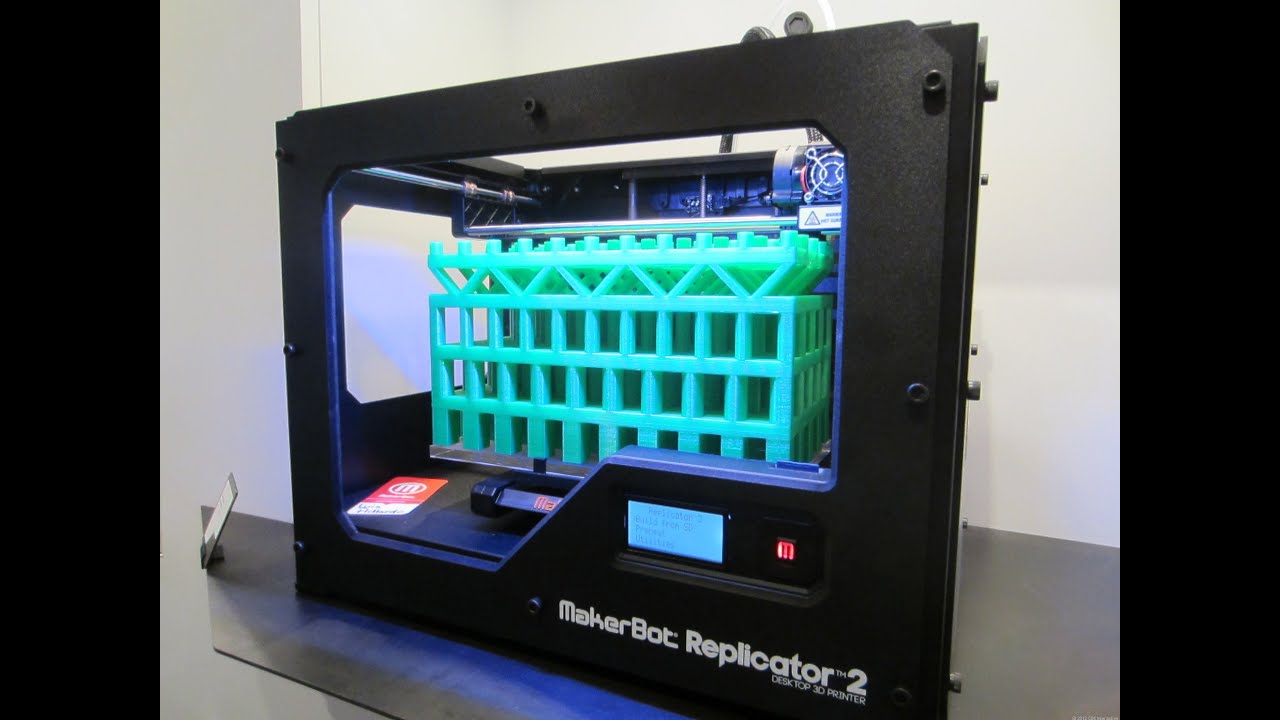
What Ever Happened to 3-D Printing?


3-D Printing is an exciting technology, but hasn't and likely never will live up to the hype.


As I noted in another posting, Motley Fool has been hyping 3-D printing as "the next big thing!"  And although they claim they don't "chase the hype" they seem to generate a lot of it in that article.

The hype isn't that 3-D printing is an interesting technology that will have (and has had - it is not a "new" technology, but rather more than a decade old) many interesting applications.   No, the hype they use is that it will "Put China Out Of Business!" and other modest claims.   Of course, most 3-D printers are made in China so I am not sure how that is so.

But first a word about China, or more precisely a word about the word "China".   China is a high-index word, like "Mom" or "Obama" and will generate an emotional response from a lot of people.   And for a lot of people, "China" is a word packed with emotion.   Trump (another high-index word) uses China a lot as a means of vague foreign-bashing.   It resonates with the plebes, who are convinced that somehow China has taken something away from them.

For example, when Mark worked at the Museum store, a busload of rednecks comes in and one of them says, "Ya got anything that's NOT made in China?  All this crap is made in China!"  And of course the redneck in question was wearing white sneakers (only old white people wear those anymore, apparently) made in China, a t-shirt made in China, and even his "Trump - Make America Great Again!" hat made in China.   Professing to be anti-China while buying almost everything you own from China is hypocrisy of the first order.

China is not the enemy.  Ignorance is.

But getting back to the hype, these same kind of rednecks would believe garbage like the Motley Fool spews - that someday you can wake up and say to your 3-D printer, "Make me a new iPhone, because I just dropped my old one in the toilet!"

Or, as posited on one discussion group, that you could just 3-D print yourself a new car, and it would cost you little or nothing.

A fantasy and an illustration as to how most Americans are technically illiterate.   Most 3-D printers today make things out of plastic only.  Other materials are coming online, but the idea of 3-D printing from dissimilar materials is the real issue.  Things like cars or iPhone are made of steel, glass, rubber, fabric, ceramics, plastic, all arranged in a very complicated manner.   3-D printing an airbag, for example, would be very tricky.

And then there is the issue of electronics.   Ironically, the processes used to make semiconductor devices got their start from photo-lithography.   A semiconductor chip is made of layers of materials that are sputtered in place, or etched away (using a photo mask) or are doped or embedded using a number of techniques that don't really lend themselves to 3-D printing.   We are talking about things on a microscopic - a nanoscopic - scale.  The idea that you could push a button and a car or a smart phone comes out the other end is a bit far-fetched.   Some assembly would be required.

And who knows, in 100 years, robots may assemble such devices, although I would guess that mass production on a robotic assembly line would be more economical than trying to make "one-off" devices using 3-D printing, even then.

But the point is moot, for two reasons.  First, such fantasies are still a very long way off.  Stamping cars out of steel will still be far cheaper than trying to "print" them for a long time to come.   3-D printing will be useful, but it will not replace ordinary mass-production techniques in the near future or even the far future.   The idea of it putting China "out of business" is nonsense.

The second problem is one endemic to all emerging technologies and that is, who do you invest in?  Note that I said "who" and not "what".   Which company will dominate the market, or at least survive and make a profit?  It is hard to tell in advance.

When the railroads came, everyone invested in railroad stocks.   And within a few years, there was a bubble and many railroads went bankrupt.   How to know in advance which one to invest in, is problematic.

When the auto came, small manufacturers sprung up in every town.  Most went out of business, as the business matured and consolidated.  Even the successful companies, such as Ford and GM nearly faced ruin at early times in their histories (and in recent times as well).   Betting on emerging tech is hard to do.

When airplanes came along, the pattern repeated, but even worse.  As the industry required a lot of R&D to keep up with rapid advancements, few dividends were paid as profits were plowed back into R&D.   Within a few decades, the industry consolidated and many smaller players went bankrupt or were consolidated into larger companies.  If you bet on the wrong company, you'd lose money, regardless of the fact that airplanes were "the next big thing!"

And so on and so forth.  Computers came along.  IBM went big and then went away.   The PC business has had its ups and downs - Dell bought Gateway, HP got out of the business, and now everyone struggles to sell PCs in this smart phone era - itself an example of the problem of who to bet on (check Apple's stock price lately if you doubt me).  

The Internet arrives and everyone bets on AOL and loses.   The telcos end up being the ISPs of the future.  Who saw that coming?   Social networking arrives.  MySpace and Second Life are the "next big thing" until some kid in a dorm room accidentally stumbles into something more popular.

It is never ending, and 3-D printing is not immune from this pattern - already companies are going bankrupt or facing difficulties as the bloom is off the rose.  If you got caught up in the hype spewed by Motley Fool in the last few years, you likely lost your shirt on 3-D printing stocks.   The "next big thing!" turned out to just be a "thing".

And really, there is no "next big thing!" to invest in, anyway.  There is no "ground floor" to get in on, except in retrospect.   So the sooner you stop buying into that sort of nonsense, the better off you will be in life.
 
In a way, the plebe's fascination with 3-D printing reminds me of how they perceive things like carbon fiber or "billet" aluminum.   In the hot-rod world, one way to make custom parts for your car is to make them from "billet" aluminum.   This is not a type of aluminum, but rather a description of how it comes and how it is made.  Most mass production processes try to eliminate waste and reduce manufacturing time.  So, for example, if you are making 1,000 aluminum brake calipers, you would cast them in a casting machine or even investment casting.   It is cheaper and faster to do.

It is possible - although not economical - to just take a block of aluminum (a "billet") and then just machine away huge amounts of metal using a multi-axis N/C mill, until all that is left is the part you desired.  It is like how stone sculptures are made - you chisel away everything that isn't what you want, and it is time-consuming and leaves a lot of rock dust.

Now, if you are making a custom part, then machining it this way is usually your only choice - and it is a lot cheaper and faster than making a sand or lost-wax casting of one item.    But for some reason, among the hot-rod ignorati, the term "billet aluminum" has taken on a secondary meaning as something special, high quality, high-tech, and of course, faster and cooler.   But the reality is, of course, none of this is true.  It is just a way of saying "custom-made" and trust me that a mass-produced forged aluminum wheel is going to be a lot better, lighter, stronger, and cheaper than one machined from a billet of aluminum.  It won't, of course, be unique.

The same is true for 3-D printing.   I see on a lot of car shows, some trim piece or part of a car being hyped as "3-D printed!" as if this meant it was better than a part made using more traditional techniques.   What it means, however, is that it is unique and custom.  The process does not mean that the part is better necessarily.

Ditto for carbon fiber.  It is a lightweight material used in high-performance cars to create bodies that are strong and feather-light.   In such applications, it is not only exotic, but performs far better than more traditional materials.   However, replacing your dashboard trim with carbon-fiber pieces (or worse yet, things that merely look like carbon-fiber, but are not) isn't improving the performance of your car or making it significantly lighter.

It is little more than a cargo cult mentality.   Og see race car with carbon fiber.  Og replace dash trim on Honda Civic with stick-on carbon fiber.   Og think car go faster.   Og is idiot.  Grunt.

Again, the same is true of 3-D printing.  The press reports on it as if anything made using the technique is inherently better.  Granted, the technology does allow for unique shapes to be readily made, and in that it has a bright future.   But 3-D printing a garden gnome is meaningless.

Thursday, March 10, 2016

Beat the Market?


Rich folks have interesting hobbies!


On National People's Radio this morning was an interesting story about a million-dollar "bet" Warren Buffett made with a hedge fund manager as to who would win over an eight year period, the hedge fund or the overall market.   Buffett looks to be on track to win the bet.  I guess this is what those evil 1%'ers do all day long, swim in their champagne-filled swimming pools, light cigars with $100 bills, and make million-dollar bets with each other.

Well, you'd think that National People's Radio would say something like that, after all they are blowing Bernie Sanders on a daily basis.   But a funny thing, the people who actually listen to NPR are fairly entirely white, middle-to-upper class, and worry about things like their 401(k) and home values, even as they profess that "Black Lives Matter" and "we are the 99%" (because let's face it, most listeners are actually 1%'ers, as they have a net worth over $1M).  But I digress.

But readers have mentioned this to me - that over time, particularly long periods of time, most folks don't outperform the market.   If you select your own time interval for evaluation, you can show that you "beat the market" for weeks, months, years, or even decades.  But as I noted before, never confuse getting lucky with being brilliant.   And Buffett's argument is that the "brilliant" people on Wall Street are just this week's lucky folks, who eventually will break their lucky streak and everyone will wonder why they "lost their touch".

Arbitrary selection of time criteria can be used to show whatever trend you want to highlight - particularly in hindsight.   And if Buffett made this bet back in the go-go 1990's, he might have very well lost.  It all depends on your start and end-dates for selection.  It is akin to Disco Stu's record sales chart - ending in 1976.  You pick the start point, you pick the end point, you can show a huge gain.   Gold bugs did this all the time, however, lately you haven't heard much from them, as the commodity has stagnated.

Buffett's argument also tends to negate his own investment style.   For the small investor, buying stocks is sort of a pig-in-a-poke.  You buy 100 shares of a stock, you technically "own" a piece of the company.  But you have no say in how it is run.   You buy a 30% stake in the company, you might be on the Board of Directors, or indeed, the Chairman.   And Buffett has done this sort of thing in the past - investing in companies he felt were undervalued at the time, and buying enough of the stock to have a say in how the company is run - forcing changes in management and policy and helping turn around the company and the share price.

It is akin to the difference between passively investing in a housing project through an REIT and buying an old house and fixing it up.   In the latter scenario, you have control of what is to be done, and your talents and labor can significantly increase your yield.   "Hands On" investing like that can generate real results.

Another example is the Darden Group - who until recently owned Red Lobster.  An "activist" hedge fund, Starboard, bought into the company, forced out old management, and got a seat on the board.   They spun off the failing Red Lobster chain (to an investment group, who having their own money in the game, will no doubt turn it around) and even spun off the real estate holdings into a separate entity.   The results were positive.  The share price went up, profits went up, and business improved.   They saw, as outsiders, that people don't want cheap lobster slathered in fake butter, but upscale dining experiences like the Seasons 52 restaurant (part of the Darden group) which charges far more than Red Lobster ever did and has a line out the door.   This is how capitalism is supposed to work.  And "hands on" investing can make a real value difference.

But is it true that even the smartest Wall Street analyst will not outperform the market over longer periods of time?   Well, in any quantum environment like a market, this is probably correct.  Over time, you will make mistakes which will negate your so-called "smart" choices.   And if you are a small investor who can't afford to take over a company, probably investing in an index fund - or a collection of stocks that represent a broad section of the market - is probably a smart choice.   And as the story noted, monitoring the market on a day-to-day basis is pointless.   Long-term gains are the real issue, not day-to-day fluctuations which are little more than background noise.
A lot of factors may affect stock prices in the short-term that have no affect for the long-term.   Someone sells a chunk of stock in XYZ corporation because they need money (for example, a margin call) and the stock price tanks.   In recent years, this has happened to some dot-com wunderkind who used their founder's shares as collateral for margin calls.  Their bets on the market go South and their insider stock gets sold, which often violates some SEC rule or their terms of their stock options.  This in turn tanks the share price, as people freak out that the founder of WilgroCo.com is "selling out". 

Or whatever.  The point is, share price fluctuations often have little to do with the real value of the stock.   Volkswagen has a major crises with diesel emissions cheating, and the entire German car sector takes a beating - justified or not.  It is not an indication of an actual change in value of the company, despite what the financial channels say (and they love to say how such-and-such a company "lose a billion dollars" in market cap, when in fact, it lost nothing whatsoever).

The good news is, I guess, that for the small investor, the best strategy to invest is to have no strategy other than to put most of your money into a mutual fund or index fund, or a number of mutual funds, and not try to strategize how to "beat the market" as it is likely you won't anyway.  Diversify your portfolio and then just leave it alone.

The worse strategy is to try to have a strategy - to listen to financial channels day in and day out and buy and sell when the shouting guy says to.   You will end up underperforming the market in most cases, as you churn your account, buy high, and sell low.
 

Tuesday, March 8, 2016

Flat Tax = Flat Earth

Simple answers are usually the wrong answers.

I spoke before about our tax system - actually in several posts:

Deductions versus Credits, Part I

Deductions versus Credits, Part II

Deductions versus Credits, Part III
Deductions versus Credits, Part IV

And I have even written about the Flat Tax proposals - which are little more than political posturing, as there is no chance in hell of them ever passing Congress.

To the novice it seems all so confusing and daunting.   And part of this is by design.   As a friend of mine who worked at the IRS told me, the two greatest weapons they have in their arsenal are withholding and the unnatural fear people have of the IRS.

Horror stories about the IRS are spread by people who blatantly cheated on their taxes - they pooh-pooh their own malfeasance and then postulate the IRS was "unreasonable" by assessing penalties.   The agency doesn't bother to refute these stories.  If people are scared of the IRS, it makes their job easier to some extent.

The reality is, of course, that it is a horribly underfunded and understaffed agency with antiquated equipment that counts on the honesty of the public for the most part.   But that doesn't fit anyone's political narrative, so forget I said it.

I also related earlier that in Law School on the first day of "Tax Law" the professor gave us an assignment to come up with a new and better tax system.   And on the second day of class, some young College Republican would stand up, beaming with pride and propose a "flat tax" system, and act as if he had invented the wheel.

"That's a good idea," the professor would say, "how exactly would that work?"

"Well," the boy would reply, "You just tax, say 15% of everyone's gross income.  No deductions, no tax credits, no forms, you just write down how much you made and then pay 15% of that!"

"Sounds good!" the professor said, letting the boy into the trap, "But suppose you ran a business where your profit margin was only 15%?   That person would end up broke, if you taxed them on gross income, right?"

"Well," the boy said, "I guess you'd tax on net income.   You'd subtract out the business costs like labor and materials and what not and only tax the profit part."

"Congratulations, my boy!" the professor said, "You've invented the deduction!"

Of course, it didn't end there.   Since it didn't seem "fair" to pay taxes on taxes, there should be further deductions for State taxes paid, as well as local taxes and so on.   Within a few minutes, our "flat tax" proponent had muddied up his "simple" system with a host of deductions and exceptions.

"Now what about things like meals?" the professor added, "should business meals be fully deductible?  If they are, we create a loophole where people will claim their food as a deduction!"

"Well, I guess not," the boy replied, "maybe they could be partially deductible" - and so the young man kept parsing out the actual tax code we have.

"And I suppose someone making only $10,000 a year - should they pay the same tax rates as someone making a million dollars a year?" the professor asked.

"Well, I guess not" - and he invented the somewhat progressive tax system we have today.  In short order, his "flat tax" proposal grew to a complex set of deductions and marginal rates and it no longer could be written on one page of paper.

Then a young fellow named Bobby Jindal raised his hand and said, "Well, what about just a sales tax?"

That, too, seems like a swell idea at first, until you realize a few things.   First of all, a sales tax is a regressive tax, as the poor spend 100% of their income on food, clothing and shelter, and if you instituted a 15% tax, they would pay 15% of their income.   The rich, since they invest don't spend all of their money and would pay less tax.

And they also have ways of avoiding taxes.  When California tried to institute a "yacht tax" to "get after all those rich people" the very rich simply registered their yachts in nearby Mexico and then just flew to Baja to go fishing, thus killing off the marina business in Southern California.   Taxes always create unintended consequences.

Another fellow posited a property tax would be better.  And in some States in the past, all of your personal property was taxed, right down to your shoelaces.  Just trying to inventory all of your assets and calculate a tax on a used chair from year to year was a nightmare, so the municipalities used flat-rate schedules for "personal effects" based on the assessed value of your home.  Sometimes cars were also taxed - which created a disincentive to buy a new car, as the taxes would be murder for the first few years.

And as the professor noted, when people get older, they may live in a house that is "paid for" and can afford to live there, but if the property taxes were high enough, they could not afford the house.   So the fellow proposing that scheme created a set of schemes for property tax relief for the elderly and infirm.

You can see how "simple" tax schemes become very complex in short order when they collide with the real world.

As I noted, every kind of tax has some unintended consequences.  If you allow business lunch deductions, businessmen start taking their secretaries out to expensive restaurants (until the wife catches on).  You tax yachts in Southern California, they move to Mexico.   If you raise property taxes through the roof, people move to other States or property values go down.

But Congress, over the years, as also used the tax system to create intended consequences - Incentivizing people by using the tax system.  Buy an electric car?  Get a $5000 tax credit.   Buy a House?  Deduct your mortgage interest (why?  It isn't a business expense, just a personal one!).   Rent out a house?  You can depreciate the property and reduce you income taxes and convert ordinary income into capital gains.   There are all sorts of incentives, some of which work, some of which backfire - like the "free NEV" scheme that resulted from a poorly worded tax incentive that allowed people to get free golf carts, paid for by the government.

A lot of people think these kinds of incentives are wrong, and to some extent, they have a point.  When the government uses the carrot-and-stick approach of tax credits and deductions, it is no better than the Soviet Command Economy -with all its faults.   It is somewhat better in that a person can ignore tax incentives if the market is screaming otherwise.   $5000 off an electric car is nice, but not enough of an incentive for most of us to go out and buy one.

The other problem with incentives is that they are like a drug - once you are hooked, it is damn hard to get off.   For example, if you went to a "flat tax" tomorrow and got rid of the home mortgage interest deduction, many people would lose their homes, as the deduction brought down the price of the home to make it affordable.

On the other side of the coin, as I have noted before, these deductions are a sop to the middle class.   The man buying a $500,000 house has more to deduct in interest to offset his 25% marginal rate.  The man living in the $100,000 house has far less to deduct and it doesn't affect his taxes as much as he is only in the 15% bracket.  The 401(k) and IRA has a similar effect - which is why we offer the poor a tax credit to save.

The flat-tax proponents like to blather on about how many pages there are in the tax code, and stack up books and say, "See, no one can figure this stuff out!" and act like this sort of thing applies to you and me.  However, 90% of the tax code (maybe 99%) is irrelevant to individuals.   Entire sections on tax credits for farmers or widget production are complex and difficult to understand, but if you are a W-2 wage slave, they never will apply to you.  So when Senator Klaghorn stacks up tax code books on this desk on C-SPAN, he is basically lying to you and you should never take the word of liars.

The biggest problem with a "flat tax" is that even if you could somehow come up with one, it would represent a huge tax increase for people in the 15% bracket ($80,000 combined income and under) and a huge tax cut for those in the higher brackets (making $360,000 a year).  Right now, if you are living below the poverty line you basically pay no taxes.   We would be taking away 15% of the income from people who need it the most.

Now, you might say, "OK, fine, have a cutoff for people below the poverty line" - but now your flat tax is not flat anymore.  You see how complicated this gets in a real hurry.
 
Estimates so far indicate such a tax would be at least 25% which would be a big tax increase for the poor, many of whom pay no taxes.  This would be a huge burden on the elderly, who often pay no taxes.  It would be a huge cheat to those who saved in their IRA or 401(k) who were promised they could withdraw the money later in life at a lower tax rate.

It would be a huge blow to homeowners who were counting on a home mortgage interest deduction.

A lot of poor people would end up destitute.  A lot of rich people would have their taxes cut nearly in half.

If you want to raise your taxes so people with yachts can have bigger yachts, go ahead.

But the reality is, "deductions" are there for a reason, as are marginal rates.   And speaking of which, our highest marginal rate is about 39.5% which sounds like a lot, but is less than the 50% my Dad paid, or the 90% people paid during the Eisenhower era.  Our tax system is already pretty generous, compared to other industrialized countries.  I am not sure making it "flat" makes it any better - it just gives the top earners a big bonus, and takes away money from the bottom.

As for complexity of the system, again for the average wage-earner, filling out a 1040 is not all that hard.  And you can, for a modest fee, use websites like TurboTax to calculate and file your taxes.   The problem, I think, that people have is that there is this vague uncertainty in the back of their minds that they are paying too much in taxes as compared to their neighbor - or that they are paying too little and will be audited.   It is a matter of uncertainty and fear at work.

Calculating the exact amount owed is not an exact science.   No two accountants will come up with the same tax bill, except in very simple cases (in which you don't need an accountant).   Even the IRS rounds off anything under a dollar these days.   They are not so concerned that you overpaid or underpaid by $100 than that you failed to disclosed $100,000 in income.   And in fact, things like the "standard deduction" are really nothing more than a Scientific Wild-Assed Guess as to how much you pay in sales taxes and other taxes, to deduct from your income.   And the "personal exemption"?  A totally made-up number.

To be sure, when your finances get complicated, you may need an accountant.  When I was running my practice and had two Subchapter-S corps to file papers on, it was a lot easier to have an accountant to handle payroll, quarterly filings, and annual returns.   I realized quite quickly how much a pain-in-the-ass it was to be an employer and got out of the game.   Today, my taxes are much simpler, although chasing down 1099 forms can be a pain.   But it is not all that hard to do my taxes on Turbotax.

So the "complexity" argument is somewhat specious.  And it is a way that the very rich are using the poor and middle-class (who have tax anxiety and trouble filling out forms) to hoodwink them into pushing for a tax system that blatantly favors the very rich.

And for what?   Because filling out government forms is hard?


Flat Tax = Flat Earth.   Makes about as much sense.